KIMIA RAHNAVARDI
Banoo-Serai
When it comes to architecture, the layout and concept of most residential designs have remained the same as centuries ago. There has been this unspoken rule that there’s always someone, the woman, who is staying home to take care of children and the house while the man is outside providing for his family.
While this practice has been outdated for many decades in most countries, most societies lack suitable housing and childcare support for single women or widows. When these women cannot find a space that allows them to do both affordably, many women have no other option than stay in poorly constructed housing and not work to be able to raise their children.
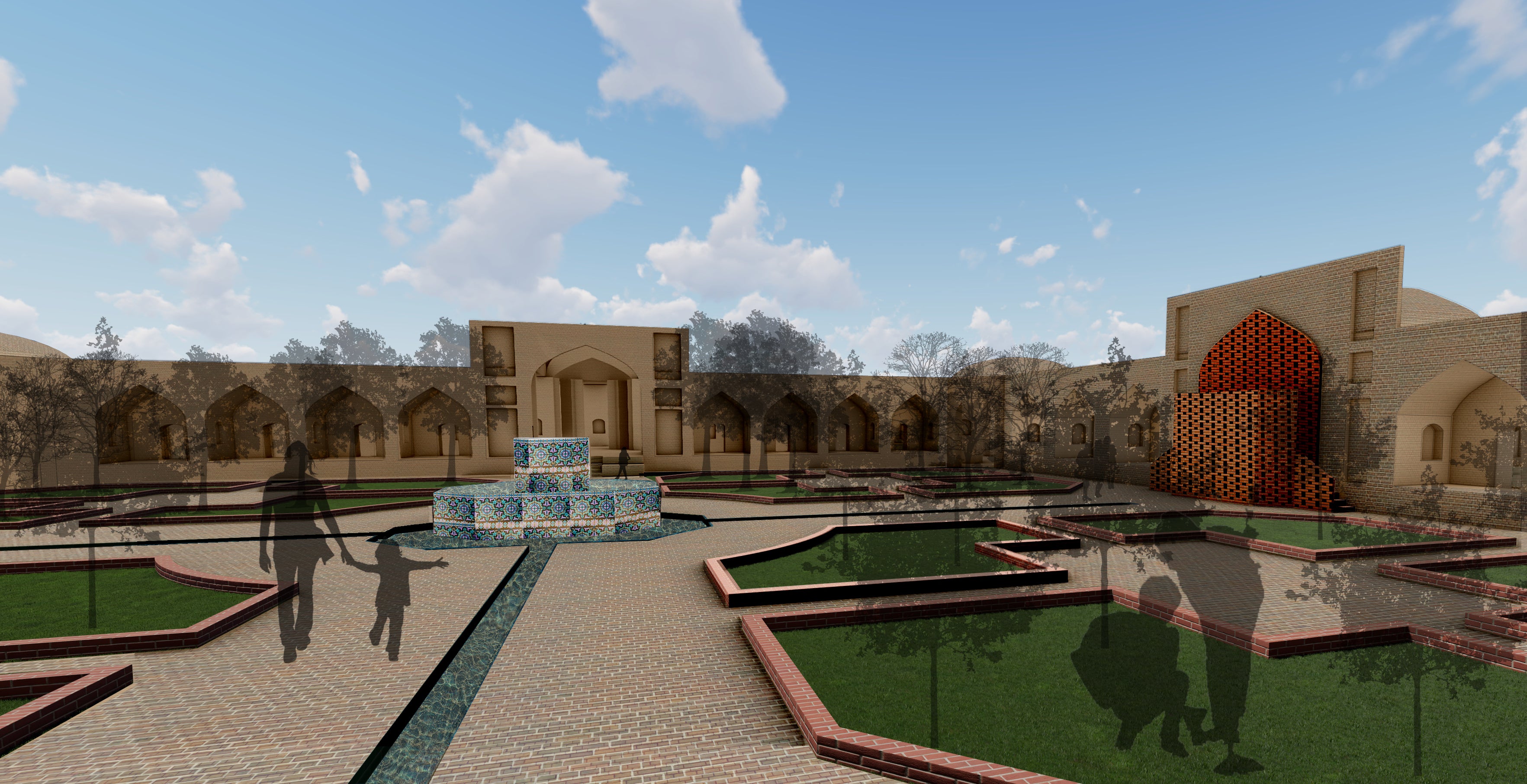
This thesis proposes a reconfiguration of a Caravanserai, an abandoned historic architecture in Isfahan, Iran. Once used as shelter for travelers along the Silk Road, the readaptation of this structure as a residence and workplace for single women and widows bestows upon this landmark a reimagining of Persian architectural tradition while addressing a social issue. By implementing elements such as light, textiles and pattern design to soften the edges of this imposing structure, once associated with political and masculine power and trade, the design concept and layout offers both practical and symbolic empowerment for disenfranchised women.
Image
The Challenges
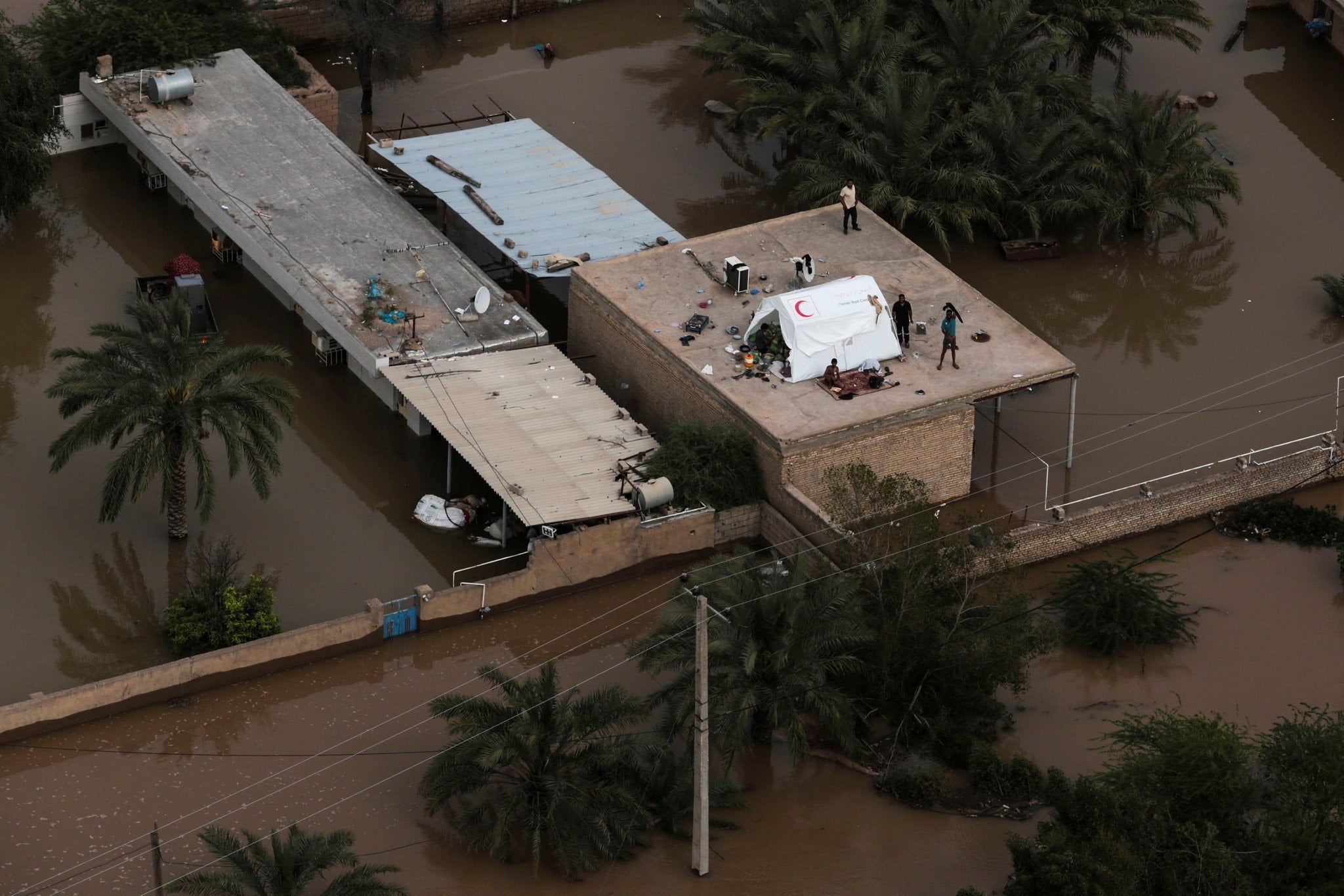
When it comes to Iran, different elements are playing a huge role in the lack of good and affordable housing. The most important one being natural disasters. Iran is a country that due to its geographical location and bad management, faces many flooding and earthquakes throughout the year. On average every year in Iran 2,900 people lose their lives due to natural disasters. In addition, 1,500,000 people are affected by the consequences of these disasters. The most important and notable natural disasters in Iran are earthquakes, flooding, and drought. Out of all the natural disasters in Iran between 1970 and 2010, 61 percent were caused by flooding, while 28 percent were earthquakes. When these disasters do happen, due to weak constructions and cheap designs; while a great number of houses are destroyed, the affordable housing projects done by the government are the ones that get seriously damaged. Considering the fact that people who live in these affordable housing projects, usually do not have the resources to repair their houses or buy a new one, they have no other option but to settle for shelters.
In addition, when it comes to renting a place for themselves, many landlord are not willing to rent their houses to women who have no male figure in their lives. That causes these women to have a hard time finding a place to live by themselves. On top of that, for women who have children usually, childcare is not supported in their workplace or is very expensive. As a result, many of these women are forced to stay in and raise their kids.
Image
THE SITE:
SHEIKH ALI KHAN ZANGANE CARAVANSERAI
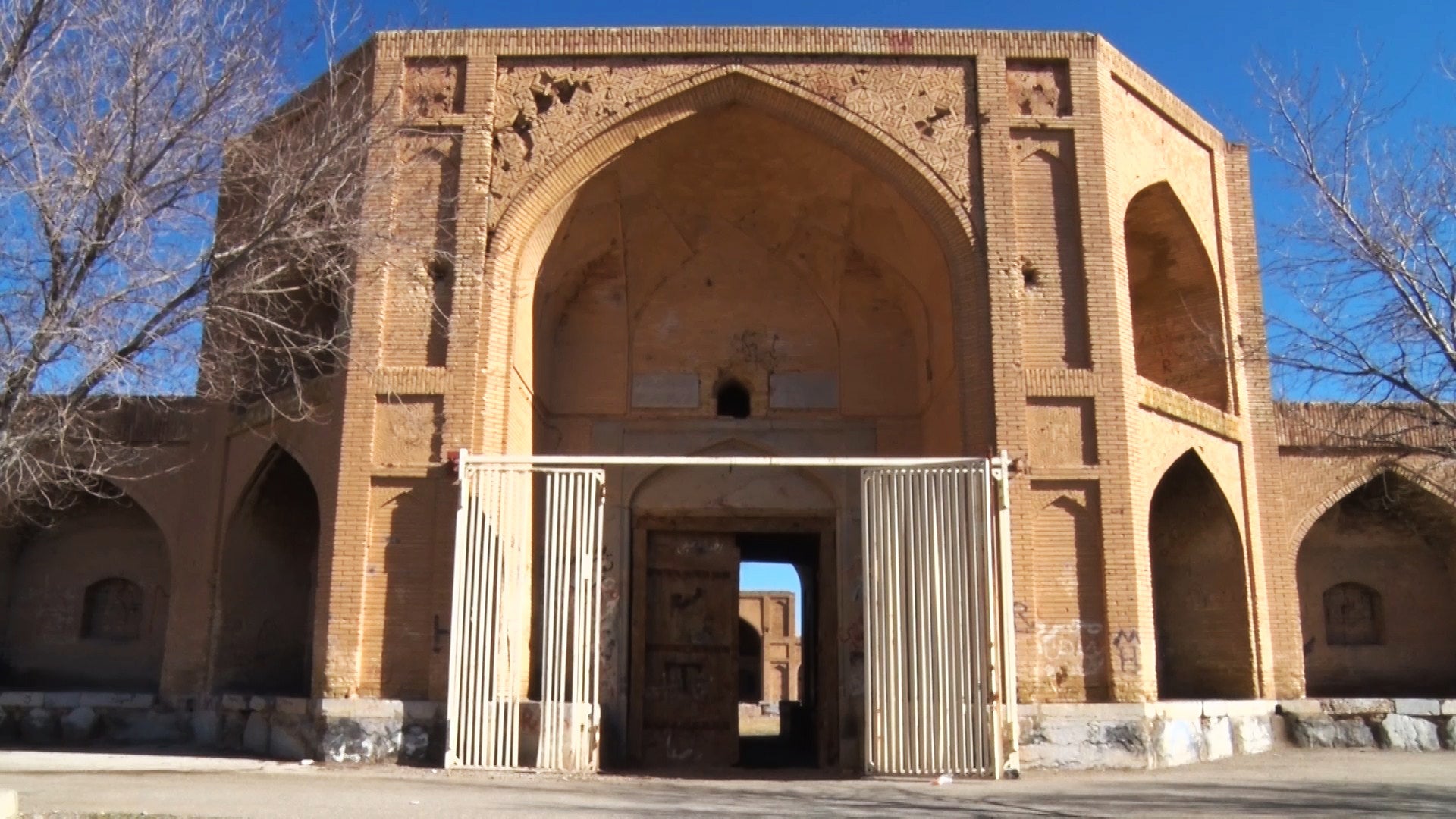
In the Safavid period, roads and communication paths were very important and, since at the time, Isfahan was the capital, thus many Caravanserais were built along the roads leading to the city. The Caravanserai is the main element of the historical road in Iran, were not only a simple place for travelers to rest and keeping safe their belongs but were also a meeting point for travelers, merchants, scientists, and many other scholars who wanted to exchange knowledge and ideas, as well as discover new civilizations.
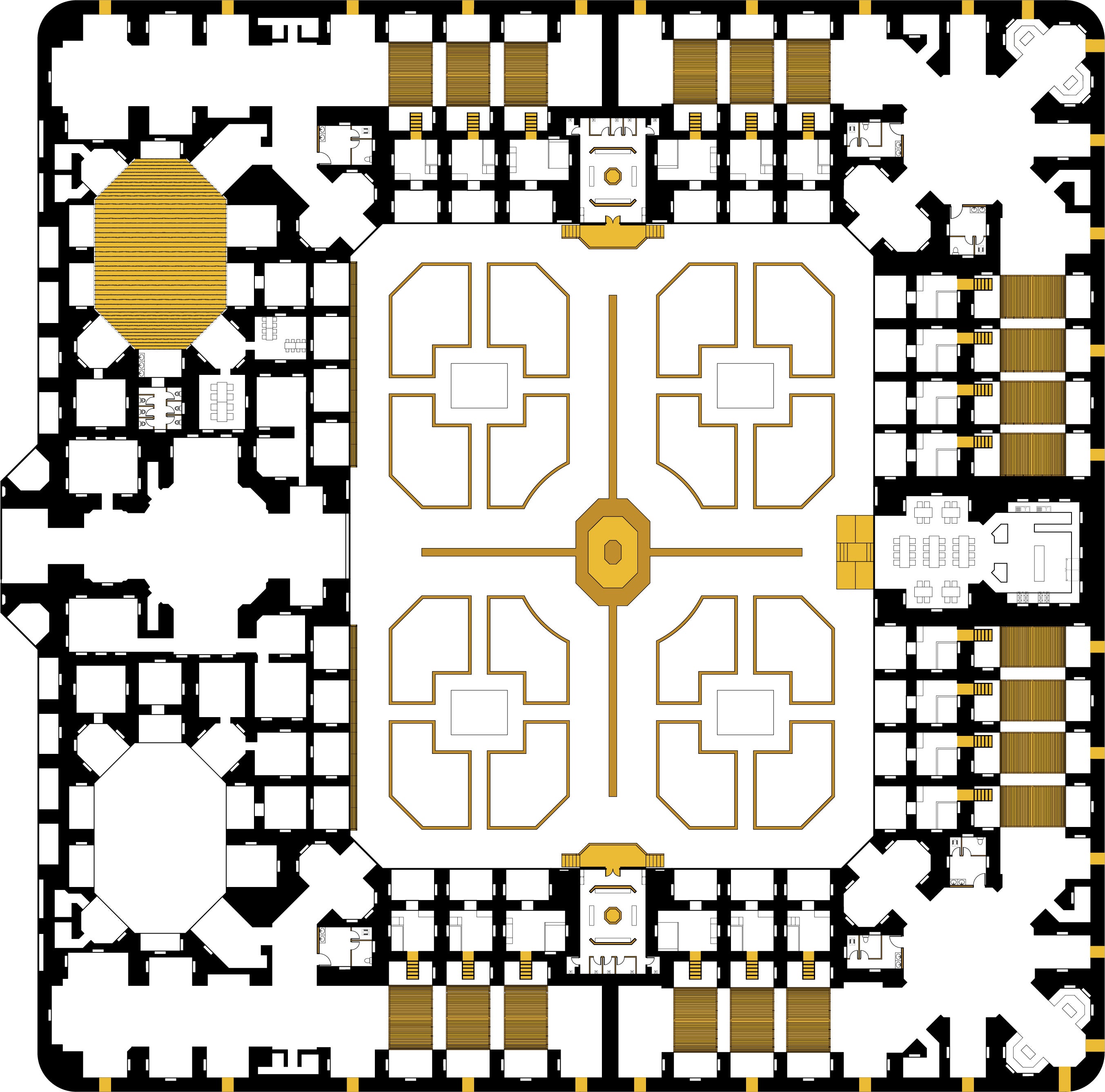
One of these Caravanserais is Sheikh-Ali khan Caravanserai. The building is 82 Meters by 82 Meters, and the length of its courtyard from east to west is about 50 meters and, its width from north to south is about 38 meters. In the southern part of the building, you can see the main entrance of the Caravanserai and according to the inscription, it has been built in 1687. Sheikh-Ali khan caravanserai can be called Royal because sometimes even the Safavid kings stayed there for a while.
It worth mentioning that Caravanserai comes from Farsi and, it's made out of two words. Caravan which, means the traveler and Serai which, means shelter. And so they were a place to shelter the travelers. Therefore I have decided to name my project Banoo-Serai. Banoo in Farsi means females, and therefore now this building is a shelter for women.
Image
THE INTERVENTION
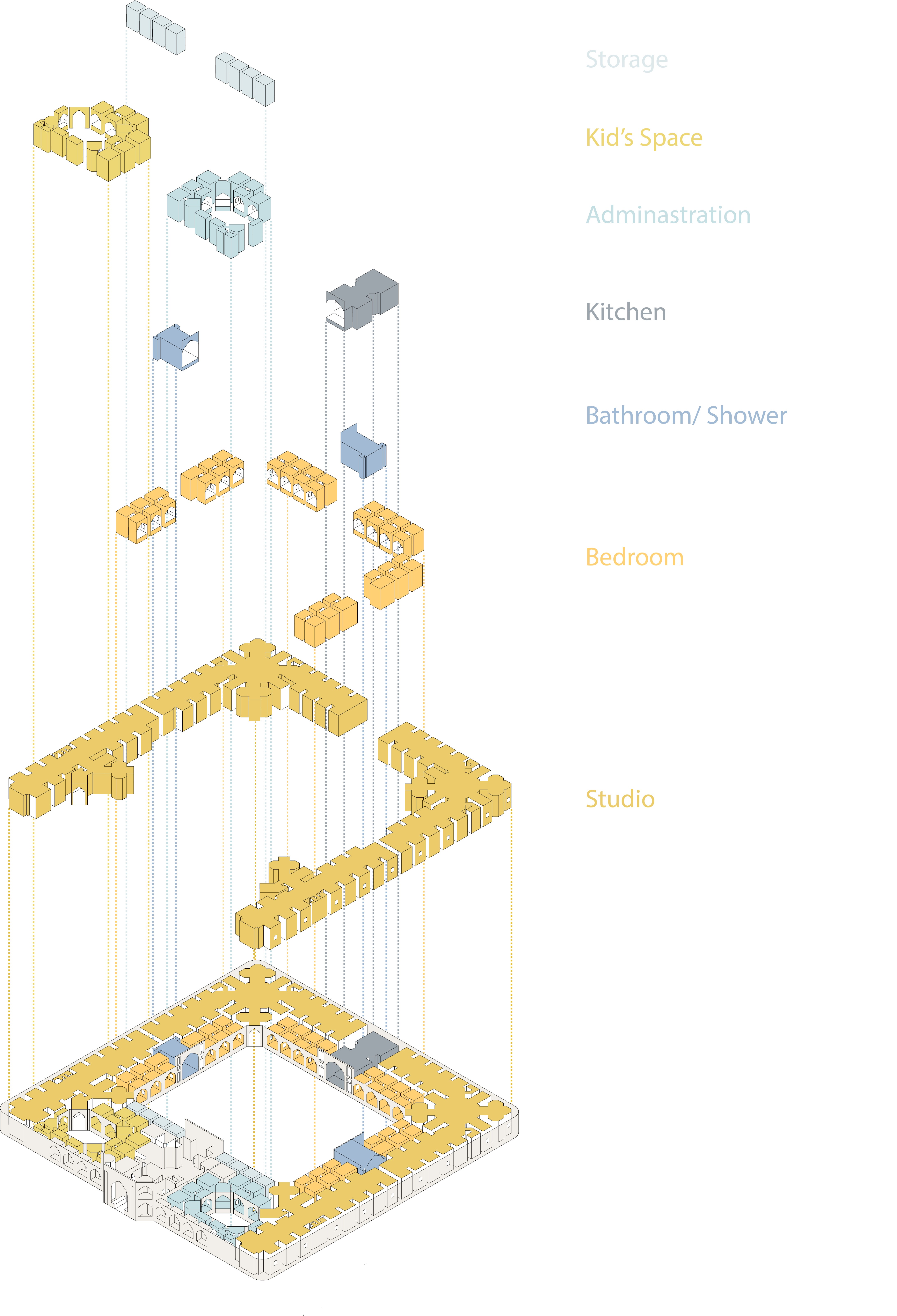
This thesis is heavily focused on designing a space that allows women to live, work, and simply just grow. Banoo serai will be a space that will allow women to establish a community that not only empowers women but also helps them to feel safe and a part of a big family. The most essential aspect of the project was to adapt this historical site into housing for women. A Caravanserai which used to belong to Safavid king, a structure that represents masculine and political power, now it’s going to represent women. A group that was always looked down upon. The intention is to design a space that could support women to become equals.
Another significant part of this project is the studios. Most of these women are artists that their work is going unrecognized. This thesis hopes that by providing them a space to work or learn from others, they be able to make money and also to receive the recognition that they deserve. In addition, it worth mentioning the techniques that they use for their handcraft are part of an ancient and vibrant culture and it’s essential to be preserved. The core goal of this project is not only to preserve the building, but also the culture. By accomplishing that, many people can be preserved as well.
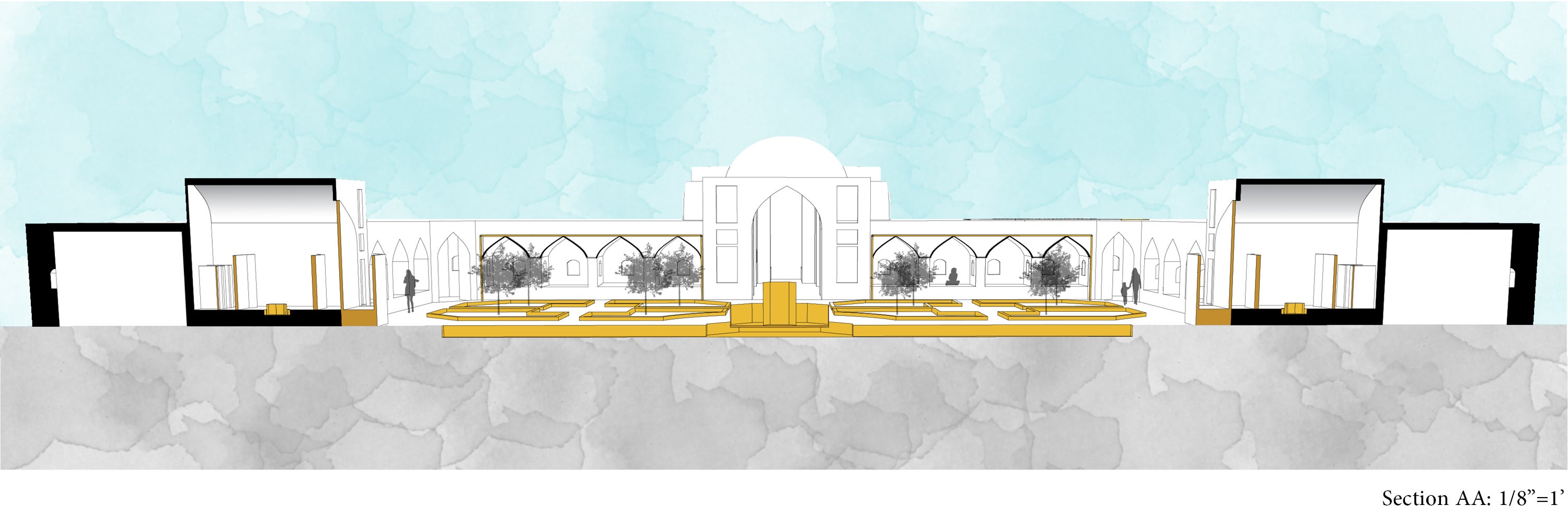
Finally, as was mentioned the main goal of this project is to create a co-housing space that will allow the focus group to live and work while keeping the structure as self-sufficient and affordable as possible. For that reason, every intervention has been designed with that intention in mind. Fortunately, the structure itself has been constructed perfectly appropriate for its environment, which is dry and hot during summer and cold during the winter, and thus does not require many alternations to make it more sustainable. That being said, considering that this building has been a shelter for travelers to stay for only a short period of time and now it’s being transformed to a co-housing space for women to stay for several years there was a need for some changes in the layout of the building.
Image
Renderings
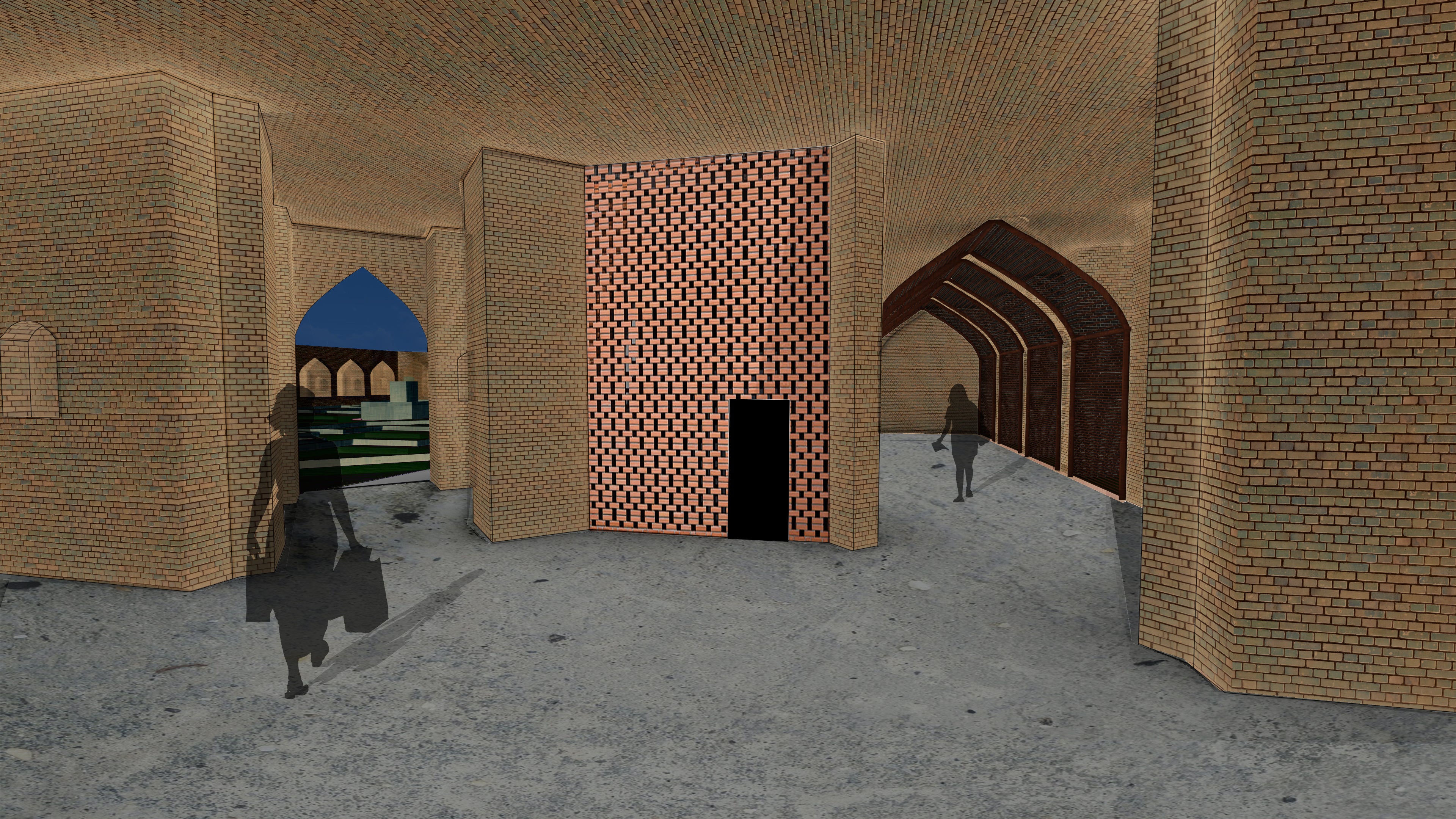
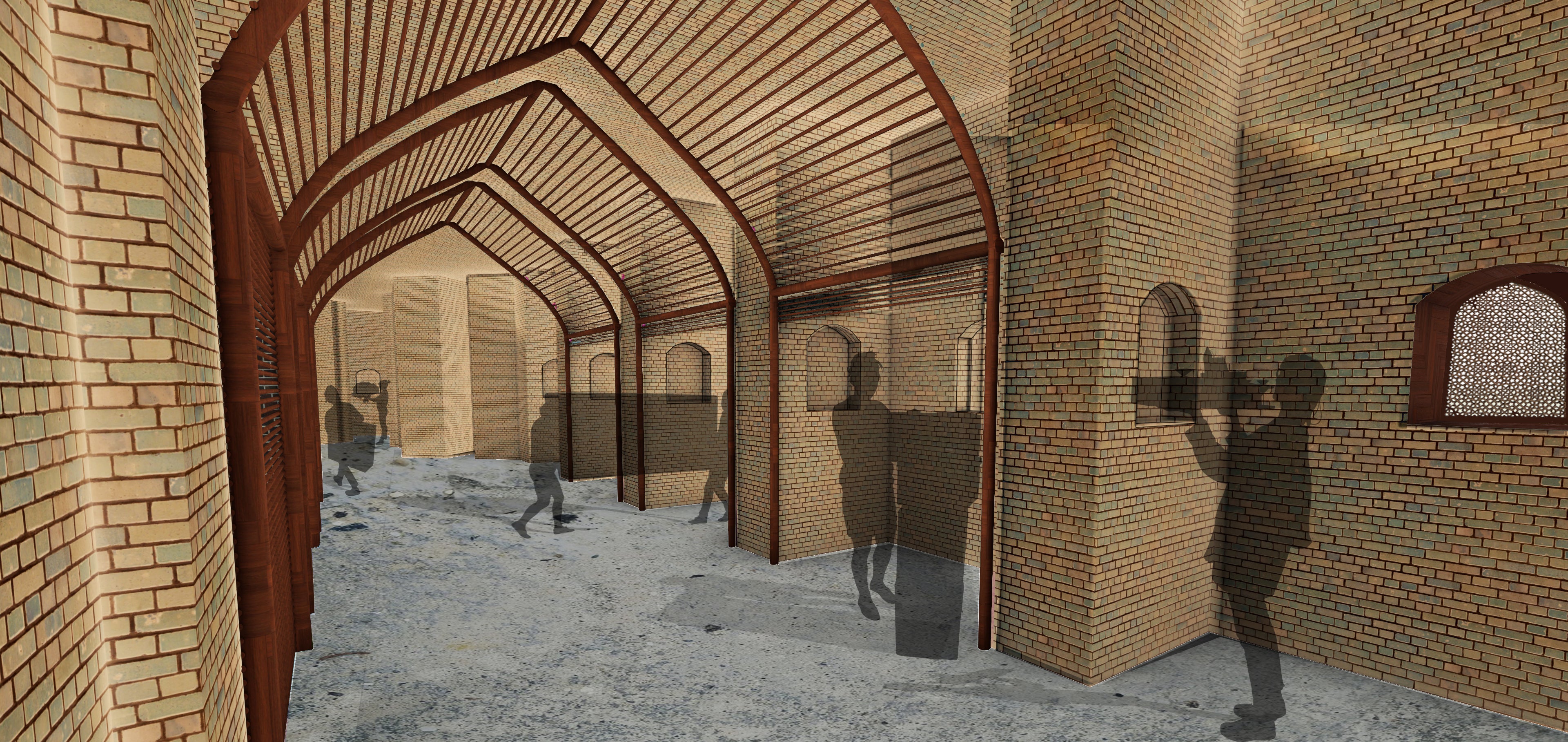
- Architecture
- Ceramics
- Design Engineering
- Digital + Media
- Furniture Design
- Global Arts and Cultures
- Glass
- Graphic Design
- Industrial Design
- Interior Architecture
- Jewelry + Metalsmithing
- Landscape Architecture
- Nature-Culture-Sustainability Studies
- Painting
- Photography
- Printmaking
- Sculpture
- TLAD
- Textiles
