OBJECT LESSON
“Our cradleboards are living beings”
A Conversation with
Vanessa Paukeigope Jennings
and Carl Jennings
Image
Images
1
LISTEN: Vanessa Paukeigope Jennnings on Kiowa cradleboard construction
Image
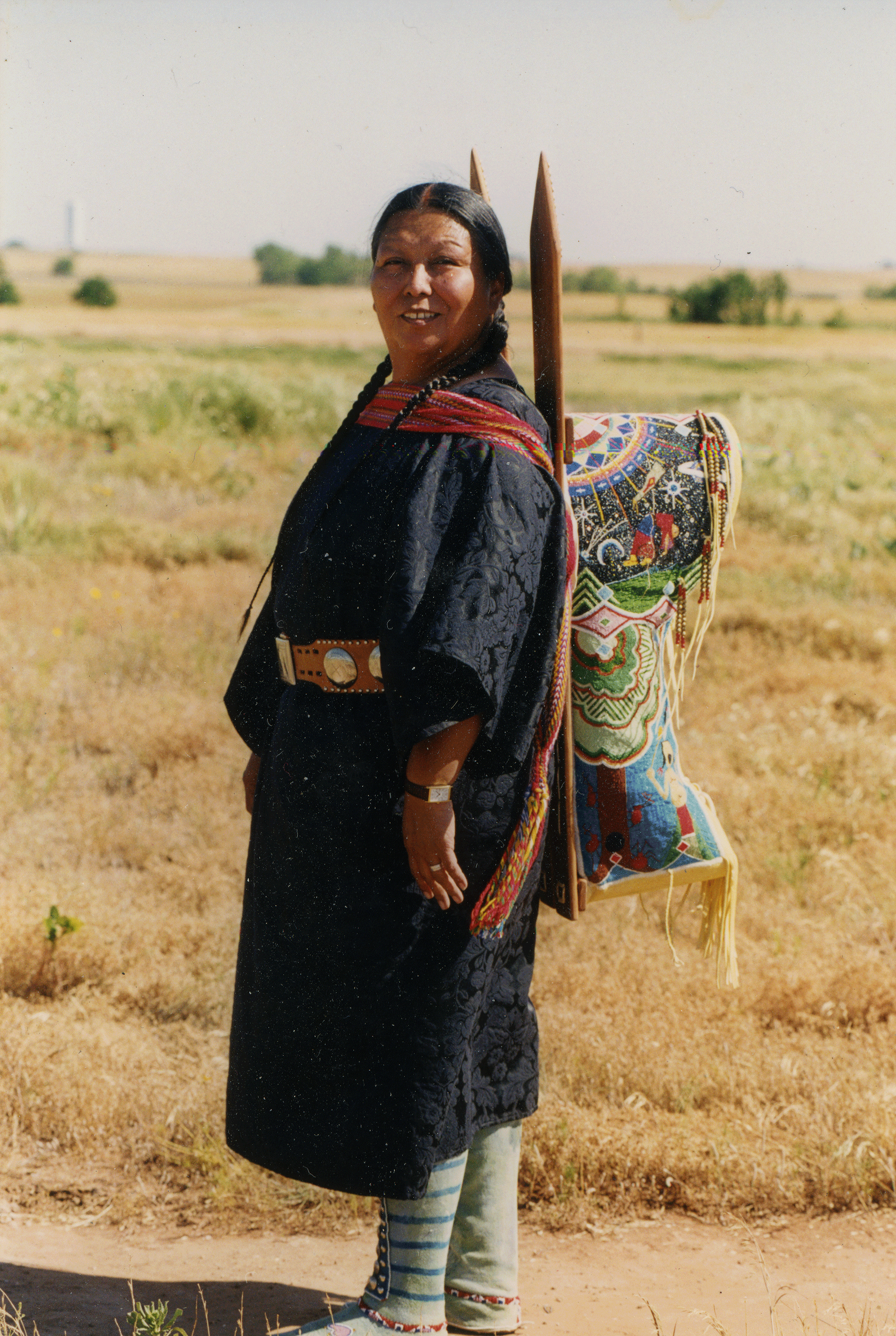
FIG. 3
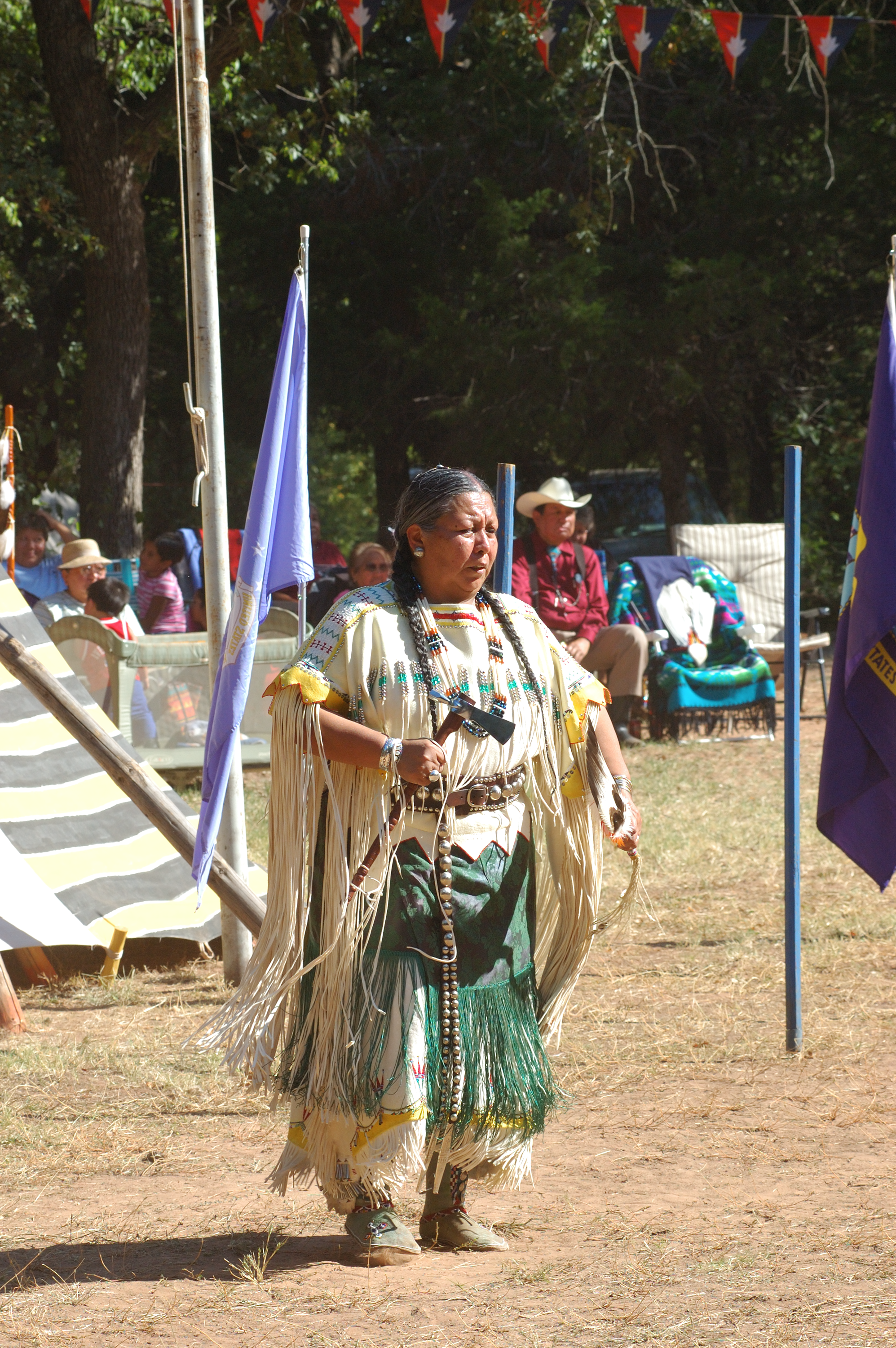
Vanessa Jennings wearing one of her cradleboards, 1998
Photo by Carl Jennings
Image
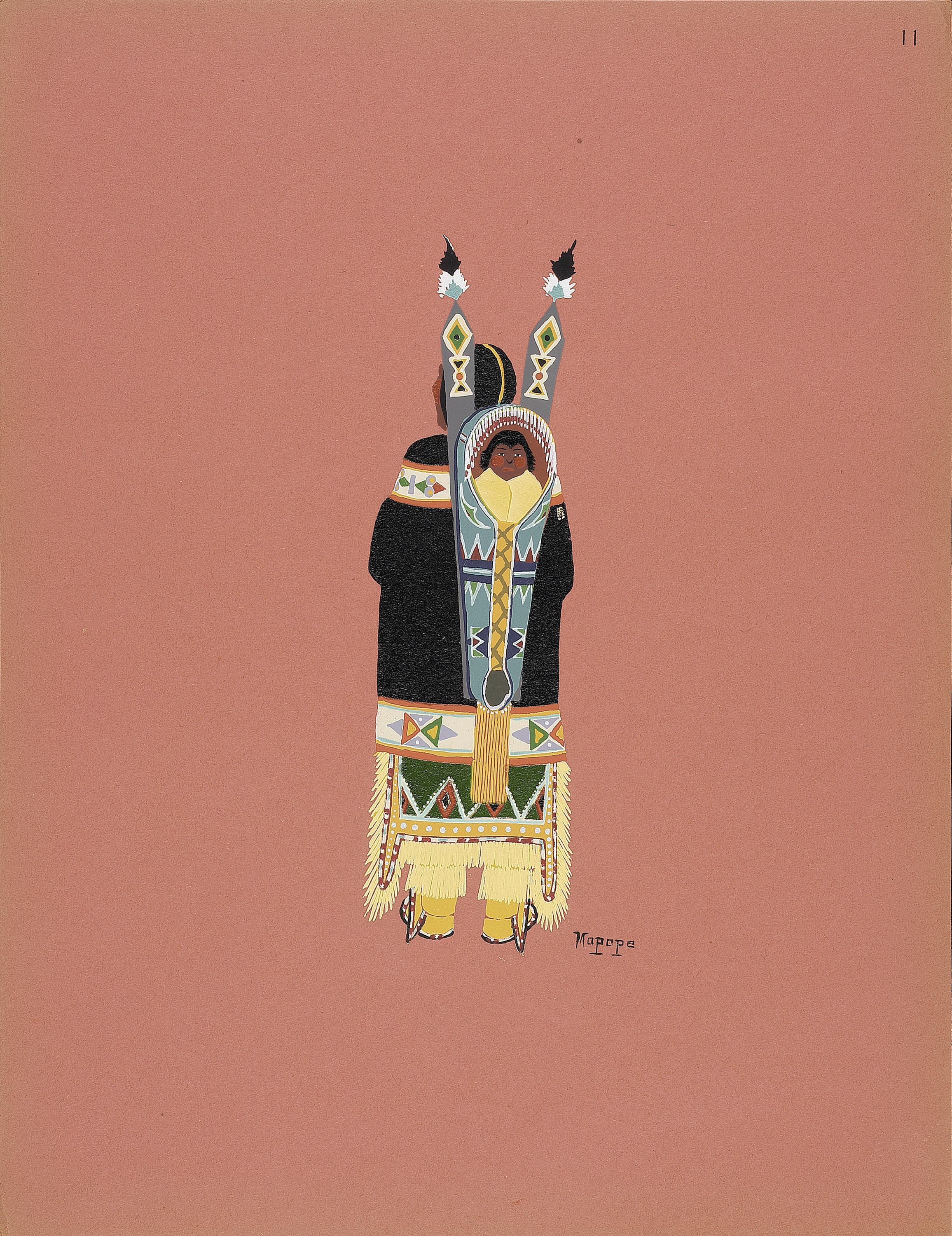
Stephen Mopope (Qued Koi / Painted Robe)
Kiowa, 1900–1974
Plate 11, 1929
Silkscreen printed on paper
29 37.8 cm.
National Museum of the American Indian, Smithsonian Institution (26/4033)
Photo by NMAI Photo Services
Image
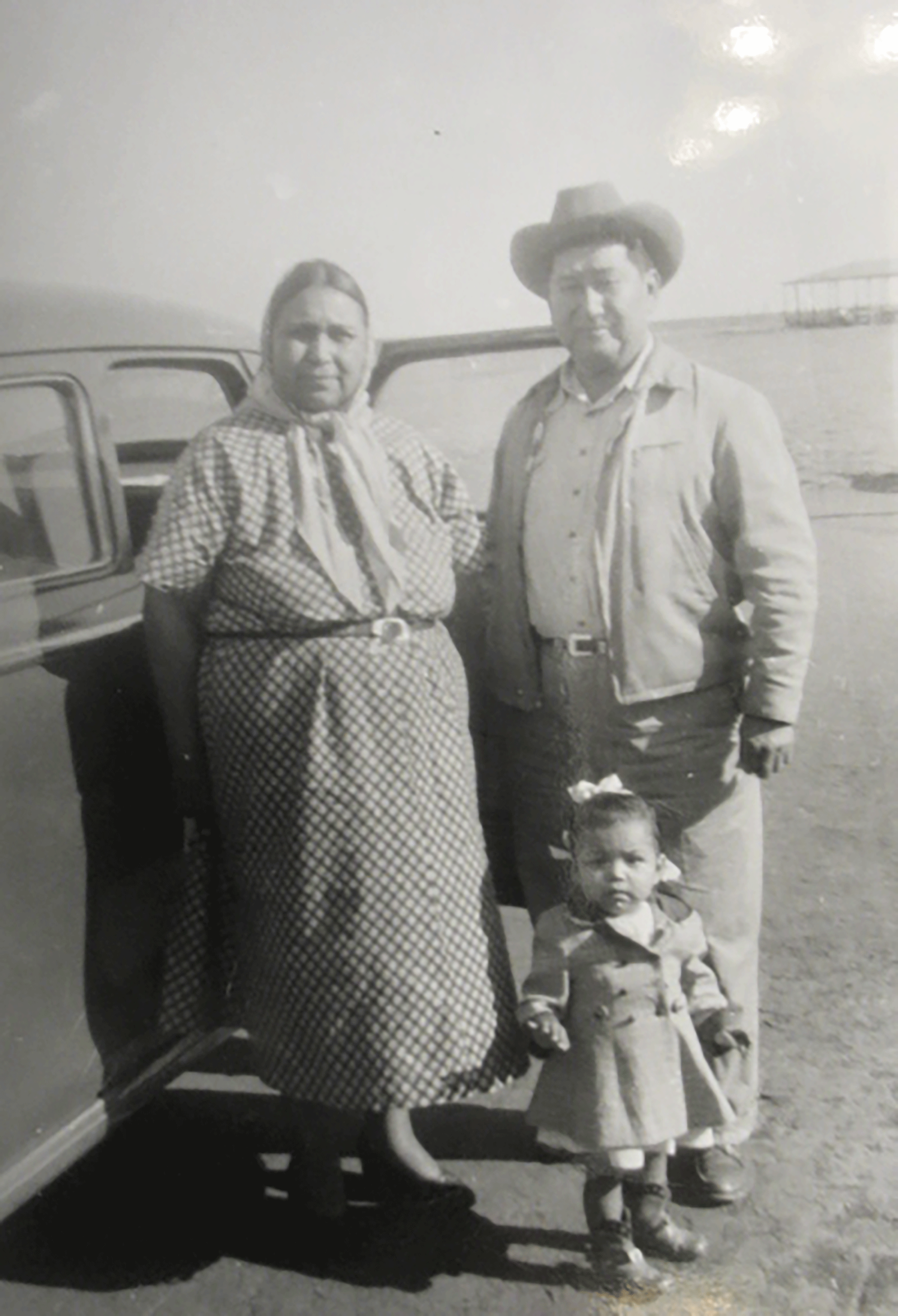
Vanessa Jennings and her grandparents Stephen Mopope and Jeanette Berry Mopope, ca. 1955. Photo courtesy of Vanessa Jennings
Image
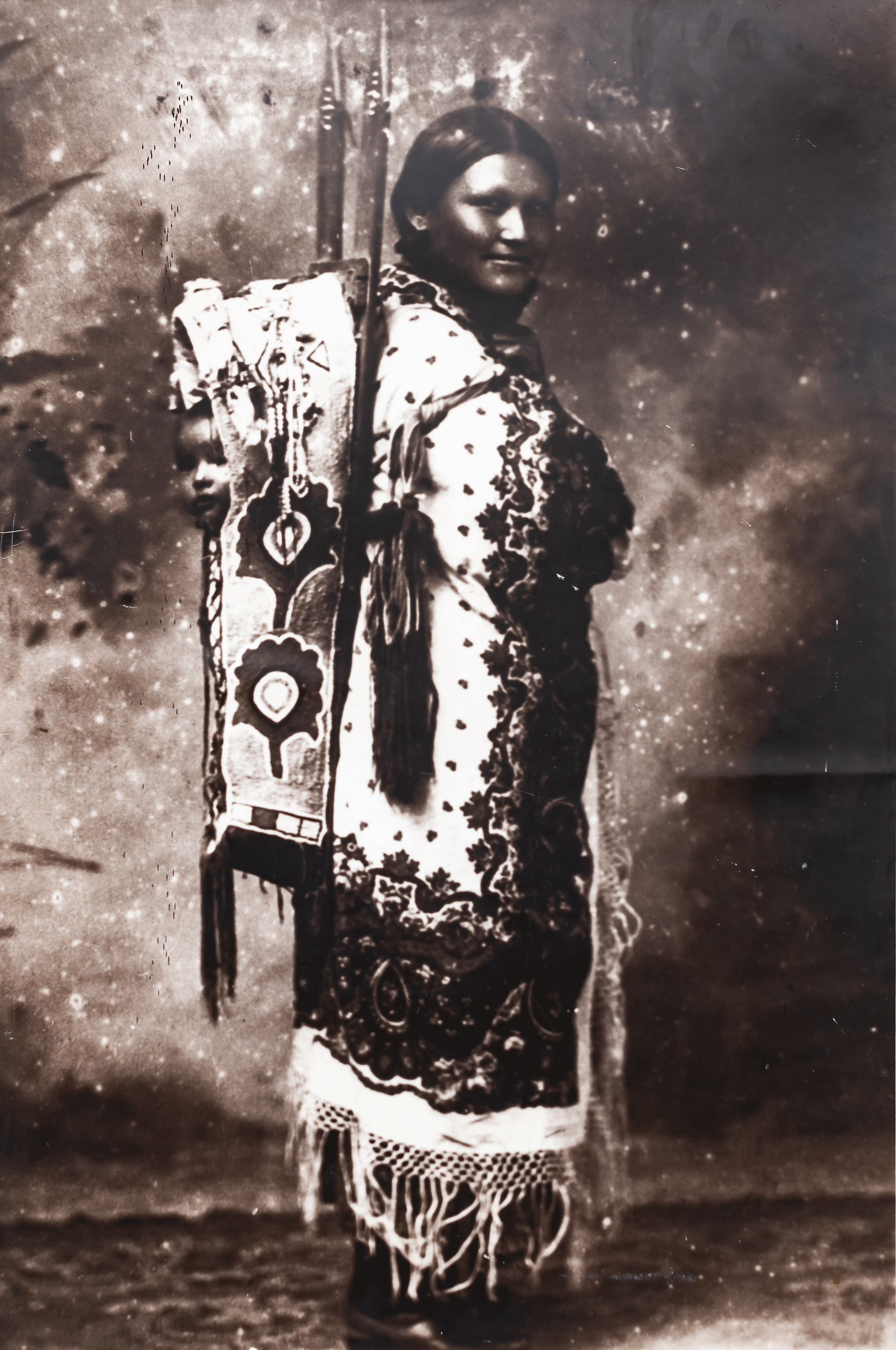
Jennings’s great-grandmother,
Etta Mopope (Paukeigope),
carrying Stephen Mopope in a cradleboard, ca. 1900.
Photo courtesy of Vanessa Jennings
Image
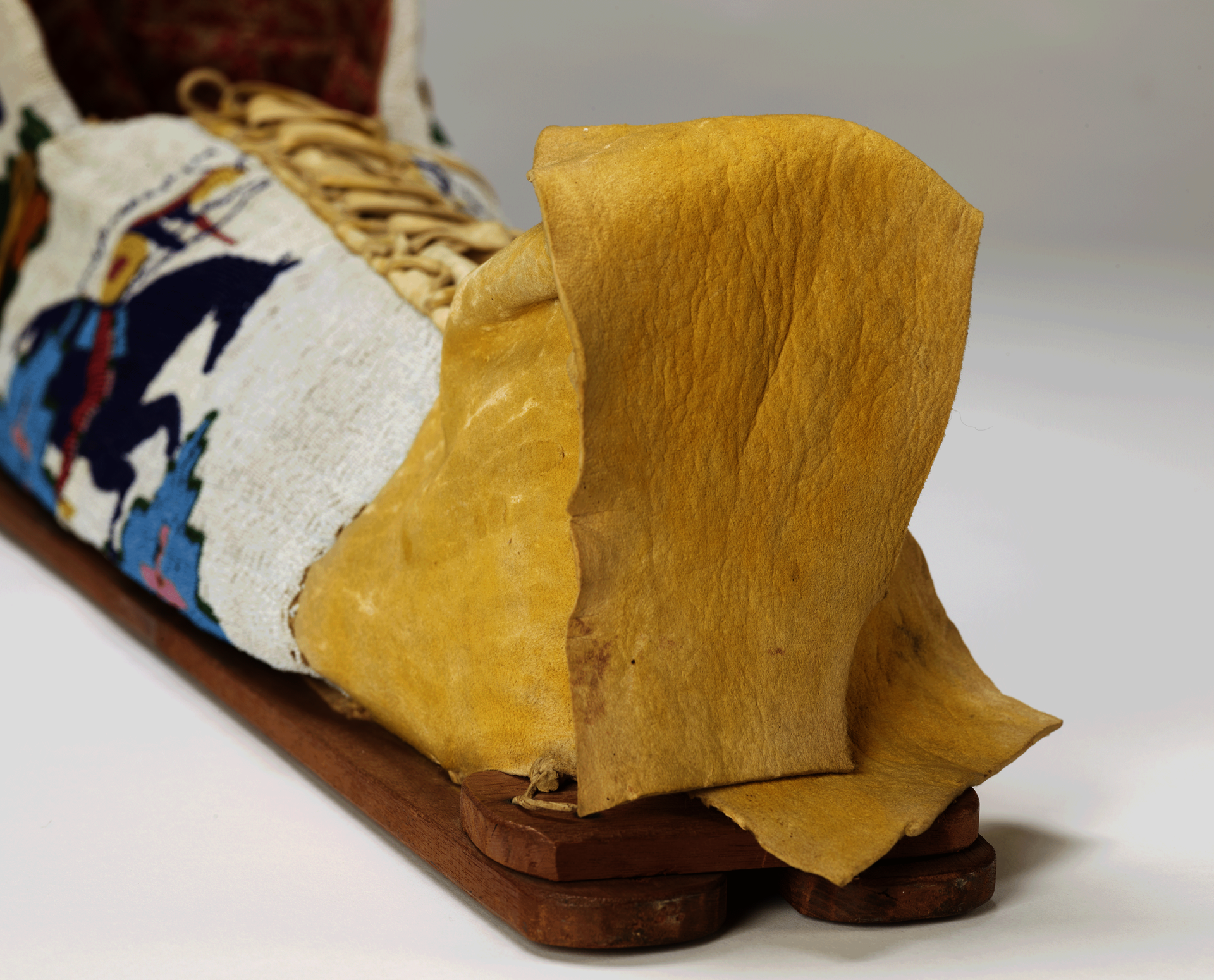
6
FIG. 6
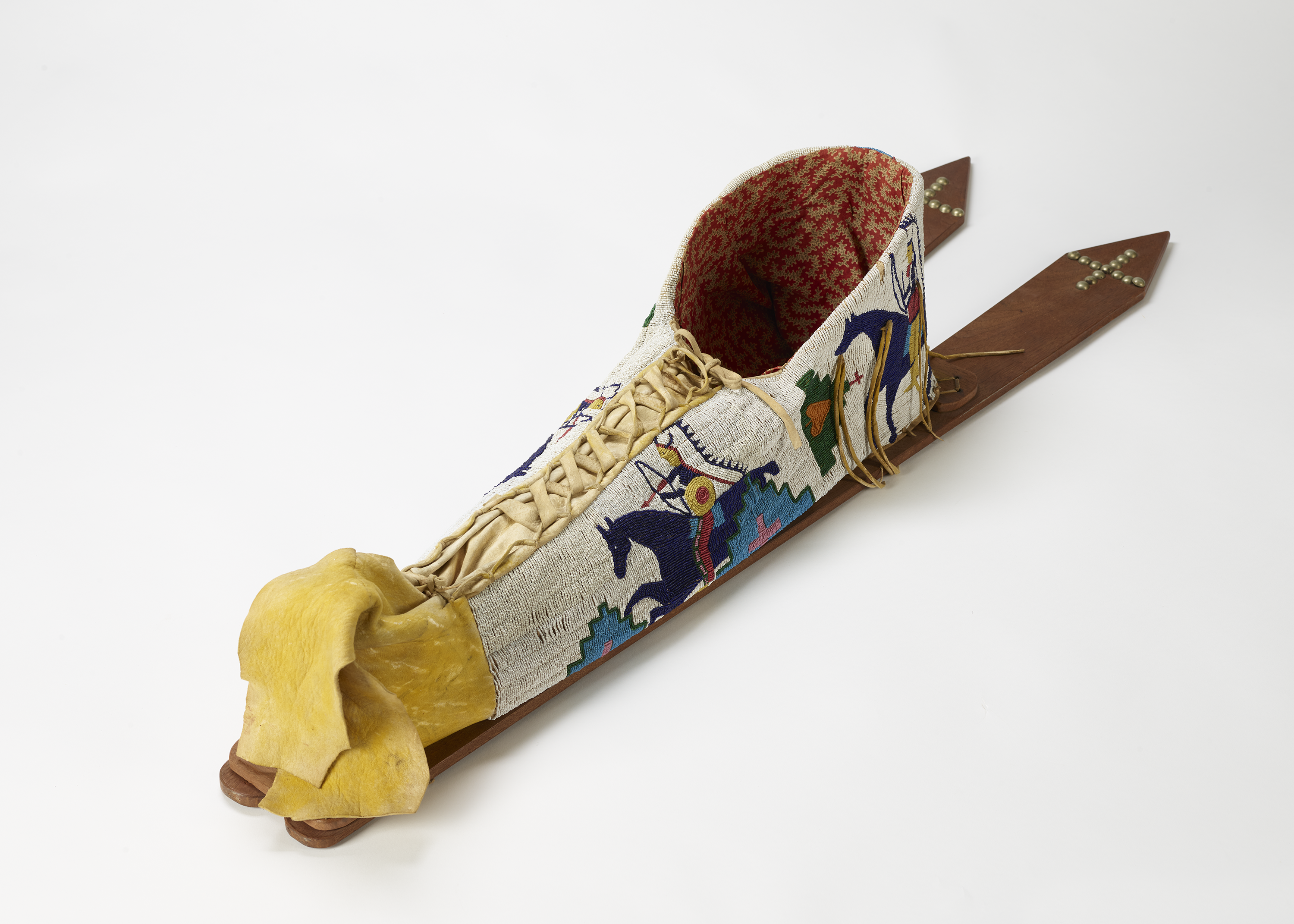
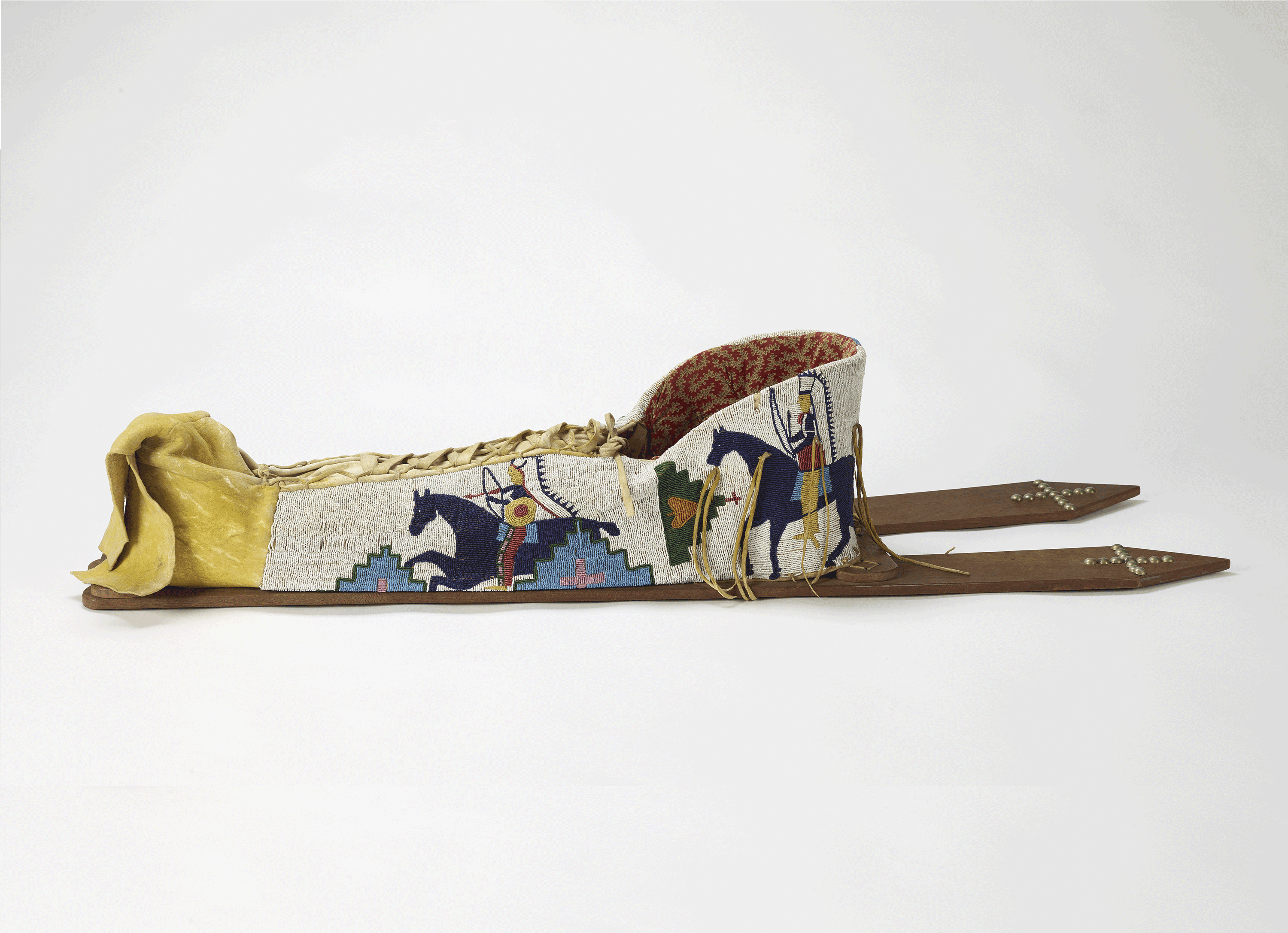
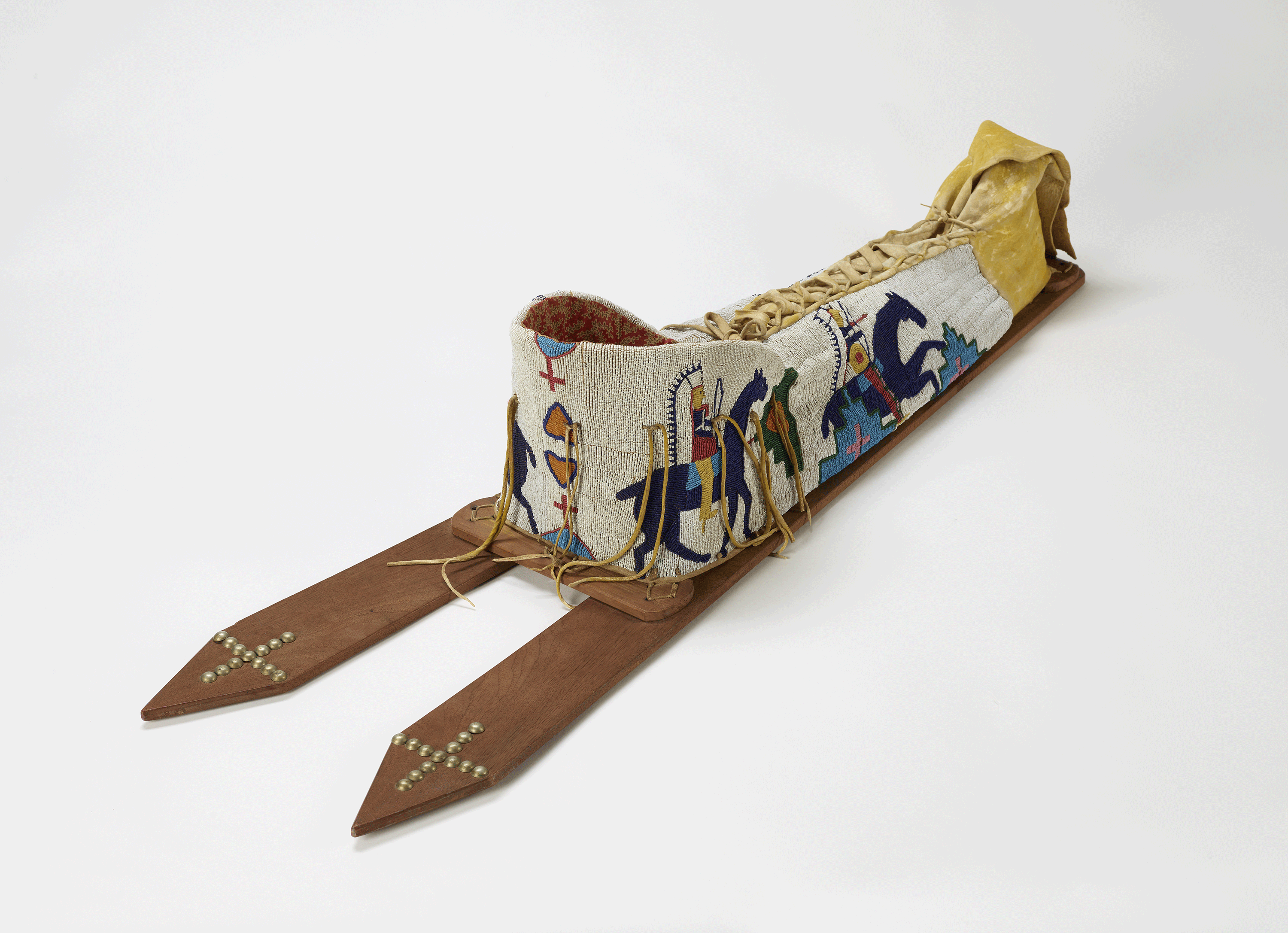
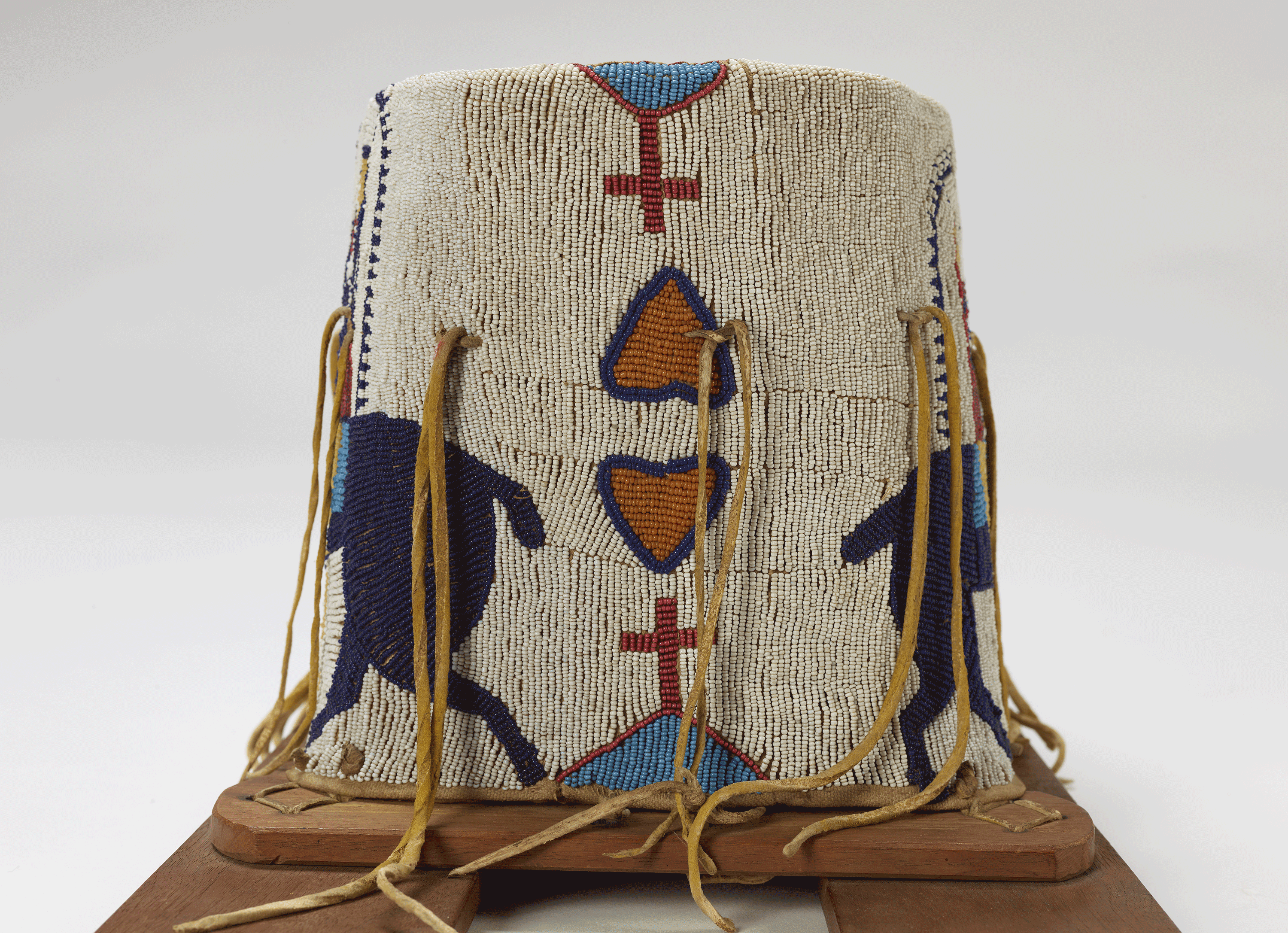
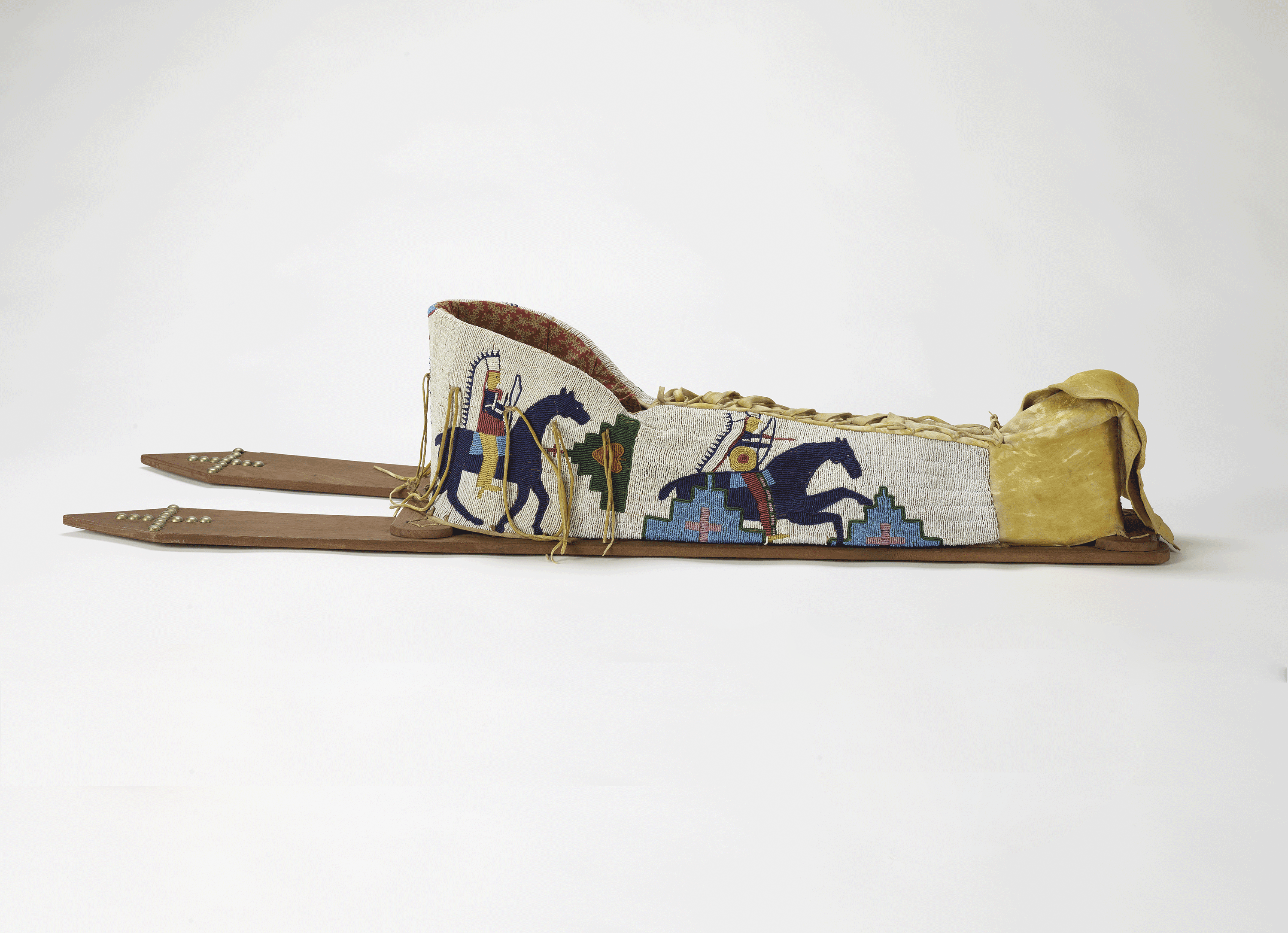
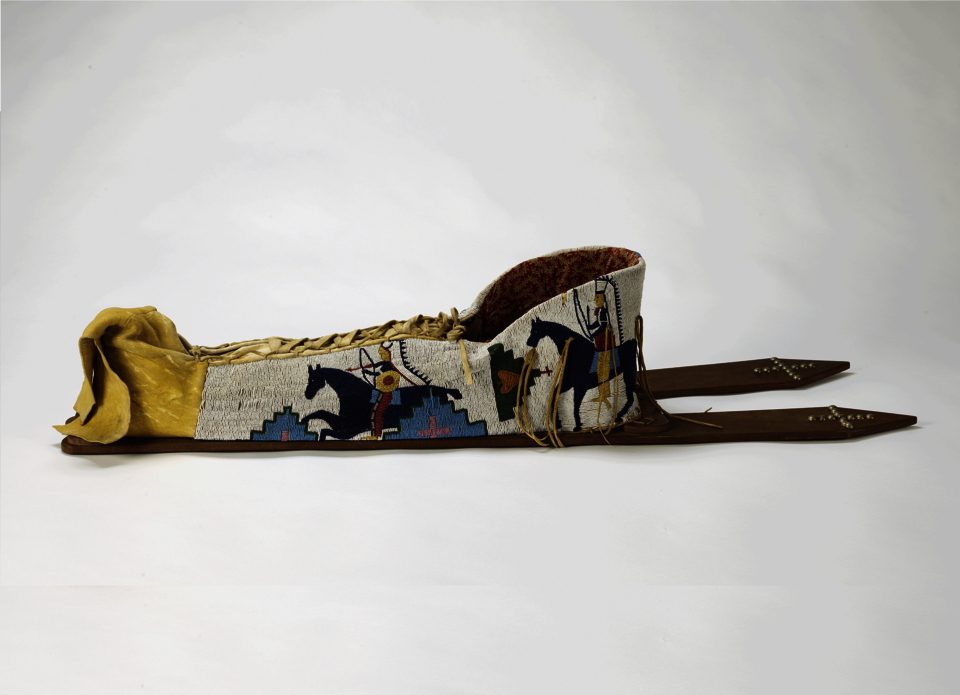
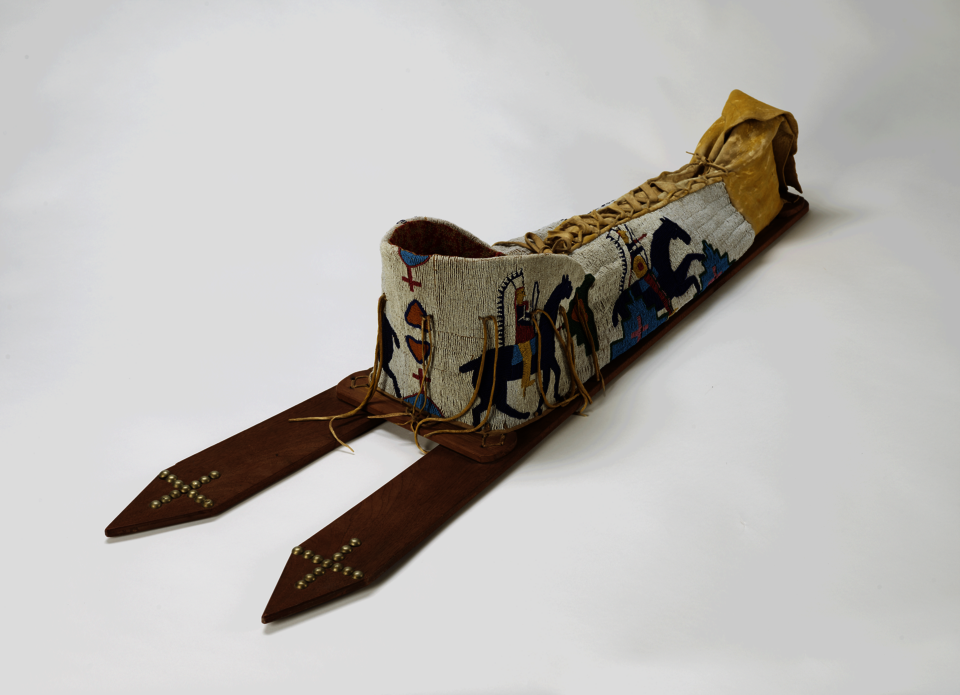
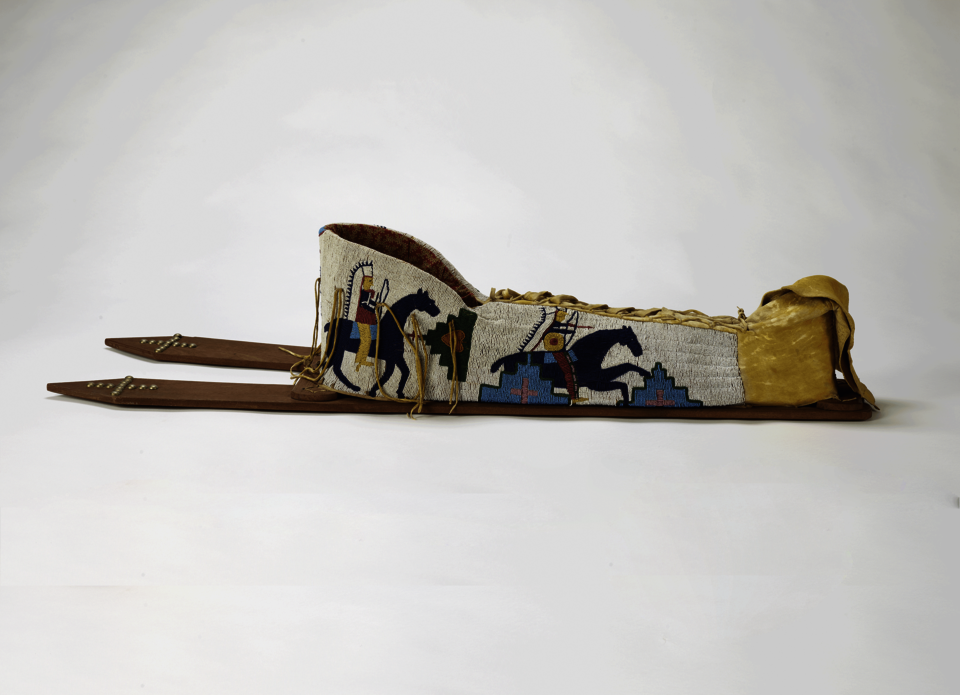
Ka’igwu (Kiowa) Cradleboard,
ca. 1900
Wood, leather, beadwork,
and brass tacks
Length: 111.1 cm. (43 3/4 in.)
Museum Works of Art Fund 44.610
Image
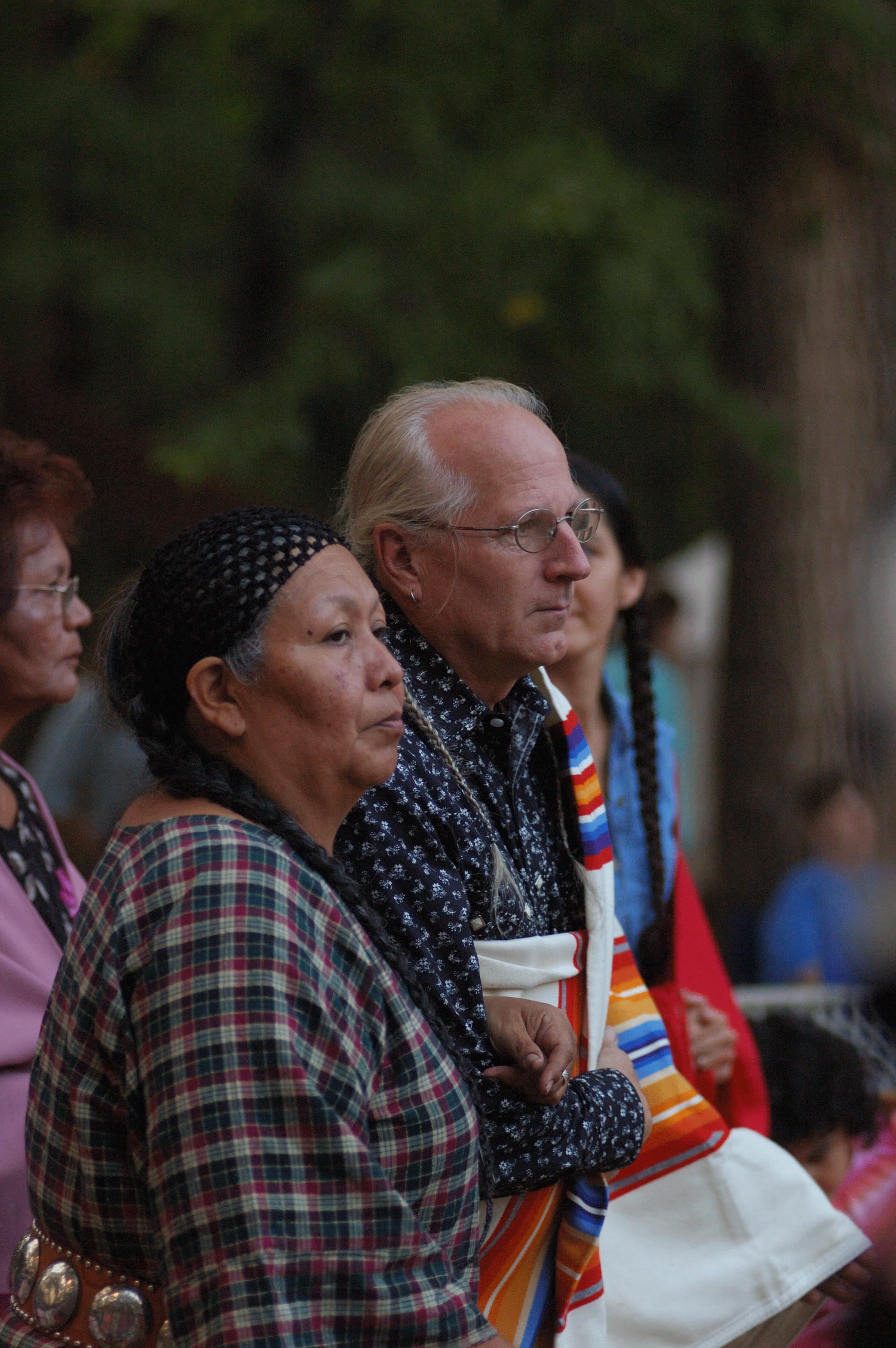
Vanessa and Carl Jennings.
Photo by Lester Harragarra
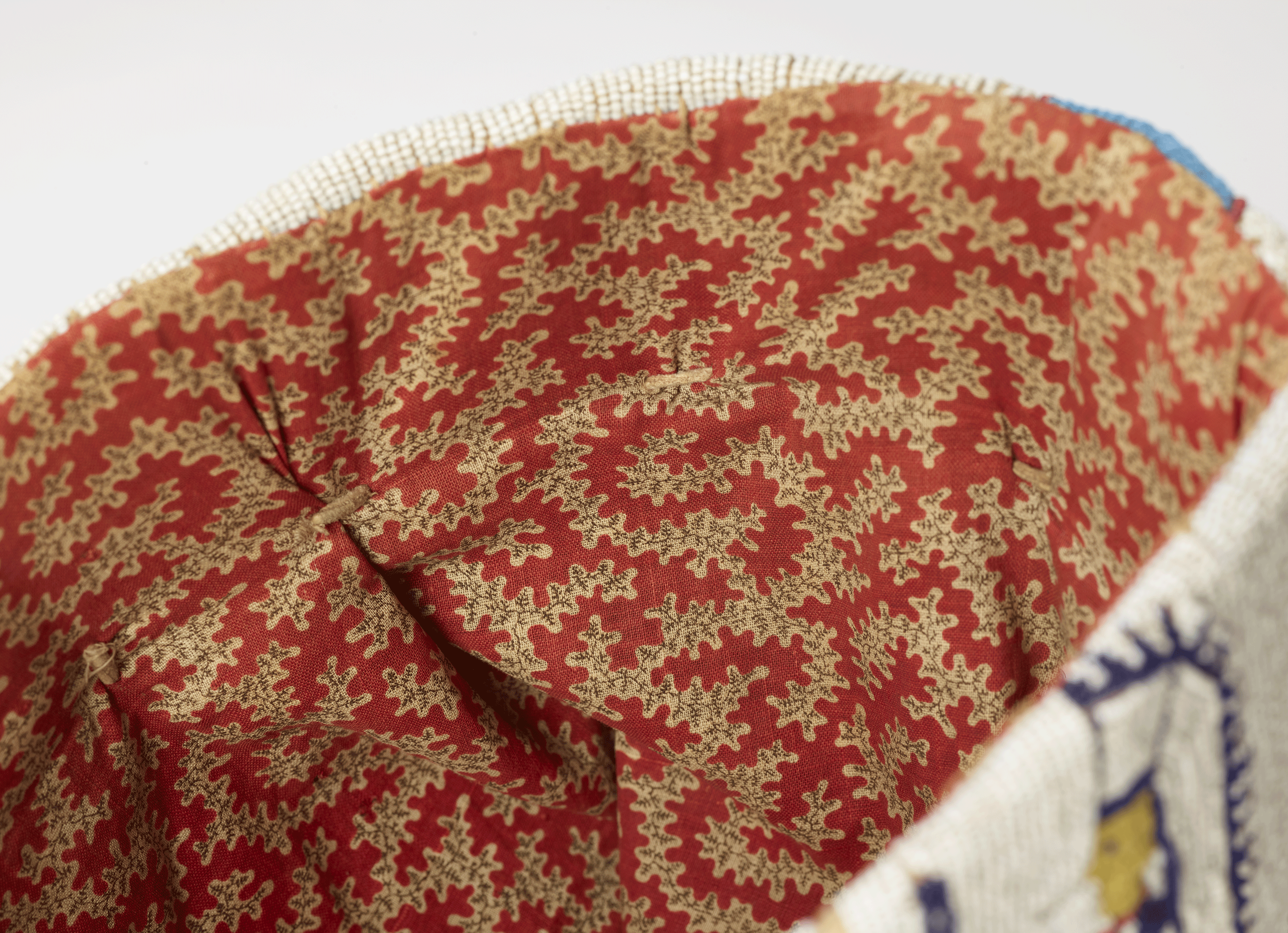
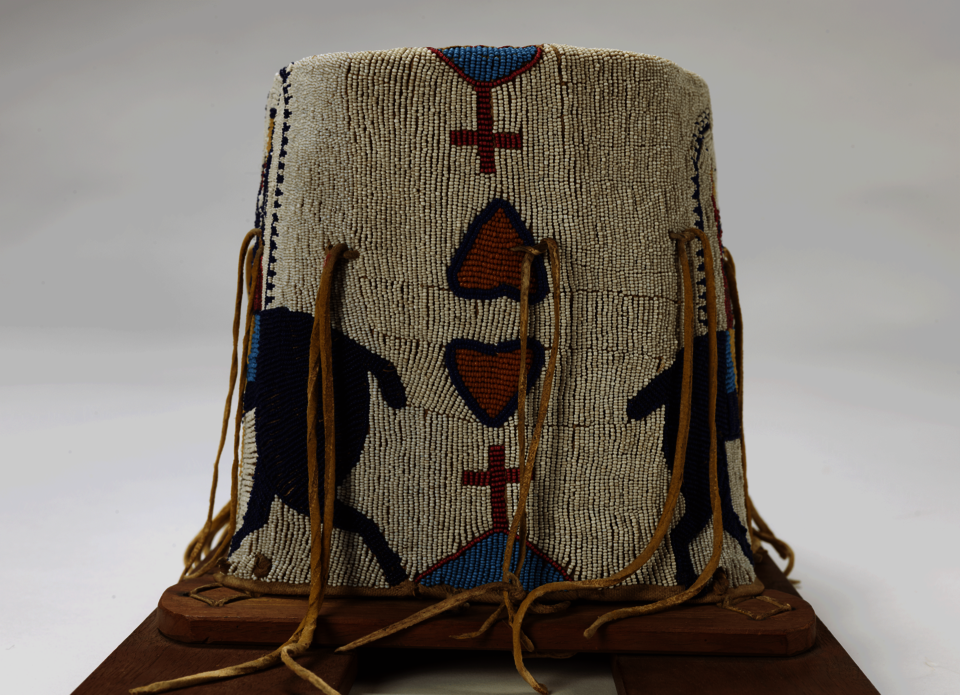
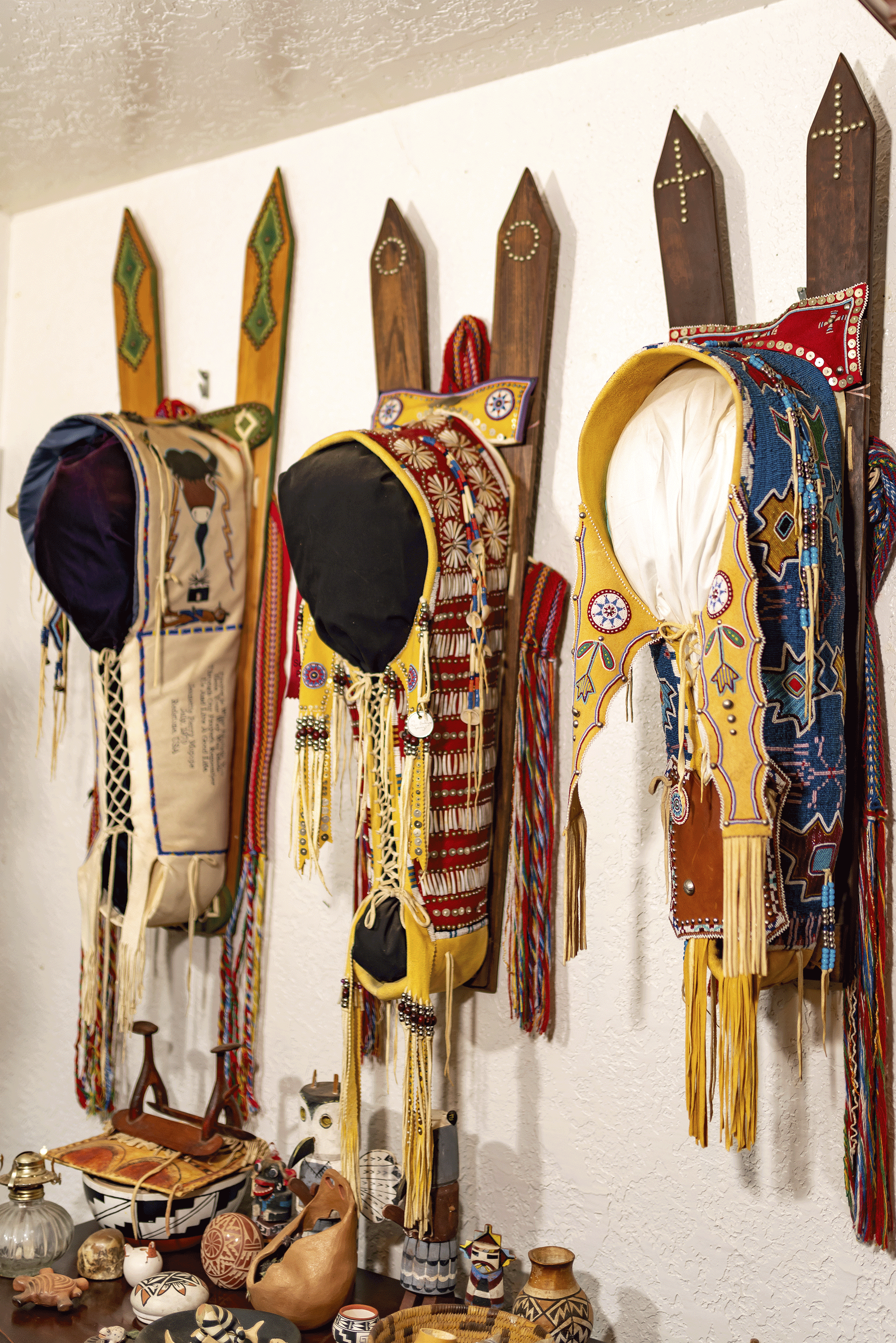
Carl: It looks to me like this is a cover that was taken off the boards after it was damaged and put on new boards. The hide under the cover, under the beadwork, is different than the hide that is visible. And the bottom piece that is sewed on at the beadwork line should be one piece of hide.
The beadwork should be about five inches longer. It looks short to me. So I’m supposing that the bottom part of the cradle was damaged with water or whatever, and they’ve cut it short and they’ve put this hide that’s normally a part of the beadwork hide. They patched it on. That piece of hide on the bottom that’s painted yellow and no beadwork on it is much longer than it would be normally.
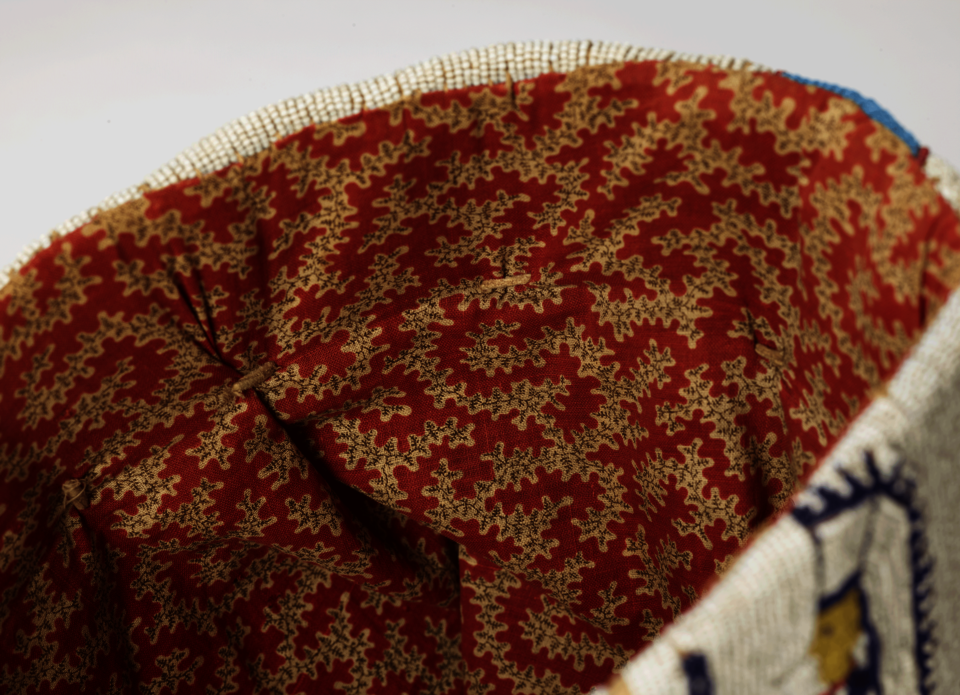
When it was sewn on, it was sewn on and then turn turned in, and there’s a fold in the hide that wouldn’t normally be there. Usually if you’re going to do a cover on canvas, you’ll sew a piece of hide on that and cover that seam. And they have not done that—cover the seam with beadwork. I’m saying it’s an older beadwork, and they’ve repaired it at some point. Of all the cradleboards I’ve seen, only three that have this kind of pictorial beadwork on it. Ninety-nine percent of them are of geometric designs and floral designs. This hide looks like it was fairly new in the early 1900s, but the hide under the beadwork is darker and, I would say, at least twenty years older than the repairs. Most cradleboards are much more detailed. Their designs aren’t this large. It’s just, this beadwork looks clunky to me. And the calico of that cotton also looks to me like it’s older than 1900.
I can’t see anything wrong with the boards. They’re Indian-made and bois d’arc will turn this color. It could be walnut, but I don’t think so. You can check the boards: if it’s a harder wood, it’s bois d’arc. Walnut is softer. Also, if you scratch somewhere on the back, the inside will still be yellow if it’s bois d’arc.
And the hide strings that it’s sewed to the board with—if they’re repurposed or repaired, they took the boards off the cradle. They’d take them off and store the beadwork, and then two, three, four years later, when they have a new baby, they’d make new boards and put it back on. So maybe that has to do with its construction. But definitely the beadwork to me is short.
And this construction of the hood, it’s not the way we make them, the way that she learned to make them. And the way that it looks like a baseball cap, kind of sticks out and has a definite curve to the body. I’ve seen them made like that. There’s nothing to say there that it’s older or even younger, but it’s not the way we make them. She’s got a cousin that makes small boards and they have this construction to them and I can’t say where he learned to do that. I don’t know. It’s interesting that in one family they’d make them different ways. But he had a misspent youth, and I think that had something to do with it.
Image
Image
Image
Photos by Lester Harragarra.
Vanessa: Can you tell we specialize in old gossip? But we are two independent human beings. We have different ideas. And I’ve always been smitten with this cradleboard. I’m a nosy, nosy old woman. Here in Oklahoma, down in the—don’t laugh—in the livestock building, they had this big powwow. They had these vendors set up, and everybody’s walking around looking. This non-Indian had a bunch of old photographs, and here was a picture of this cradleboard. It was so striking, I asked him, I said, “How much is this?” And he said, “Five dollars.” It was so beautiful. I could afford five dollars so I went ahead and bought it and I brought it home. I would pull this photo out and look at it, and I would wonder, “Who were you? Who were you?” I truly believe that there are spirits, and obviously that one wanted to be loved and appreciated, and nobody was looking at it. But I found it, and I brought it home.
I have no idea how this board ended up in Rhode Island, but to me the most powerful of all Kiowa art is the cradleboard. Oh—Carl has another question about something.
Carl: Hey, this is beaded on canvas, isn’t it? Okay, that’s what I thought. They had canvas in the 1850s as a trade item. It was expensive, and it got cheaper as time went along. So that doesn't really say anything about the age, because before the wars they had canvas, but that could speak to how it got damaged.
Also, it looks like the beadwork design at the top edge is folded in. So the original was perhaps bigger when they put it on new boards, and a new rawhide hide for the inside, that was made smaller, so the beadwork folded over. There’s nothing to say that the original didn’t fold over, too. I don’t know. But that’s something to look into. You might look under the red fabric on the inside where it’s sewed down. Look under that seam and see if there’s beadwork that they covered up. Anyway. Here’s Vanessa.
Vanessa: Before you hang up: Kiowas are adaptive. They see something and think, “Hey, you know that’ll make this or that.” And this is a good example. Back in the sixties, there was this woman, Winifred Paddlety. She made and entered a beaded cradleboard at the American Indian Exposition they have. They would give just a little blue ribbon for first prize—there was no money or anything like at Indian Market. But all these old ladies, they’re talking. And I got big ears, too, besides being nosy. I learned to listen a long time ago at my grandma's feet, picking up beads when she couldn’t get down on her hands and knees anymore. And you never waste beads when you accidentally drop them on the floor. So I’m down there on my knees, saying, “And then what?” And my grandma thumped me on the head. “You’re not supposed to be taking part over here. You’re supposed to be picking up the beads.” When you’re around adults, you can hear as long as you’re quiet.
Anyway, these women were scandalized that she had used velvet for her cradleboard, because at that time I think velvet was like seven dollars a yard, and they just couldn’t believe. “You know how expensive that is?” and “It’s so difficult to work with.” They were just going on and on, and she had the audacity to make a cradleboard with it. And now, years later, that cradleboard belongs to her great-grandson. But age will wear things away over the years. Like everything else.
Anyway. You ladies see, I’m full of stories. You should hear more stories about the power of women. But that’s for another time.
Image
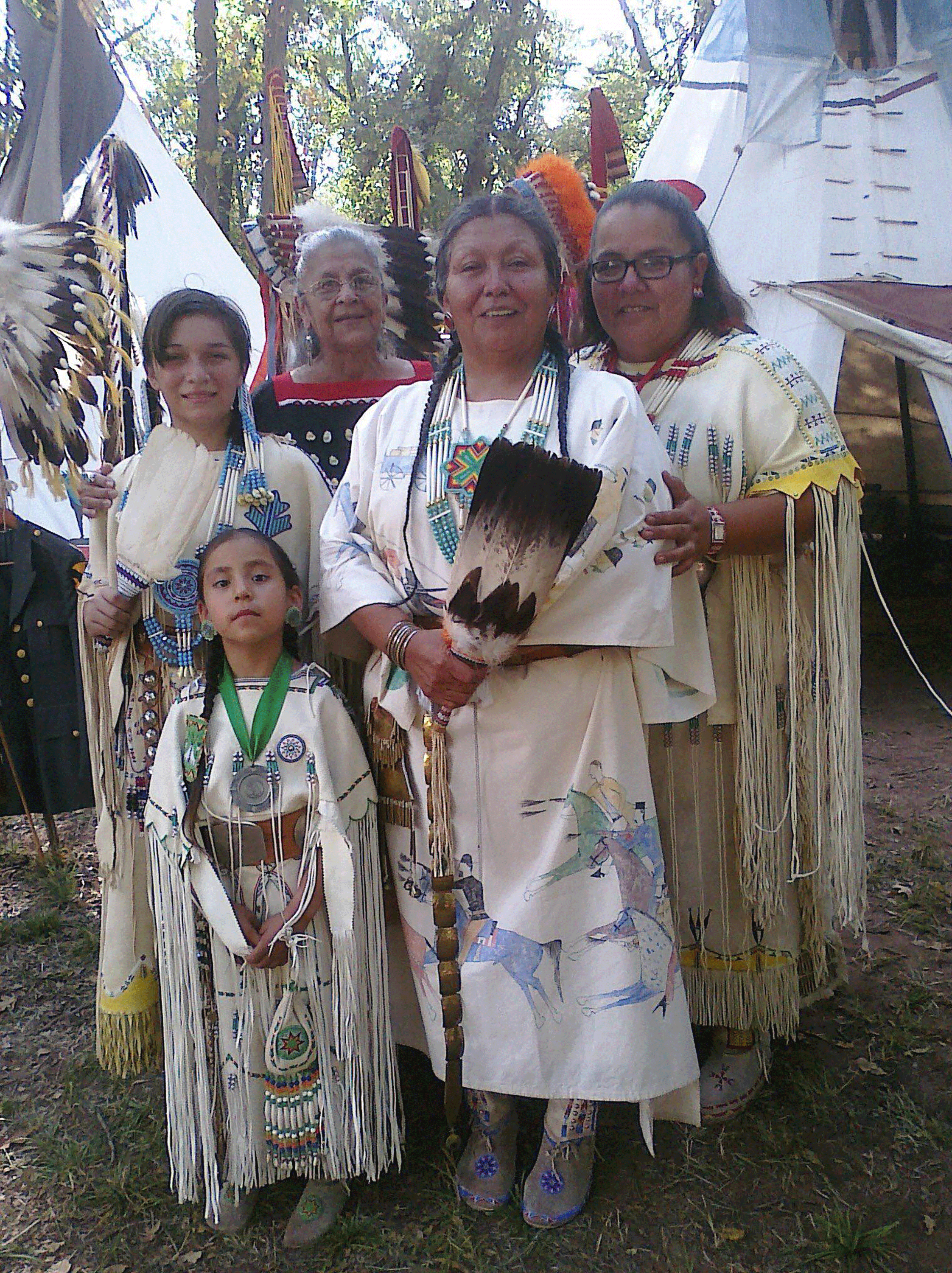
Vanessa Jennings (center) at her Black Leggings camp with (from left) her granddaughters, Elizabeth Morgan and Winter Morgan; her aunt, Donna Jean Mopope Tsatoke; and her daughter, Summer Morgan, ca. 2011.
Photo courtesy of Vanessa Jennings
- Maclura pomifera; also commonly known as the osage orange.
- Combat Aviation Brigade.
- Jennings’s grandfather, Stephen Mopope (1898–1974), was a musician, dancer, and member of a group of celebrated artists known as the Kiowa Six.
- Kiowa tribal members and the citizens of other Native nations would not become US citizens until 1924, with the Indian Citizenship Act
- Colonel James F. Randlett (1832–1915) served in the US Army beginning in the Civil War and later worked for the federal government as an Indian agent.
- Jennings’s grandmother was Nellie Jeanette Berry Mopope (1904–1970), a Plains Apache traditional artist.
- The Red River War of 1874–1875 was the last major conflict between the US Army and Southern Plains tribes. Kiowa, Southern Cheyenne, Arapaho, and Comanche leaders were imprisoned and tribal members were forcibly relocated to reservations.
Cite this article as
Chicago Style
MLA Style
Shareable Link
Copy this page's URL to your clipboard.