Image

Image

Postindustrial Playbook++
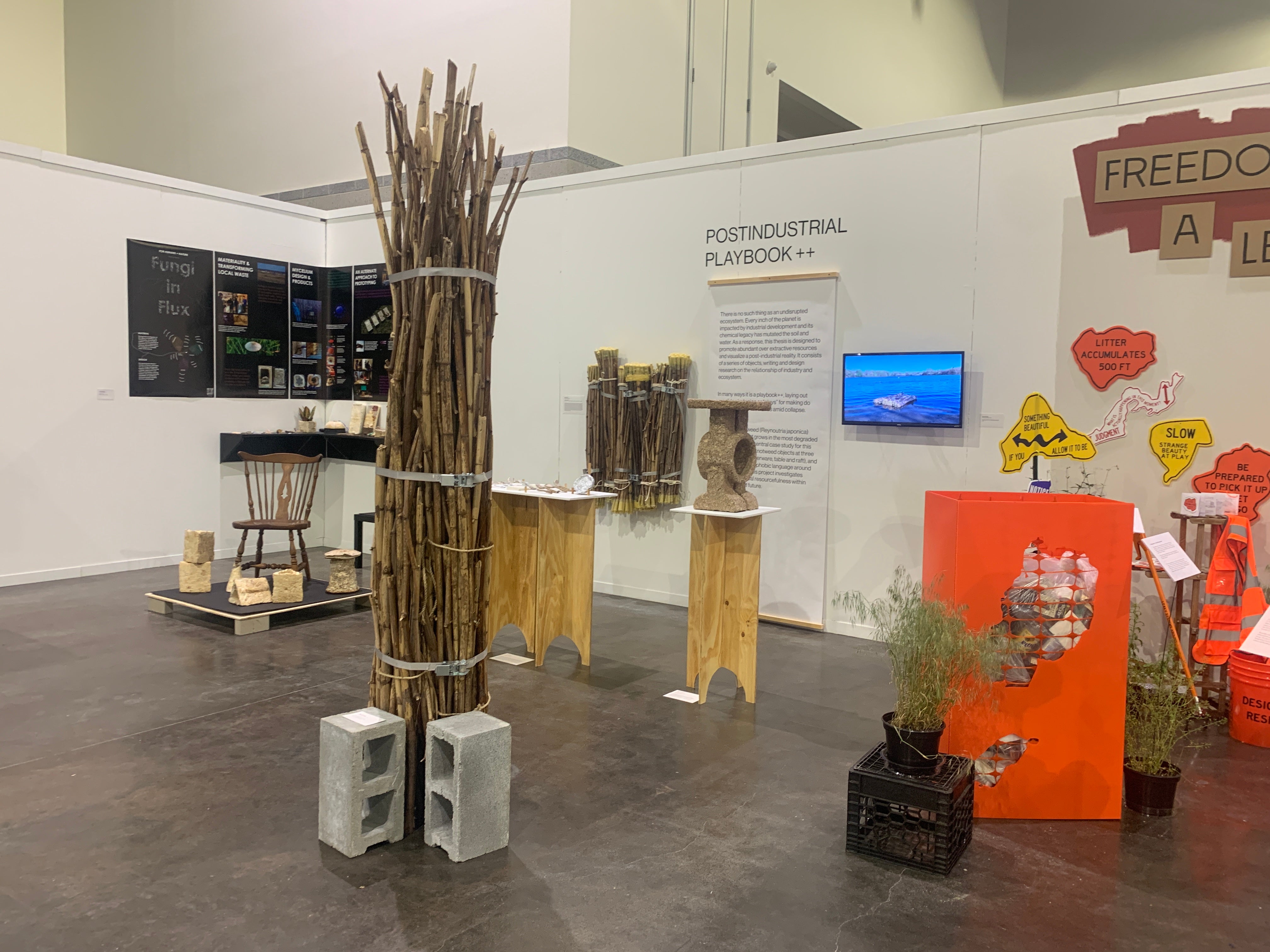
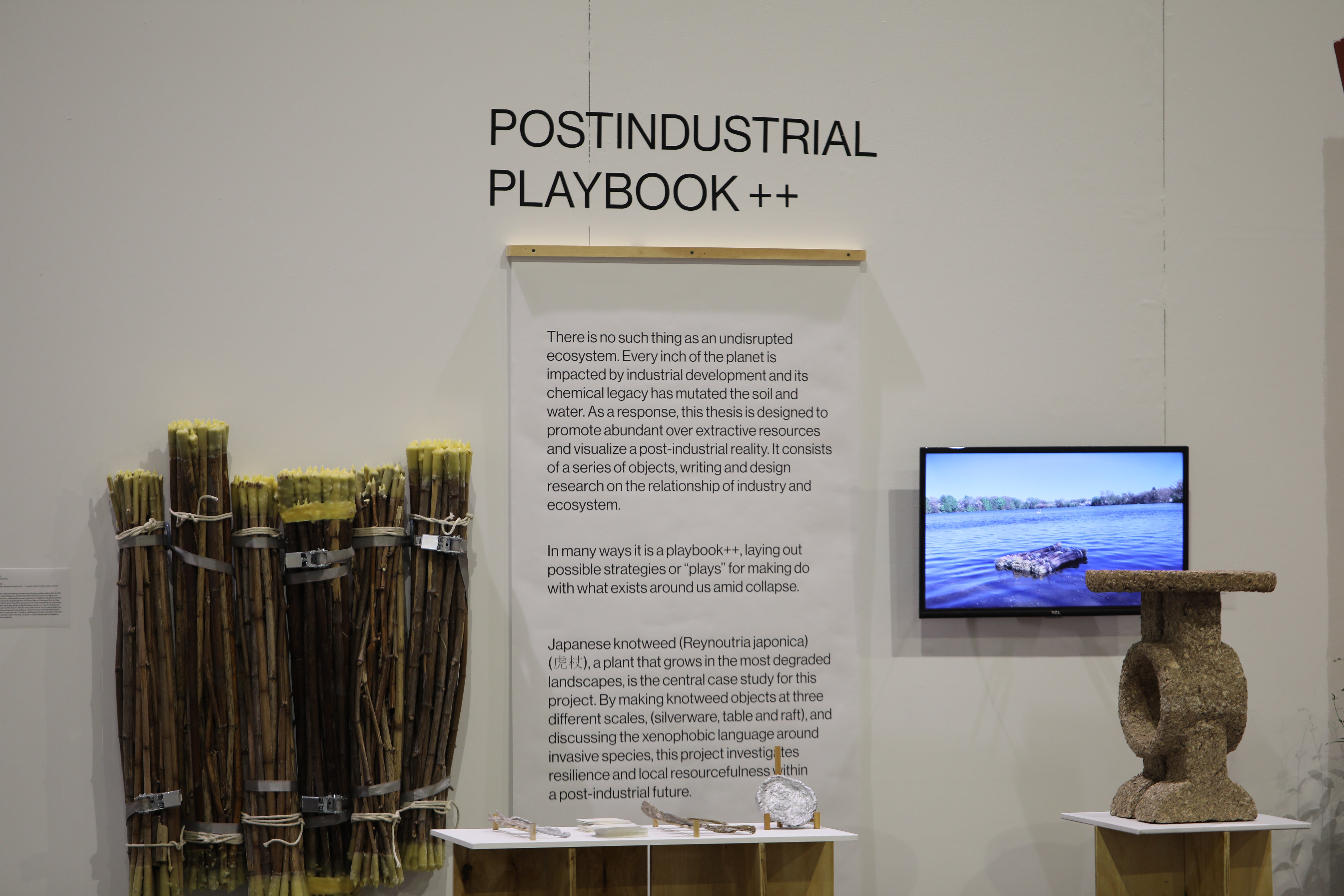
There is no such thing as an undisrupted ecosystem. Every inch of the planet is impacted by industrial development and its chemical legacy has mutated the soil and water. As a response, this thesis is designed to promote abundant over extractive resources and visualize a post-industrial reality. It consists of a series of objects, writing and design research on the relationship of industry and ecosystem. In many ways it is a playbook++, laying out possible strategies or “plays’’ for making do with what exists around us amid collapse. Japanese knotweed (Reynoutria japonica) (虎杖), a plant that grows in the most degraded landscapes, is the central case study for this project. By making knotweed objects at three different scales, (silverware, table and raft), and discussing the xenophobic language around invasive species, this project investigates resilience and local resourcefulness within a post-industrial future.
Image
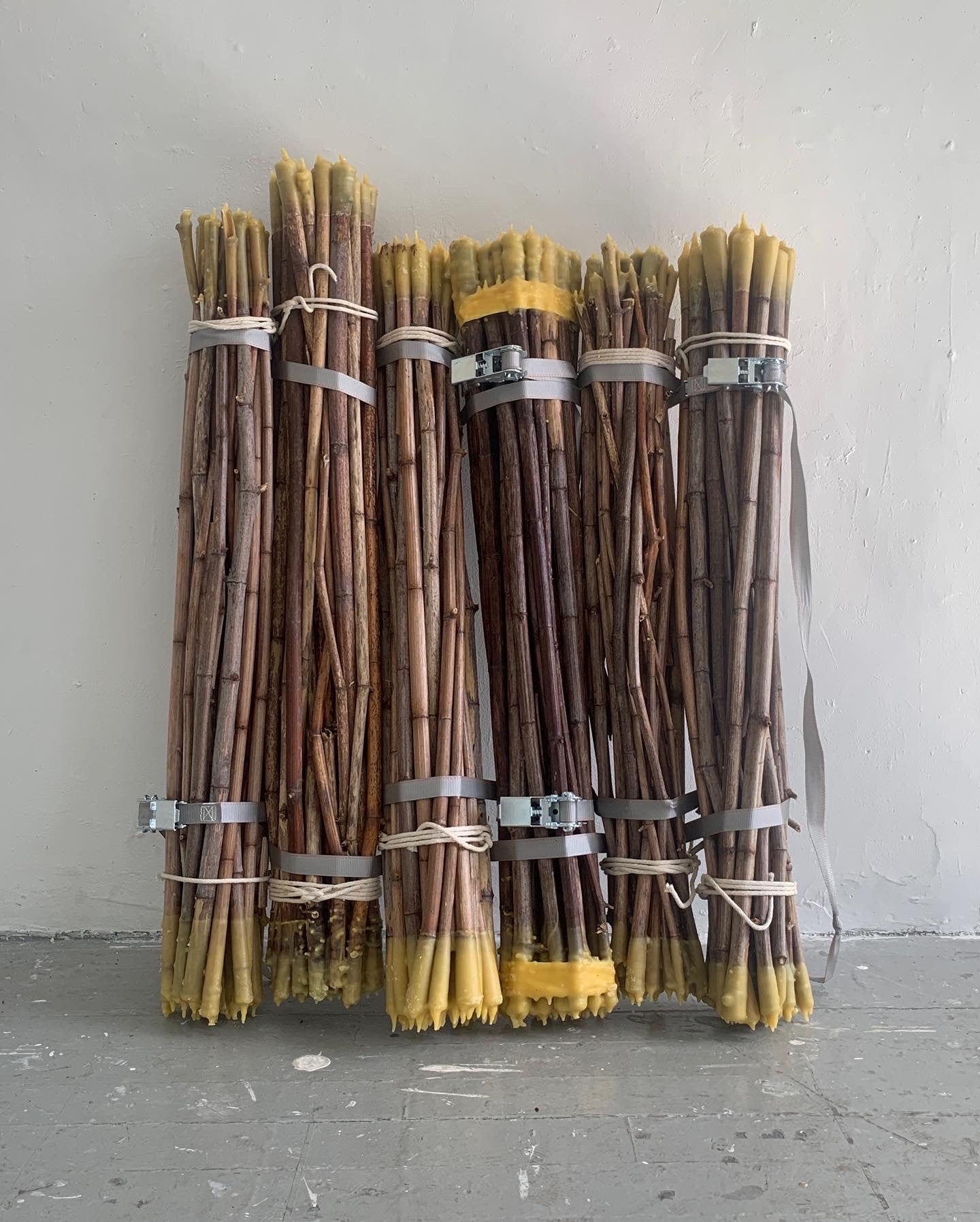
“Knotweed raft” (2023) knotweed bundles, ratchet straps, rope beeswax
A Contaminated landscape
This project does not pretend to be a solution but rather a highly contextual provocation to reframe our relationship to the post-industrial environment. At its core, is the disrupted Providence landscape and the ways nature and our minds have mutated accordingly. This thesis is not just about Japanese Knotweed but uses it as a window through which to discuss the entanglements of industry and ecology.
The ++ that is seen throughout, is a symbol of abundance and addition.
Floating Island
The first object, in collaboration with Augie Lehrecke (FD 14), Matt Muller (FD 14) Alexandra Ionescu (NCSS 21), Hope Leeson (Critic, NCSS), and Holly Ewald (UPP Arts) is a floating island made of knotweed bundles. Each bundle was harvested from either Mashapaug Pond, Morley Field in Pawtucket or East Side Train Tunnel Valley. At its roots, it is an Island made of invasive species in the middle of a polluted pond. Using the pollution of Gorham Silver on Mashapaug Pond as a case study, this raft will use their byproducts to instead regenerate the environment.
In essence, this product develops the bed for a floating wetland as a way of containing but also harnessing this abundant resource. It has a discursive function, referencing the introduction of invasive species and ornament, as well as bundles, subverting a symbol of fascism. It also has an ecological function of providing a bed for plants to grow and extract toxins that resulted from chemical waste. In this way, the goal is to craft a postindustrial cycle based on abundance rather than extraction.
Structuring repair
The second, Indeterminate Structures of Repair addresses the entanglement of human and nonhuman growth made tangible by invasive species. It also calls for the need to harness this relationship to develop reparative networks in humankind. Combining sculpture and research in design for the end of the world, these forms put forward a novel material from the local flora to provide agency to non-human nature.
Image
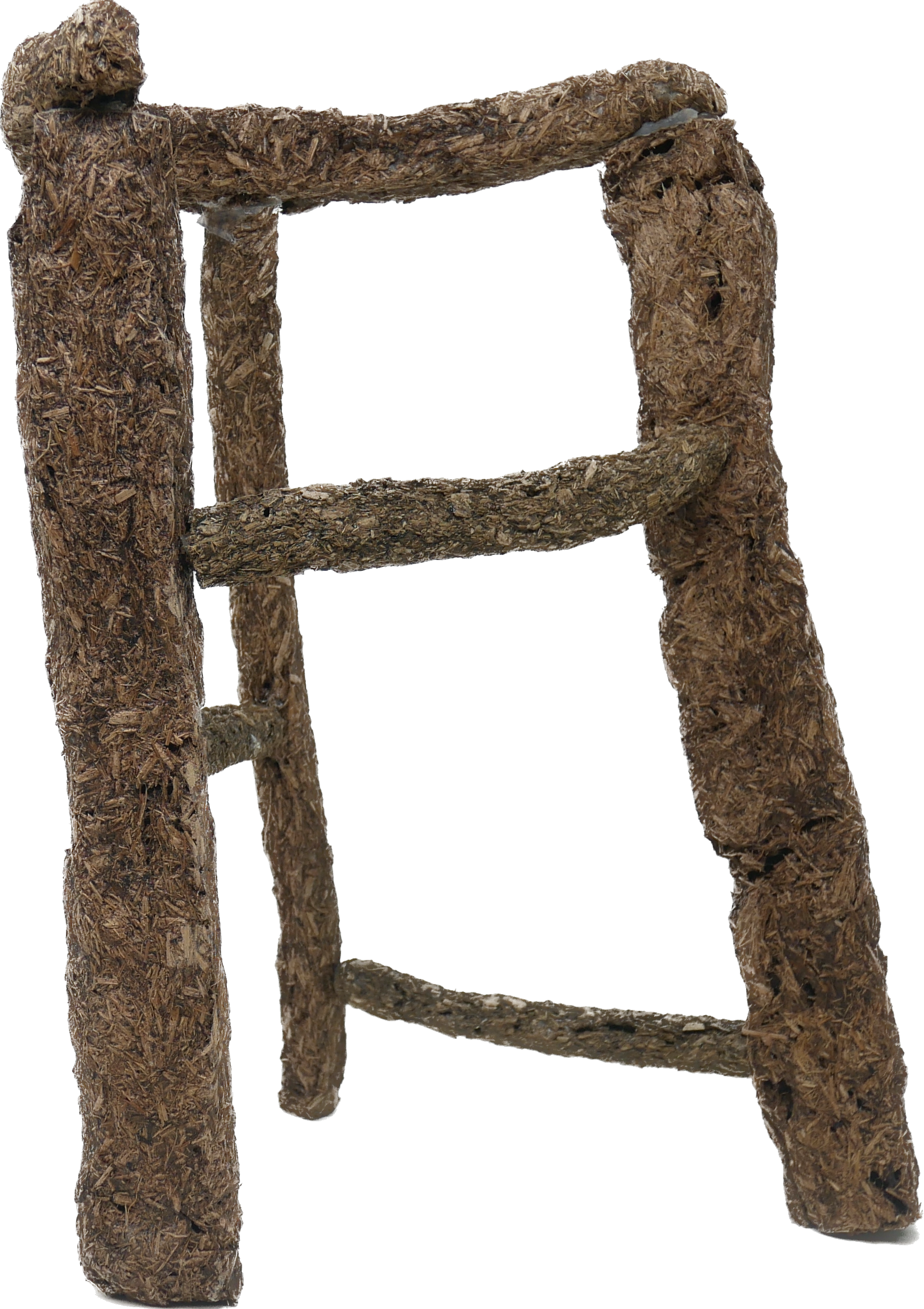
“Indeterminate structures of repair” (2022) knotweed pulp, sodium alginate
In order to make this recipe, you will first have to industrialize a whole region, introduce a species with no competition and wait for a century of mismanagement and collapse. Then, you will need to find and identify a significant patch of land that is occupied by Japanese knotweed, it won't be hard to find. The leaves are wide and flat and almost heart-shaped. They are almost never alone so once you find one, you will find many. The stems look similar to bamboo with clearly delineated nodes.
1. Harvest by carefully slicing the stem above the ground. Its rhizomes can extend almost 20 ft wide and 10 ft deep so one might want to avoid the task of full removal.
2. Next, slice the stems into manageable pieces and soak them overnight in water. The next day, you must drain the water and boil the stems for 3 hours with a few pinches of calcium carbonate to help it break down and enough water to cover the stems. Then, after draining the hot water, you must pulverize the stems with a hammer until they are flat and fibrous.
3. Finally, place the stems in a blender with some water as needed and blend to a fine pulp. You will then drain this water well to find their damp Japanese knotweed pulp. At this point, you can add gum arabica to make paper or add gum arabica and some sodium alginate to make a structural paste that can be molded or cast as desired. Using a dehydrator and or freeze dryer will vastly speed up the drying process too.
4. Assemble the parts as you wish using a mixture of knotweed powder and wooden sticks. These pieces will grow into each other with time.
Knotweed “silverware”
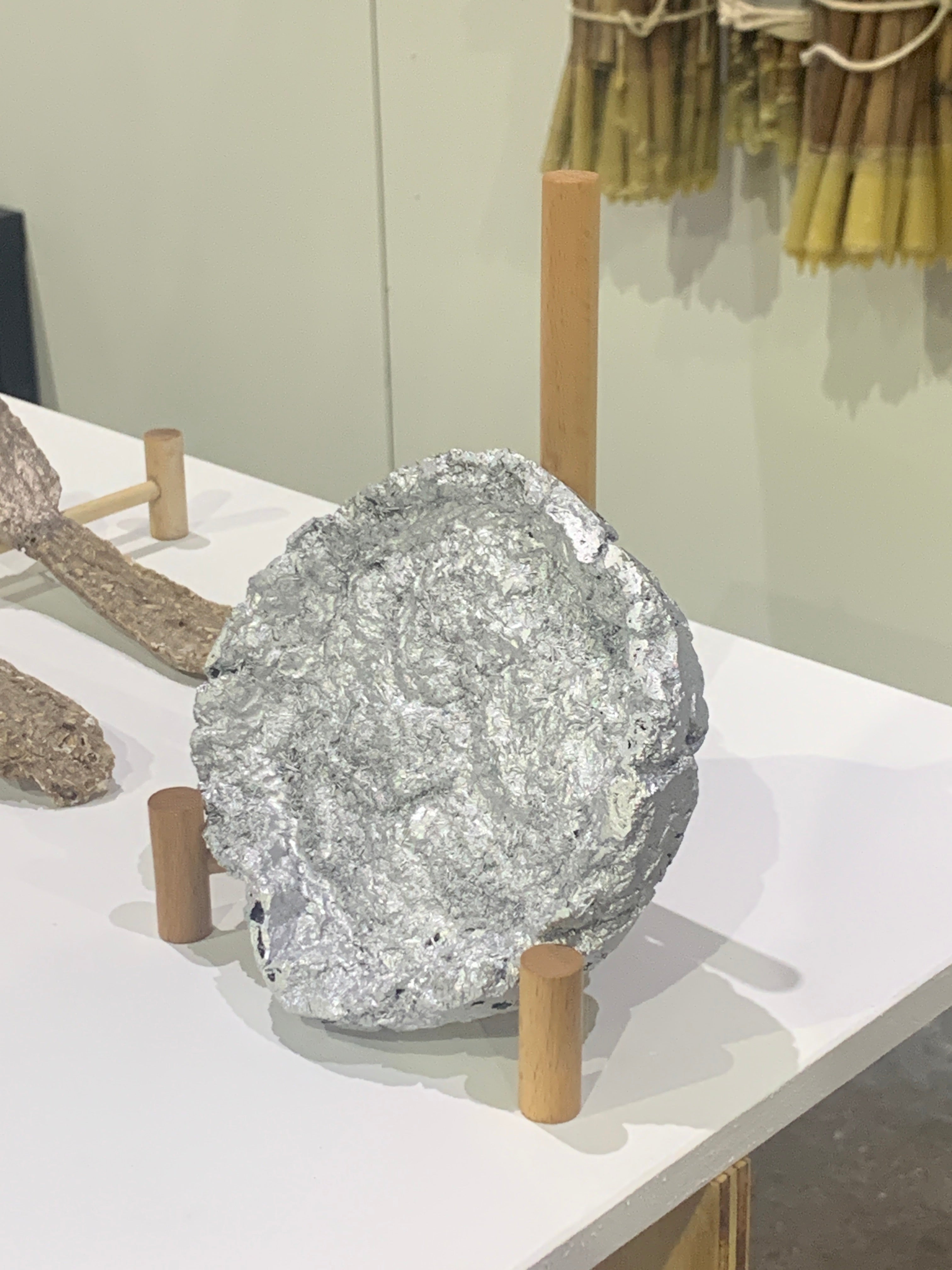
The third object, at the hands-on scale, deals directly with history and context. These act as a critique of Gorham Silver by casting “silverware” from knotweed powder and covering the ends with actual silver done using an electroplating method.
Image
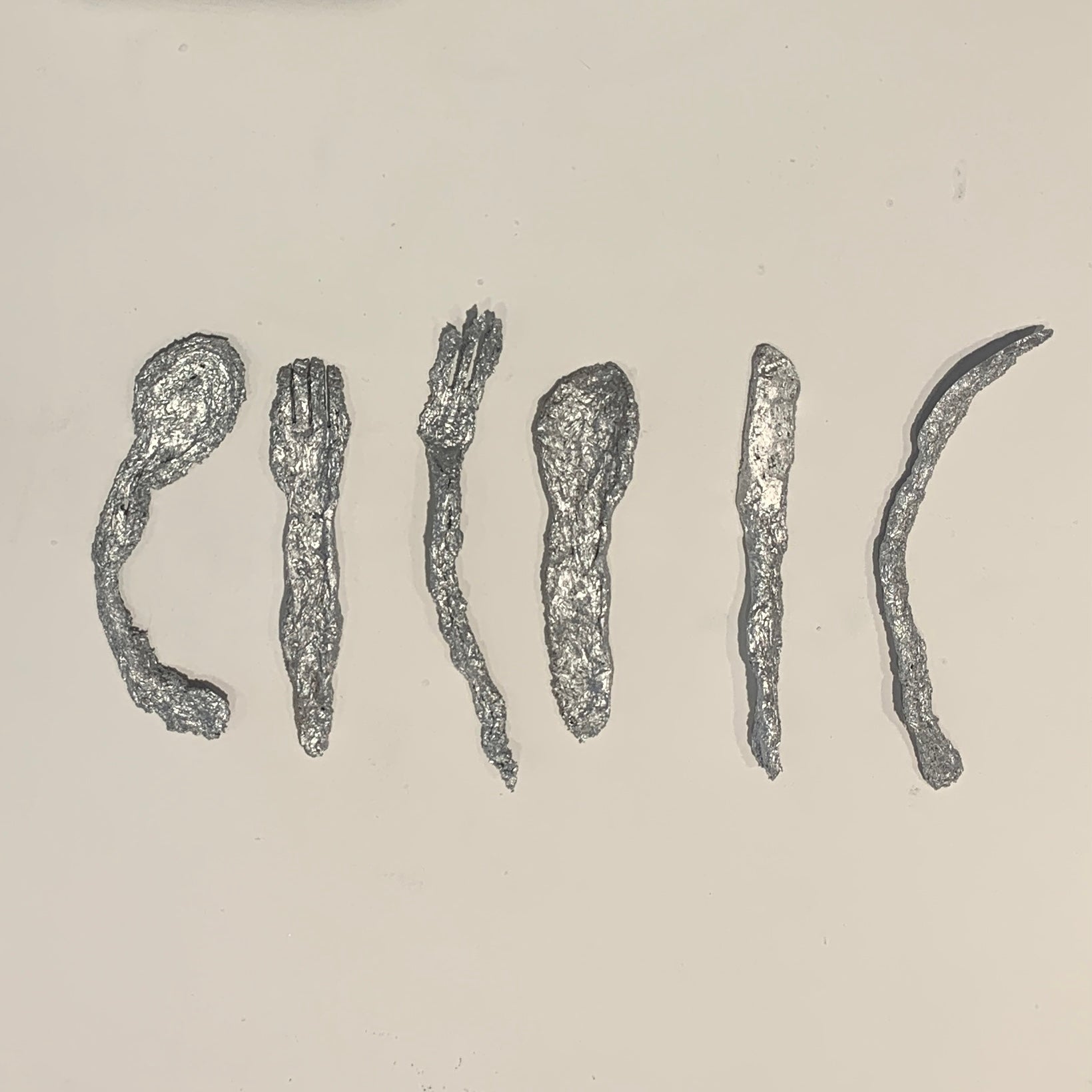
“Knotweed ‘silverware’ version 1” (2023) cast knotweed powder and electroplated with copper and silver
This cutlery is meant as a response to the environmental impacts of Gorham Manufacturing Company, nearly 50 years after they shut their doors. While producing fine silverware for the wealthiest families, locally and abroad, Gorham dumped toxic solvents and polishing agents into Mashapaug Pond Today this area, once fishable/swimmable, is completely overrun by invasive species and toxic algaes that thrive in these disrupted environments. As the ecosystem begins to recover, this project questions, how might we work with this “new wild” instead of trying to eradicate it? How might we use the tools of function to subvert the model of growth?
1000 Plants Side Table
In collaboration with Sam Aguirre (MFA FD 24), we created a small side table out of knotweed pulp mixed with paper and cotton pulp and cornstarch as a binder. Designed with inspiration coming from industrial, concrete infrastructure, this object embodies similar values to the Indeterminate Structures of Repair but with an added element of function. This table is made out of the organic post-industrial byproduct and degrades back into the earth once its usage is done.
Image
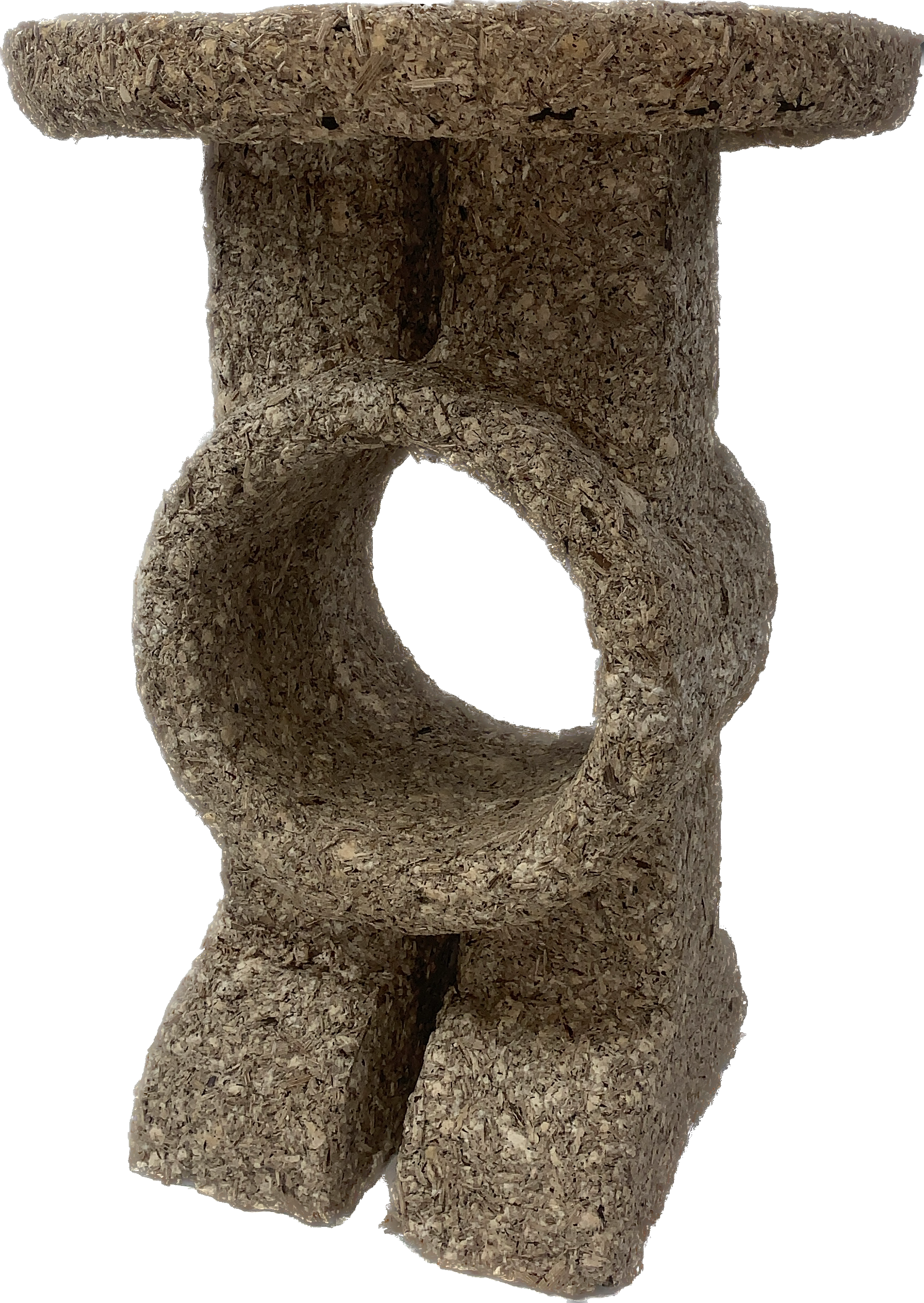
“1000 plants Side Table” (2023) made with Sam Aguirre (MFA FD24), knotweed pulp, paper pulp, cornstarch, cardboard
Local Histories
The context exists at the crossroads of two histories: the first is Providence, Rhode Island. Providence was once (1890-1900) home to five of the largest factories in the world. For tools (Brown & Sharpe), files (Nicholson File), steam engines (Corliss Steam Engine), screws (American Screw) and fine silver goods (Gorham Silver).
By 1950, many of these major manufacturers moved on and left much of their infrastructure and waste behind. Gorham Silver, for example, left an incredibly toxic legacy on the Rhode Island environment. Once the largest fine silver manufacturer in the world, Gorham was in every high society household in America, even the Lincoln White House. Today its former home on Mashapaug Pond is practically poisoned with heavy metals and dioxins left behind by the silver dynamo. Today it is currently undergoing an ongoing but endless bioremediation. Mashapaug Pond was once the winter village of the Narragansett peoples who have been continually displaced by these industries are then left with a poisoned body of water that is teeming with toxic algaes and will take years of healing and repair to make it swimmable or drinkable again. The soil around this pond, as well as every other formerly industrial site is also weakened, and full of toxins, unable to supply plants and animals the proper nutrients or immunity to thrive. Think about what happens when nothing else can survive in an environment, who can live in these conditions?
Image
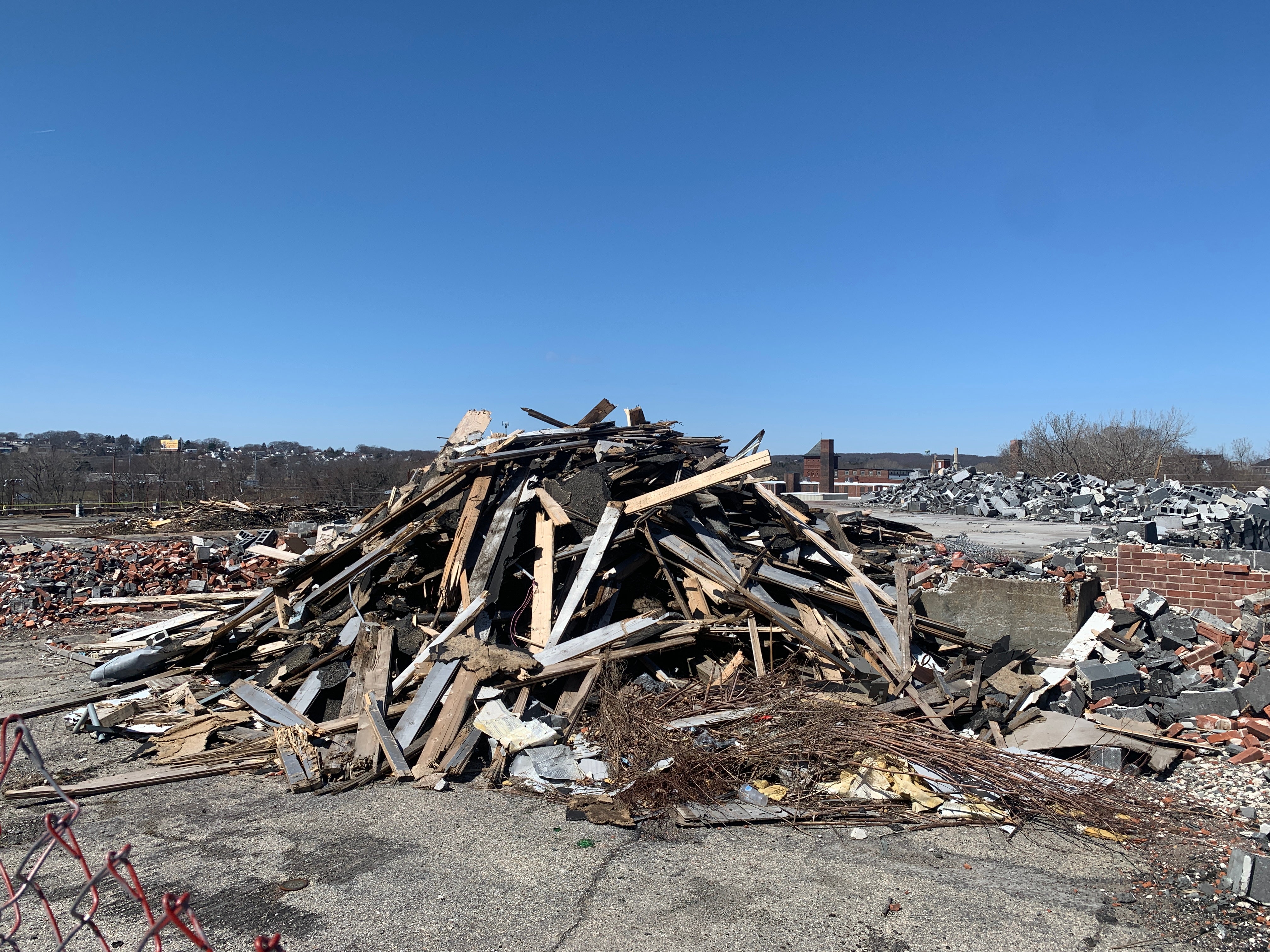
The industrial rubble at Morley Field, Pawtucket at the former site of the Microfibres factory. This area is filled with knotweed and construction materials. Credit: Maxwell Fertik