Brooke Dutton
MLA Landscape Architecture
Rooted Retreat
Although I’m a Landscape Architecture graduate student passionate about the built environment, at my core I am, and always will be, a gardener. Maintaining a garden, facilitating the growth of a plant from seed to seedling, and even the meditative processes of weeding or raking have gradually shaped my personal understanding of landscapes and the gardens we create within them. As somebody who has built my love of landscape through physical interactions with plants and soil, I believe it’s crucial to learn about landscape in this manner.
My thesis work highlights the significance of gardening as a tool for reassembling and reconnecting communities. Working collaboratively in the landscape can be a process of healing and reconciling with the places that connect us; the idea that somebody’s spirit and story can live on through their garden is critical to my work, and I strive to explore how this idea can be translated into this thesis as a means of preserving community and connection.
My thesis imagines a new process of managed retreat that integrates gardening and community land stewardship to foster a generational connection to a landscape that outlasts the ability to live there. I have developed a gardening and land stewardship system that can be referenced by communities at various stages of retreat interested in maintaining connections with one another and the landscape they’re retreating from. I hope this work inspires other designers to consider gardening as a method for strengthening communities in the face of climate change.
Image
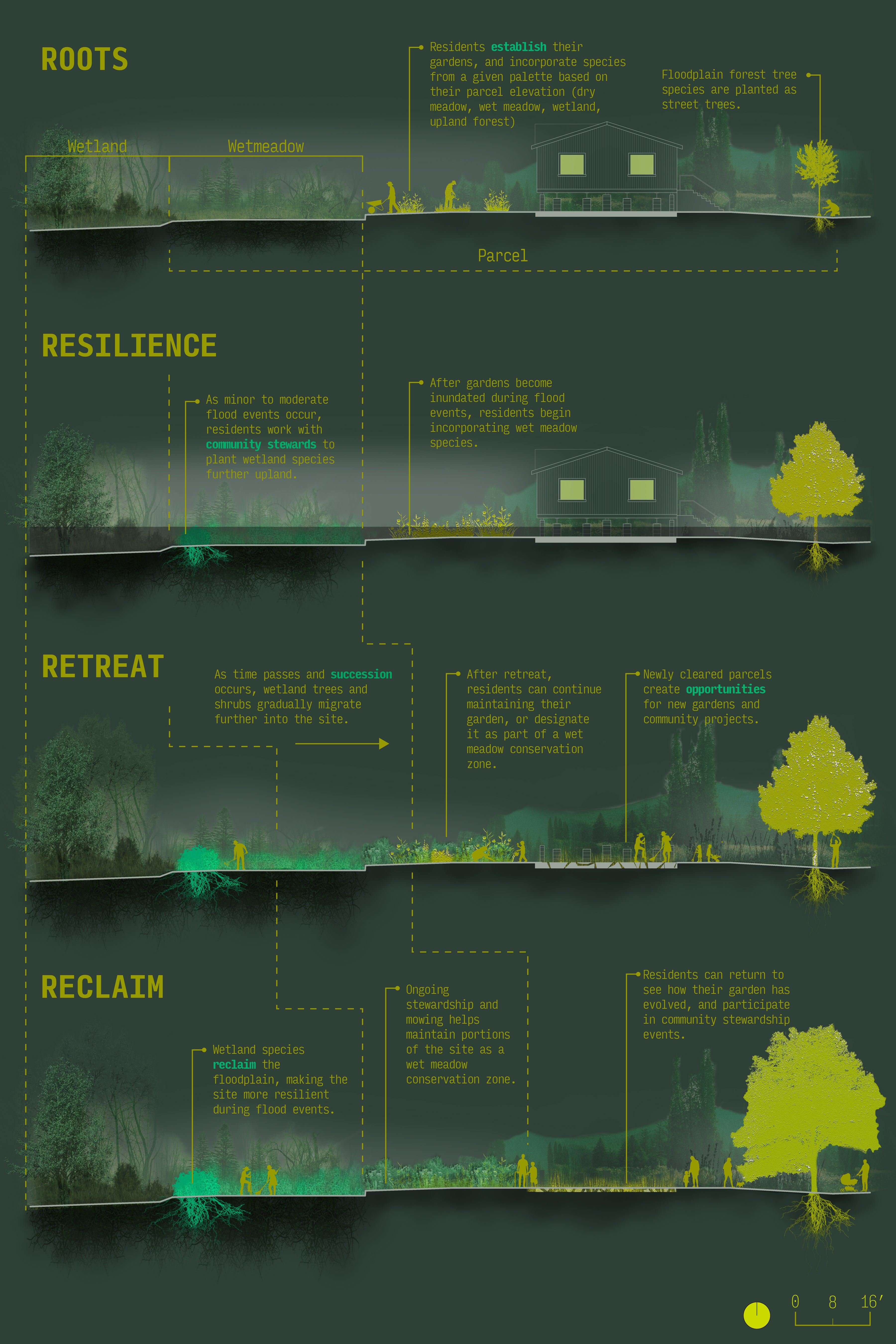
Principles of Rooted Retreat
A series of sections showing how a community will engage with the landscape throughout the process of retreat.
Image
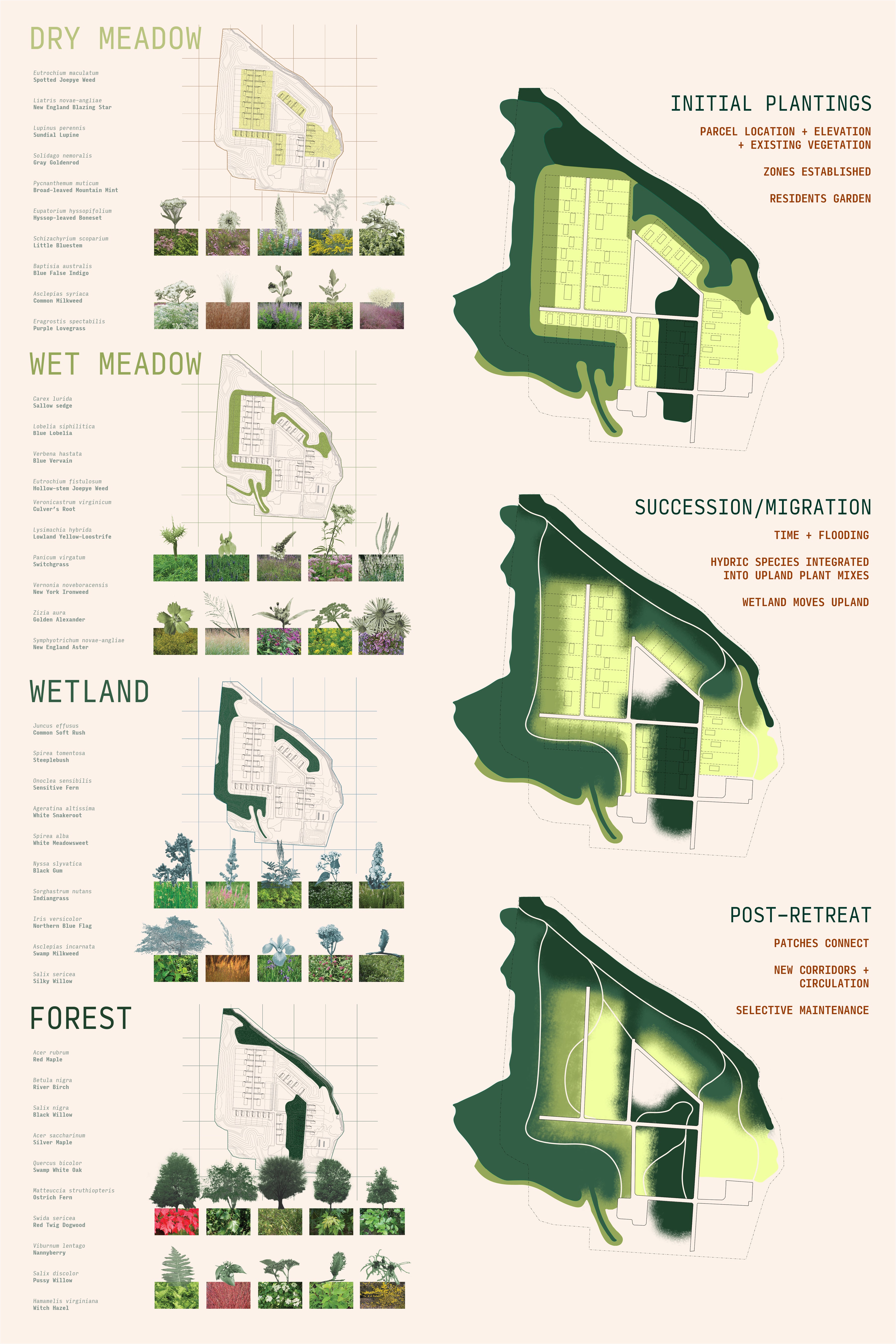
Rooted Retreat Planting Strategies
This diagram shows where on the site different plant communities are located, and how they merge and migrate over time. Four different palettes were created, including dry meadow, wet meadow, wetland, and floodplain forest. As the site gradually returns to a wetland during and after the retreat process, the growth of wetland and wet meadow species will shift upwards, with the help of ongoing community stewardship.
Image
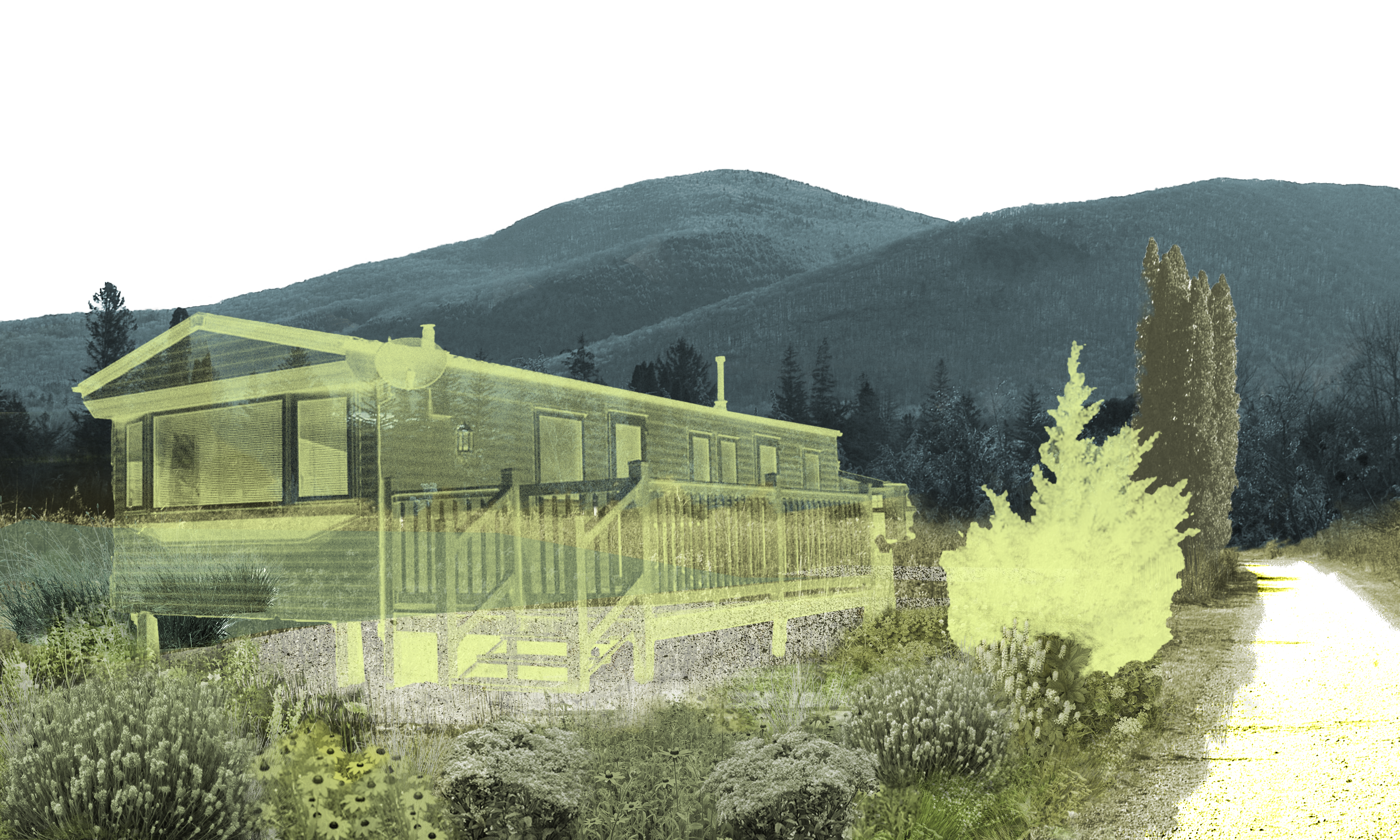
Growth & Disappearance
This is an image I created as part of a model illustrating the gradual transition of an individual garden over time, as it slowly becomes overgrown with a wet meadow planting.
Image
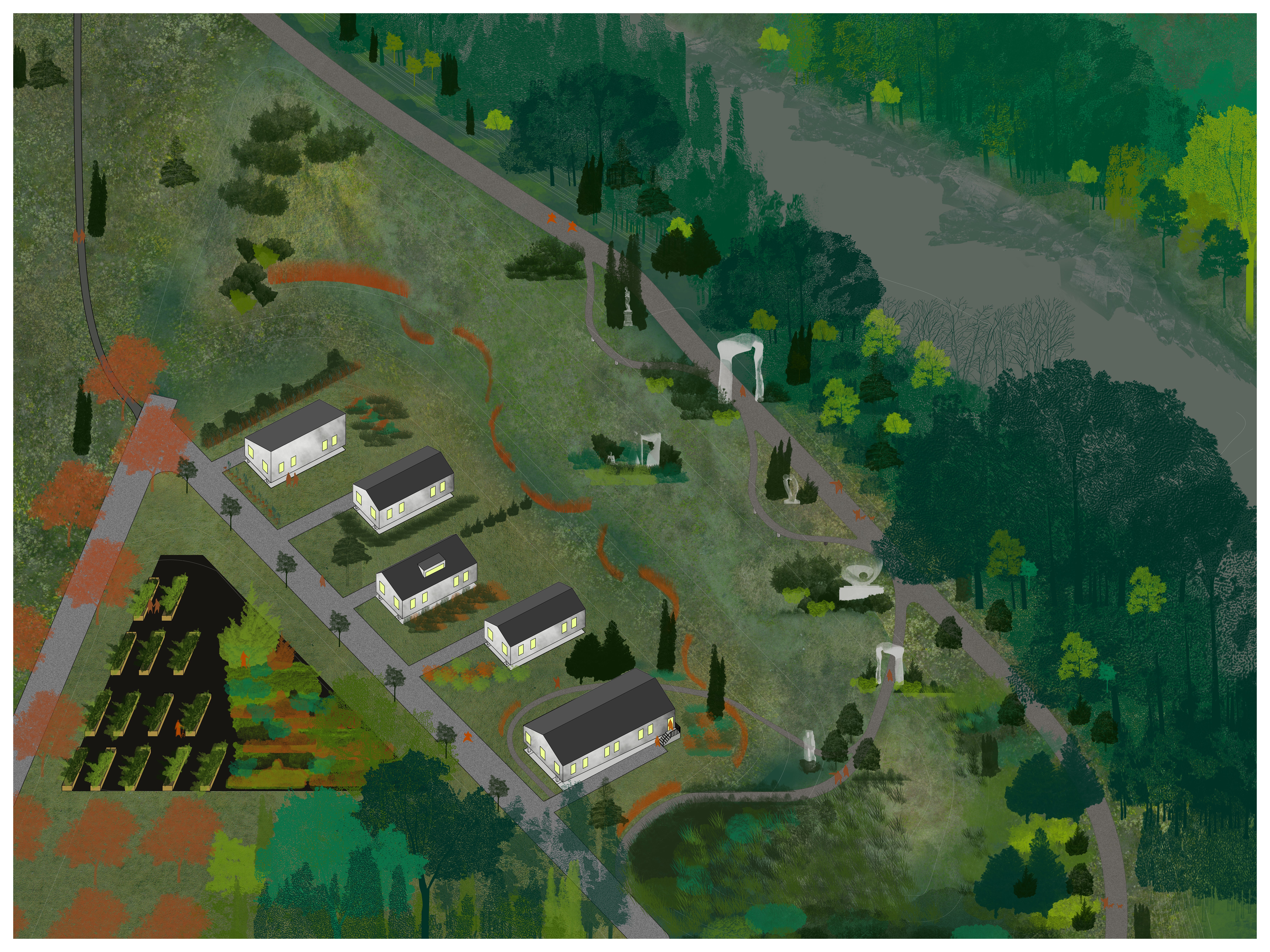
Trail of Sculptures
This image shows a portion of my thesis site design that engages the local artist community of North Adams, Massachusetts, through temporary artist housing and a sculpture trail. The sculpture is meant to serve as a datum for observing the landscape's growth and change over time.
Image
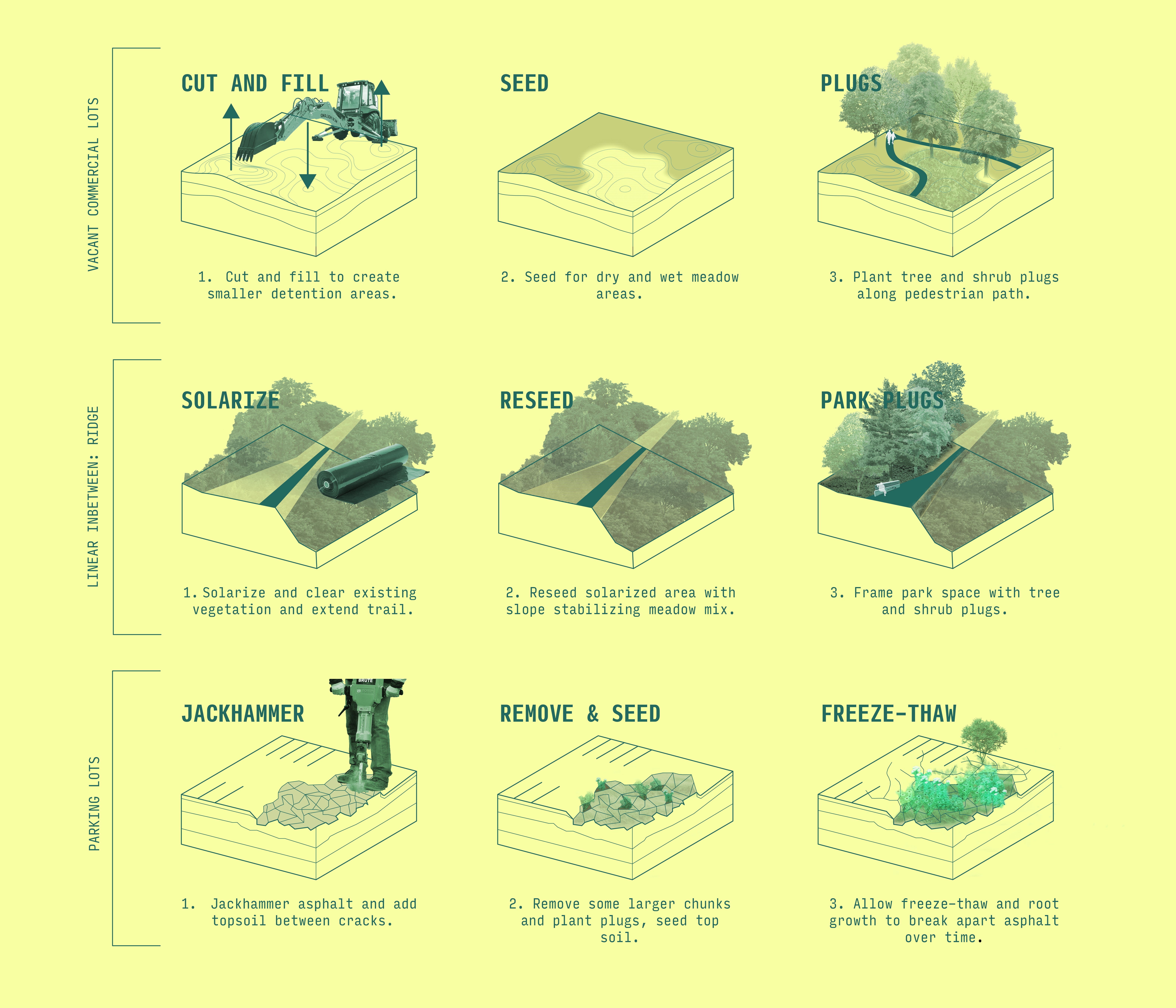
The New Niche
Planting strategies for uprooting the asphalt of the Woonasquatucket River Valley and creating new niche ecologies in vacant industrial parcels along the Route 6-10 corridor.
Image
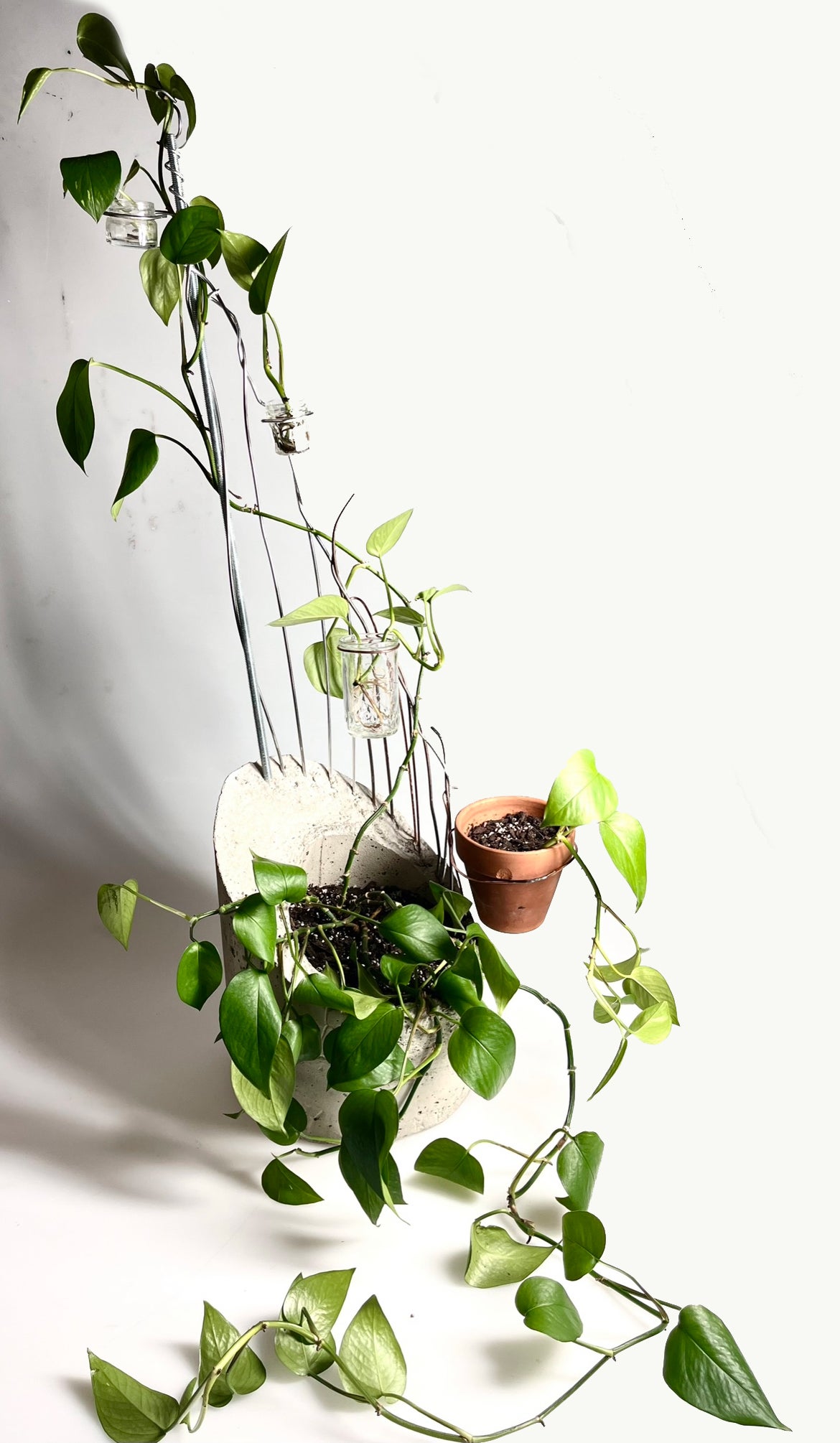
Motherpot
A concrete planter celebrating the growth of a plant, from baby propagation to motherplant. Created for [RE]Purpose, an ID Wintersession 2024 studio.
Image

Rhode Island School of Design
20 Washington Place
Providence, RI 02913–2784
United States of America
+1 401 454 6100
+1 800 364 RISD
QUICK LINKS
risd.edu
Graduate Studies


Image
Rhode Island School of Design
20 Washington Place
Providence, RI 02913–2784
United States of America
+1 401 454 6100
+1 800 364 RISD