Brooke McLaughlin
MArch Architecture
Ordinary Acts of Common
The rhythms of domestic life are largely hidden behind walls and closed doors, rendering everyday acts of care invisible. Further, the ability to have a home to invite others into and to know one’s neighbors has become a privilege, which produces a challenge in how we live together. Ordinary Acts of Common reframes this narrative, drawing attention to everyday routine visible as public care.
By situating itself in Roxbury, Massachusetts, opportunities emerge to recognize shared humanity through the inhabitation and maintenance of programmed public rooms. Without walls to privatize care, the rhythms of resting, cooking, living, and caring become legible as collective practices. Seeking to delight in ordinary acts in this Boston neighborhood, domestic spaces and routines become instruments of civic life, where architecture is not the boundary of invisible and inaccessible care but rather the signifier of commonality within an urban context.
Image
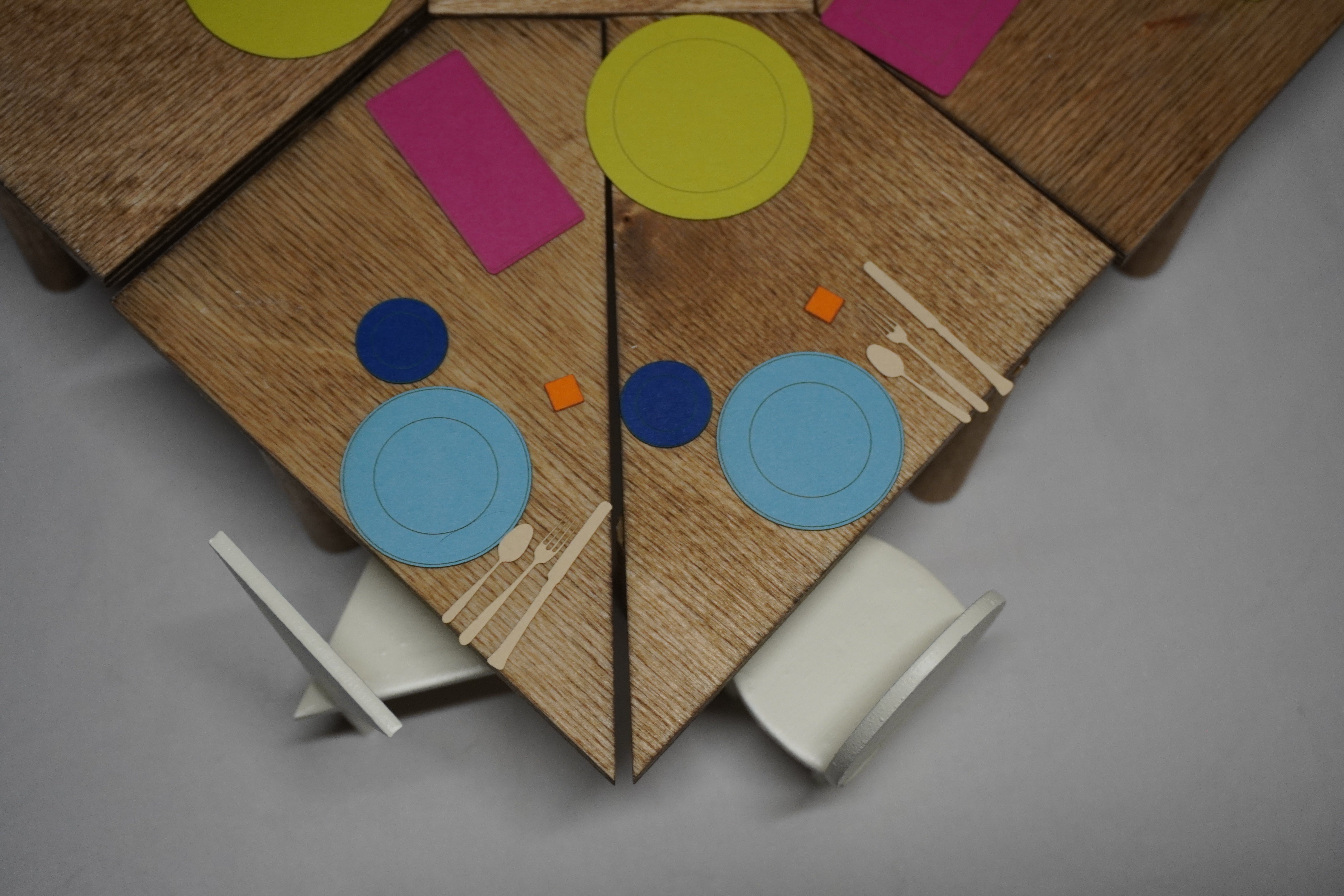
Centerpiece
Eight tables which only stand when every piece is plugged into the centerpiece. In the game, the host meticulously programs various settings first done as a collective, then done in pairs, then individually, but always done together.
Image
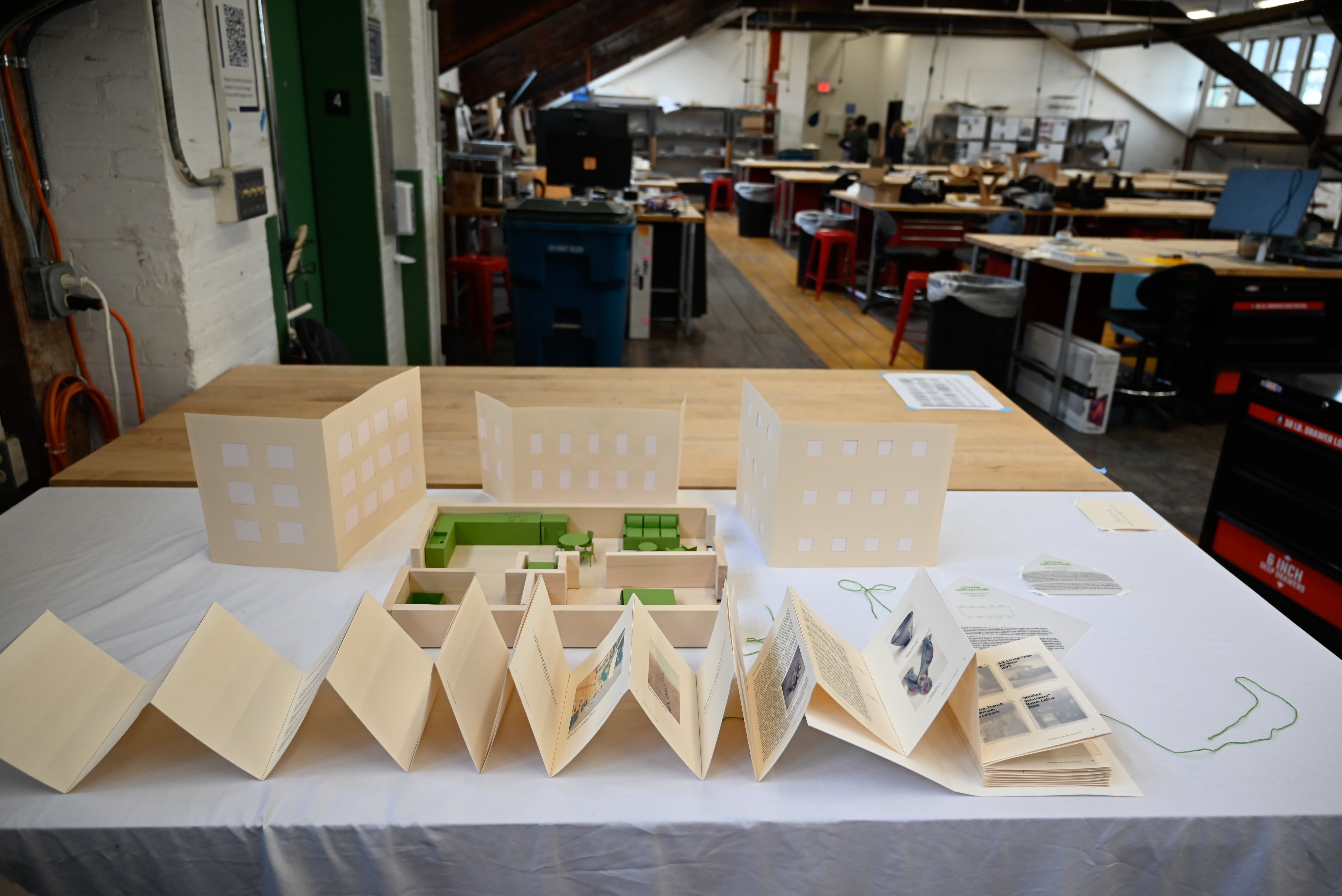
House with Wall-less Walls
If a wall is defined as a vertical structure which encloses, divides, and lends itself to privacy, what would it mean if a house were designed where walls lose their wall attributes and no longer obstruct access or visibility?
Image
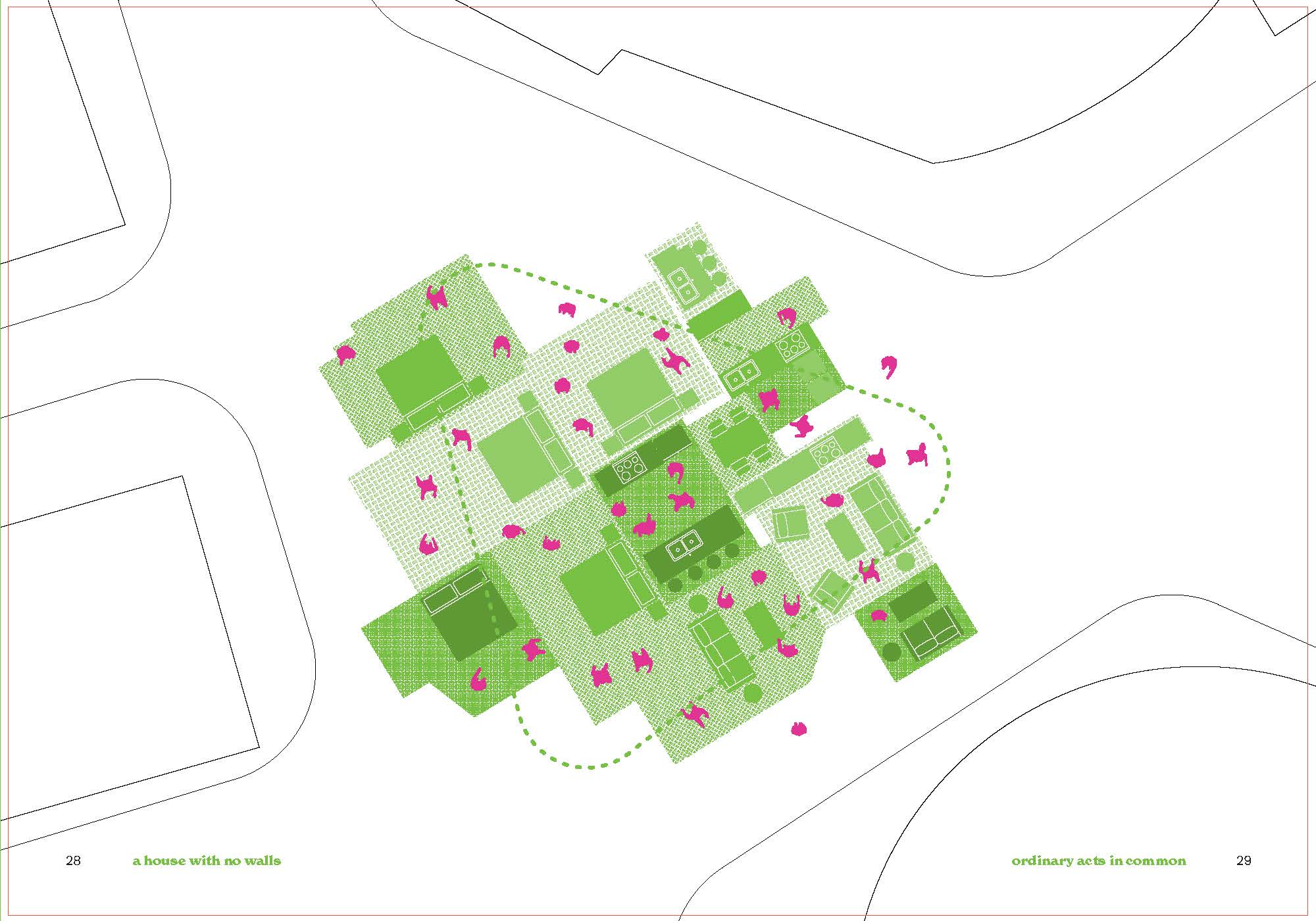
Public Domestic
What happens when the domestic comes out in public? If we study various home layouts in apartments surrounding liberty square in Boston, how does its value change when they become meshed together in a public square, free to experience as a public amenity?
Image
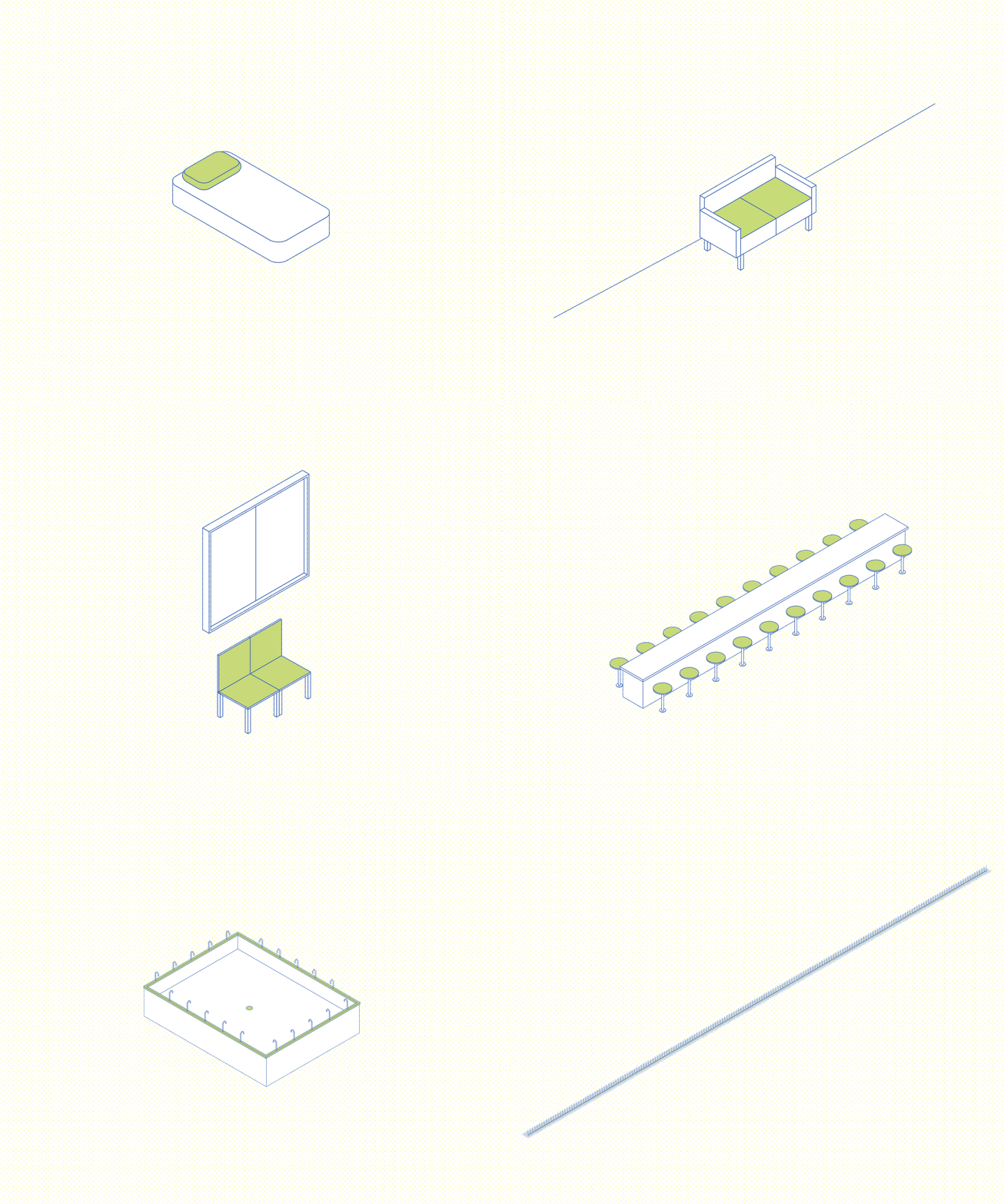
Scaled Domestic Condition
Household furniture scaled from 1 to 2, 20, 200, speculating that these things could be done collectively.
Image
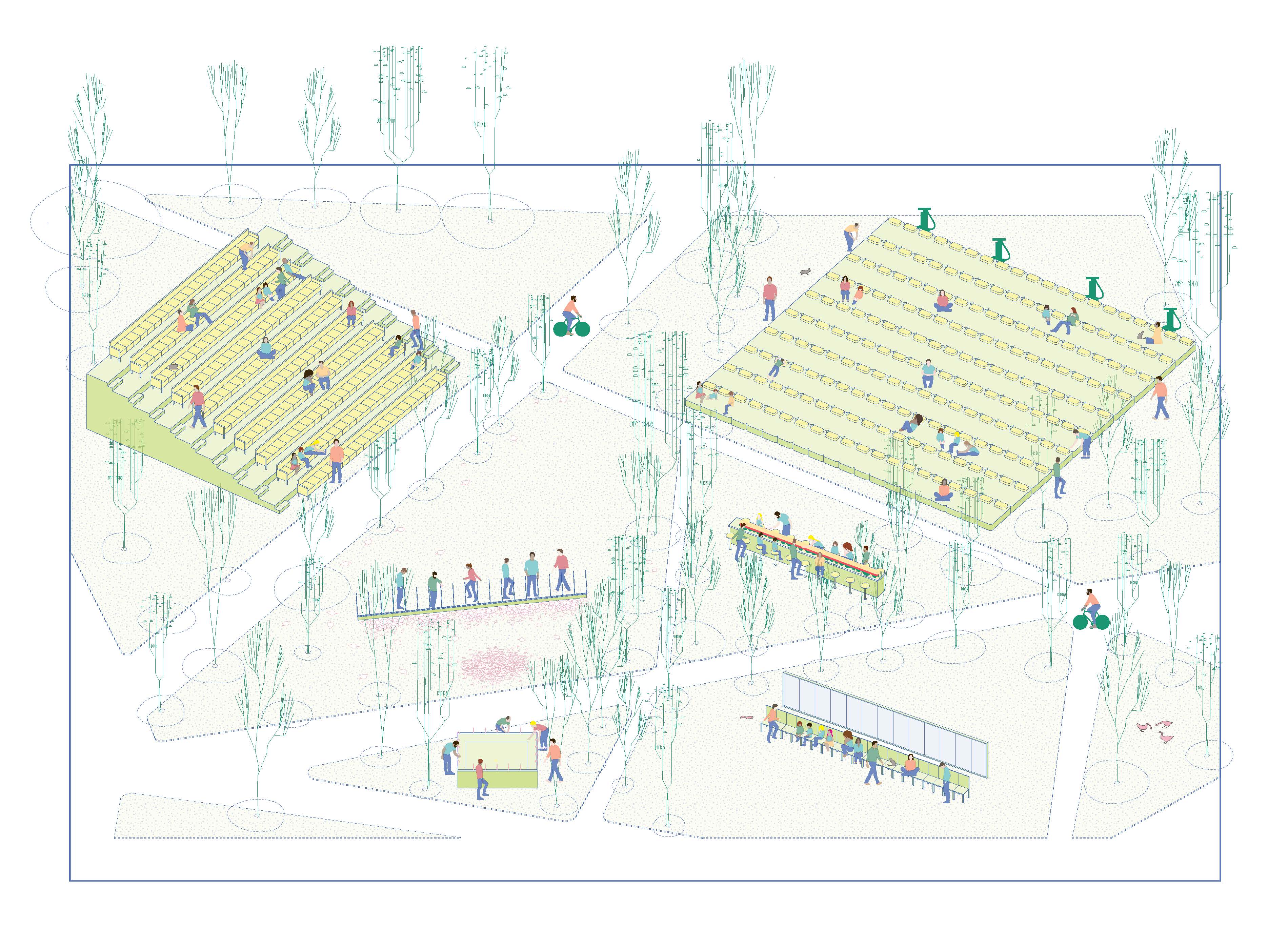
Absurd Conditions Garden
Scaled furniture assembled in a park, for domestic conditions to be engaged with collectively and as a public amenity.
Image

Rhode Island School of Design
20 Washington Place
Providence, RI 02913–2784
United States of America
+1 401 454 6100
+1 800 364 RISD
QUICK LINKS
risd.edu
Graduate Studies


Image
Rhode Island School of Design
20 Washington Place
Providence, RI 02913–2784
United States of America
+1 401 454 6100
+1 800 364 RISD