Camilla Radoyce
MArch Architecture
Billiards Cosmologies
Architecture is a story we tell ourselves.
Thinking through systems, my work uses relentlessness, humor, and the materials at hand to find creation within constraints and new forms within enduring structures. Following intuition and affective as well as cognitive intelligence, my work is both sculptural and human-focused. Here, things carry traces of their making and are continuously remade through use.
The spaces and objects I create are for interaction, participation, and finding meaning—not to resolve complexity, but to sit with it long enough to understand a little more about how it operates.
My thesis project began by thinking about California wildfires after the Palisades Fire came close to destroying my family home. Trying to intervene at that scale became overwhelming, and the nightmares I was having pushed me to find spaces of community and joy… so I started a pool league.
Wanting to explore how architecture can foster conviviality, I decided to build a pool table—one that could fit inside my Honda Civic. Responding to available materials and tools, and working collaboratively, the project does not aim to answer questions, but to frame moments for conversation and critical thought.
As an architect and designer, my work aims to reframe values around resources and how we come together. Intervening at large scales can seem impossible without coordination and mutual participation. My thesis aims to investigate co-creation and making with what’s at hand at the human scale—in this case, the pool table. Now let's play.
What new stories can we tell?
Image
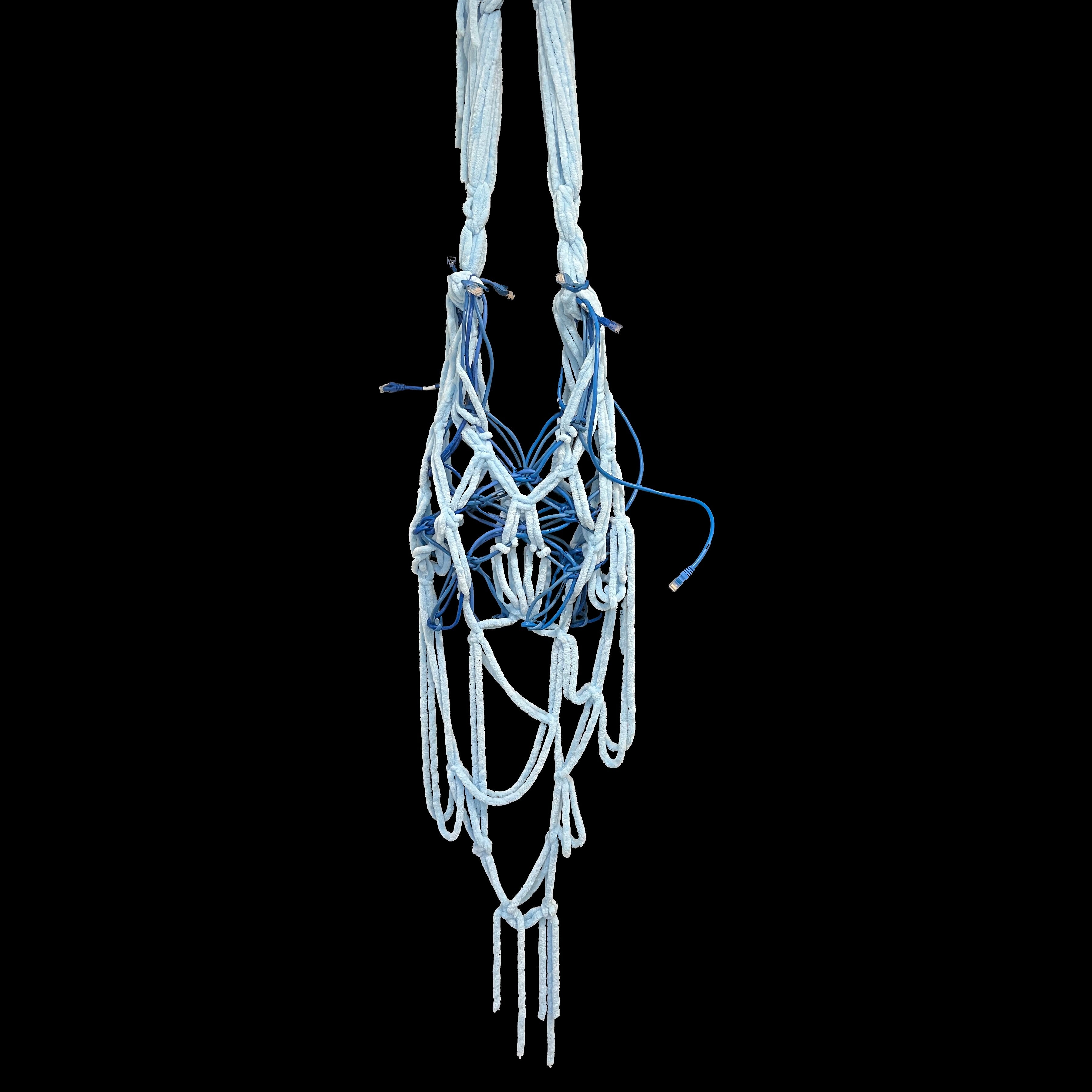
Carrier Bag
Found ethernet cables, polyester yarn
Remembering is slippery. Made to carry a photo album, this carrier bag explores how memories fade and disintegrate, often attaching themselves to more durable forms like photographs and stories.
Image
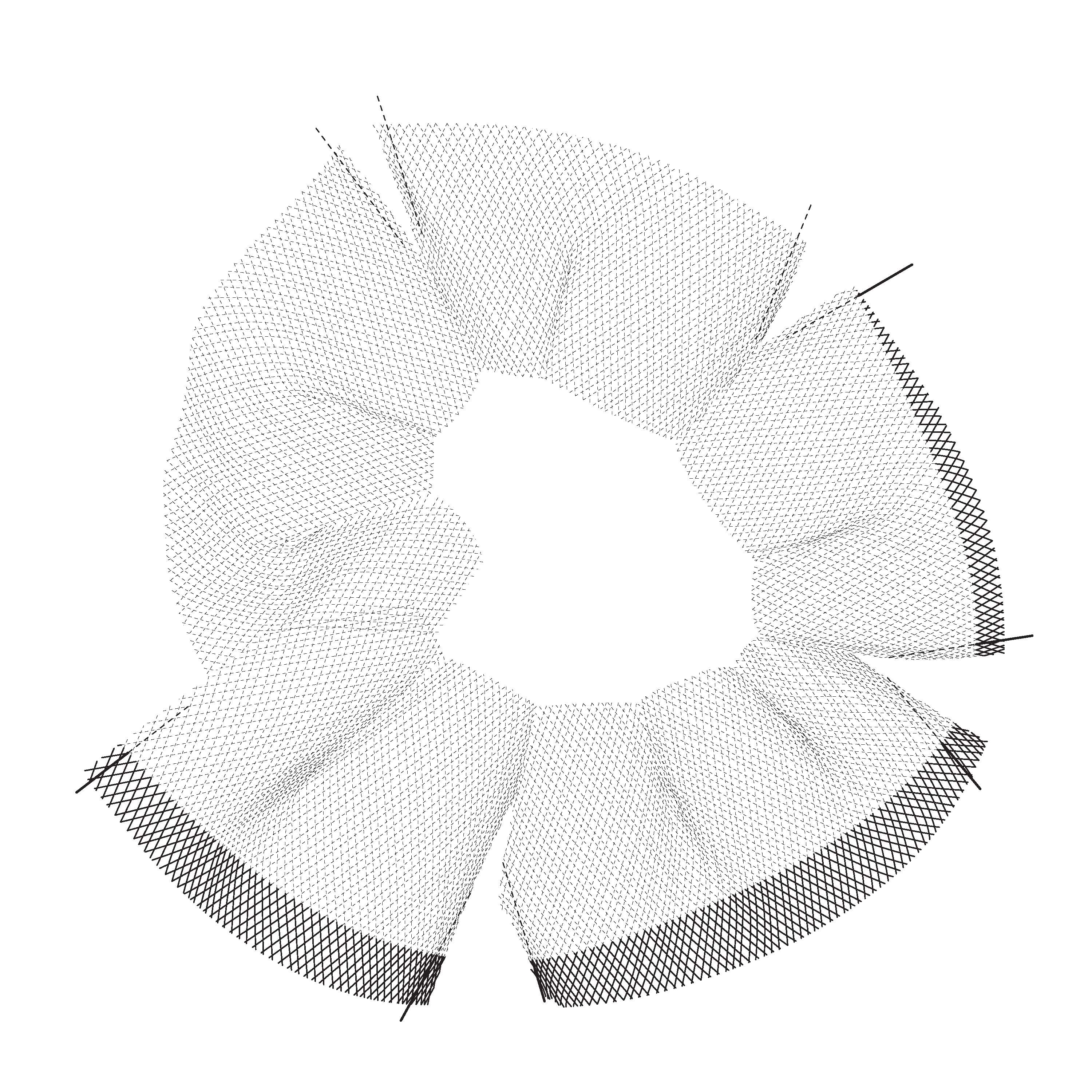
Chainlink Reflected Ceiling Plan
Digital drawing
While designing a pavilion through weaving techniques from cultures around the world, I became curious what an indigenous weaving method might look like on a site that exists only as a Rhino .3dm file. The result is this reflected ceiling plan, where chainlink fencing is pinched into fins that simultaneously produce enclosure and structure.
Image
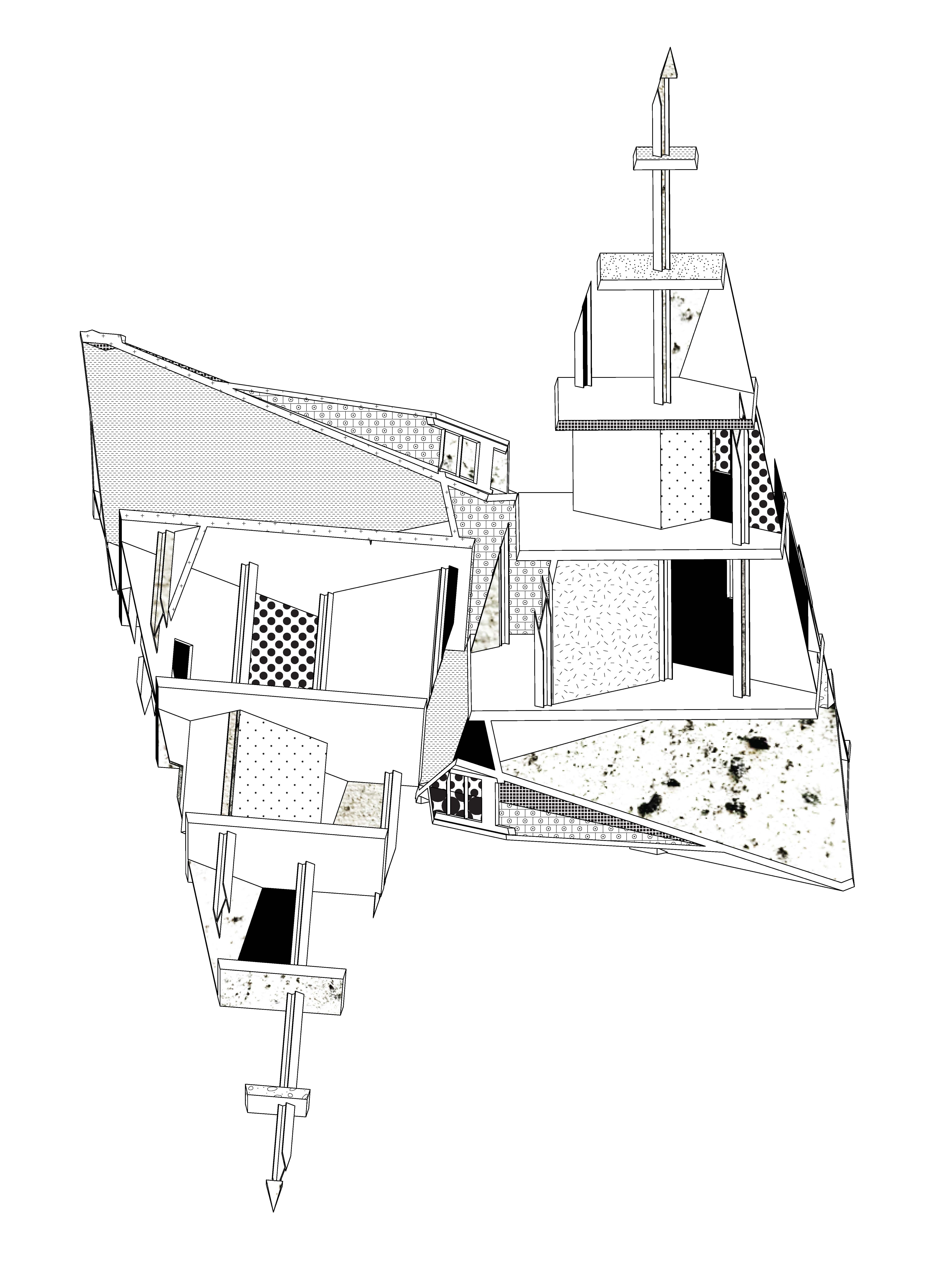
Getting to the Core of It
Digital drawing, scanned dust
This drawing extracts the circulation core of a building and introduces swept dust as an architectural hatch. By using debris to mark selective surfaces while leaving expected poche conditions unresolved, the drawing confuses distinctions between solid, void, structure, and occupation, treating accumulated matter as both residue and representation.
Image
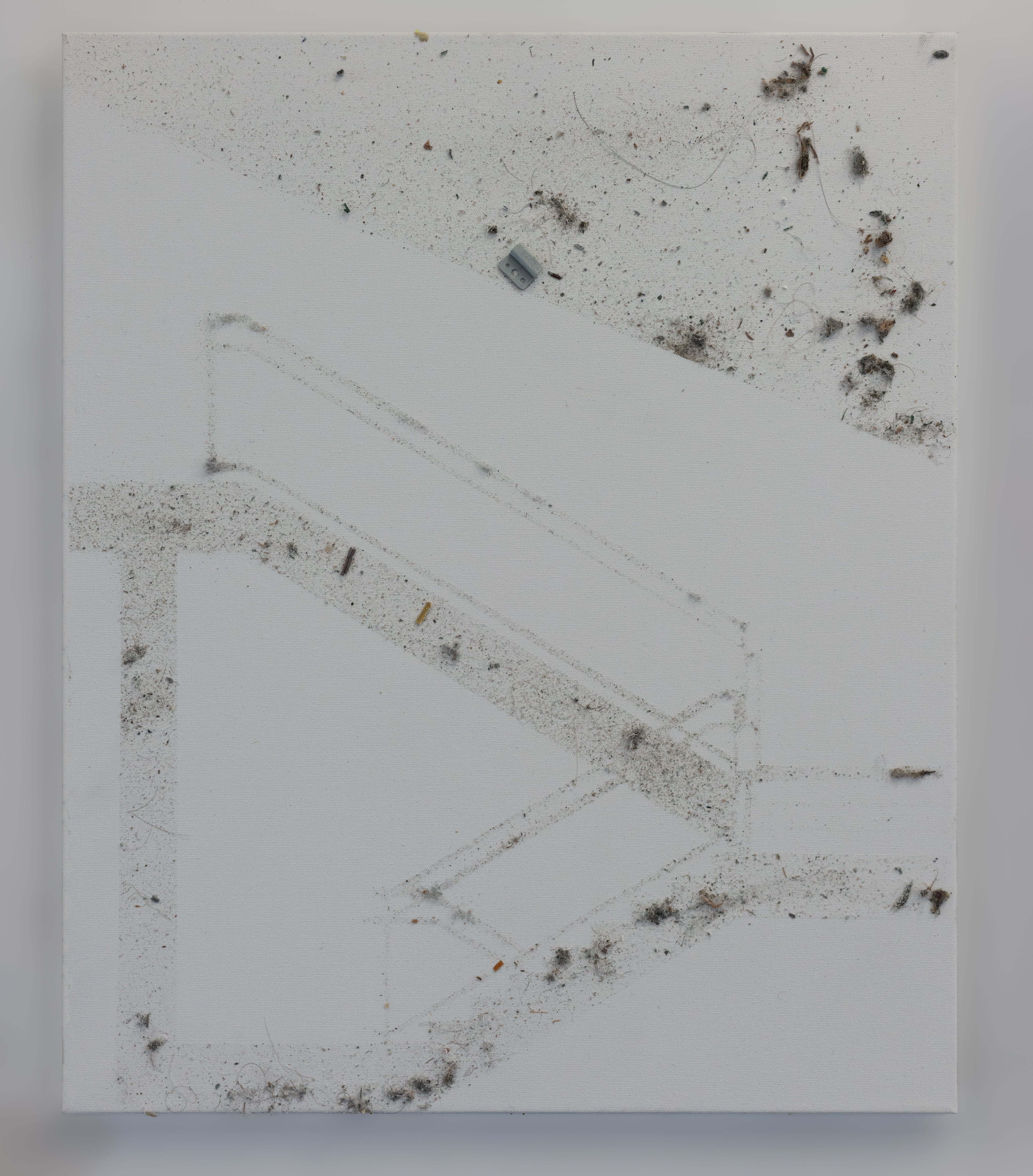
Dust Section
Swept dust, hair, debris on canvas
Architectural section drawings often use solid poche fills to represent material thickness, flattening the histories embedded within buildings into abstraction. Dust Section replaces conventional hatching with debris swept from a staircase, using accumulated dust, hair, and fragments to reveal traces of habitation, labor, and time embedded within the site.
Image

Digital Quilt
Found trash made into a digital drawing
Made from discarded fragments collected around the studio, Digital Quilt treats debris as a contemporary scrap fabric. Layering ornamental motifs, construction remnants, and misfit geometries, the quilt reframes the excess of architectural production as a material for recombination and repair.
Image
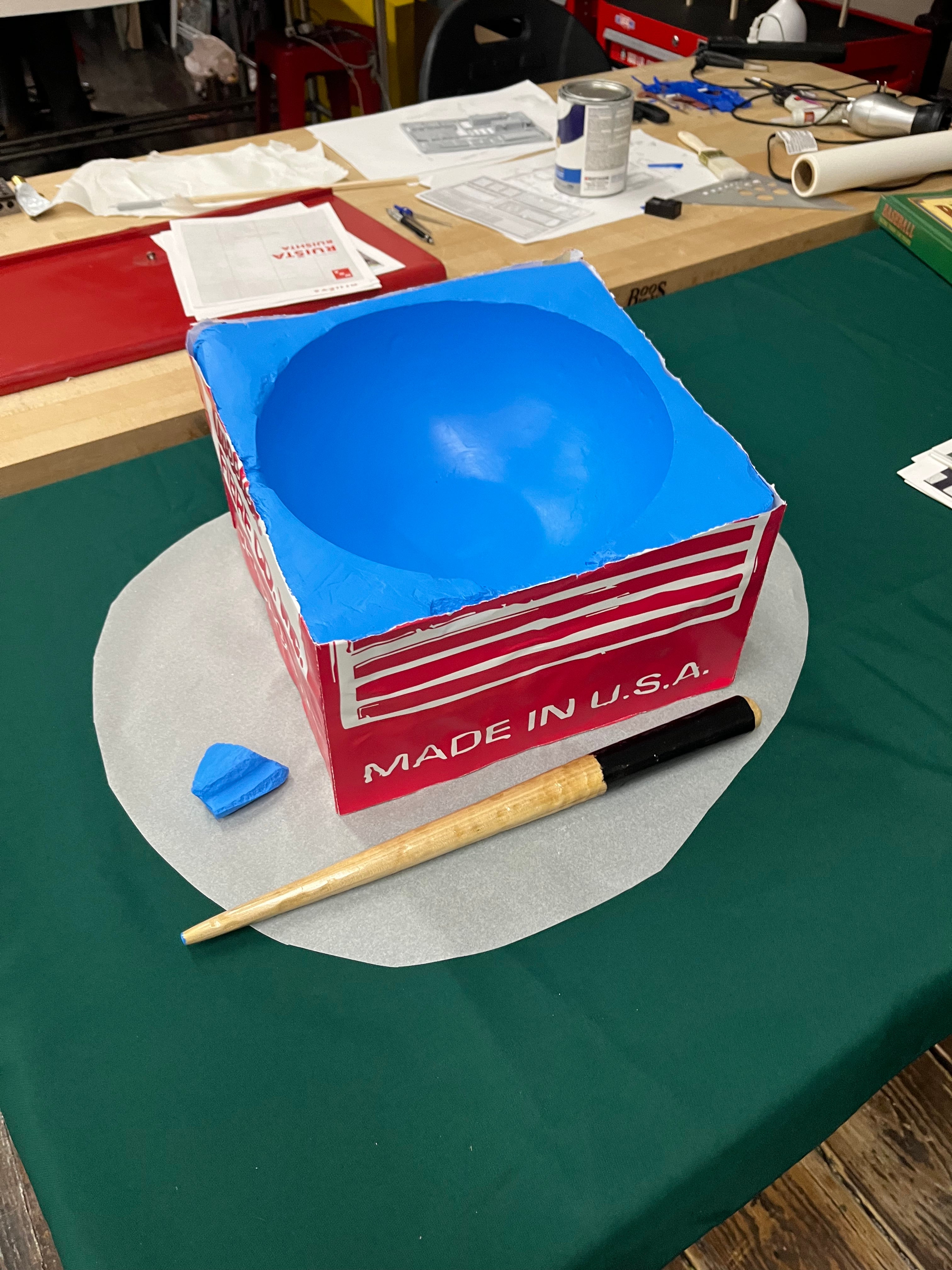
Scale Study
Paint, plaster, wood, paper
This process study from my thesis explores scale as a tool for humor, disorientation, and critique. A giant piece of pool cue chalk paired with a miniature cue transforms familiar billiards objects into awkward counterparts, frustrating expectations of use and questioning the fixed frameworks through which objects are understood.
Image
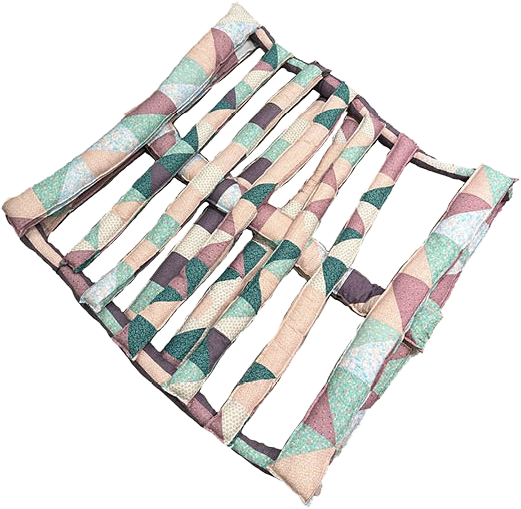
Pillow Pal
Found fabric, batting
Inspired by a crossover between Pillow Pets and industrial shipping pallets, Pillow Pal transforms a ubiquitous object associated with labor, weight, and circulation into something soft, supportive, and affectionate. By quilting and stuffing the pallet form, the project reframes infrastructure as an object of comfort and collective care.
Image
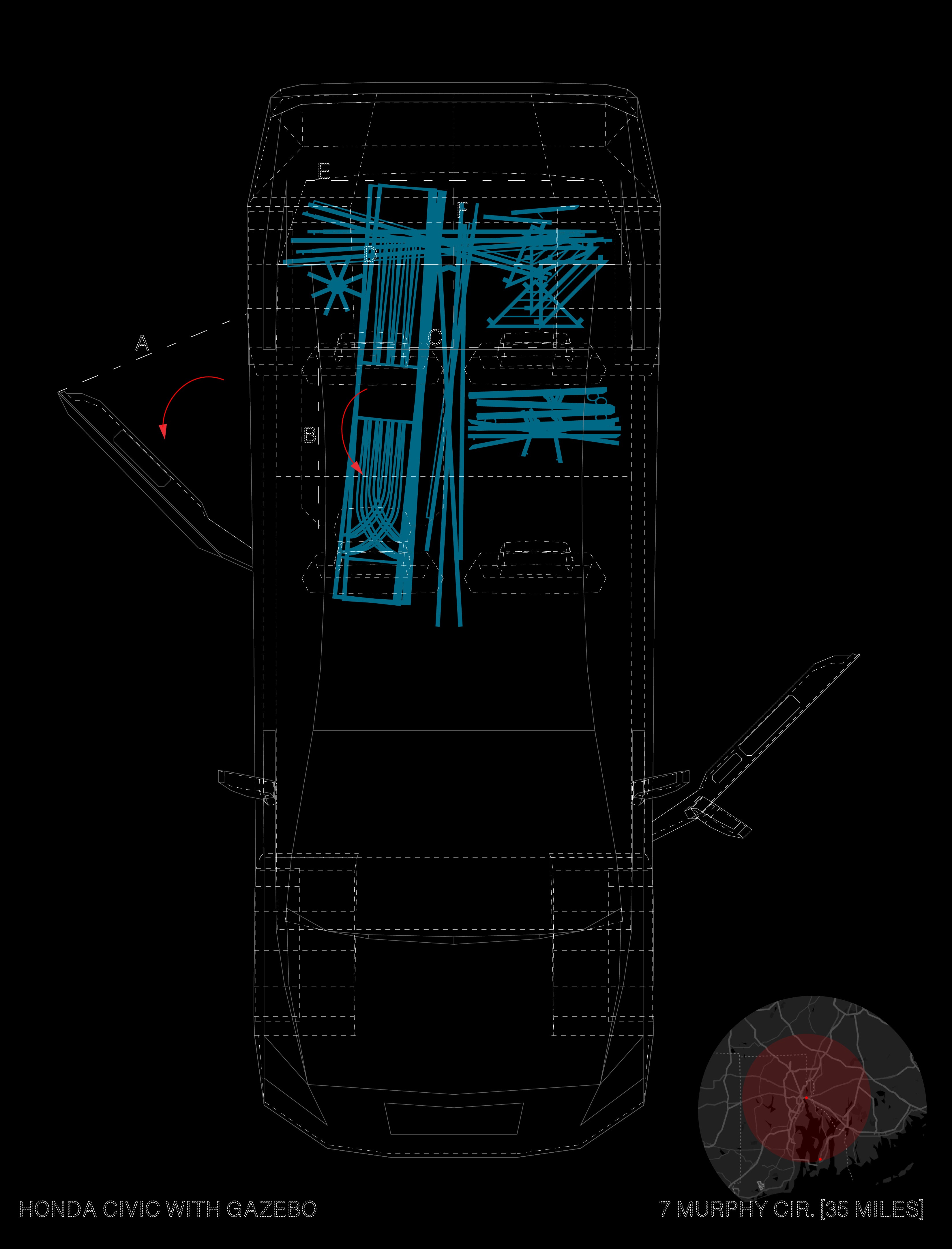
Honda Civic with Gazebo
Digital drawing
This drawing documents my Honda Civic loaded with salvaged gazebo parts collected from Craigslist. Treating the car as both transport and architectural container, the drawing frames improvisation, constraint, and scavenging as serious spatial practices, elevating a mundane condition into architectural consideration.
Image

Rhode Island School of Design
20 Washington Place
Providence, RI 02913–2784
United States of America
+1 401 454 6100
+1 800 364 RISD
QUICK LINKS
risd.edu
Graduate Studies


Image
Rhode Island School of Design
20 Washington Place
Providence, RI 02913–2784
United States of America
+1 401 454 6100
+1 800 364 RISD