Faith Kim
MFA Graphic Design
Mediated landscapes
I do whatever I can to not work on my laptop. But when I do, I'm greeted with the pristine landscape of Mac OS Tahoe — it was Mac OS Sequoia for a long time until recently. These default wallpapers are engineered layers composing an image: mediated, highly designed, presented as though they were simply found. Where an image lives determines what it means.
From the digital camera to the phone camera, effortless distribution, infinite storage: photography has reshaped not just how we make images but what we think they're for. I'm as interested in moving existing images around as I am in making new ones. The systems that organize and distribute images — operating systems, satellite maps, Google Image search, interstate signage, disposable print — always leave a remainder. Something that wasn't supposed to mean anything. A broken tile where resolution runs out. A placemat. A paperweight.
That remainder is where I work. It's what gets lost when we consume images at the speed and volume that screens make possible, and what I keep trying to recover. I don't recover it by making something singular and authored. I work with anonymous, throwaway, mass-produced images and find the aura hiding inside them.
Image
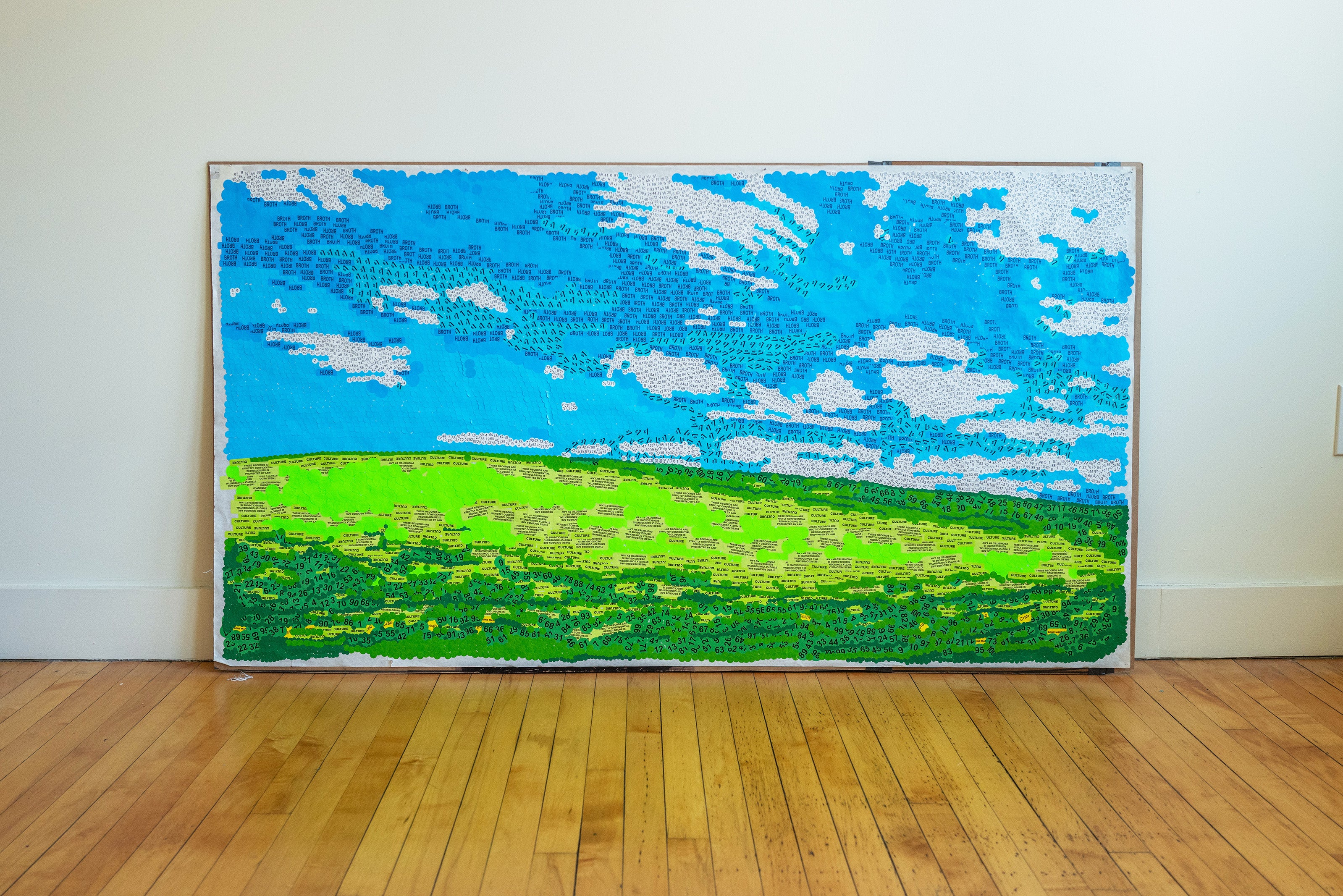
Landscape 1 evokes a painting, but instead of using a brush, it is assembled with thousands of stickers to craft a landscape. Reflecting the tradition of pointillism, the repetition forms a larger composition. The stickers—hazard warnings, corned beef labels, and confidentiality markers—are symbols of our everyday environment. By decontextualizing these familiar symbols, the viewer is invited to see a topography of nature from a distance, while the fine details of the tags reveal the subtle signs of automated consumption up close. It highlights the widening gap between humanity and nature in the post-Capitalist landscape, exposing the signs and symbols that shape our existence in its absence.
Image
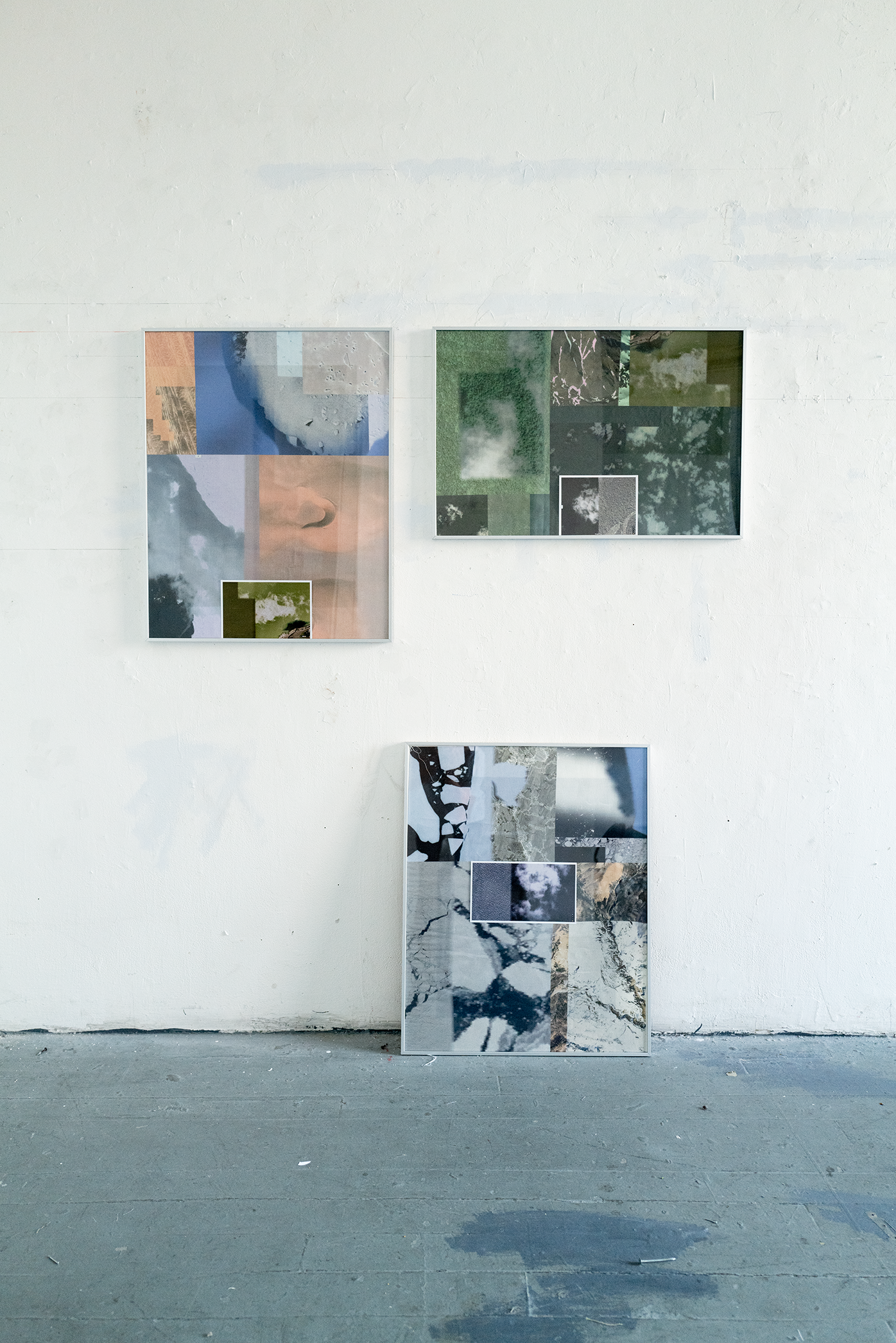
Satellite Fragments is a collection of screenshots found in remote places where Google Map’s construction of the world breaks down. It reveals the infrastructural fabrication of landscapes that are stitched together, color corrected, and updated over time.
By capturing the fragments, the mismatched tiles, the clouds casting shadows across discontinuous time zones, and the pixelation where resolution runs out, the project finds presence in the places Google didn’t think were worth constructing.
Image
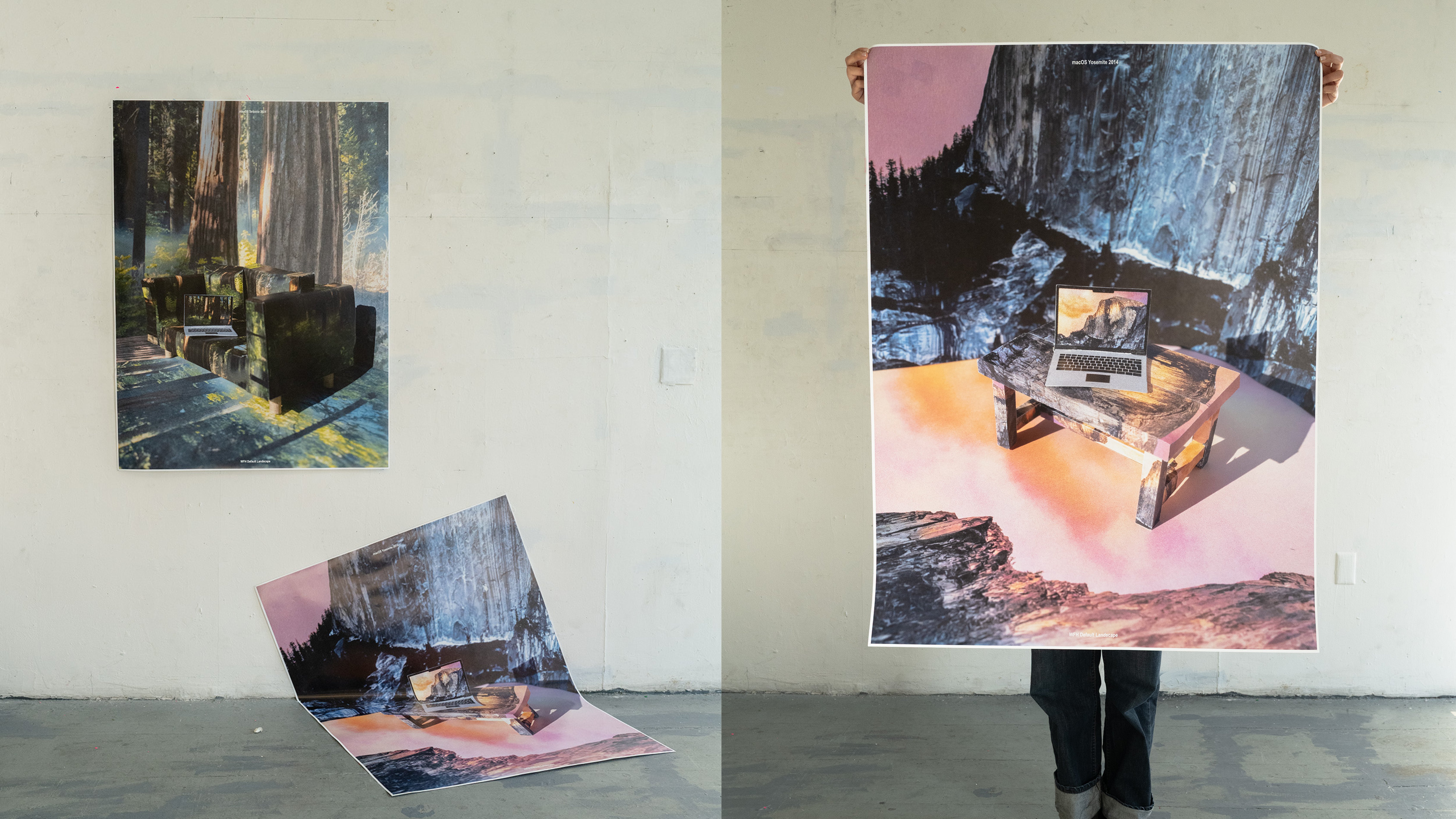
WFH Default Landscape dramatizes the URL vs IRL tensions of contemporary work environments and emphasizes the distance with our natural one. It is a work-office-living room where every inch of the space is enveloped in landscape wallpaper provided by Apple. This installation questions the injection of nature landscapes in our digital environments by reinjecting the most recent MacOS default wallpaper, Sequoia, into a physical space. With the digital world becoming the default means of life and work, the landscape as a default wallpaper is neither longing nor admiration. It is wallpaper. The feeling has been designed out of it.
Image
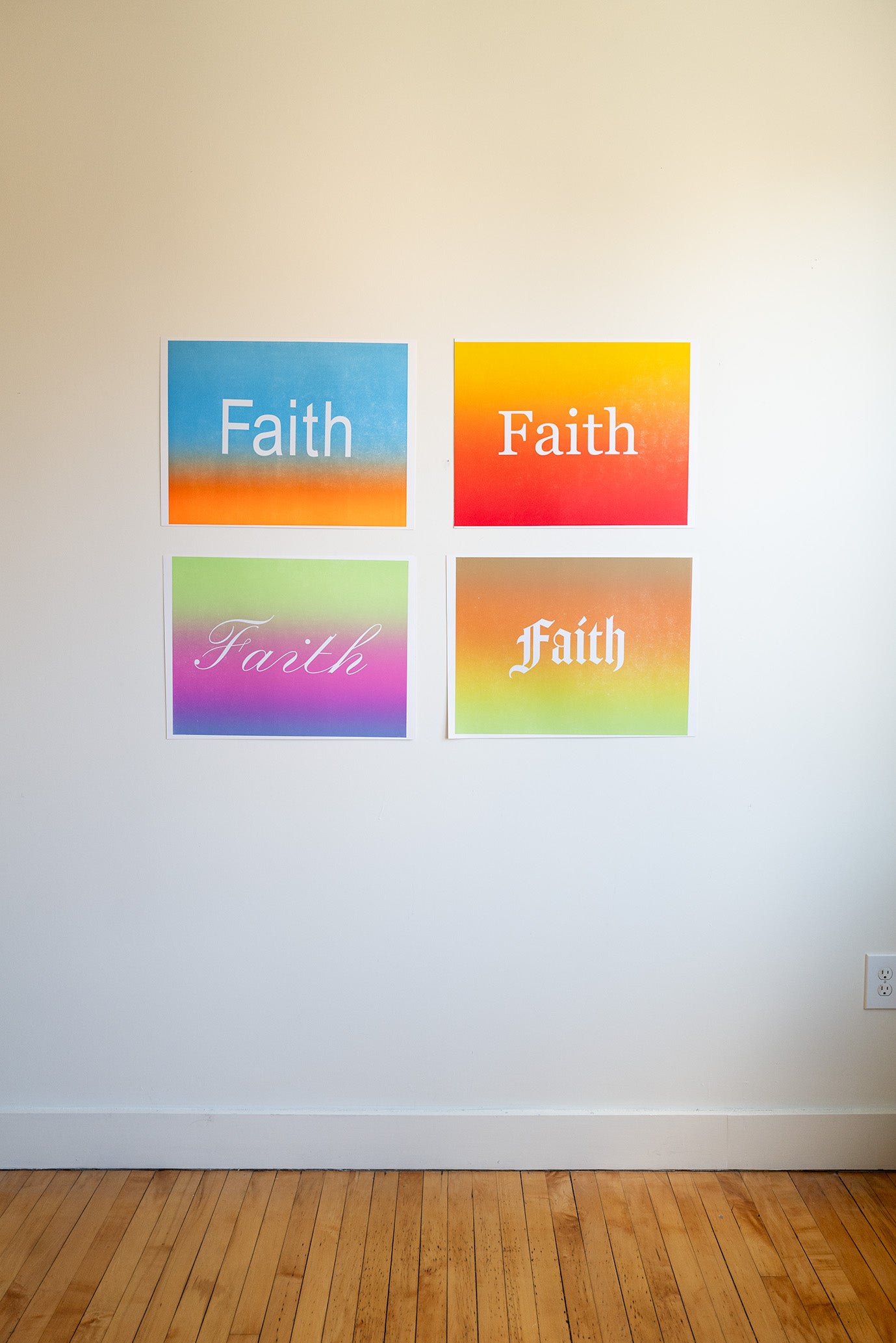
A name is one of the first things given to us by someone else. For the people who carry the name Faith, it arrives already weighted — with religion, with hope, with someone else's idea of who you might become.
Anonymous Portraits is a series of prints made from stories collected from strangers who share a name. Each portrait layers a hand-pulled gradient with vinyl lettering set in a different typeface — serif, script, blackletter, sans — a different voice, a different Faith. The gradient beneath is unique to each person while the name on top is the same.
Together they form a collective portrait of people who have never met, held together by four letters.
Image
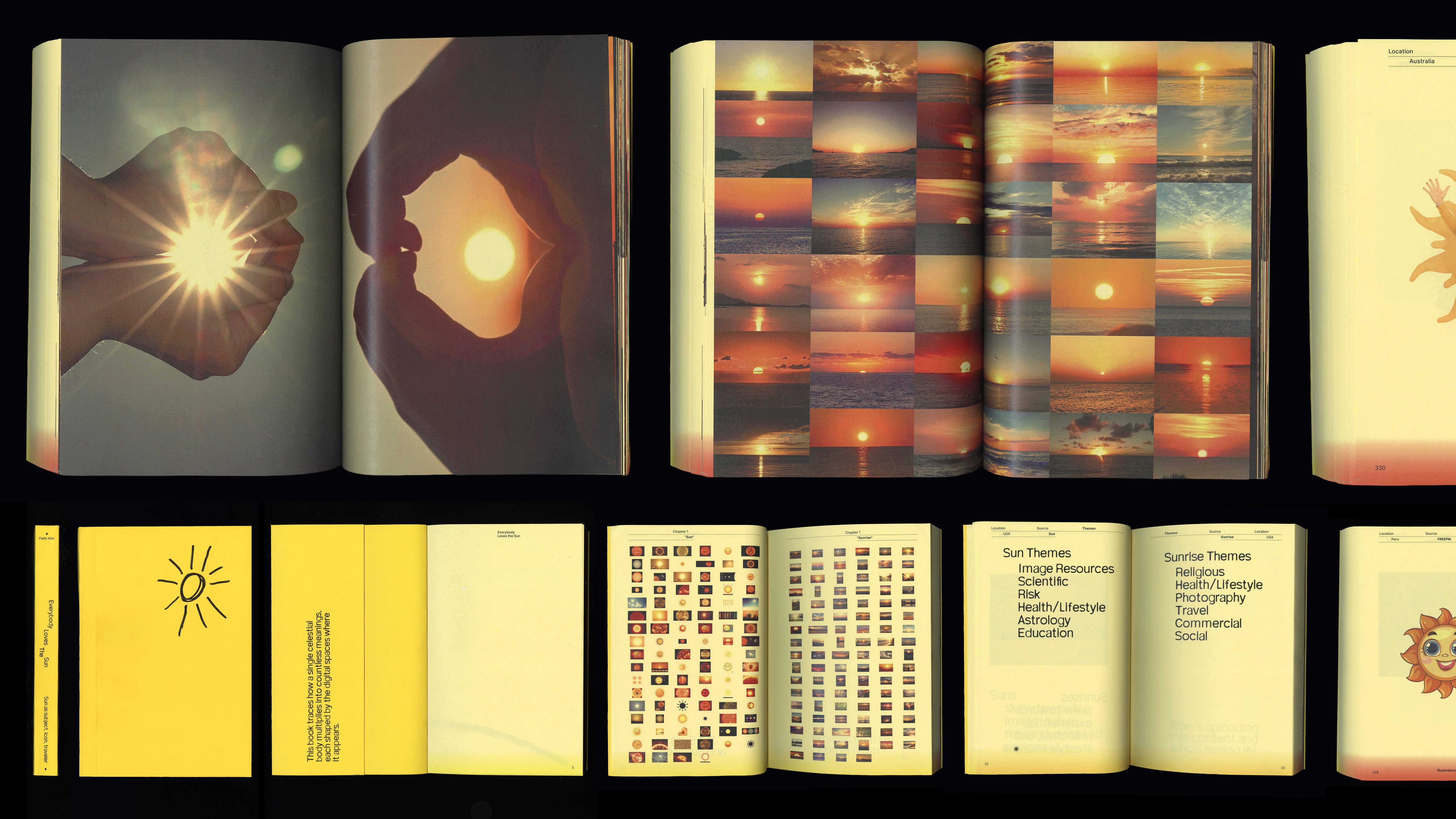
Everybody Loves the Sun is a tour of the internet guided by a single subject. With the help of ChatGPT and ScrapFly, I coded an automated system to extract images and metadata from multiple national Google Image domains using the terms "sun" and "sunrise." More than a thousand images, each traced back to its source. The metadata revealed an ecosystem. One sunrise led to Christians for Social Action. Another to trail running blogs. Others to stock photo marketplaces and scientific explainers. The same celestial body multiplying into countless meanings, each shaped by the digital space where it appears. Where an image lives determines what it means
Image

Rhode Island School of Design
20 Washington Place
Providence, RI 02913–2784
United States of America
+1 401 454 6100
+1 800 364 RISD
QUICK LINKS
risd.edu
Graduate Studies


Image
Rhode Island School of Design
20 Washington Place
Providence, RI 02913–2784
United States of America
+1 401 454 6100
+1 800 364 RISD