Gabriel Ofem Peter
MLA Landscape Architecture
Productive Armature
Change is a constant thing throughout the cycle of life. Although my thesis has gone through layers of change, one thing that has been constant is the desire to carry out this research in the global south. A place many may argue is a region where pre-recorded GIS data is wildly inaccessible. The struggle opened my eyes to Makoko, an aquatic community on the periphery of the Lagos Mainland coastline, one of the most populous cities in the world. The primary question being asked here is what does it mean to live entirely on water, really on Water! In the words of one of my favorite Nigerian singers Fela Kuti, coincidentally who grew up a few miles from this aquatic community sang in his song titled Water no get enemy. The original title is in pidgin english, a language spoken by 116 million people which translates to water does not have any enemies, it accepts all (LLC 2024). This is the case for the residents of Makoko who once lived on land over a century ago (Roland 2023). With the increased commercialization in Lagos after independence in 1960, they were systematically forced to move closer to the water. With every eviction served, the land they left behind was developed into modern luxury apartments (Roland 2023). The temporal settlement they built on water served as an ARMATURE to house them until they made sense of it all, while also being a place for their PRODUCTIVE endeavor, primarily fishing and Lumber trading.
Image
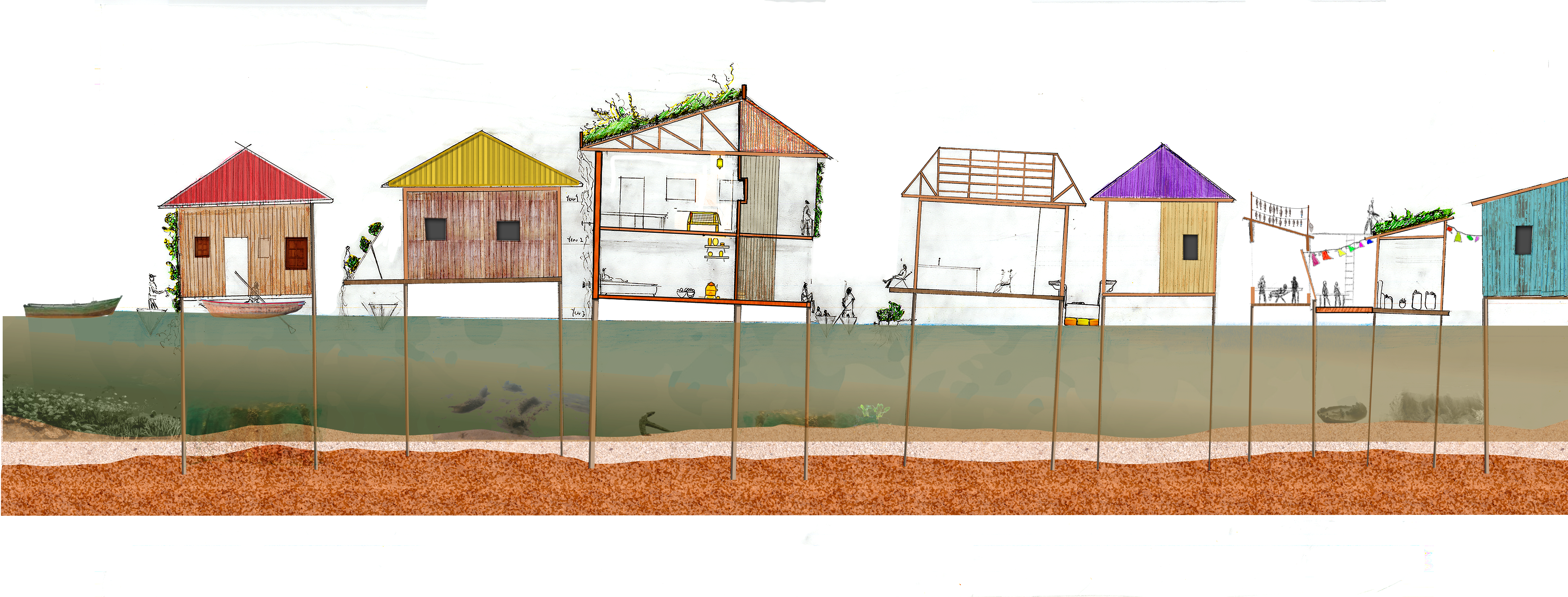
Sustained Adaptation Design Strategy
This strategy works with the existing site context, embracing Makoko's design DNA without demolition. By introducing nature-based solutions, rooftop gardens and planted porches oriented toward the sun. The community's built fabric is gently enhanced, improving resilience while respecting the character of what already exists.
Image
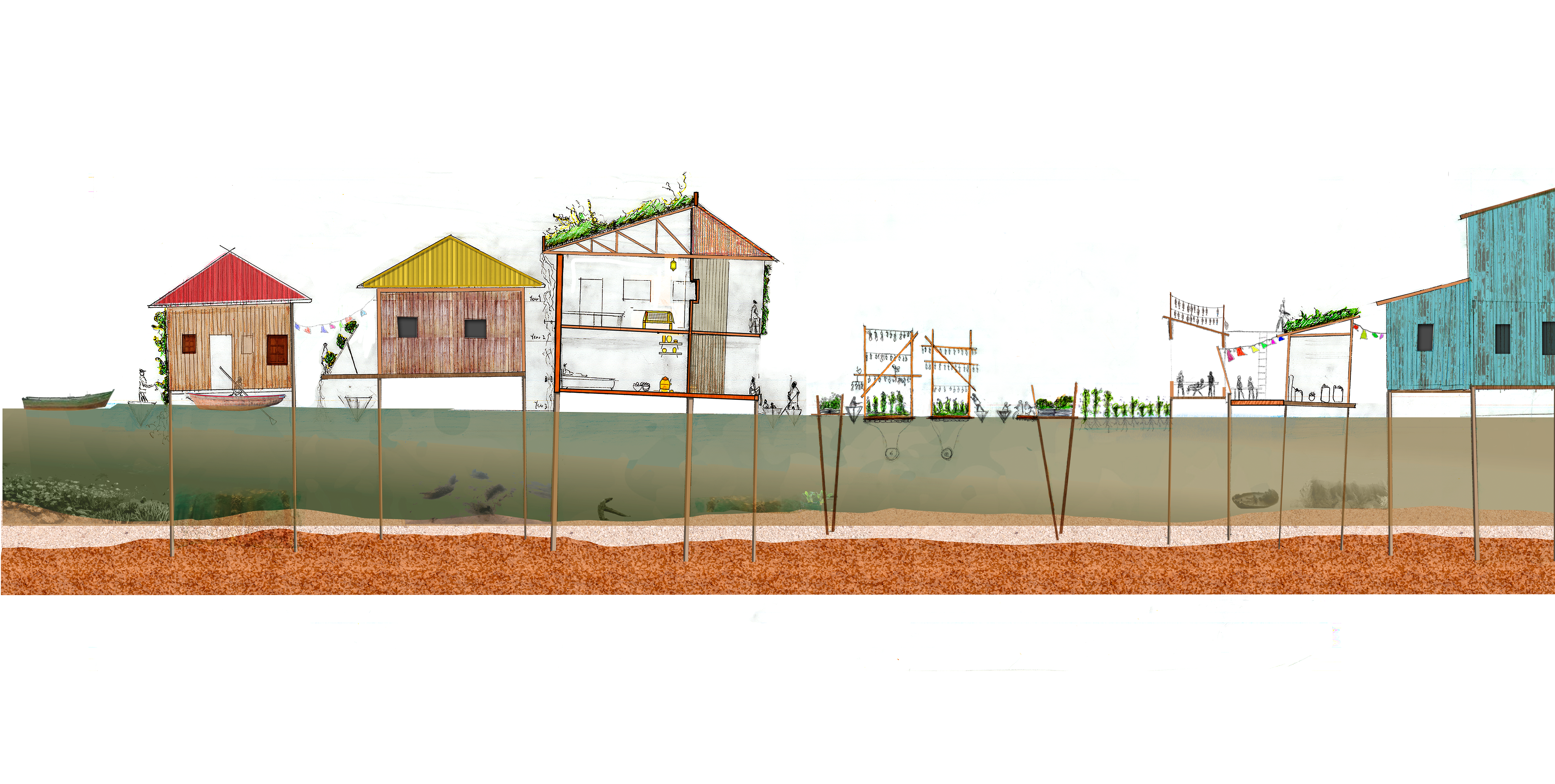
Tend (Harvest) Design Strategy
This strategy builds on the community's existing productive practices, creating negotiated spaces between buildings and occupants for aquaculture, community gardening, and fish farming, strengthening local livelihoods and boosting the economy of Makoko from within.
Image
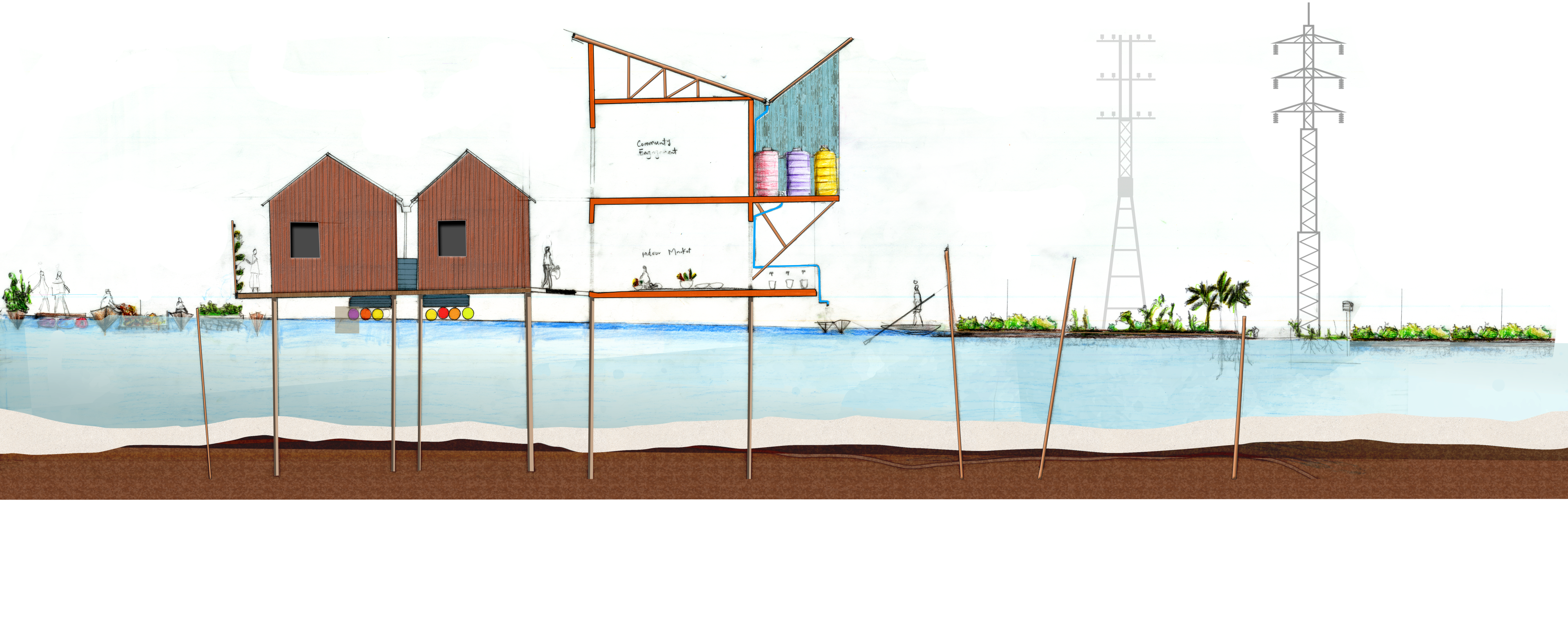
Productive Restraint Design Strategy
This strategy reimagines the community's potential through infrastructure that promotes ecological, social, and environmental wellbeing. Where state law prohibits dwelling beneath high-tension powerlines for safety reasons, the design works with the community to repurpose these restricted zones, transforming them into large-scale aquaculture farms that sustain livelihoods, support food security, and encourage the return of marine life to the waterway.
Image
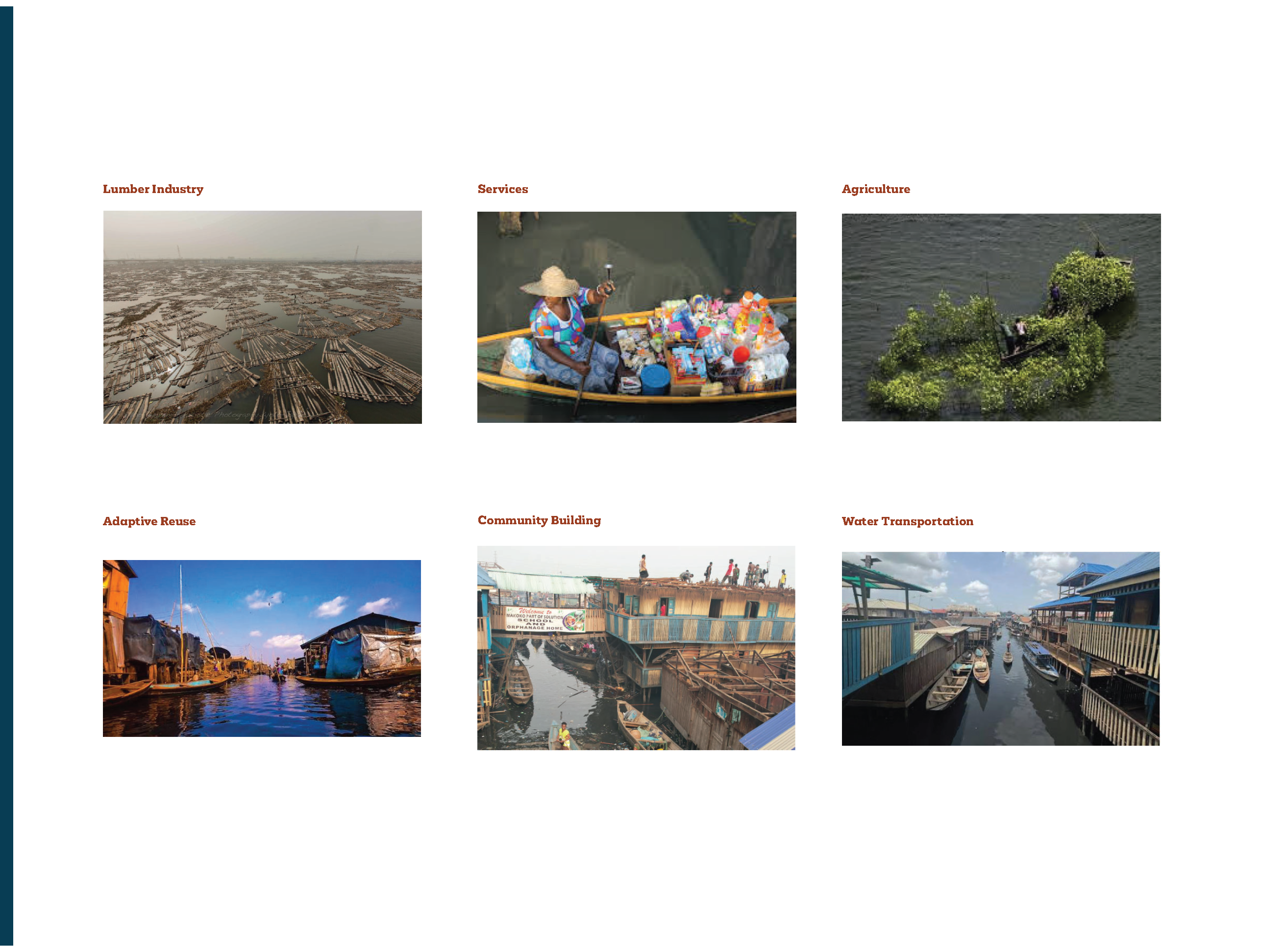
Residents navigate by canoe, sustain themselves through fishing, lumber trading, and floating markets, and build homes from salvaged timber, forming one of West Africa's most resilient and misunderstood informal settlements.
Image
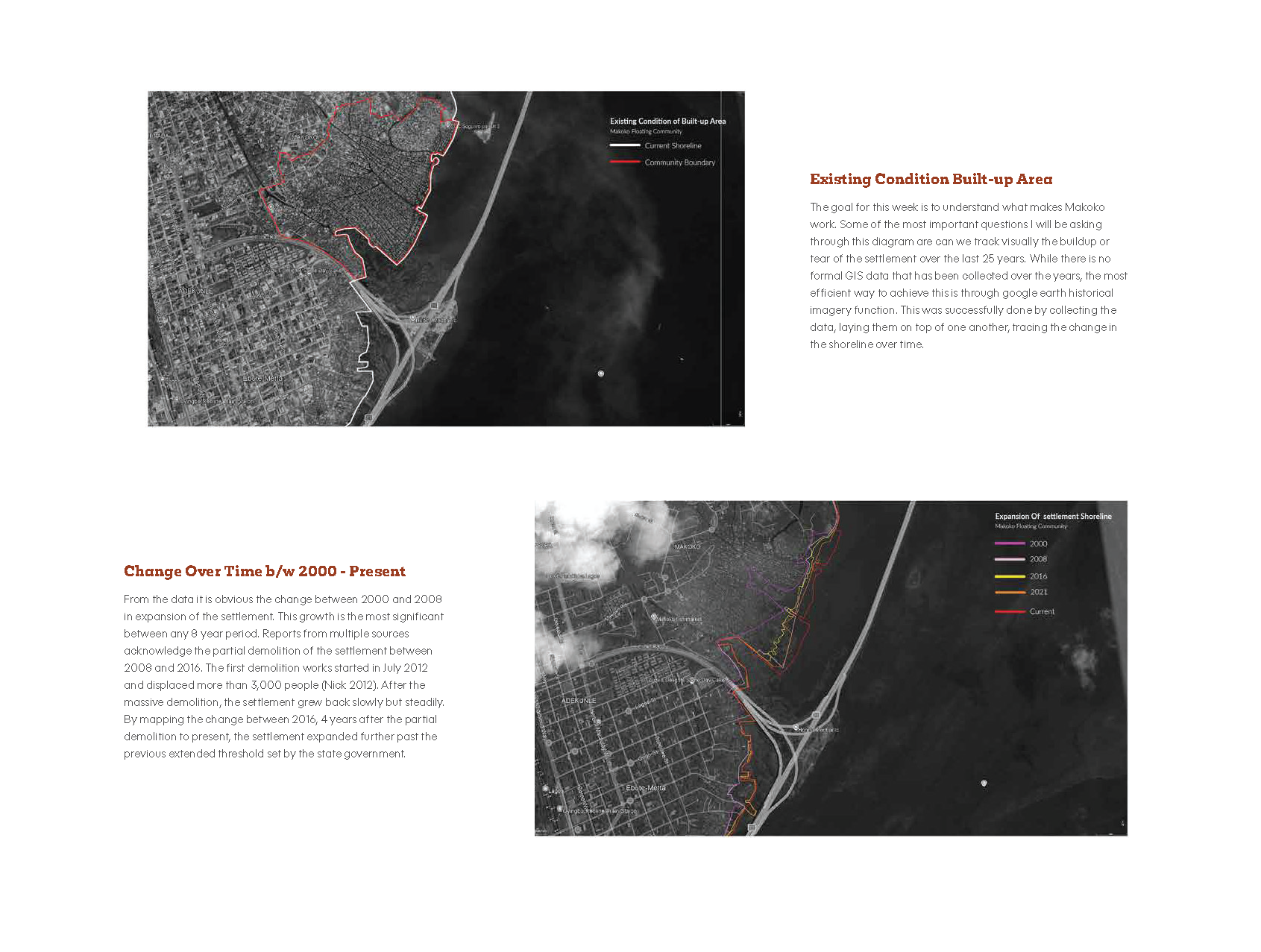
Satellite imagery and GIS mapping reveal Makoko's dramatic growth over 25 years. The settlement's most significant expansion occurred between 2000 and 2008. Despite a partial government demolition in 2012 that displaced over 3,000 residents, Makoko steadily rebuilt, eventually expanding beyond the boundary limits previously set by the Lagos State government.
Image
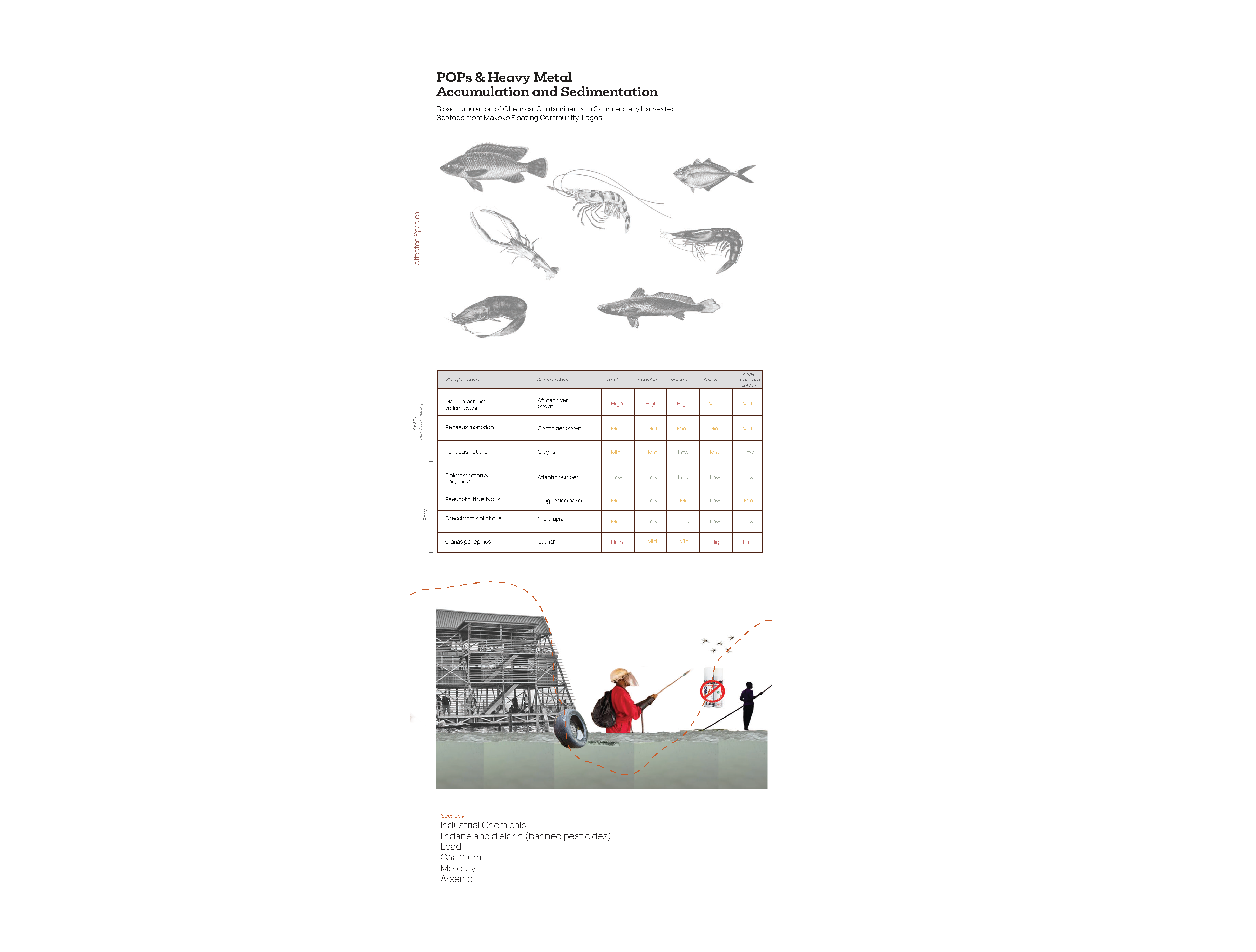
Research into Makoko's waterway reveals dangerous levels of persistent organic pollutants and heavy metals including lead, cadmium, mercury, and arsenic bioaccumulating in commercially harvested seafood such as catfish, prawns, and croaker. Industrial chemicals and banned pesticides like lindane and dieldrin are identified as key contamination sources, posing serious public health risks to the community.
Image
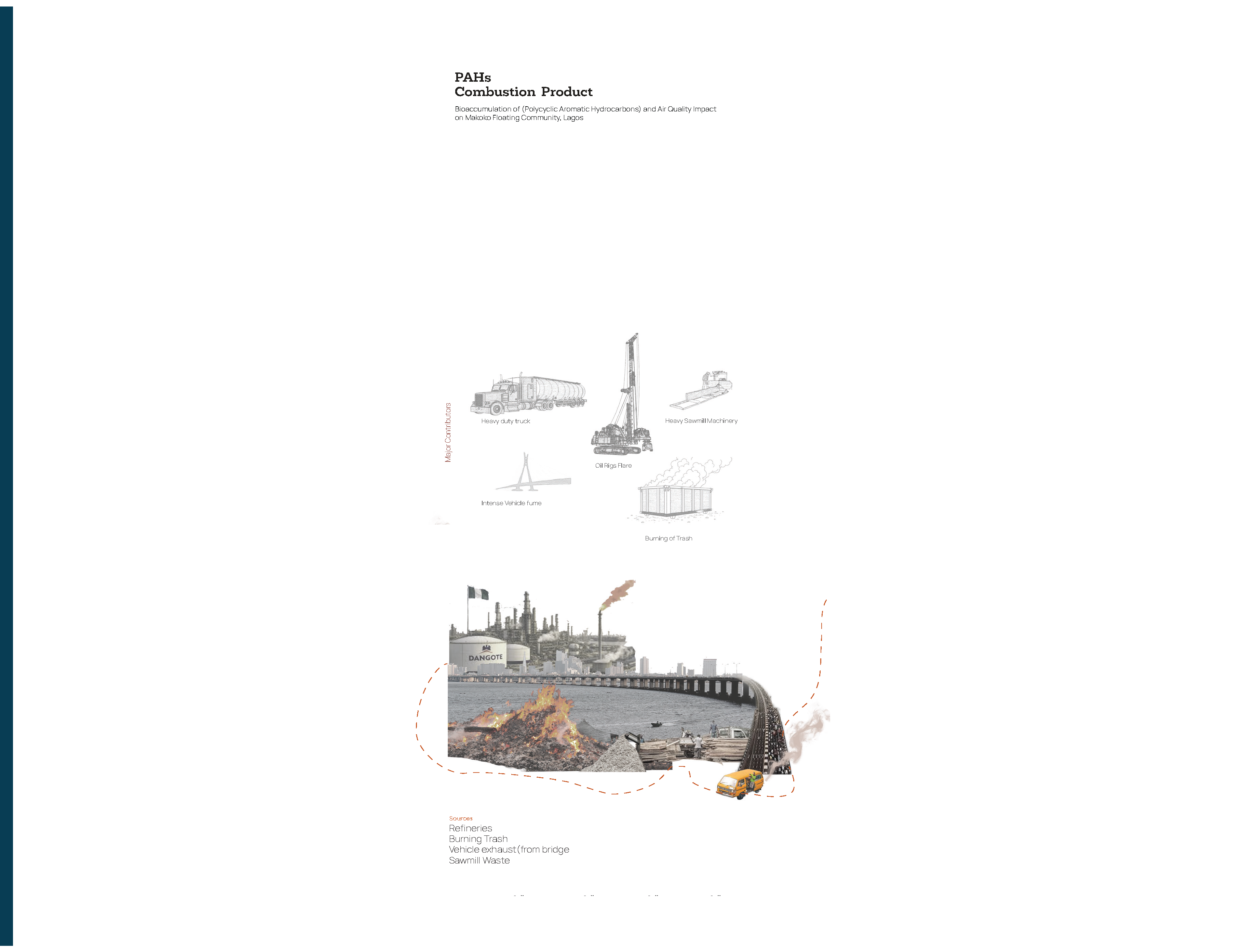
Polycyclic Aromatic Hydrocarbons (PAHs) from combustion are a significant air quality threat in Makoko. Major contributors include nearby oil refineries, open burning of trash, vehicle exhaust from the adjacent bridge, and sawmill waste. These overlapping pollution sources expose residents to harmful airborne contaminants with serious long-term health consequences.
Image
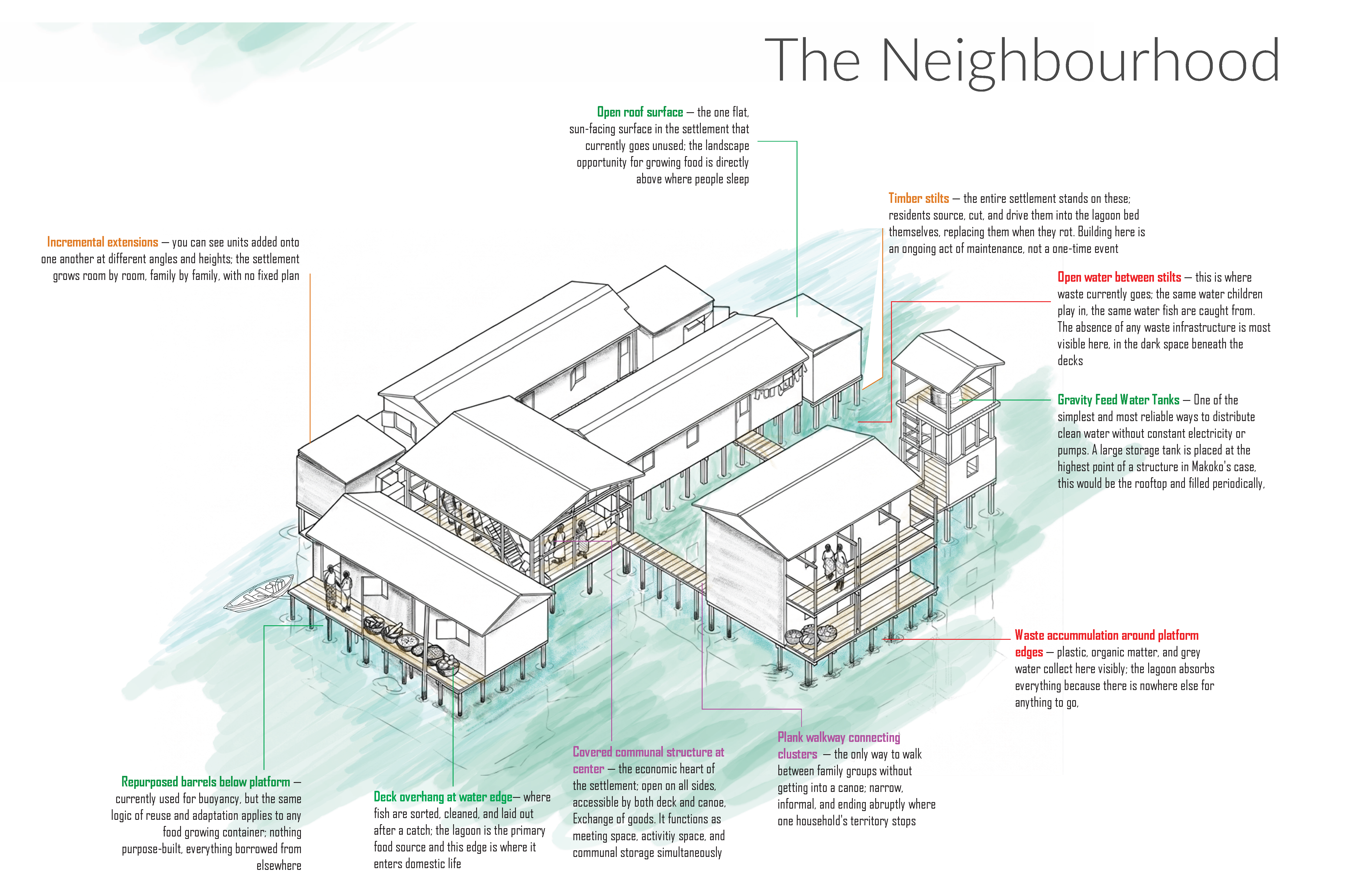
The Neighborhood in Makoko consist of homes growing incrementally, connected by narrow plank walkways and shared decks where fish are sorted and goods exchanged. Repurposed barrels provide buoyancy, rooftops remain untapped growing surfaces.
Image

Rhode Island School of Design
20 Washington Place
Providence, RI 02913–2784
United States of America
+1 401 454 6100
+1 800 364 RISD
QUICK LINKS
risd.edu
Graduate Studies


Image
Rhode Island School of Design
20 Washington Place
Providence, RI 02913–2784
United States of America
+1 401 454 6100
+1 800 364 RISD