Gregory Kmieciak
MFA Furniture Design
Recombobulation
I grew up in Milwaukee, Wisconsin, shaped by a blue-collar, middle-class upbringing that instilled in me a deep respect for labor, materials, and the everyday object. This background has profoundly influenced both my aesthetic and my approach to making—grounding my practice in function, craftsmanship, and an appreciation for the subtle narratives embedded in material culture.
I earned my BFA from the University of Wisconsin–Milwaukee, concentrating in Sculpture and Jewelry/Metal-smithing. It was there that I began to explore the tactile and conceptual potential of metal, drawn to its duality—rigid yet malleable, industrial yet intimate. After completing my BFA, I spent a decade working in the furniture industry, everywhere from restoration to fabrication and installation. This period honed my technical skills and deepened my understanding of historical and contemporary construction methods, materials, patinas, and exposed me to a culture revolving around creating environments that bring people together.
My work sits at the intersection of art, craft, and utility—investigating how furniture can hold memory, reflect identity, and act as a site for both personal and cultural storytelling. I approach each piece as a conversation between hand, material, and history—rooted in tradition but open to reinterpretation.
Through metal, wood, and found objects, I aim to bridge the worlds I come from with the one I’m helping to shape—crafting objects that are as thoughtful as they are functional, and as grounded as they are aspirational.
Image
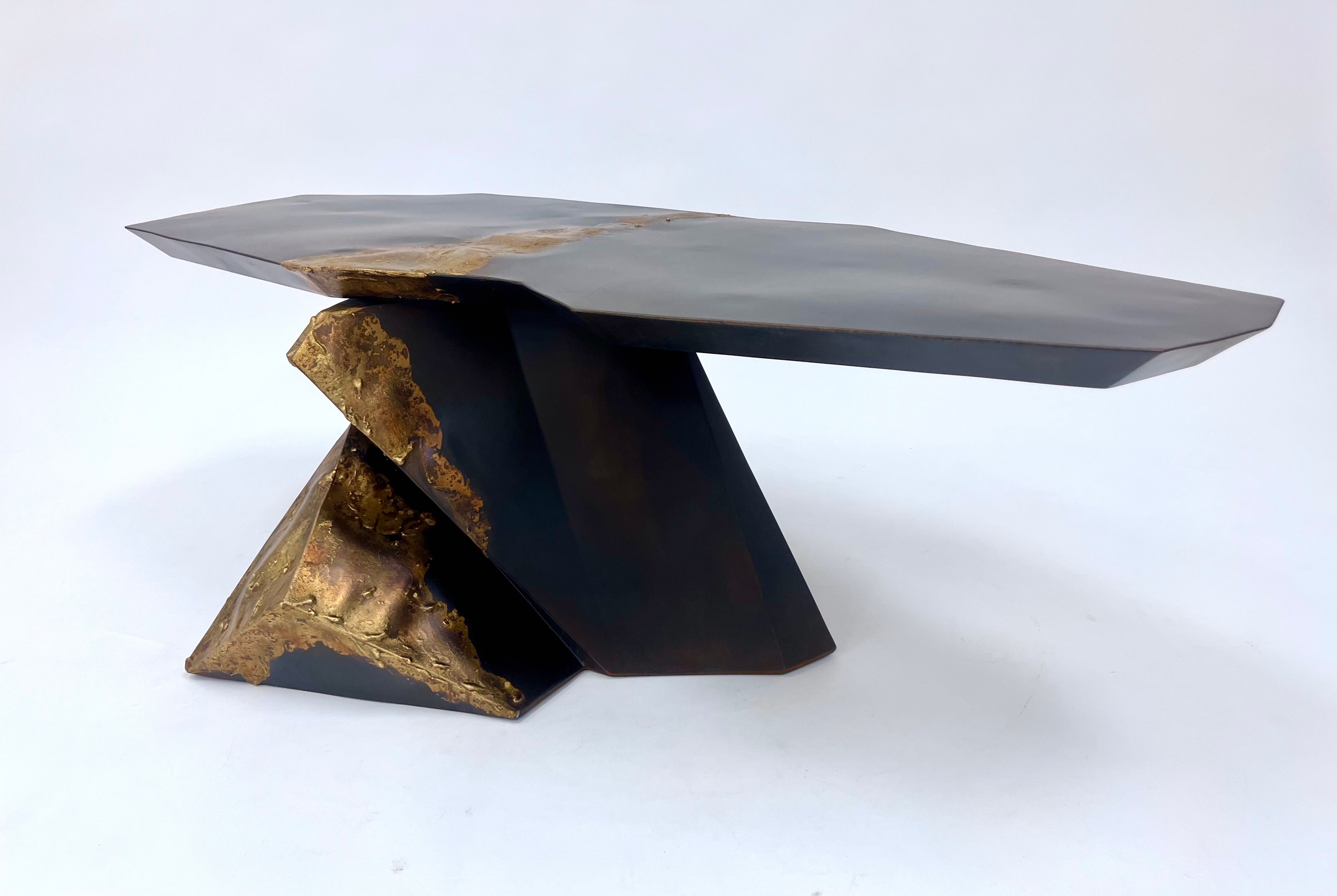
Cairn
Steel, Brazing rod
H 17"x L 48"x D 28"
I decided, once again, to attempt the already perfected design of the rock for this coffee table. The labor and technically intense fabrication process became a direct correlation to the moving and stacking of large stones in the “benches” I had arranged out in nature. The multi-layered piece is a literal interpretation of the stacking of rocks. The heaving, splitting, and warping of the surface is a visual record of the process it took to make the piece — much like the layers and veins that run through real stone.
Image
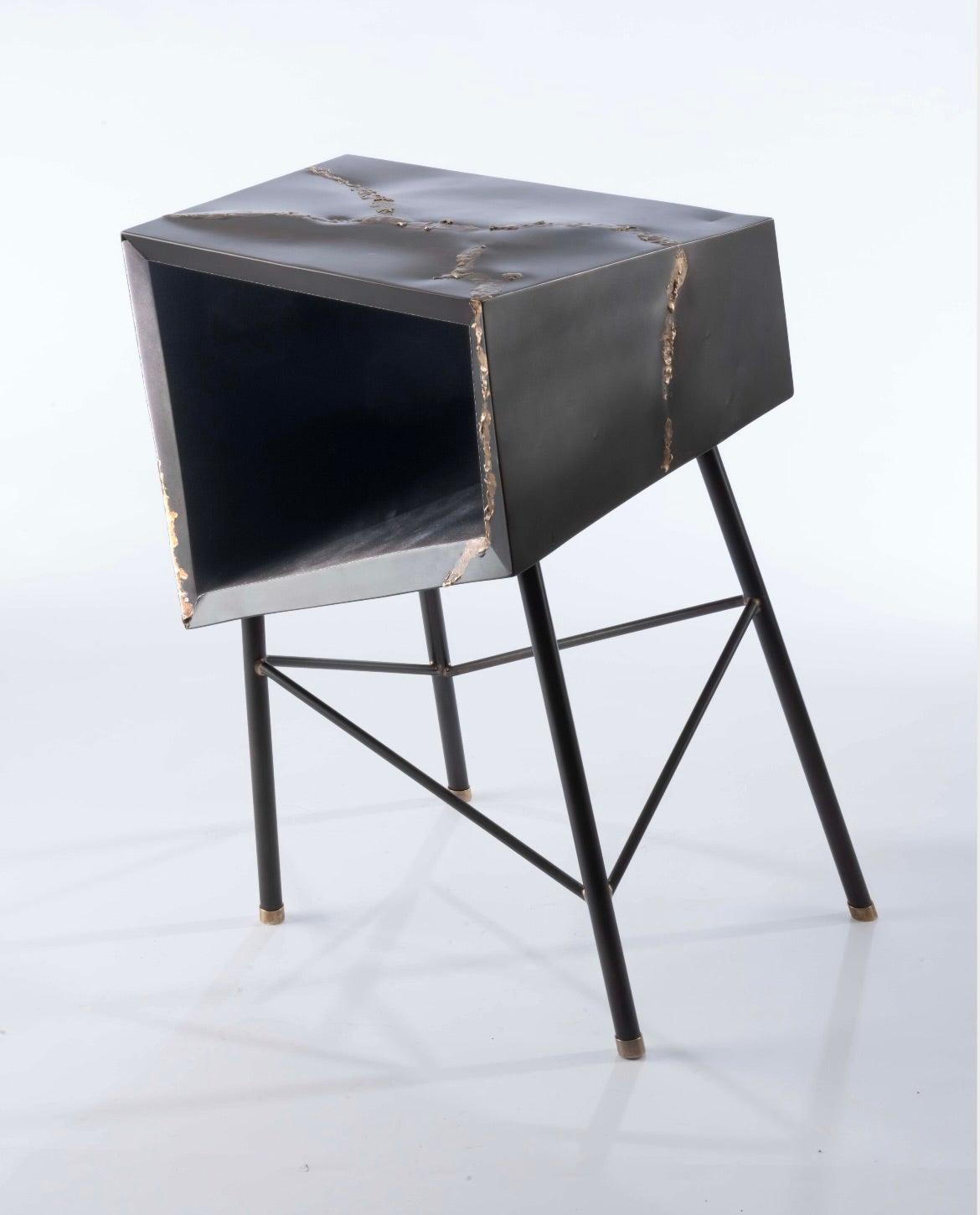
Caution Hot!
Steel, Brass, Brazing rod
H 32"x W 26"x D 24”
Made from a hollow form welded sheet steel, and a brazing technique inspired by old steel bike frame connections. The brazing process inspired the melting of brazing rod to be used as a decorative surface treatment. Where the legs have been meticulously filed and sanded to leave only a trace of the bronze the top has been over applied and left in its drippy melted state. The feet are custom brass and made using traditional silver soldering, similar to jewelry techniques
Image
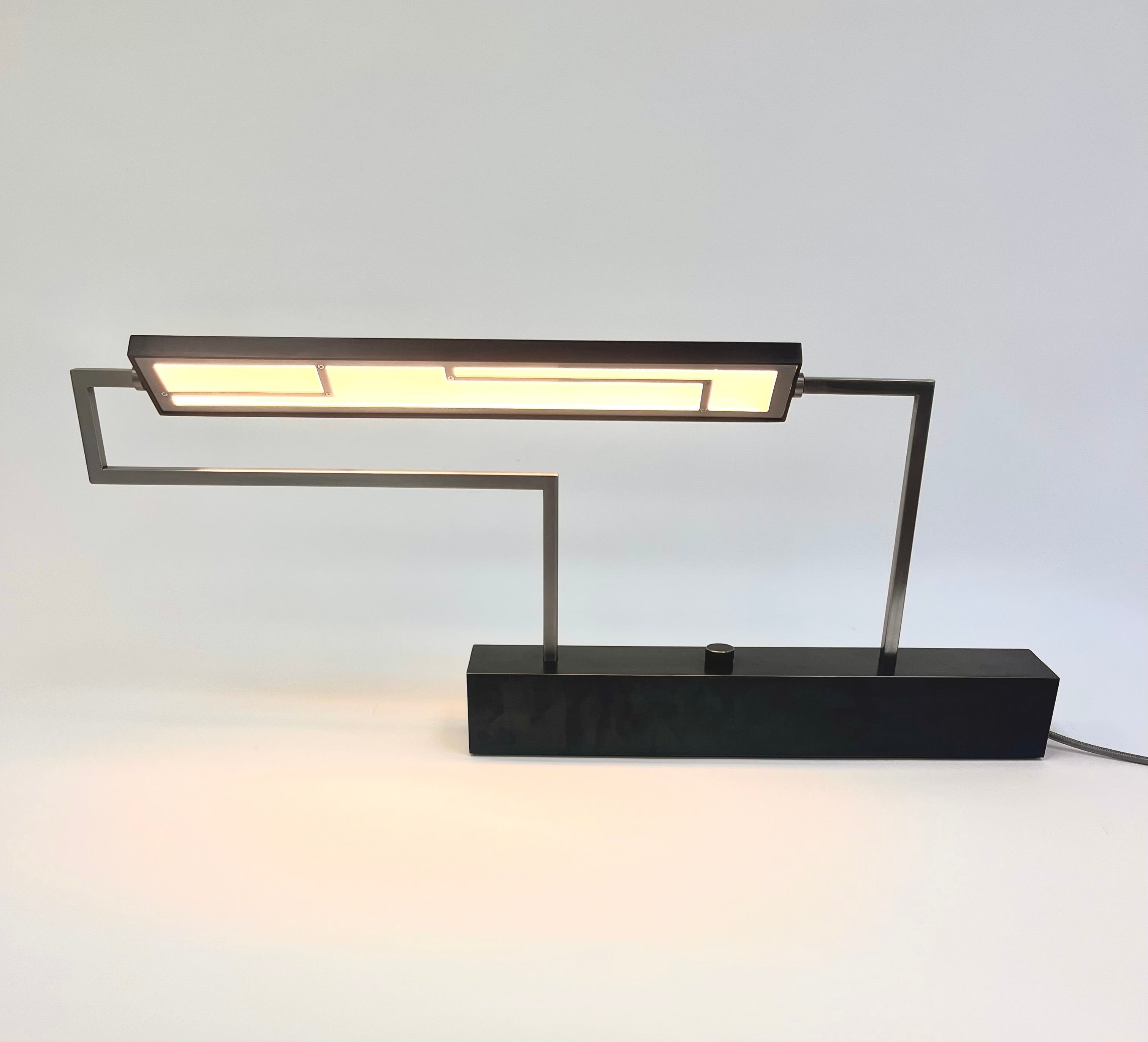
Dark Blue
Steel, LED, Acrylic, purchased wiring components
H 17"x W 24"x D 3"
Loosely inspired by billboards and circuit diagrams, this light is hand made using all mild steel, with a hand applied patina. The light source is LED and the light defuser is acrylic. It can be dimmed and rotated to give ambient or focused light source. The knob is made from round stock and uses modified electrical components for the dimmable action. The patina was carefully removed along the edges to highlight the hard corners.
Image
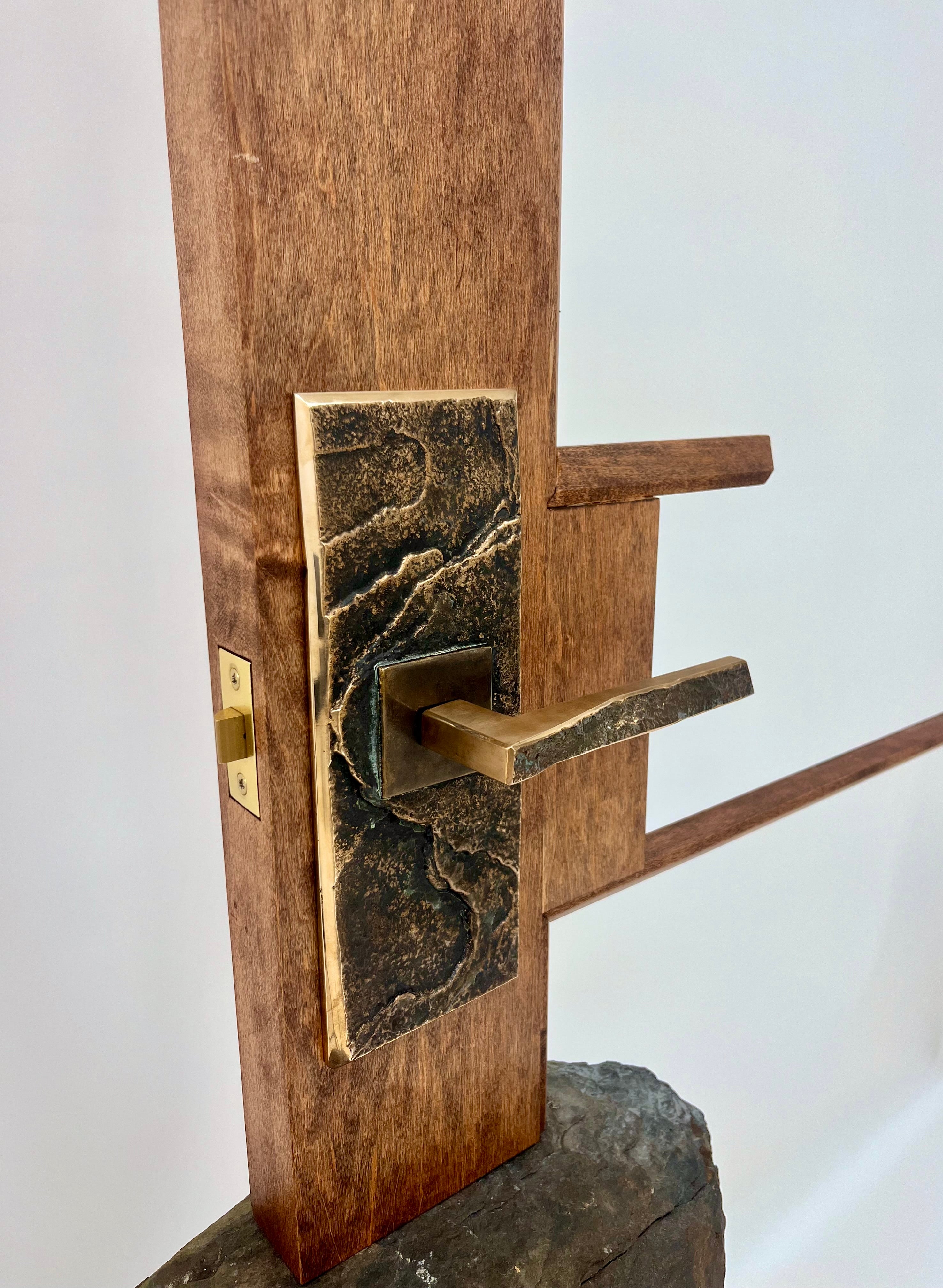
Benefit St
Bronze, Found stone, Purchased door latch, Ash wood
H 32"x W 24"x D 10"
This cast bronze door handle is a functional piece of hardware that I have displayed in a sculptural object. Using mold making techniques I was able to pull texture from natural surfaces such as rocks or sidewalk slate, then using small scale sand casting poured the bronze, followed by meticulously filing, sanding, and polishing certain areas while leaving the natural texture in others. As a display method I chose to create its own pedestal from found rock and fabricated mild steel base, and attaching the hardware to the essence of a door. Benefit street is a popular/affluent road in Providence near the RISD and Brown campuses that I walked often in my time there.
Image
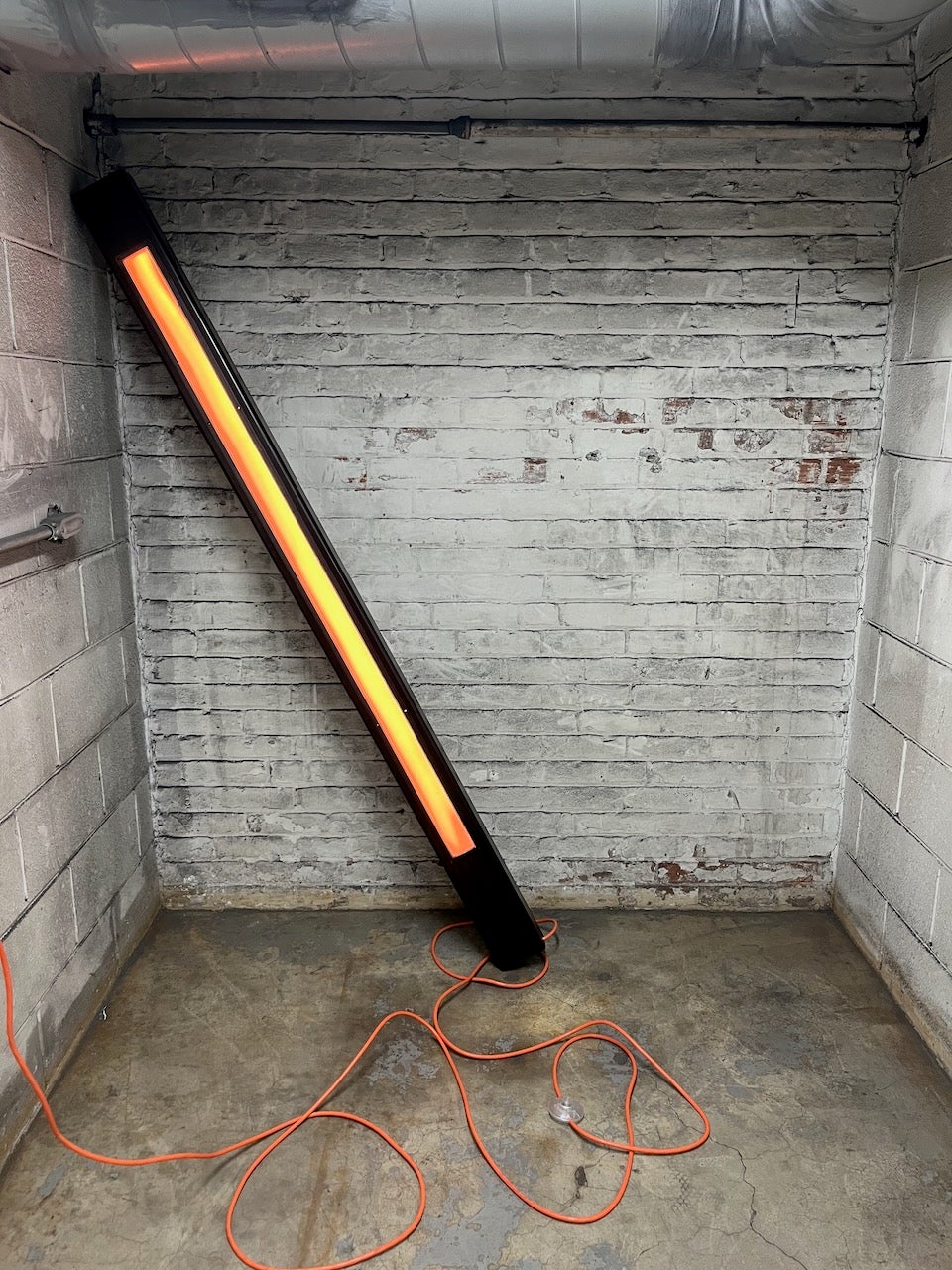
Heavy Metal
Steel, Extension cord, LED, Acrylic
H 72"x W 5"x D 3"
Based on the exploration of the found materials (steel bar, LED strip) is a heavy free standing monolithic floor lamp. The majority of lighting comes from the reflective qualities of the surrounding area dictated by the placement of the beam and the direction the user chooses to direct the light. It emits an orange glow that resembles the glow of red hot metal. Leaning precariously the weight of the monolith is the means of its stability. The finish was a hand applied patina that allows for the natural mill scale to show through and gives reference to the industrial source, the weight and the jumble of cords adds to the precariousness of the object.
Image
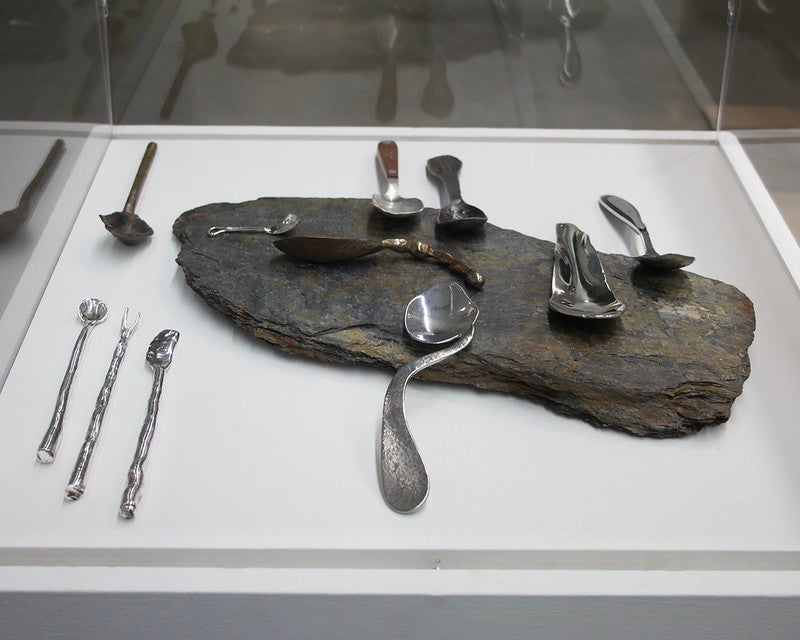
Table Manners
Stainless steel, Mild steel, Aluminum, Rosewood, Bronze, Brass, Silver
A series of spoons and a fork, knife and spoon set. This series was an exploration in form and materials. The idea stemmed from cutlery that was inspired by oysters and other shelled sea creatures. During the 19th and early 20th centuries the age of Conspicuous consumption is a great example of where the spoons purpose was quickly laid aside in order to convey class and elite status among the people. Along with having a particular utensil for very particular tasks at the table, silverware began to be decorated without restraint, making serving spoons so ridiculously lavish as to be an ornament and no longer a tool or useful utensil.
Image
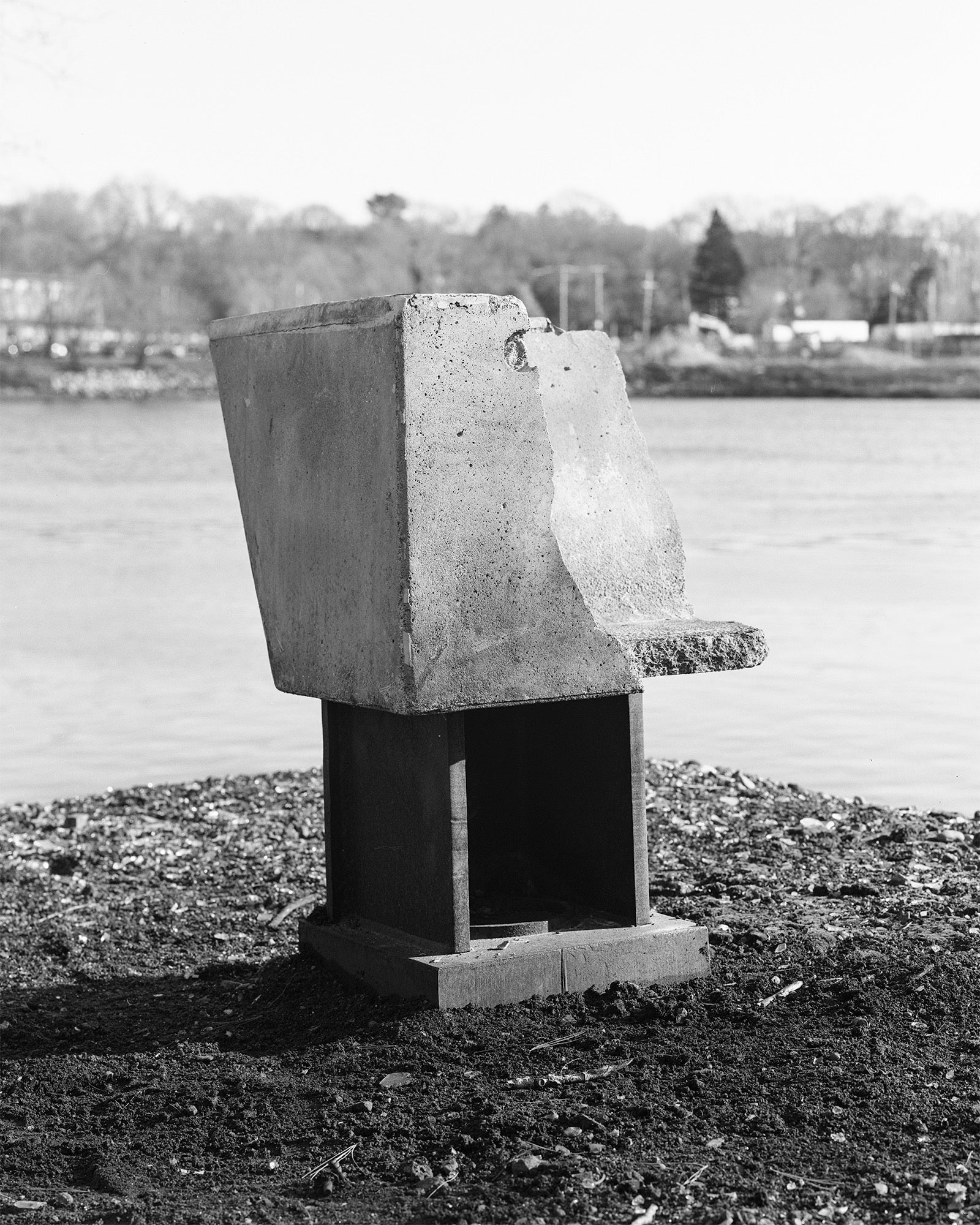
Some Assembly Required
Found cement sink, Found steel infrastructure
H 30"x W 24"x D 20"
After discovering these two separate discarded objects on a long walk along the east bank of the Seekonk River near Henderson Bridge, I laboriously transported them to a single location, and assembled them together on site. The area is filled with other pieces of rubbish, trash, and dumped items. Without altering the pieces in anyway I stacked them so they would create a comfortable chair in an orientation to have a beautiful view of an old decommissioned draw bridge, making an ugly abandoned area have a small moment of serenity
Image
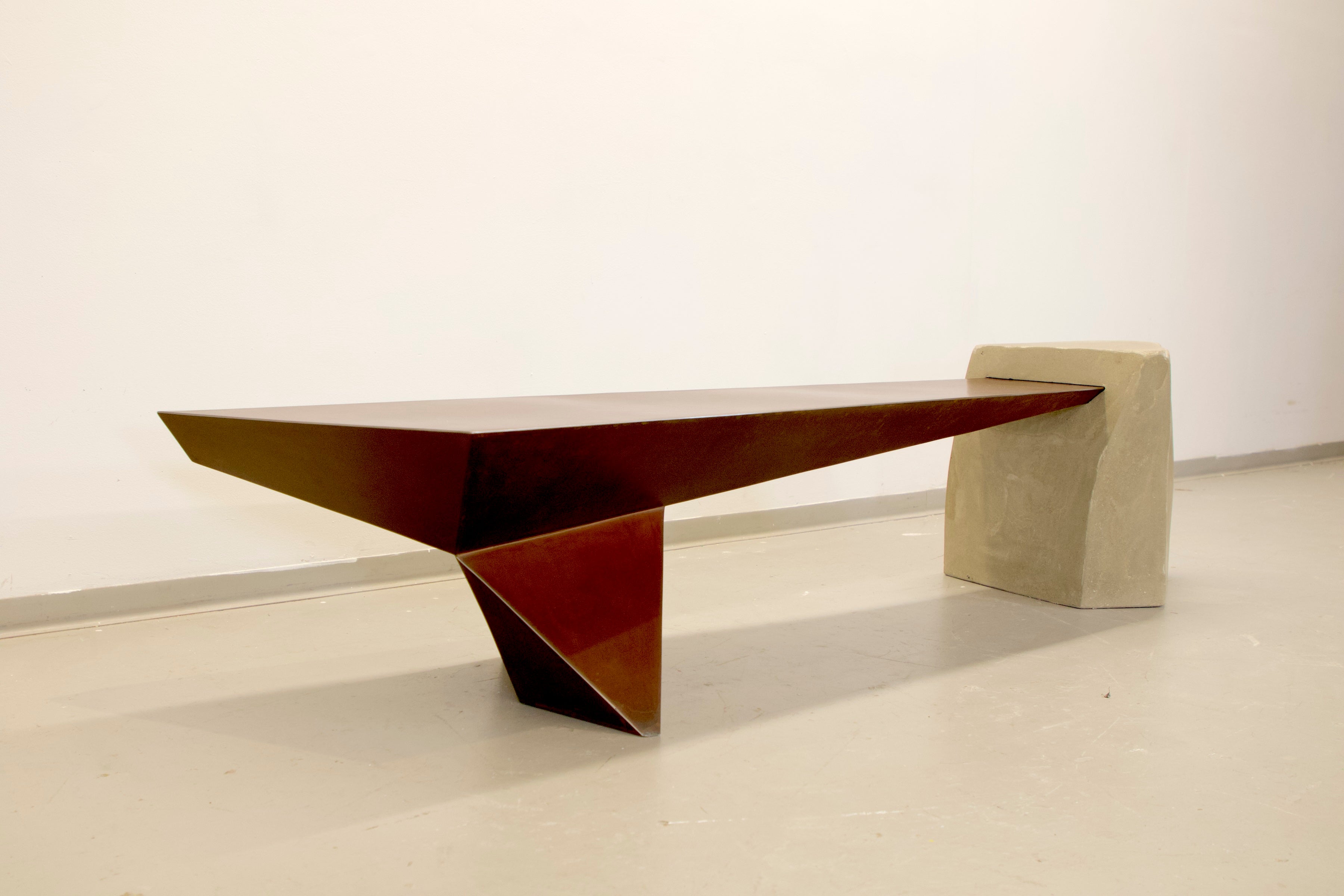
Highlight
Steel, Cement All, Hardware cloth, Applied patina
H 19”x W 76”x D 26”
A culmination piece of my time at RISD. Pulling from the various techniques that I have learned and honed over my two years in the graduate furniture program, I created this bench. After applying a patina to replicate rust, I polished and therefore removed the patina to reveal and highlight certain edges throughout.Inspired by Some Assembly Required, Highlight is my reinterpretation of what was a field study in materials, value, and environment.
Image

Rhode Island School of Design
20 Washington Place
Providence, RI 02913–2784
United States of America
+1 401 454 6100
+1 800 364 RISD
QUICK LINKS
risd.edu
Graduate Studies


Image
Rhode Island School of Design
20 Washington Place
Providence, RI 02913–2784
United States of America
+1 401 454 6100
+1 800 364 RISD