Helena He
MDes interior Architecture
Feng Shui: Daoist Cosmology into Architecture
Rooted in classical Chinese cosmology, the Daoist Five Elements (Wood, Fire, Earth, Metal, and Water) describe dynamic cycles of mutual generation (sheng)—in which one element produces or supports another—and restraint (ke)—in which elements regulate or limit one another to maintain balance. Rather than a system of symbolic representation, these interactions outline a relational model of equilibrium based on interdependence and continuous transformation. Wood, Fire, Earth, Metal, and Water can inform a contemporary design framework for interior and architectural practice. It interprets these cycles as a form of spatial logic that guides material selection, structural organization, environmental modulation, and experiential sequencing, while also addressing the challenge of translating a complex philosophical system into a design methodology accessible to a broader audience.
The thesis first establishes how each element is defined within its original philosophical context, and then examines how these elemental qualities can be translated into architectural terms and applied within design practice. Wood is associated with growth and vertical extension; Fire with illumination and spatial activation; Earth with stability and centrality; Metal with structure and precision; and Water with fluidity and circulation.
Image
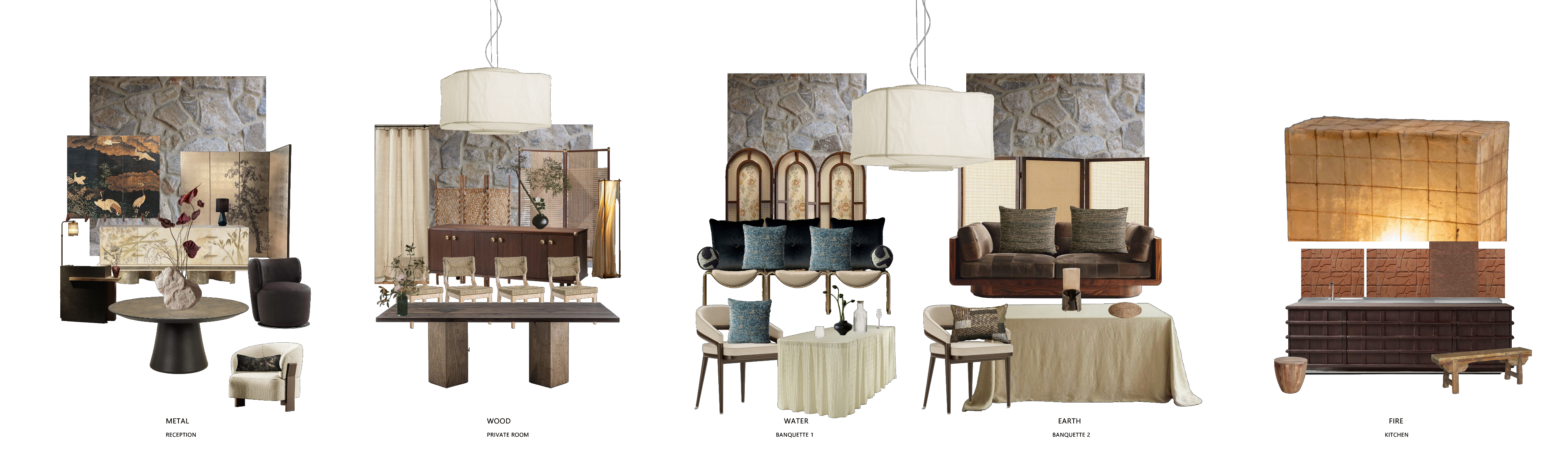
Conceptual interior collage developed for the adaptive reuse of Eliot Tower as a vegetarian restaurant. The composition explores the relationship between the Five Elements philosophy — metal, wood, water, earth, and fire — and the spatial organization principles found in traditional feng shui.
Each restaurant zone is associated with a specific elemental quality and corresponding material palette, furniture selection, texture, and atmosphere. The reception area emphasizes metal through reflective surfaces and sculptural forms; the private dining room introduces wood elements with natural timber furniture and woven textures; the banquet spaces express water and earth through soft fabrics, layered neutrals, organic forms, and grounded seating arrangements; while the kitchen is represented by fire through warm lighting, stone textures, and earthy reddish tones.
Image
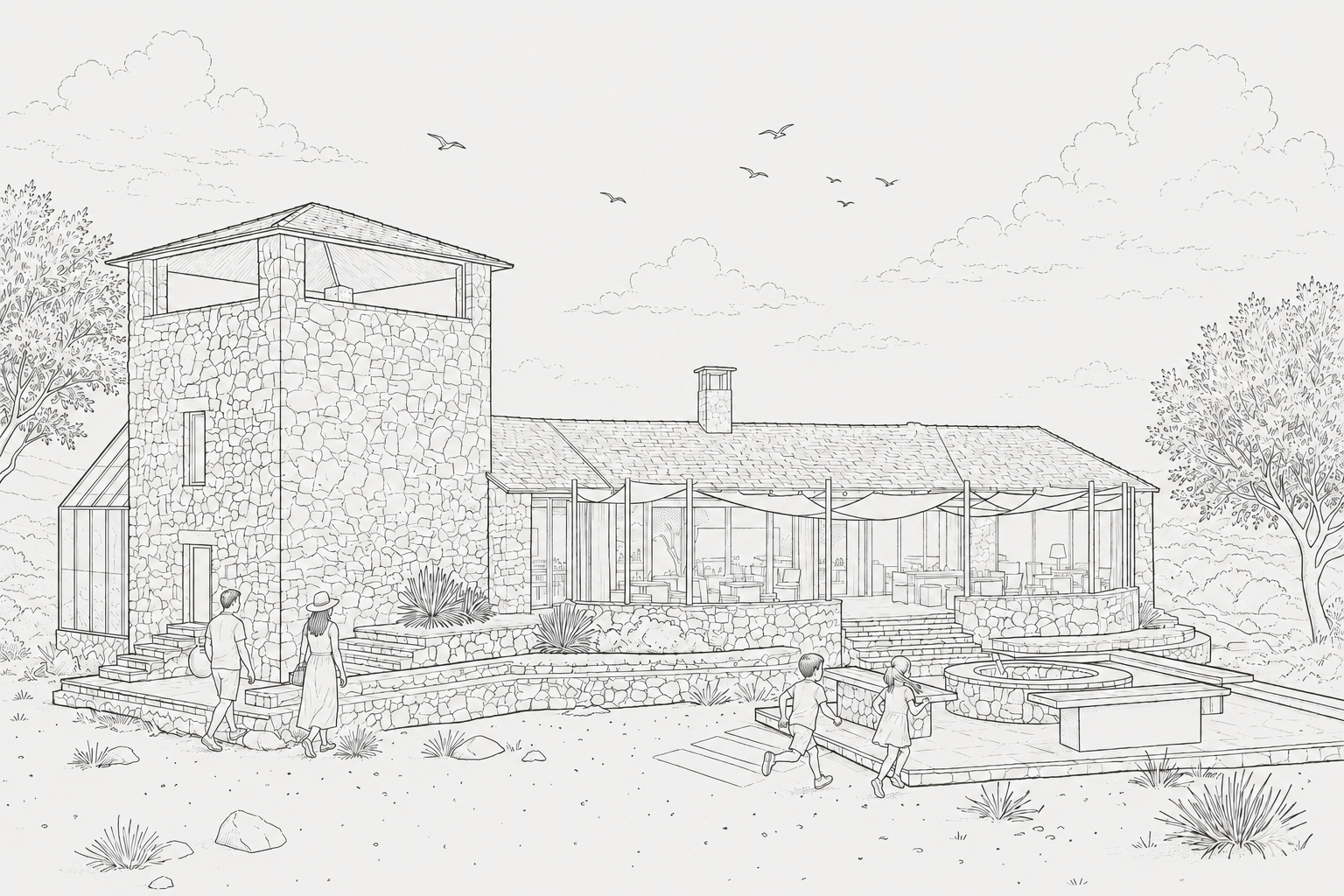
Architectural line drawing depicting the adaptive reuse of Eliot Tower, a historic stone structure located in the Blue Hills area near Boston. The project transforms the original tower and surrounding site into a contemporary vegetarian restaurant while preserving the character of the historic masonry architecture.
Image
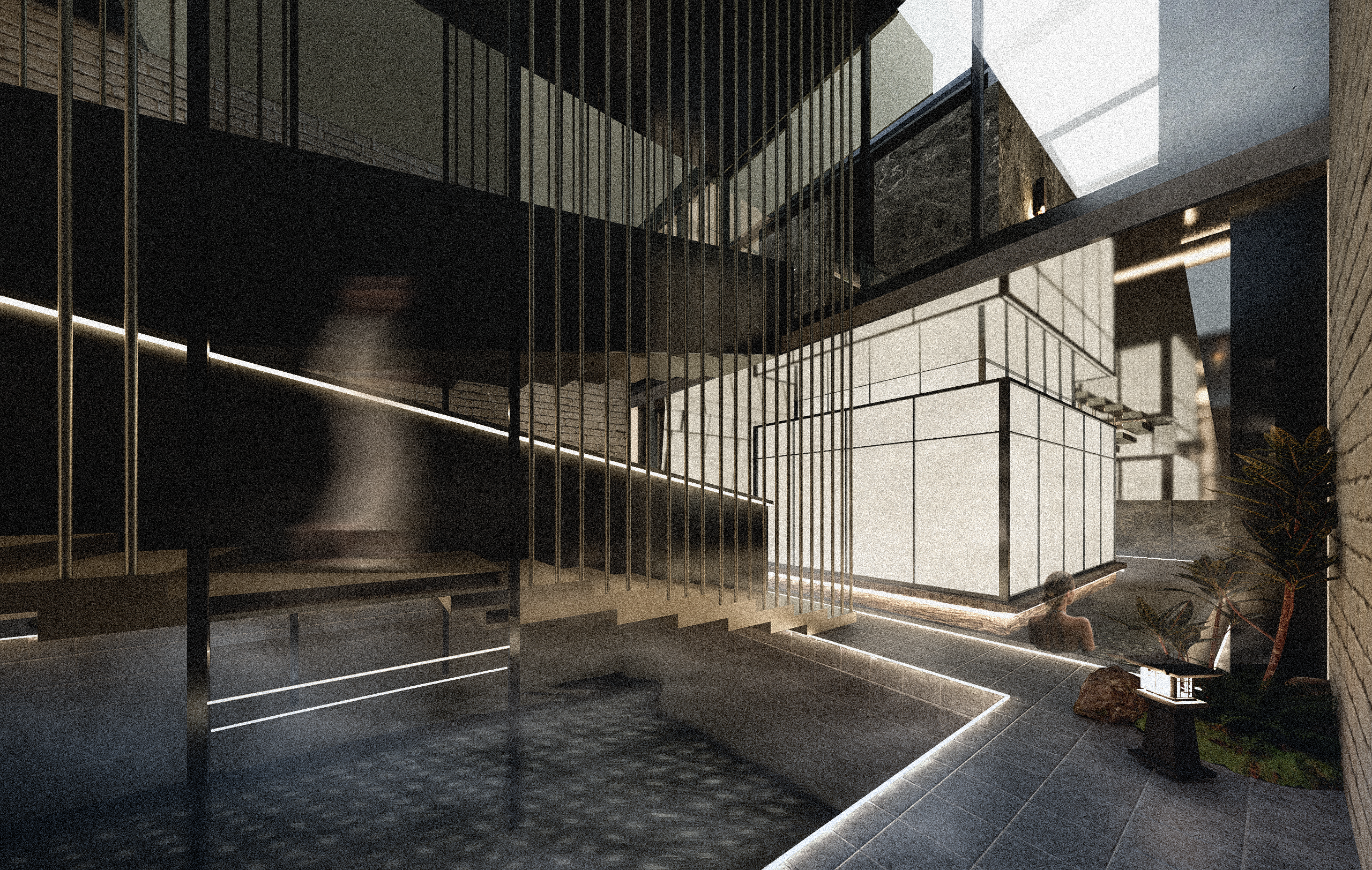
The original site was designed by renowned architect Philip Johnson in 1948. There is a pool in the courtyard of the existing building offers a sense of calm that contrasts with the energy and density of Midtown Manhattan.
This contrast became the starting point of the project and Yin and Yang is a feature the design going through. Water is introduced as the central design element, shaping the space into an urban retreat where visitors can step away from the city, reconnect with nature, and experience mental and physical restoration
Image
Rhode Island School of Design
20 Washington Place
Providence, RI 02913–2784
United States of America
+1 401 454 6100
+1 800 364 RISD
QUICK LINKS
risd.edu
Graduate Studies


Image
Rhode Island School of Design
20 Washington Place
Providence, RI 02913–2784
United States of America
+1 401 454 6100
+1 800 364 RISD