Jenny Stageberg
MArch Architecture
Textile Tectonics: Weaving Memory, Body, and Belonging
My design approach balances values of environmentally conscious, human-centric design with technical precision and an eye for detail. I often find inspiration in the mundane, which leads me to use unconventional materials in my studio practice. Context is key to my process, driving my projects and influencing the architectural concept.
My thesis work delves into the idea of home as a sensory experience. Separating the feeling of home from the physical space of the house I aim to create new spaces that give the occupant autonomy and foster intimate connections with the material of the architecture. This is done with the hope of creating homes more attune to the human body that provide a sense of belonging.
Image
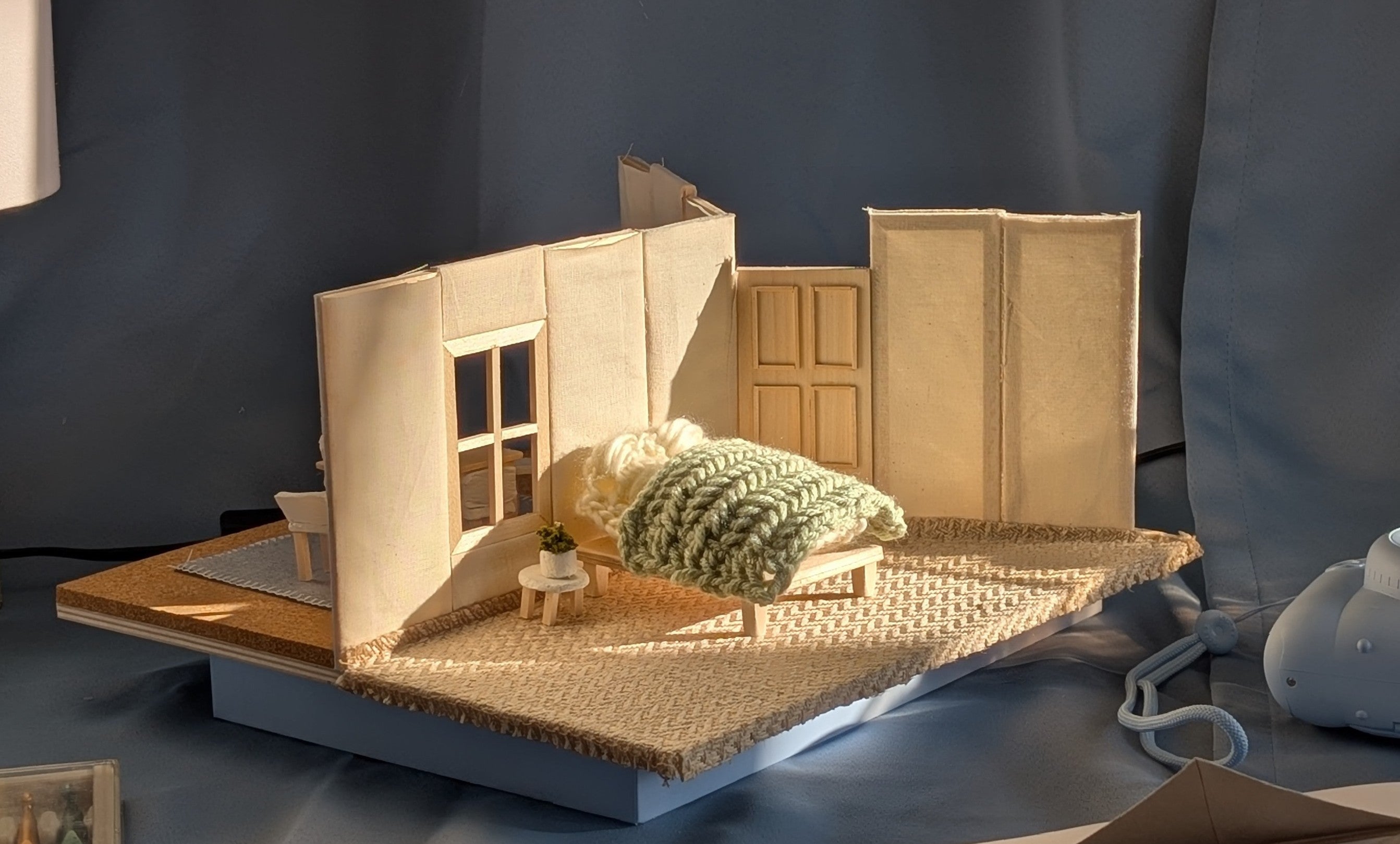
Periaktos of Domesticity
A three way stage design explores three scenes of domesticity: the bedroom, kitchen, and porch. This model is made using traditional homemaking techniques I learned growing up. This includes sewing, knitting and crochet, quilting, and scrapbooking.
Image
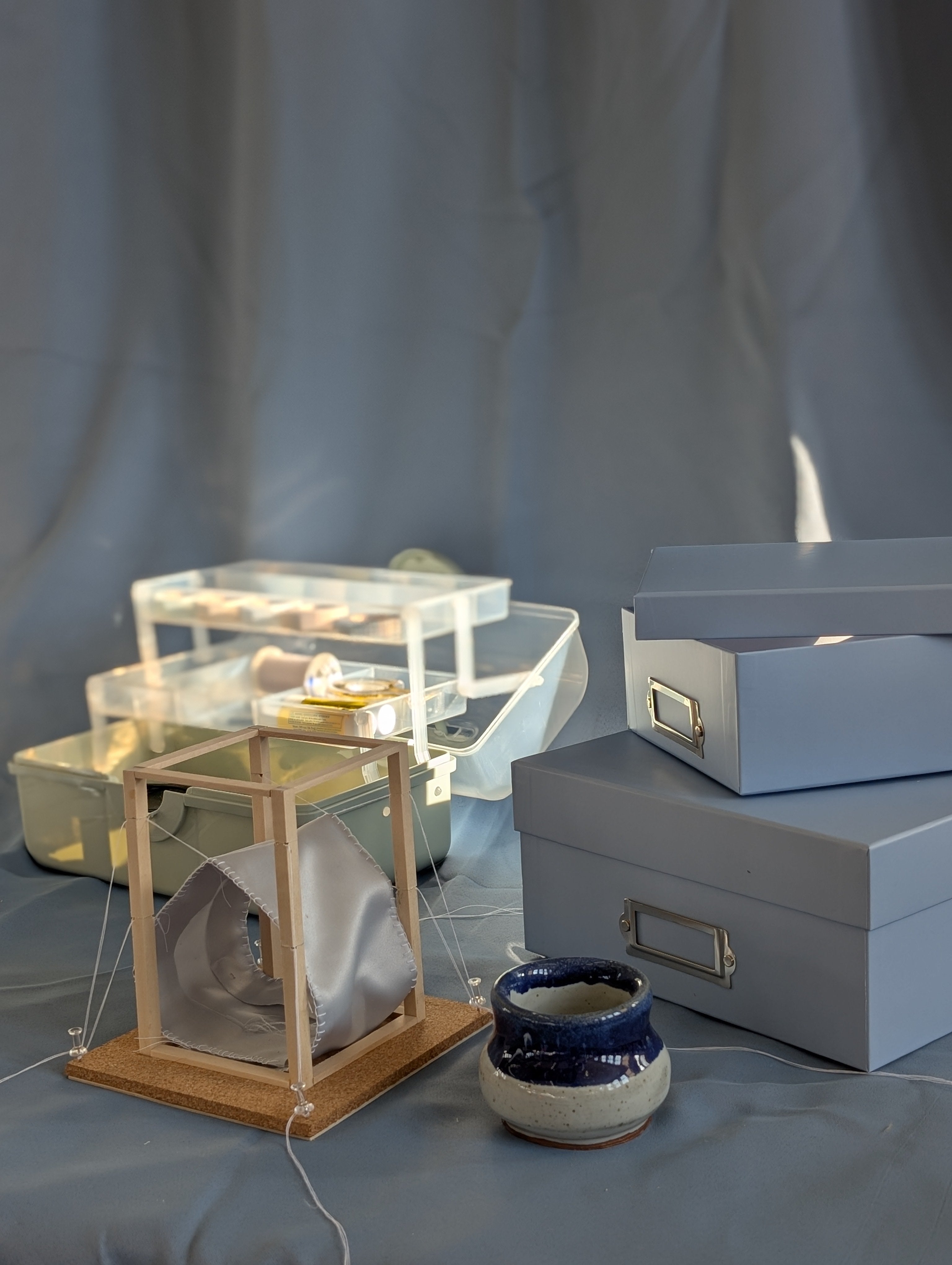
Pop-Up Model
As temporary housing becomes increasingly more necessary, structures that are demountable and adaptable allow the occupant autonomy over their space. Using a pulley system this model transforms from a flat piece of fabric to a space that resembles the form of a house. It requires two people working together to complete the transformation which highlights community building and construction.
Image
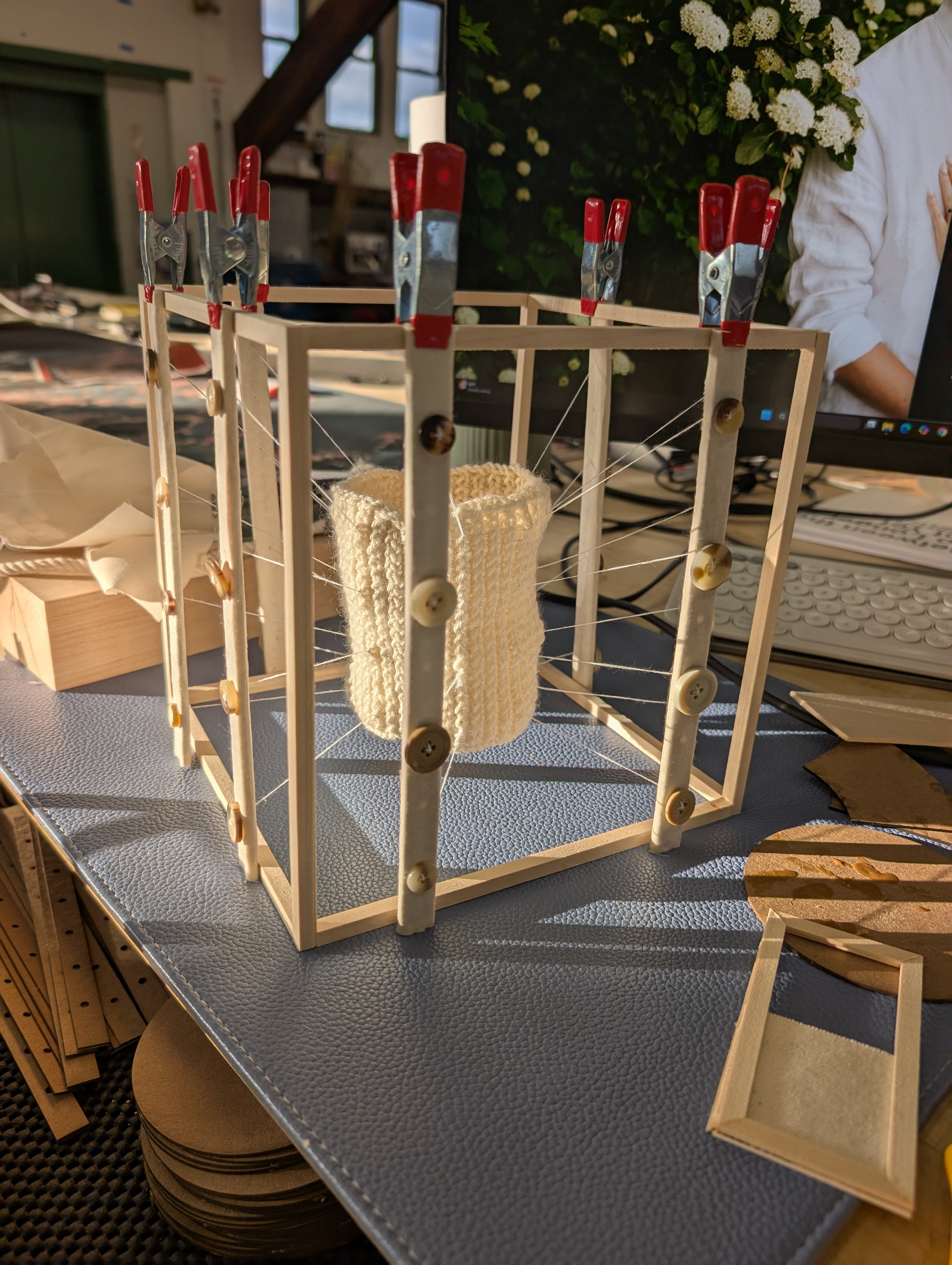
Puppet Model
This exploratory model aims to create a knit space that can be pulled and twisted to create different shapes. As the body operates the model the space is dictated by those movements. Textiles have a unique relationship to our bodies. We wear them every day and experience them through multiple senses. Fabric can hold stories, memories, and experiences. In the same way our homes should wrap around us protecting and caressing us all at the same time. The material and spatial experience should be intimate, forming to our bodies. I want to imagine the home as a connection point between our bodies and the world beyond.
Image
Woven Swatch Forms
This series of swatches shows the potential for textile architecture and the relationship to the body. Here I am testing the material, construction system, form making ability, and scale. These spaces are intended to facilitate a feeling of home, recognizing that a home can exist without the presence of a house. Home goes beyond a physical building and encapsulates memories, feelings, and experiences.
Image
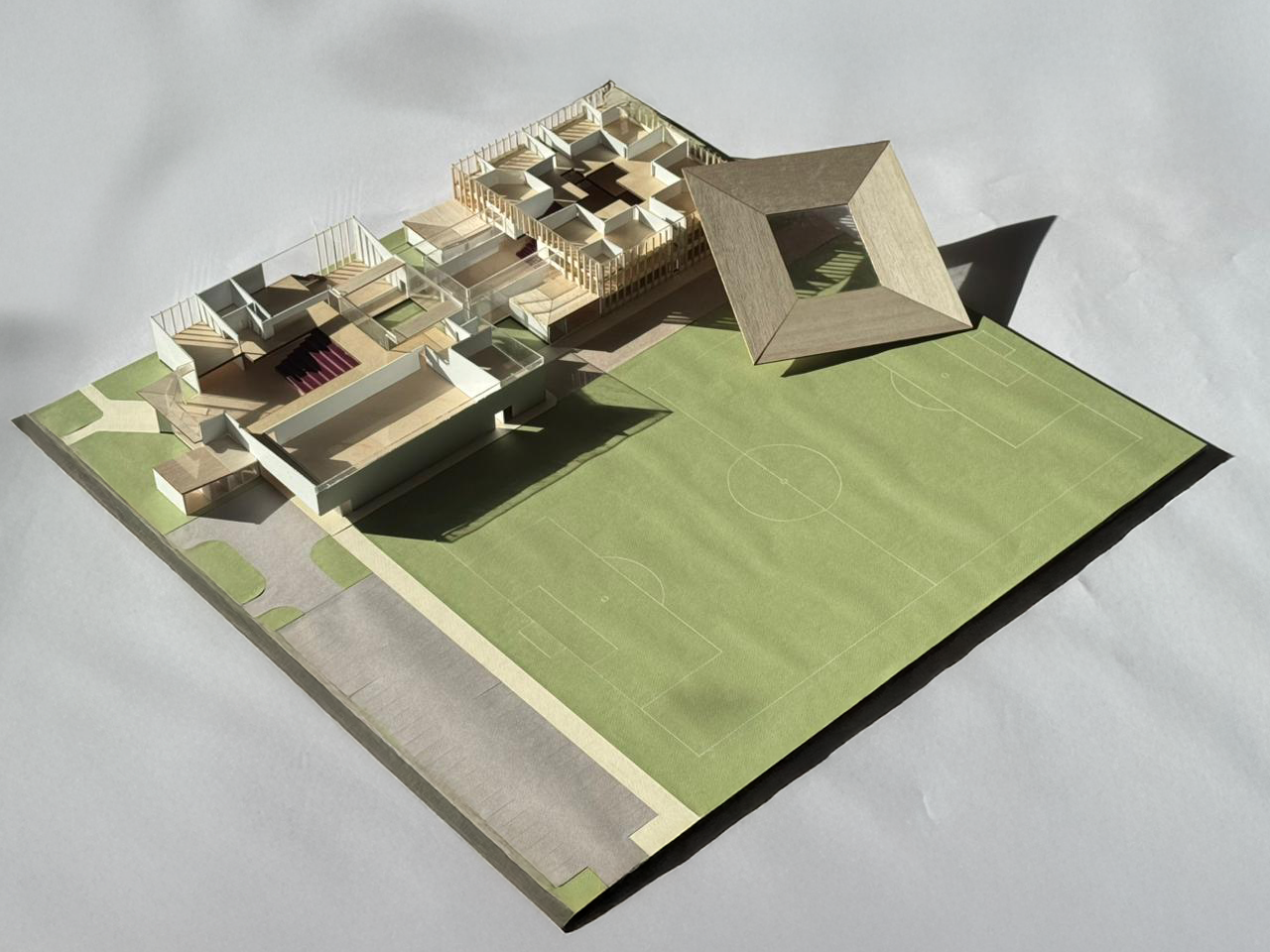
Schools that Speak Us
This project began as an urban analysis and planning exercise for the schooling system of Pawtucket. It identified bilingual learning and cultural integration into schools as an important addition necessary for the academic success of students from diverse backgrounds. The project culminated in a design proposal for a test case middle school - one that explores bilingual learning for all grades, as well as a cultural celebration community space that serves as a threshold between the community and the school. It reimagines the academic and public-facing program typologies of schools as a celebration of identity, diversity, and culture.
Image
Cultural Center
The cultural center is designed as a large, flexible space that can house a variety of events and activities. It is situated at the entrance of the school so the natural
circulation of students moves through it.
Image
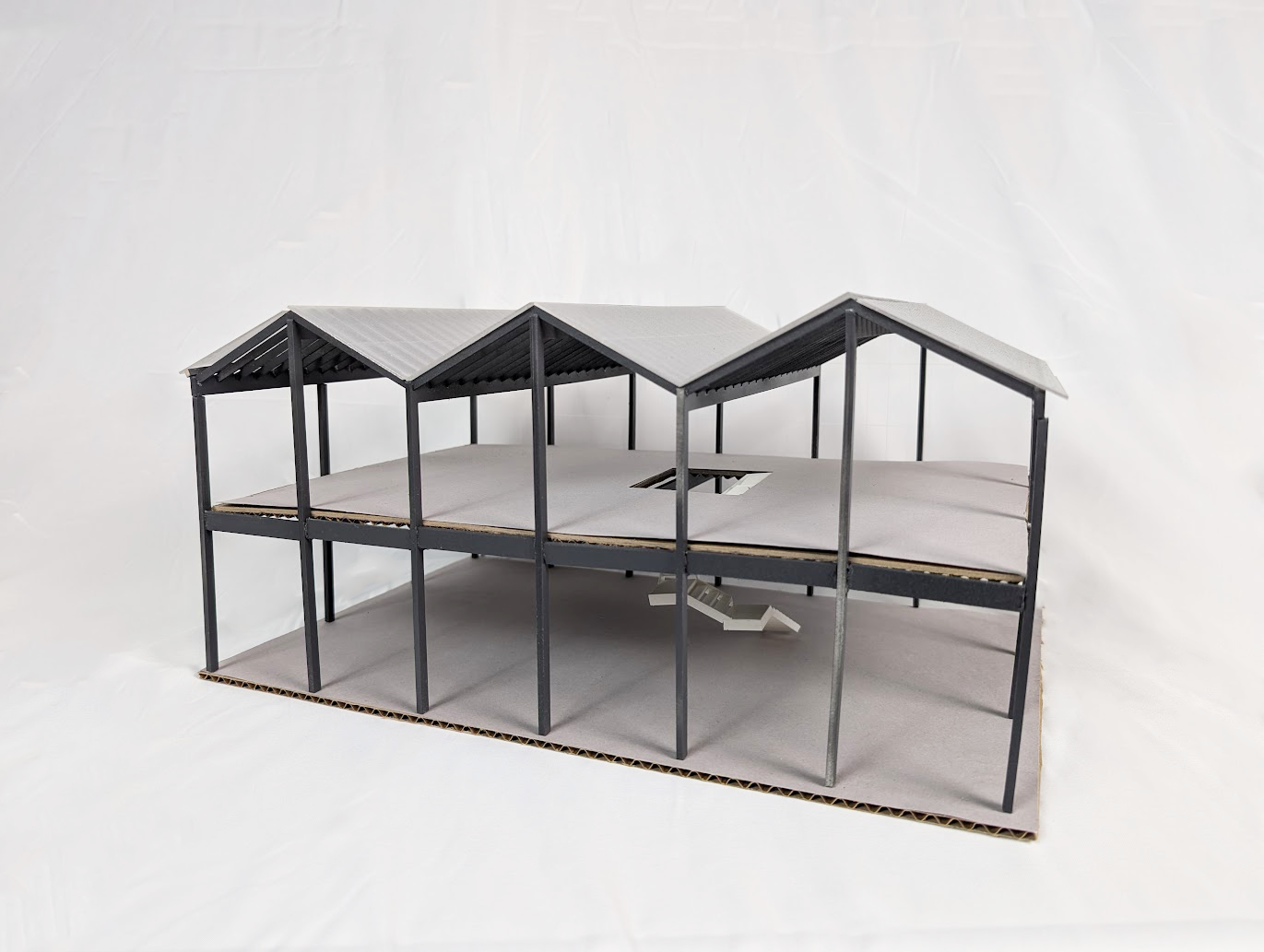
Greenhouse
As part of the design for a transitional housing and community center project located in Detroit, Michigan, this structure provides a space for residents and community members to grow their own food as well as have access to fresh produce. It serves as a gathering space that is usable in all seasons. The greenhouse highlights the importance of community engagement for those transitioning back into permanent housing.
Image
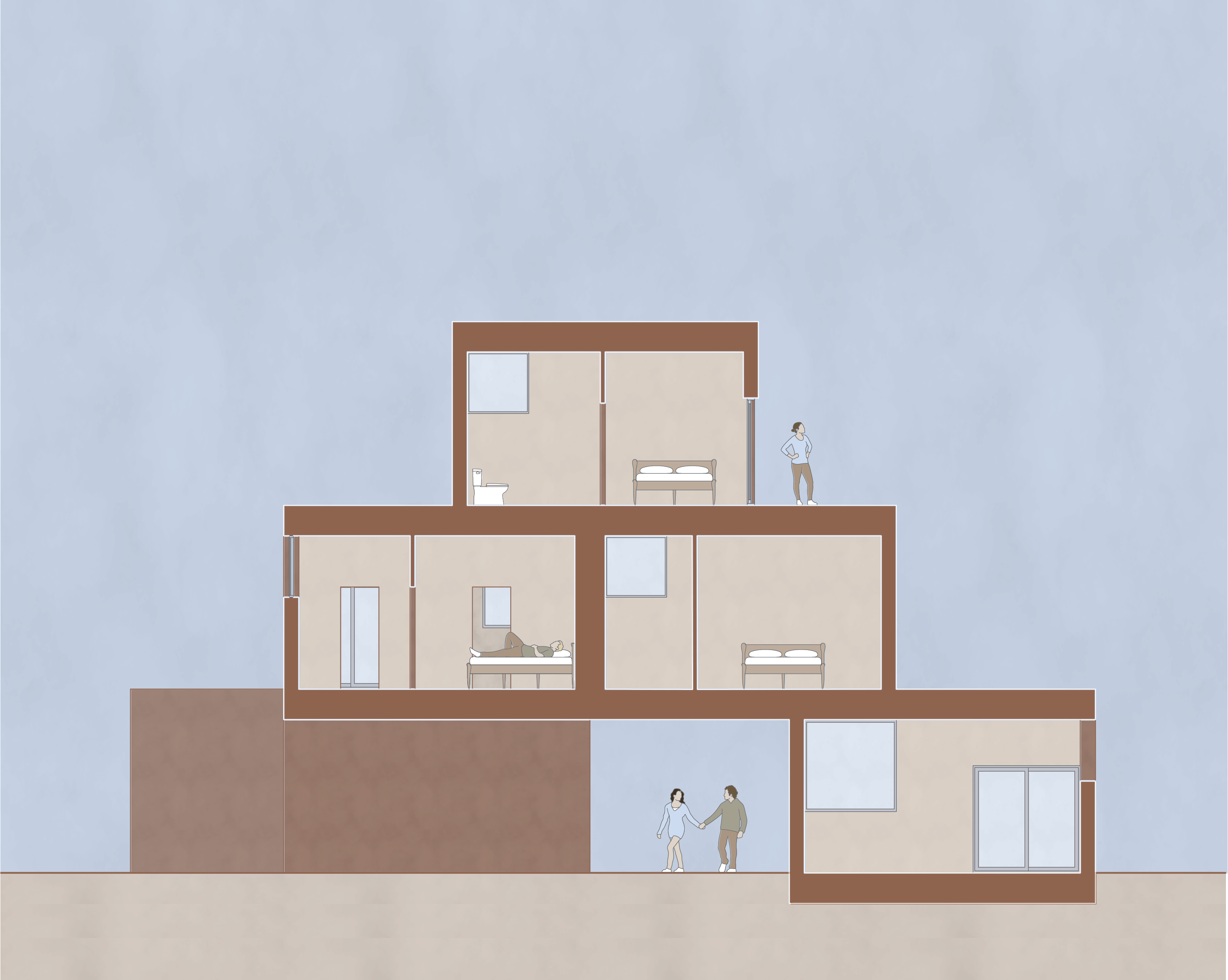
Transitional Housing Section
Apartments are stepped allowing a double height space to give the feeling of openness, while still maintaining a small square footage. The terracing effect promotes interaction between neighbors and with the surrounding community.
Image

Rhode Island School of Design
20 Washington Place
Providence, RI 02913–2784
United States of America
+1 401 454 6100
+1 800 364 RISD
QUICK LINKS
risd.edu
Graduate Studies


Image
Rhode Island School of Design
20 Washington Place
Providence, RI 02913–2784
United States of America
+1 401 454 6100
+1 800 364 RISD