Katherine Zeng
Mdes Interior Architecture
The Birdwatching Pause: Reframing Campus Life Through Everyday Bird Encounters
Birdwatching, typically framed as a leisure pursuit removed from everyday life, becomes here the organizational logic for a campus-wide system of restorative pause. The thesis departs from the assumption that nature must be sought out and instead asks what happens when the birds already present in urban space are made legible through design.
Three existing RISD buildings anchor the project, each organized around a distinct mode of encounter. At Carr Haus Café, a furniture-scaled insertion creates conditions for attentional reset through passive listening rather than active looking. At North Hall, a semi-open balcony garden introduces incidental, distanced contact with bird life into residential floors — encounter without capture, presence without performance. The Met's double-height dining hall is the most architecturally transformed: inserted rooms and a suspended catwalk reorganize the section into a protected viewing condition, slowing movement and redirecting attention outward.
Running beneath all three interventions is a quieter argument about cohabitation. Bird-safe glazing, patterned film, screened layers, and native planting are not applied as afterthoughts but threaded into each scheme as load-bearing decisions — ones that reduce collision risk and resist the tendency of designed environments to treat wildlife as decoration. The campus route connecting the three sites reframes birdwatching as something smaller and more serious than recreation: a form of attention that is restorative precisely because it asks something of the person doing it, and protective because it asks something of the building.
Image
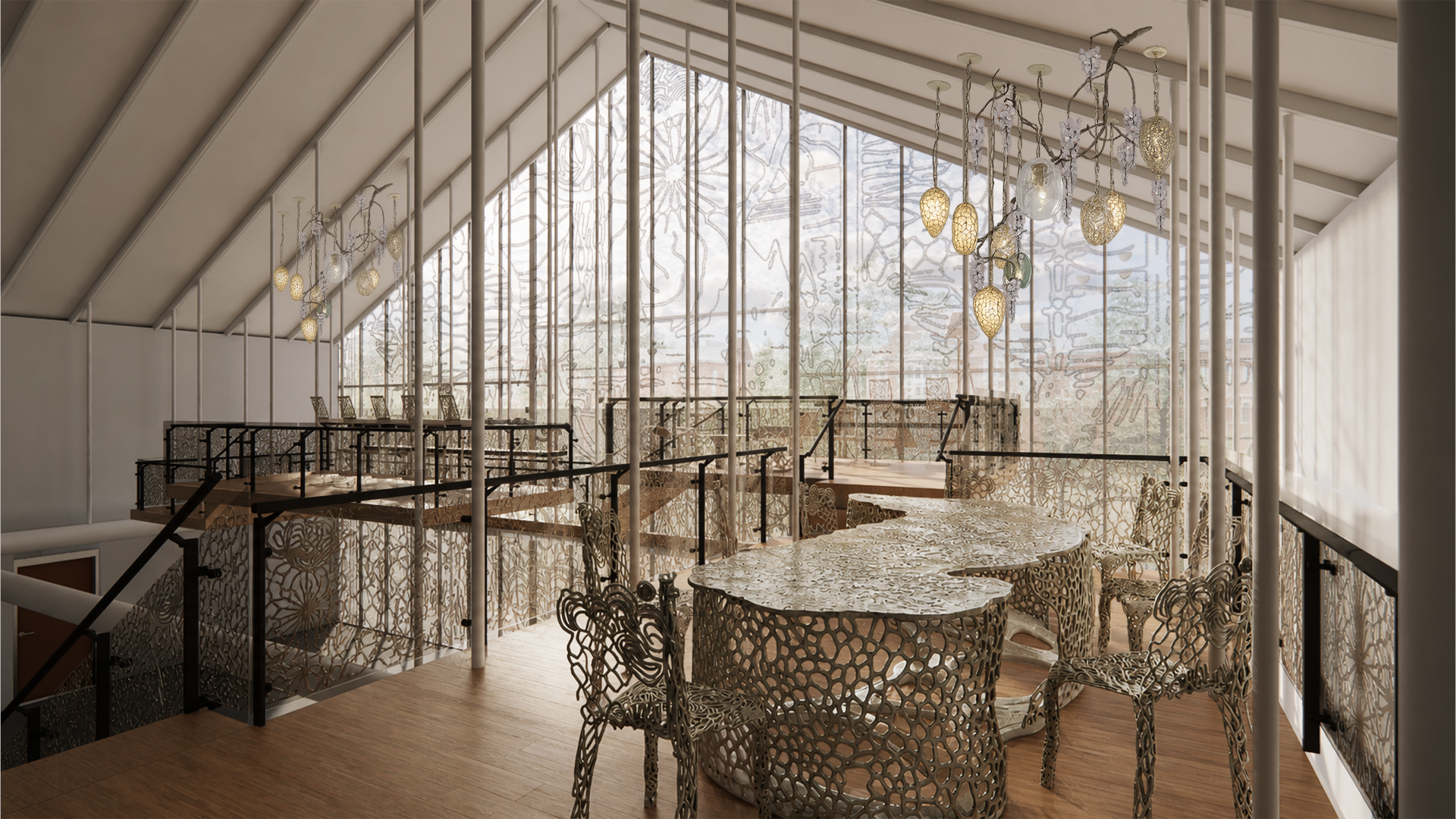
The Met Viewing Pavilion
Interior rendering of the proposed double-height viewing intervention at The Met dining hall, RISD. The design inserts elevated catwalks, inhabitable perches, and screened thresholds within the existing volume to create a slower, more protected mode of bird observation. Patterned bird-safe glazing and layered metal screening reduce reflection and collision risk while filtering light and view. Custom furniture and railing elements draw from nest, perch, and branch-like geometries, translating bird habitat into an inhabitable interior language for students. The space is conceived not as a destination habitat, but as a protected viewing point along an existing urban bird path, where students can pause, observe, and experience a more careful relationship between campus life and urban ecology. Digital rendering.
Image
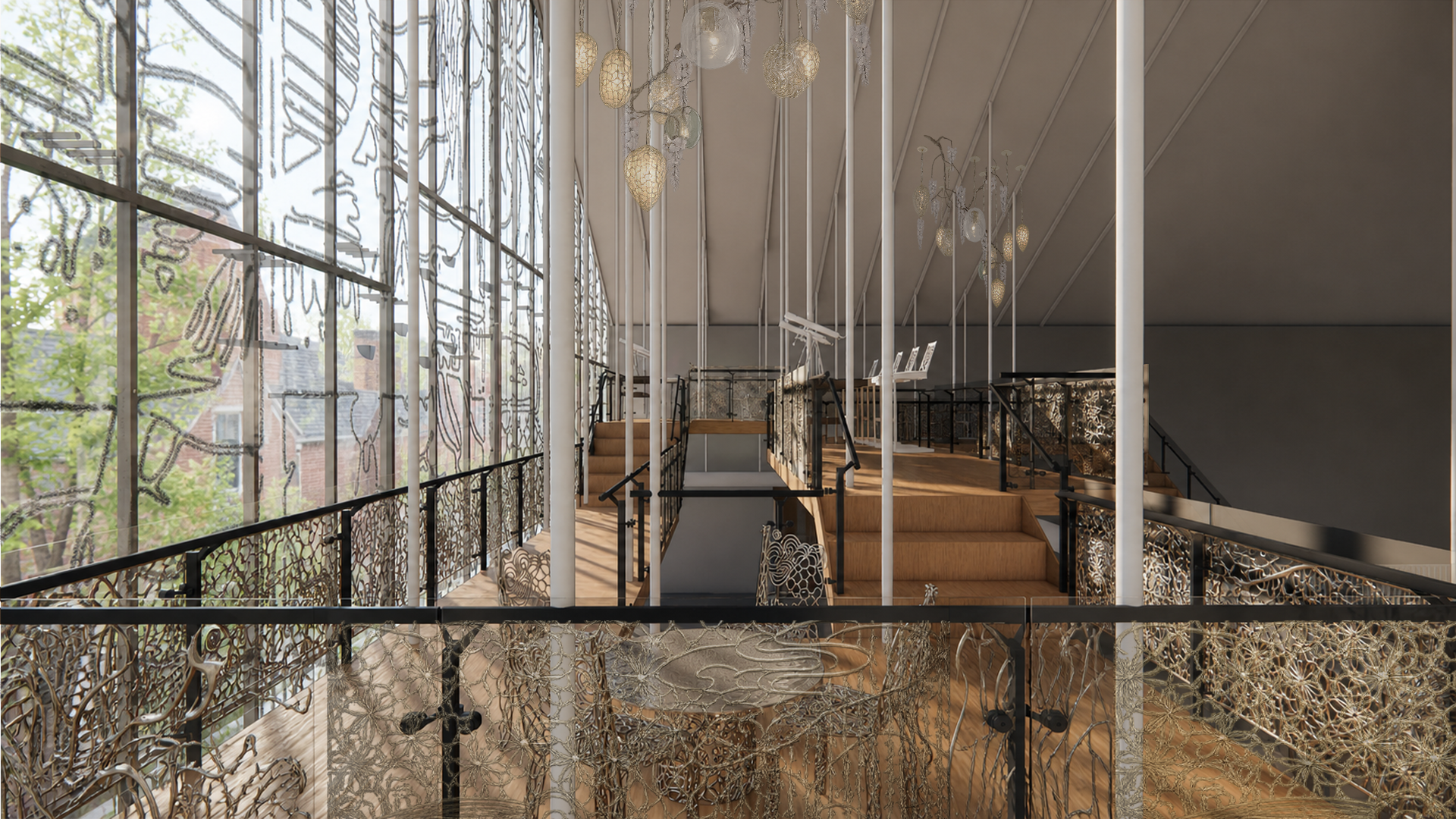
The Met Catwalk Viewing Interior
Interior rendering of the proposed viewing intervention at The Met dining hall, RISD. Located within the existing double-height volume, the design introduces elevated catwalks, stepped platforms, and inhabitable perches that slow movement and frame outward observation. Bird-safe patterned glazing and layered metal screening reduce reflection and help protect passing birds while maintaining filtered views toward the surrounding tree canopy. Ornamental perch-like furnishings, suspended lighting, and delicate branch-inspired detailing translate bird habitat into an interior language of pause, shelter, and careful attention. Rather than attracting birds directly to the façade, the project positions The Met as a protected viewing point along an existing urban bird path, where students experience a more deliberate and ethically framed relationship between campus life and urban ecology.
Image
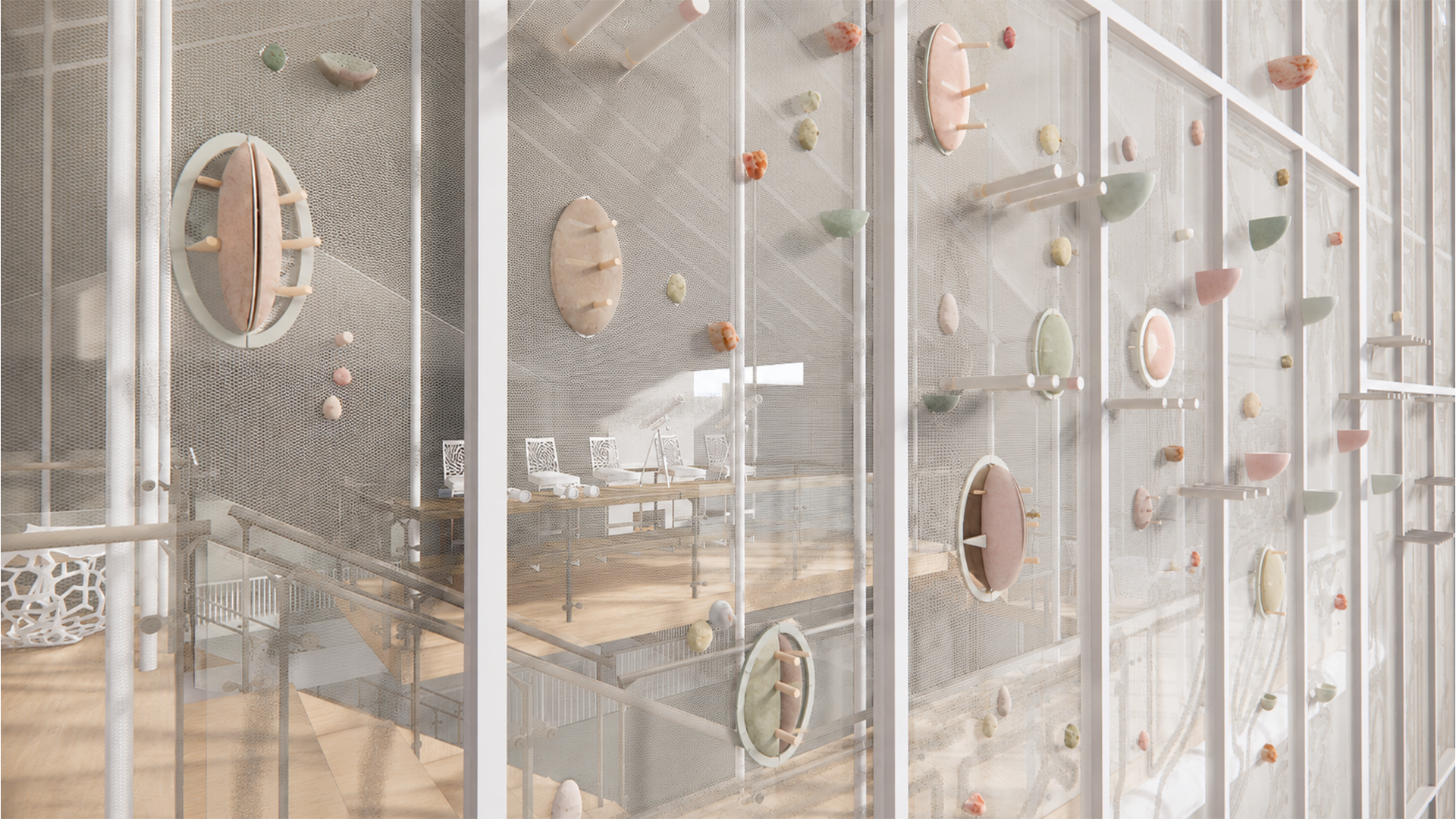
The Met Bird-Safe Screen Detail
Detail rendering of the protected viewing façade at The Met dining hall, RISD. This close-up shows the project’s layered bird-safe strategy, combining fine metal mesh, patterned glazing, and offset perch markers to reduce reflection and collision risk along the large double-height window. Rather than attracting birds directly to the glass, the design introduces light pause points and seasonal refuge elements at a safer distance, allowing birds already moving through the surrounding urban canopy to briefly stop without turning the façade into a destination habitat. Soft pastel perch forms, delicate screening, and filtered transparency translate bird protection into an architectural language of care, attention, and coexistence. Digital rendering.
Image
Rhode Island School of Design
20 Washington Place
Providence, RI 02913–2784
United States of America
+1 401 454 6100
+1 800 364 RISD
QUICK LINKS
risd.edu
Graduate Studies


Image
Rhode Island School of Design
20 Washington Place
Providence, RI 02913–2784
United States of America
+1 401 454 6100
+1 800 364 RISD