mary mitchell
MA Global Arts and Cultures
Looking At Labels, Examining Values: Knowledge, Narrative, and Multilingualism in American Art Museums
Object labels have been used by American museums since the late nineteenth century; yet they are not often utilized as sources in scholarship on museum history and practices. By repositioning labels as sources, what can we learn about American art museums—particularly about those institutions’ values? How do labels reveal the hierarchies of value that art museums construct between works of art, information, and people? I argue that object labels in American art museums should be regarded as valuable sources of information because they reveal what matters to the institutions that write them. By looking closely at labels and their elements—including technology tags, interpretive material, and multilingual text—we can understand which collection objects art museums see as more valuable than others, which narratives they consider most important for patrons to know, and which visitors are prioritized in their practices. This examination ultimately invites critical thinking and reflection on the ways that art museums share information with visitors and what those choices reveal about the values of individual institutions and the American museum field at large.
Image
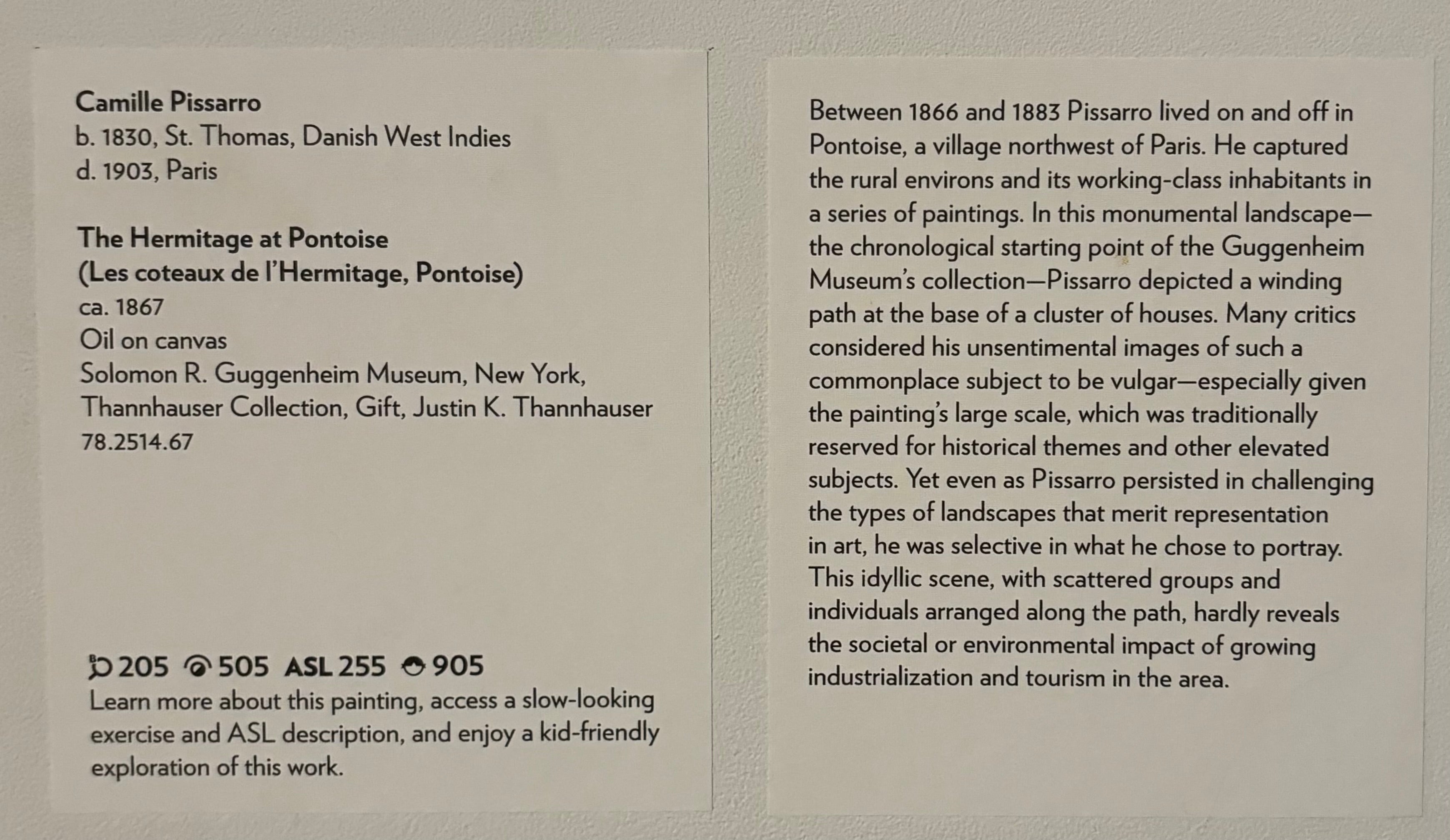
Label for Camille Pissarro's painting titled "The Hermitage at Pontoise (Les coteaux de l'Hermitage, Pontoise)" displayed at the Solomon R. Guggenheim Museum in May 2025, featuring four technology tags for viewers to access further information about the painting using digital devices.
Image
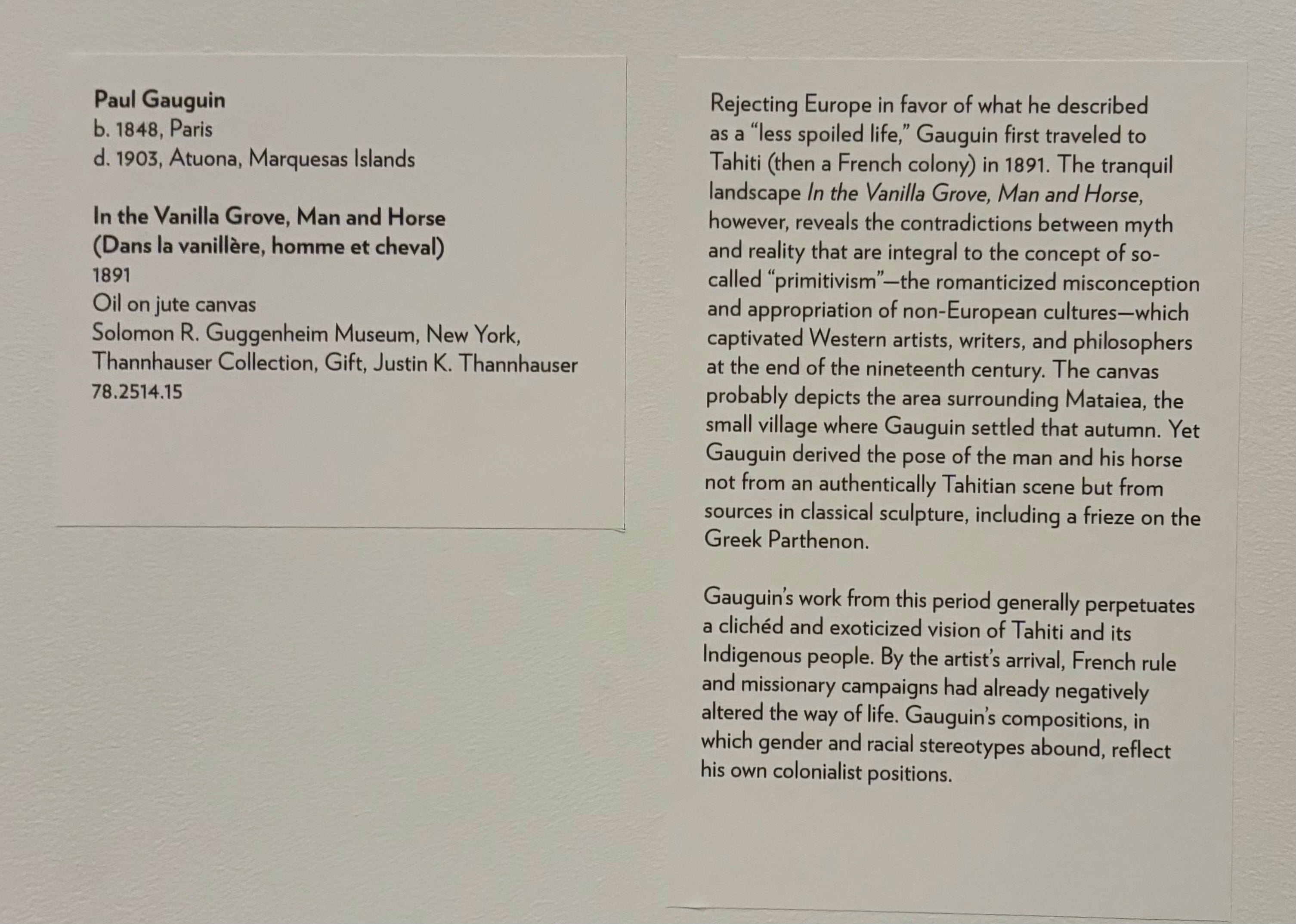
Label for Paul Gauguin's painting titled "In the Vanilla Grove, Man and Horse (Dans la vanillère, homme et cheval)" displayed at the Solomon R. Guggenheim Museum in May 2025, featuring no technology tags.
Image
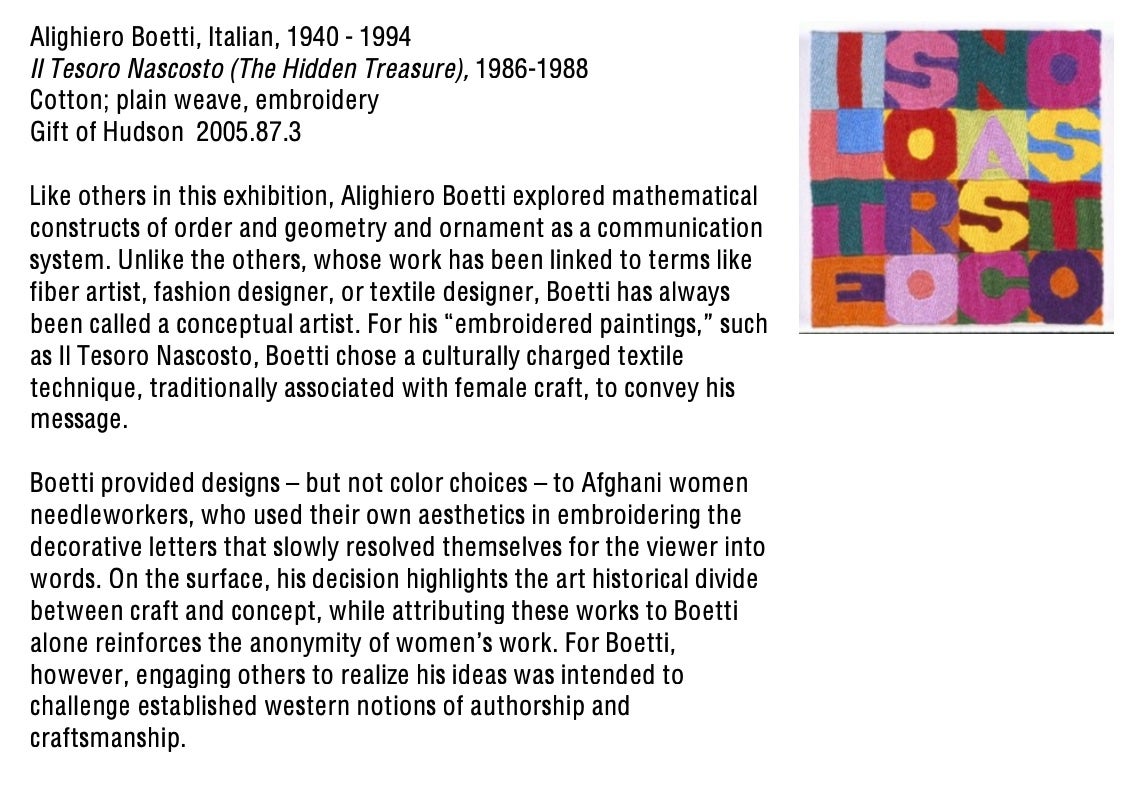
Label for Alighiero Boetti's embroidery "Il Tesoro Nascosto (The Hidden Treasure)" displayed at the RISD Museum in Term Limits: Textiles in Contemporary Art from November 2005 to February 2006.
Image
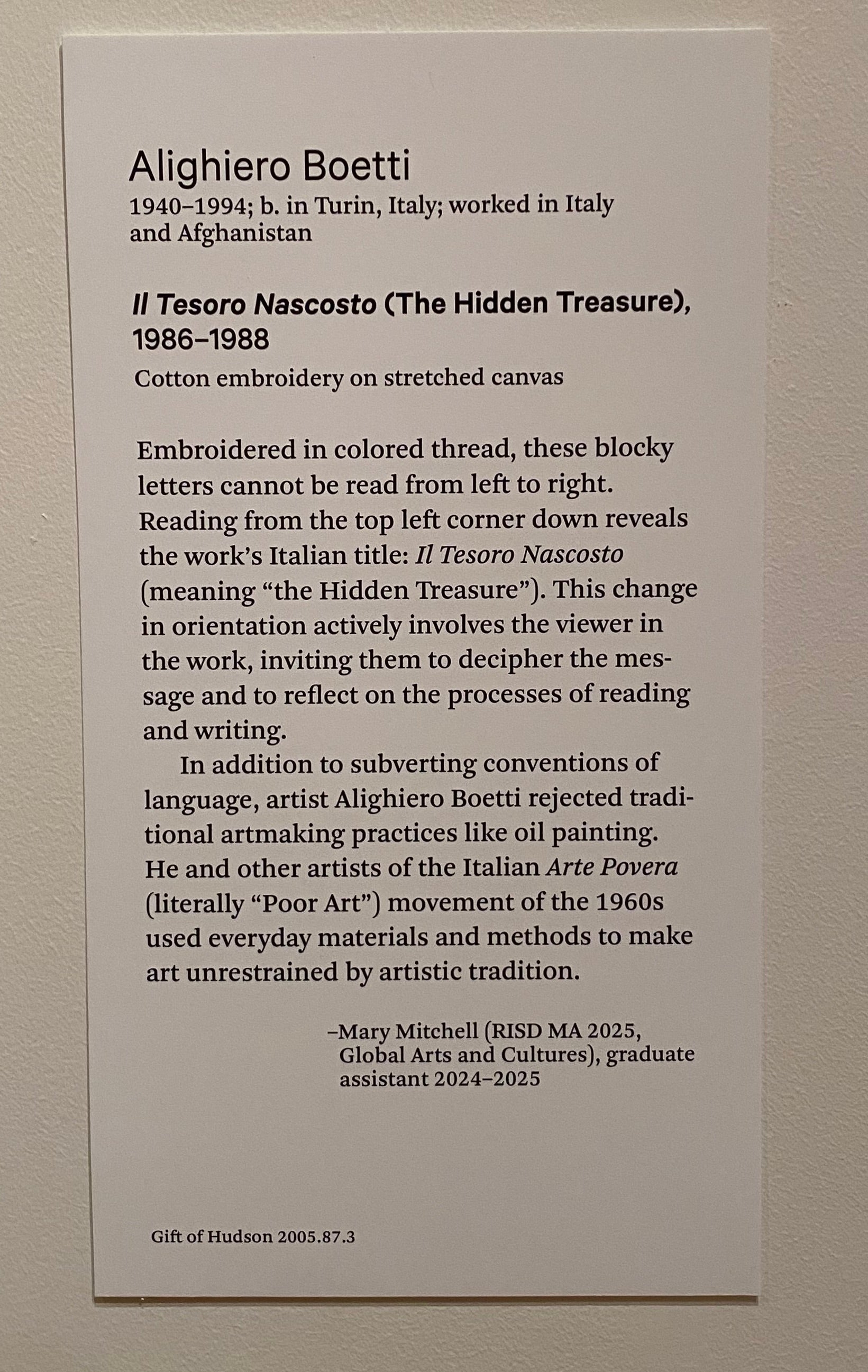
Label for Alighiero Boetti's embroidery "Il Tesoro Nascosto (The Hidden Treasure)" displayed at the RISD Museum in Term Limits: Textiles in Contemporary Art from November 2005 to February 2006.
Image
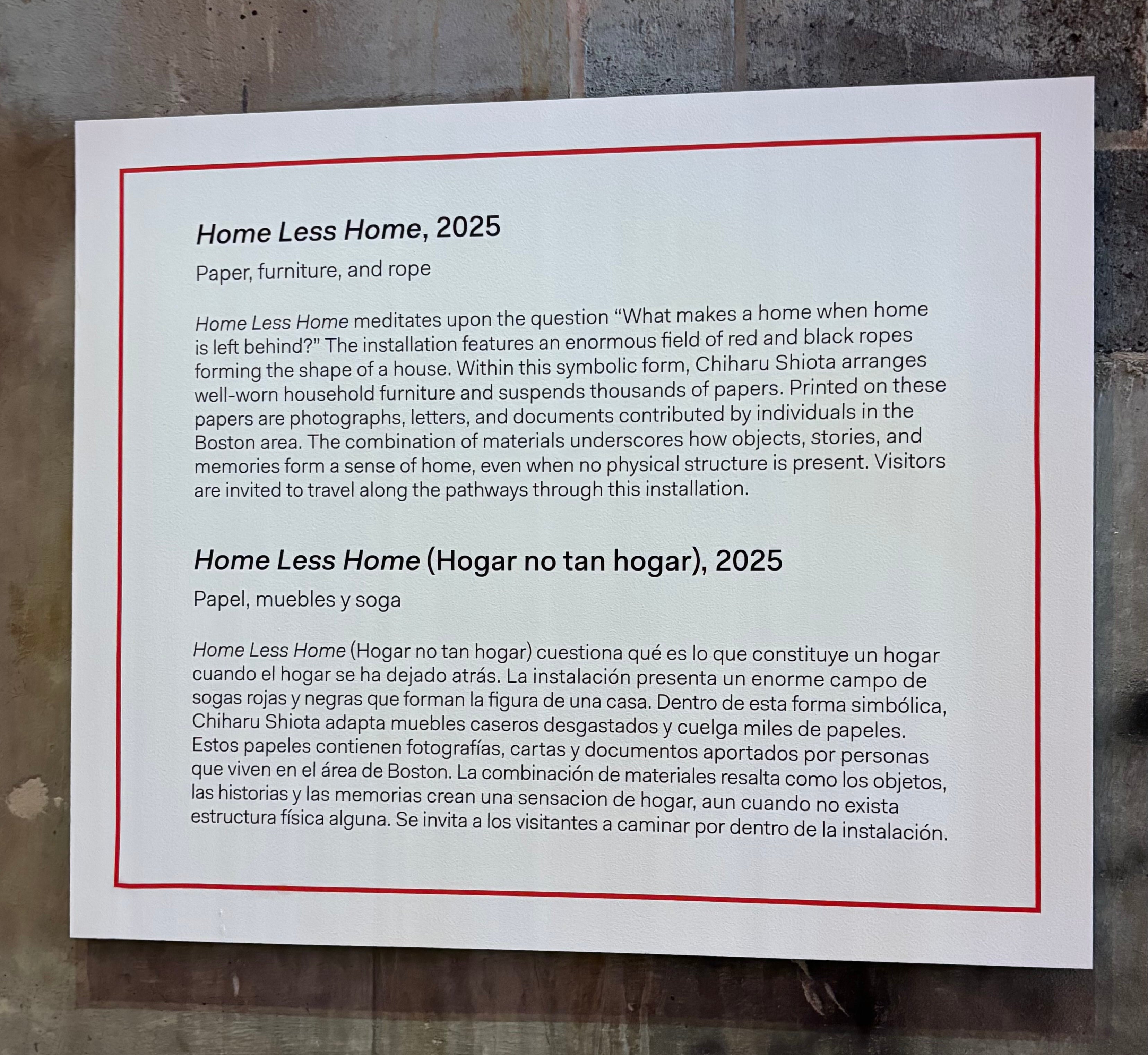
Bilingual label in English and Spanish written for Chiaru Shiota's "Home Less Home" displayed at the Institute of Contemporary Art / Boston in August 2025.
Image
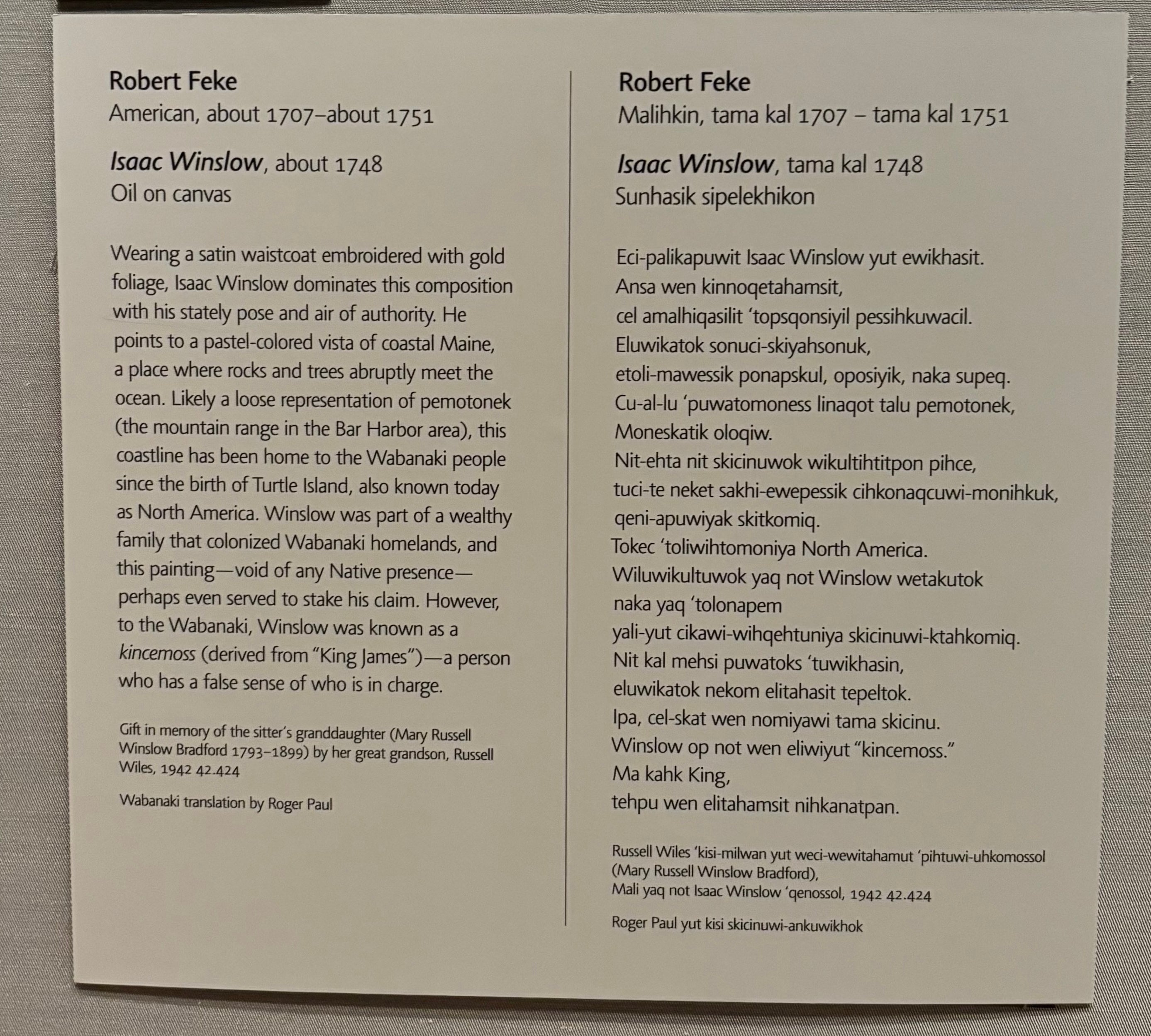
Bilingual label in English and Wabanaki written for Robert Feke's portrait "Isaac Winslow" displayed at the Museum of Fine Arts Boston in May 2025.
Image
Rhode Island School of Design
20 Washington Place
Providence, RI 02913–2784
United States of America
+1 401 454 6100
+1 800 364 RISD
QUICK LINKS
risd.edu
Graduate Studies


Image
Rhode Island School of Design
20 Washington Place
Providence, RI 02913–2784
United States of America
+1 401 454 6100
+1 800 364 RISD