Molly Lefanowicz
MLA Landscape Architecture
Meadowkeepers
New England’s cities cover the lowlands where meadows once dotted the landscape. These meadows were among the first spaces lost to development— hidden today beneath layers of concrete foundations, asphalt roads, and diligently mowed turfgrass lawns. Meadows are critical ecosystems: they support pollinators, act as seed banks for local plants, filter rainwater, sequester carbon, and build soil. But their steady disappearance is more than an ecological loss. As stewards and inhabitants of meadows, people hold a longtime cultural connection to their presence. Meadowkeepers is an effort to renew that connection.
Meadowkeepers introduces a community-scale model for meadow reestablishment in urban areas of New England. It provides a roadmap for a trained local workforce of ‘meadowkeepers’ who weave, seed, and install planted geotextiles, called ‘Fieldlets’, for meadow restoration. Fieldlets are built with locally adapted seed mixes and repurposed waste wool from New England's sheep farming industry to develop a regenerative planting medium. The process creates alternative income streams for regional farmers, introduces local job opportunities in fiber arts and meadow building, and ultimately, eases the maintenance challenges of meadow restoration. Meadowkeepers envisions a gradual transformation of turfgrass lawns and paved urban lots into vibrant wildflower meadows through a localized, materially conscious system of stewardship and maintenance. It challenges cultural hierarchies of human dominion over land and proposes a more reciprocal, care-centered relationship to the living systems that sustain us.
Image
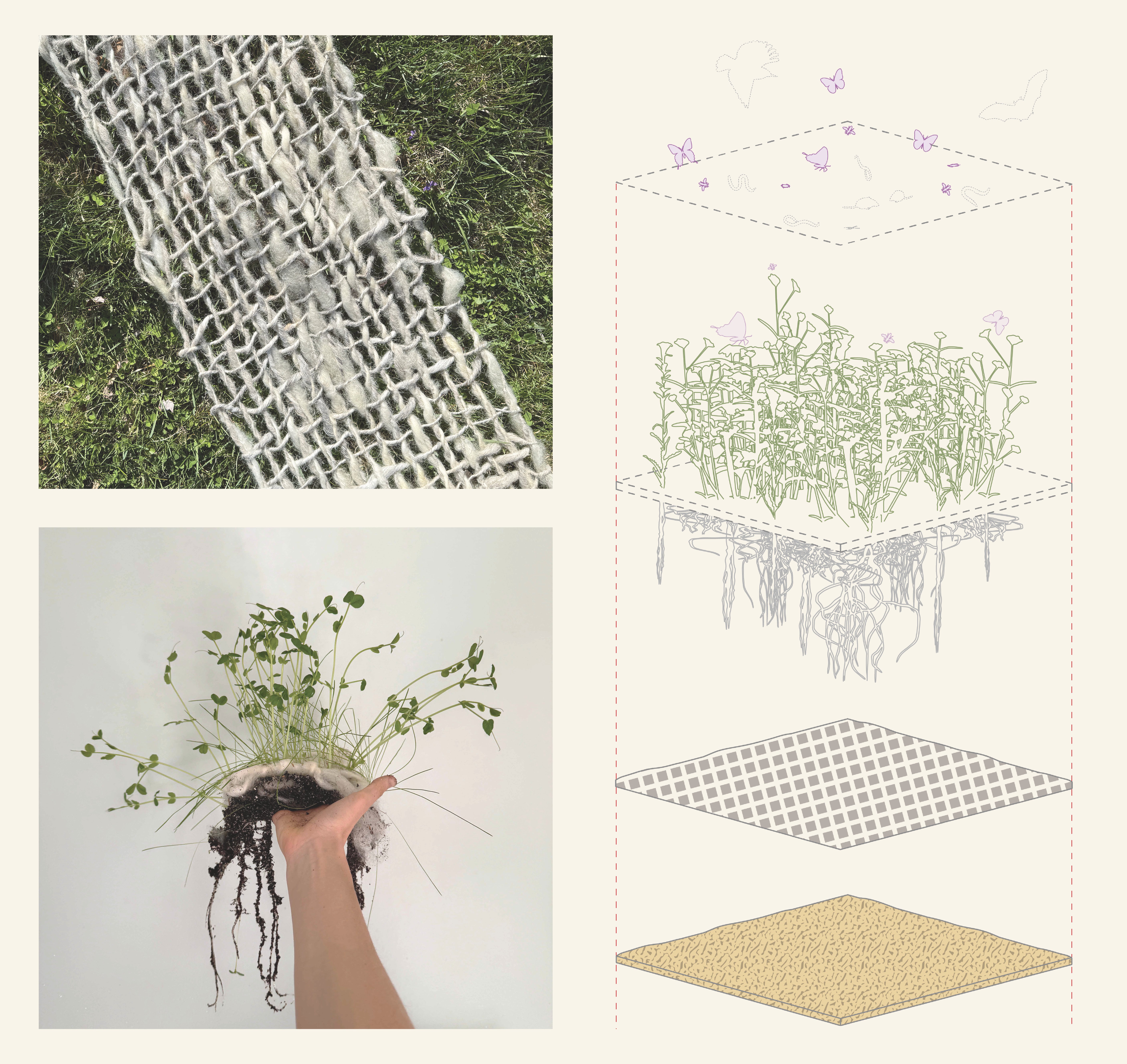
Hand-spun and woven waste wool (top left).
A wool and soil germination test, growing with field peas and winter rye (bottom left).
An exploded view that diagrams the layers of a proposed 'Fieldlet' (right).
Image
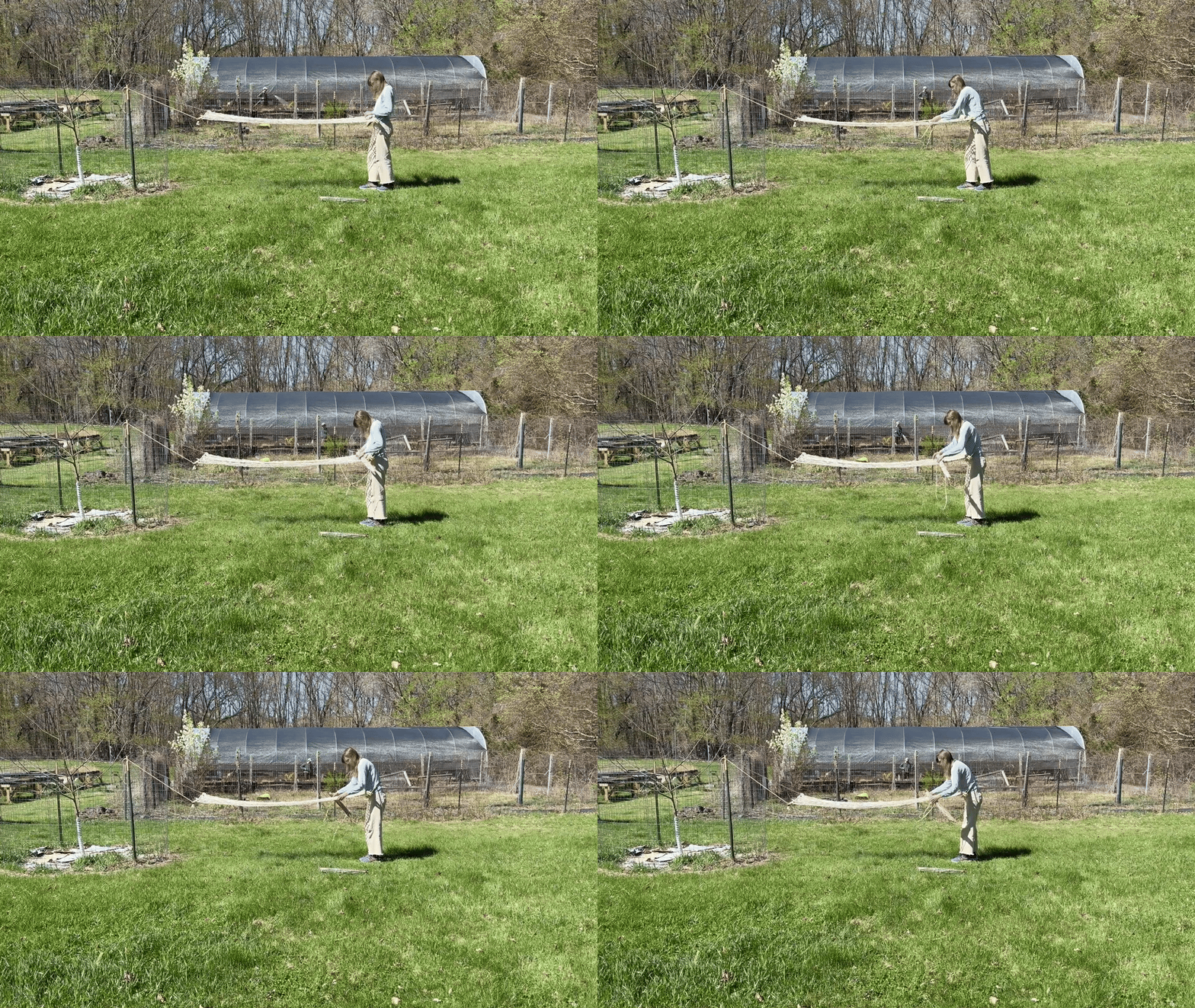
A day on the job: weaving and watering.
Image
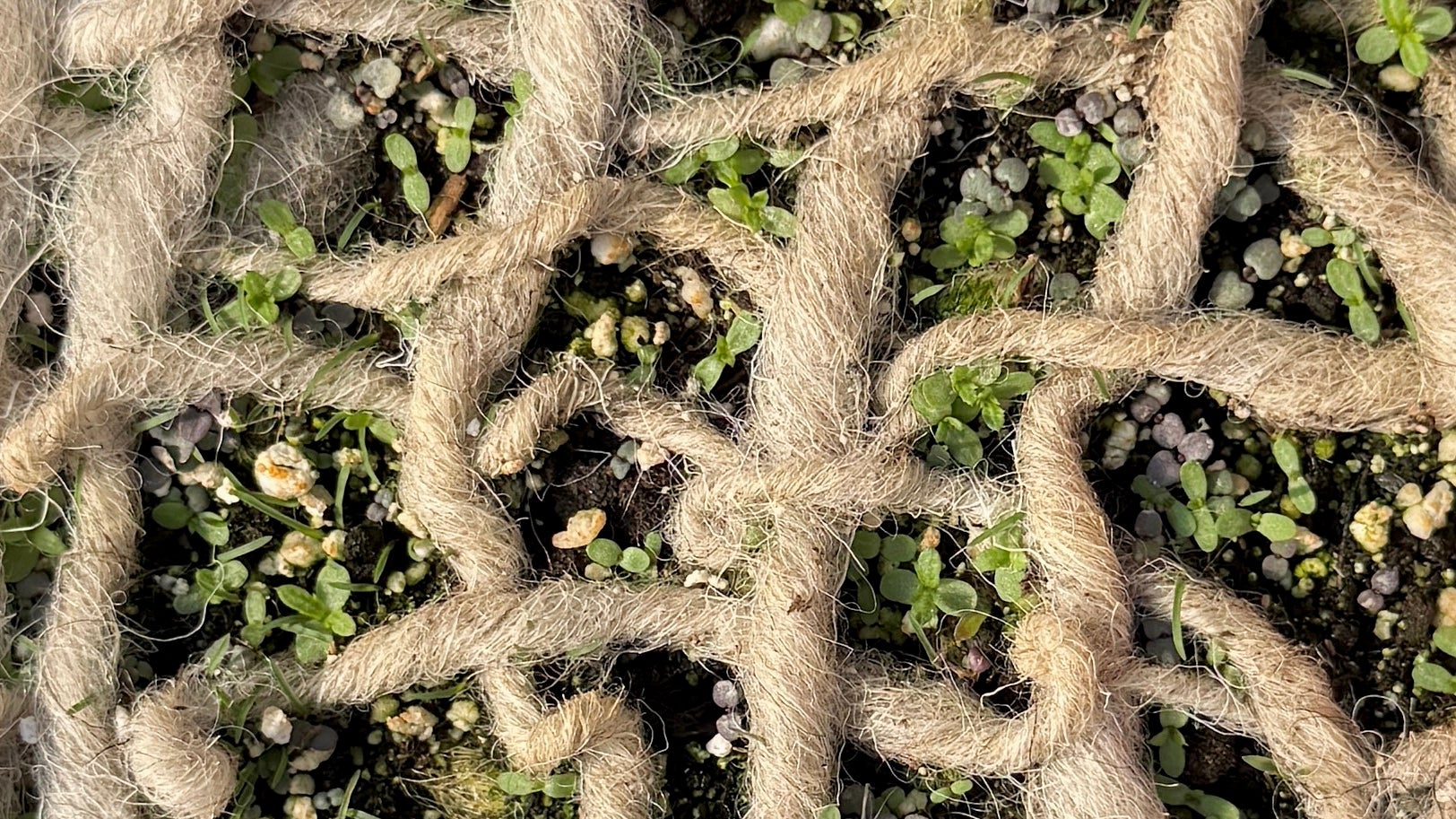
Testing the germination of local meadow seeds in hand-spun waste wool.
Image

Rhode Island School of Design
20 Washington Place
Providence, RI 02913–2784
United States of America
+1 401 454 6100
+1 800 364 RISD
QUICK LINKS
risd.edu
Graduate Studies


Image
Rhode Island School of Design
20 Washington Place
Providence, RI 02913–2784
United States of America
+1 401 454 6100
+1 800 364 RISD