Molly (Yaqi) Zhang
MDes Interior Architecture
Healing in the Flow-Reimagining Public Well-Being through the Adaptive Reuse of the Heritage Park Visitor Center
My work explores how interior environments can support well-being, connection, and everyday human experience. With a focus on workplace and healthcare design, I am interested in spaces that respond to both practical needs and emotional conditions—places where people can work, recover, gather, pause, and feel supported.
Across my projects, I see interior architecture as a quiet support system. In healthcare environments, this means designing for dignity, privacy, comfort, and moments of relief. In workplace environments, it means balancing collaboration with focus, flexibility with belonging, and efficiency with care. I often work through material, light, circulation, and soft thresholds to create spaces that feel clear, gentle, and human-centered.
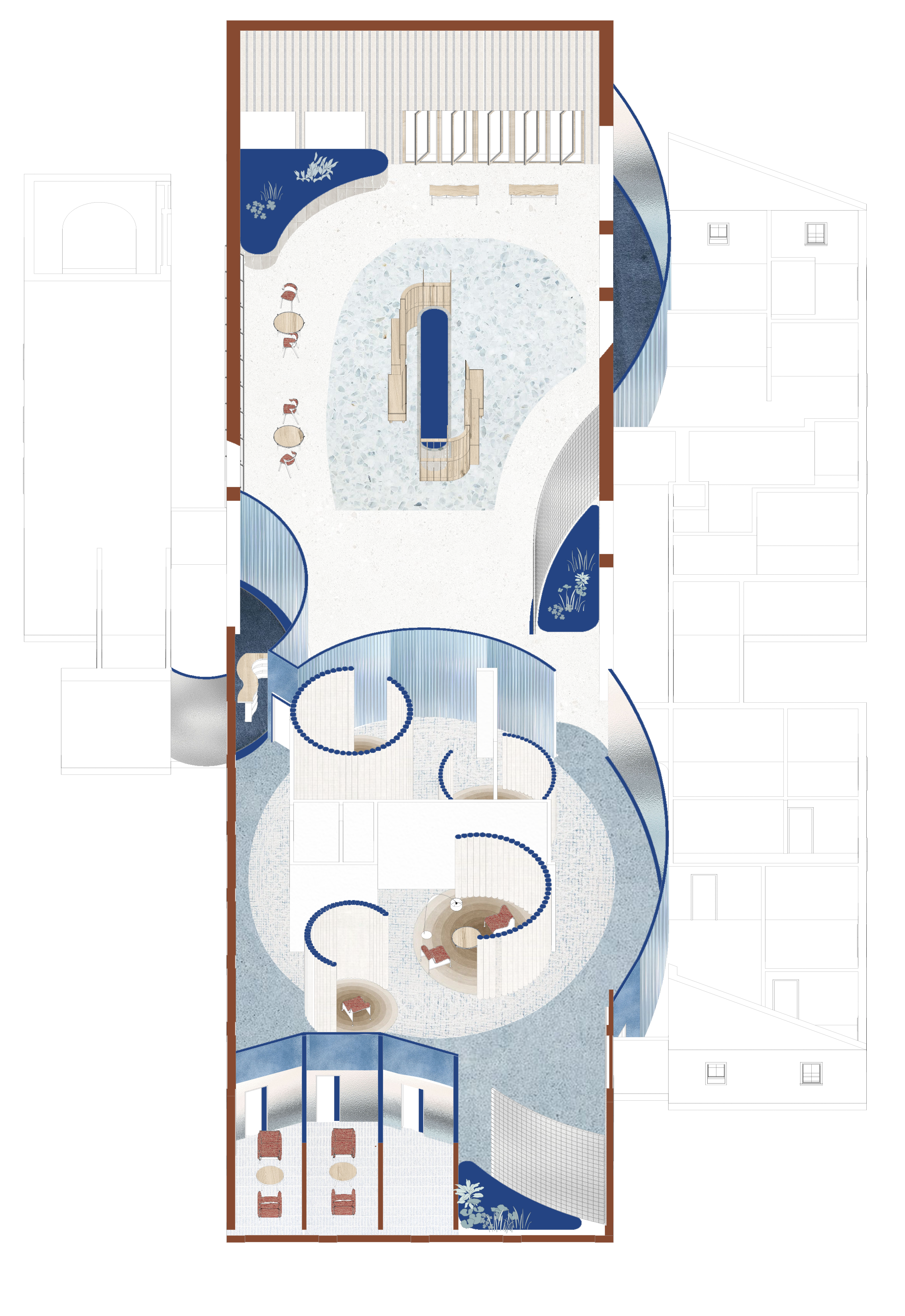
My thesis, Healing in the Flow, extends this interest into a public waterfront setting. Through the adaptive reuse of the Heritage Park Visitor Center in Fall River, Massachusetts, the project proposes an environment for rest, learning, gathering, small-scale care, and collective well-being. A curving wall moves through the building like water, shifting in transparency, material, and enclosure as it passes through different programs.
Beyond this thesis, my work continues to explore how interiors can shape atmosphere, support different ways of being together, and respond to the emotional needs of everyday life. I am interested in spaces that are not only functional, but also attentive, adaptable, and quietly supportive.
Image
Healing in the Flow
Healing in the Flow reimagines the Heritage Park Visitor Center in Fall River, Massachusetts, as a public environment for rest, learning, gathering, and collective well-being. The project uses a curving wall that moves through the building like water, shifting in material, transparency, and enclosure as it passes through different programs. Frosted glass, laminated acrylic, glass block, polycarbonate, and soft curtains create different levels of openness and privacy, allowing care to move gradually from public gathering spaces to quieter areas for recovery and support. Through adaptive reuse, the project brings the atmosphere of the Taunton River into the interior and asks how public buildings can support everyday forms of healing.
Image
The New Museum
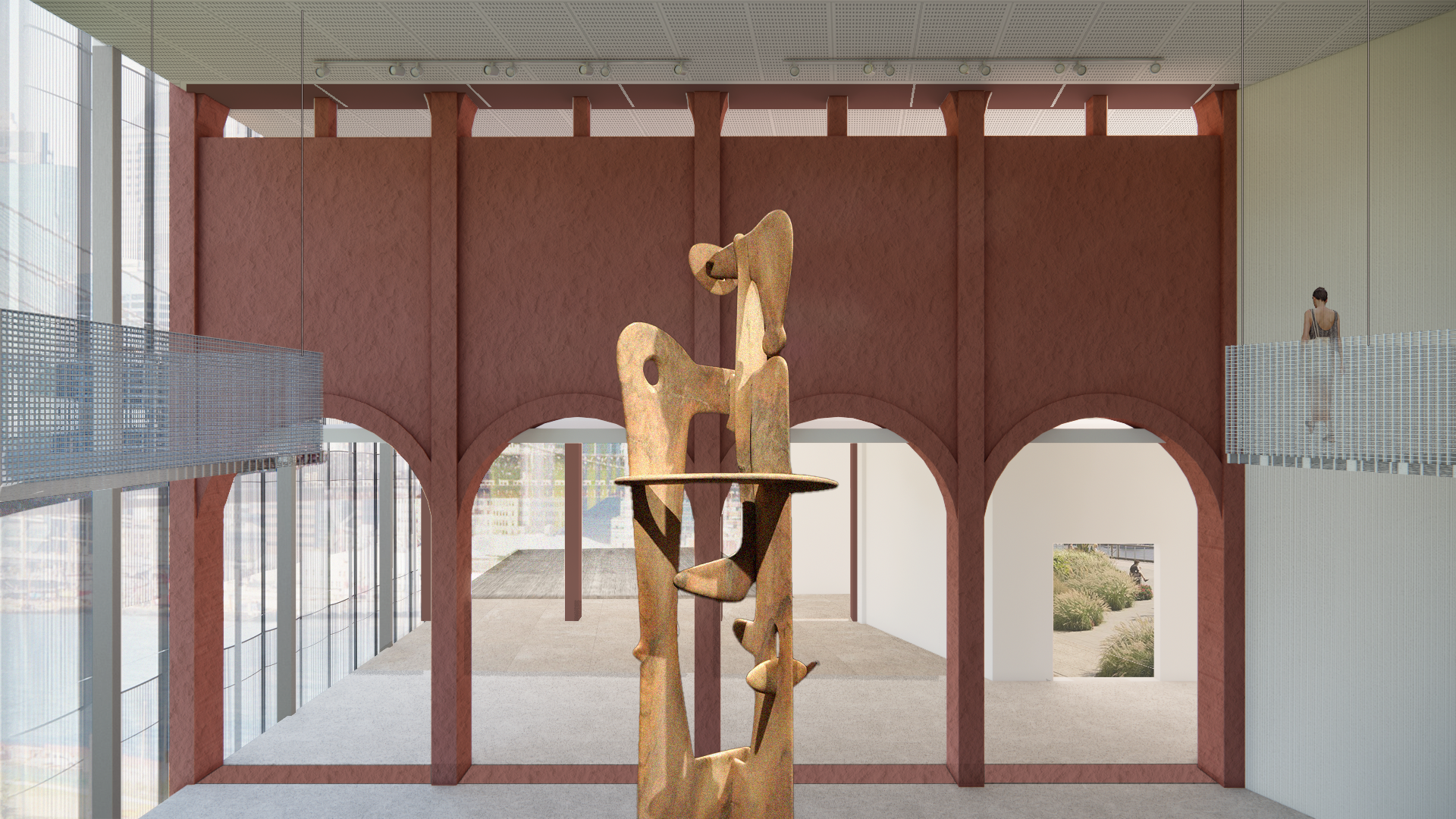
The New Museum project explores a new museum prototype on a trapezoidal site in New York City (45 Water St, Brooklyn, NY 11201). Starting from massing studies, I developed a series of design iterations to test how volume, circulation, and program can reshape the museum experience. Through these investigations, the proposal redefines the relationship between architecture and interior space—integrating exhibition, workplace, and public areas into a flexible, contemporary museum model.
Image
Soft Thresholds
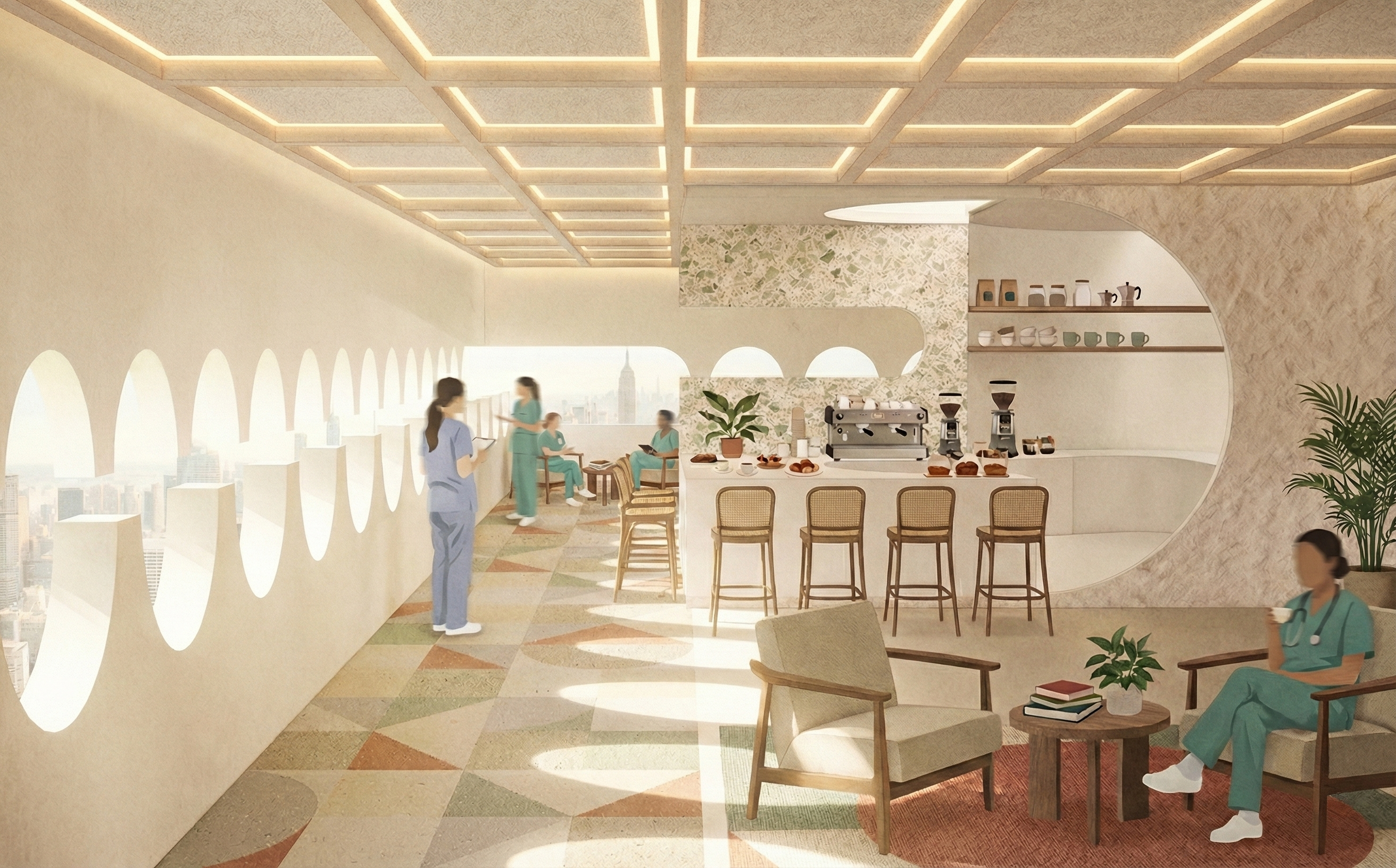
Based on an on-site visit to Northwell Greenwich Village Hospital in New York City, this project proposes a staff-centered interior intervention that bridges workplace and healthcare design. Inspired by the building’s curved porthole windows, the design translates this architectural language into soft radii, framed openings, and flowing edges that guide circulation, wayfinding, and spatial hierarchy. Responding to high-intensity clinical routines, the proposal introduces decompression lounges, quiet reset rooms, and flexible touchdown zones to balance privacy, collaboration, and recovery across shifts. Through warm material contrasts, calibrated lighting, acoustic control, and ergonomic planning, the space supports staff well-being, reduces fatigue, and improves daily workflow.
Image
Rhode Island School of Design
20 Washington Place
Providence, RI 02913–2784
United States of America
+1 401 454 6100
+1 800 364 RISD
QUICK LINKS
risd.edu
Graduate Studies


Image
Rhode Island School of Design
20 Washington Place
Providence, RI 02913–2784
United States of America
+1 401 454 6100
+1 800 364 RISD