Nayyab Naveed
MFA Illustration
Go to the Limits of your Longing
My first friend in school was a tree—a murmuring Chinaberry standing tall amidst a litterfall of creatures most commonly known as children. Because of my odd friendship with this lilac tree, everybody thought I was a bit slant in the head. To this day, I’m unable to deny such claims. To operate in the world in a slant manner meant to accept that there was a certain erasure that will happen, just in the way people view a slant creature.
To be slant meant to have a body whose modes of functioning were not the same as most peoples, and a soul that consisted of more than one spirit. Variability, erraticness, and a connection to beings outside of oneself are usual characteristics. It makes sense to me then, that one of the few places I felt at home were with the more-than-human beings who displayed similar qualities; whose worlds were peppered with variation and diversity, and a strong sense of eluding capture.
My work is an investigation into using slantness as a visual method to depict odd and oblique geographies and ecologies of Pakistan. My work asks itself; what does it mean to visualise the unseen– a territory one can often tap into through intuition and imagination, or beings that are often overlooked. Through oil paint, I research into the best ways to represent a world that both corporeally exists but is ignored and erased, as well as a world that is felt at the edges of your perception.
Image
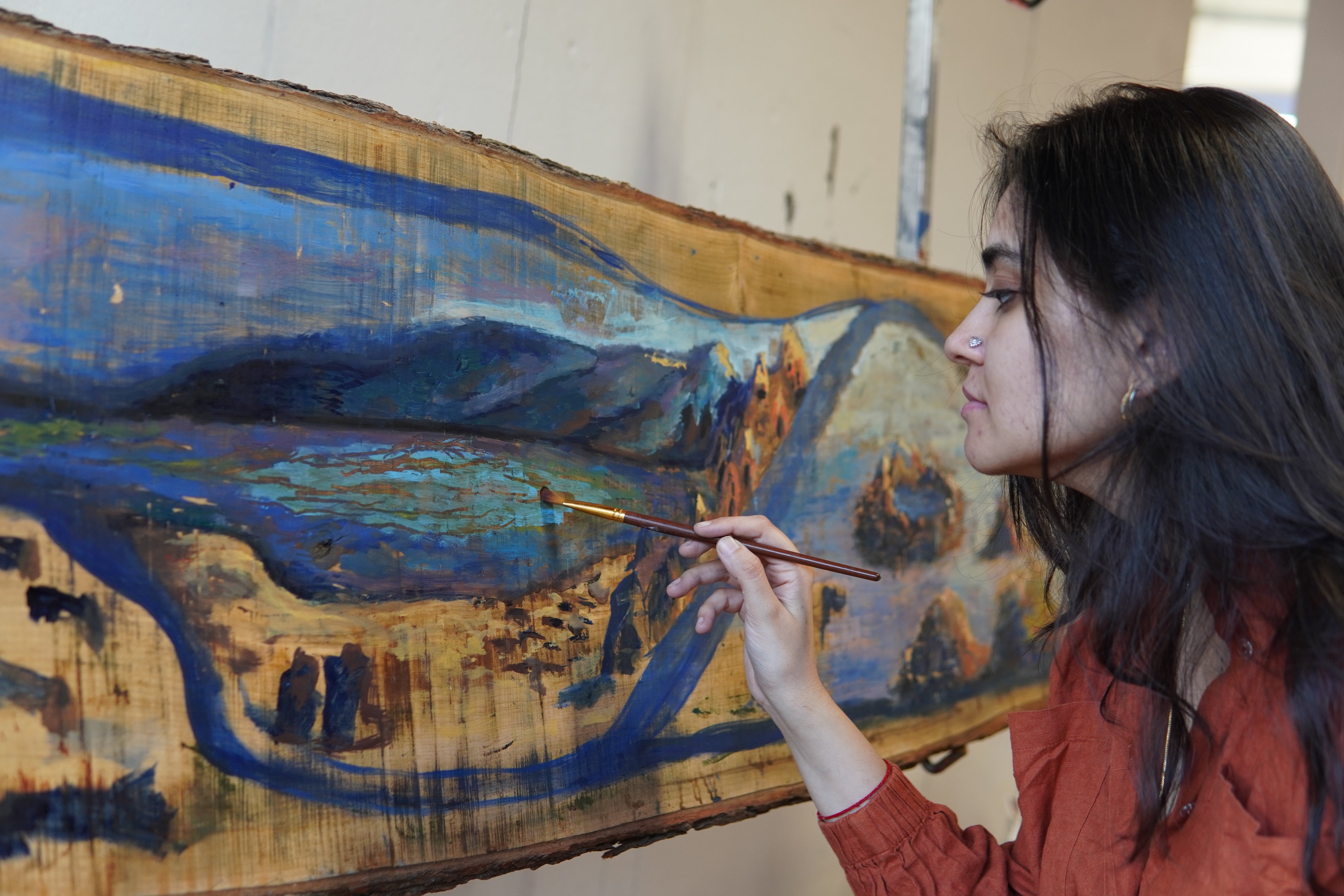
In the studio, painting my thesis project Go to the Limits of your Longing.
Image
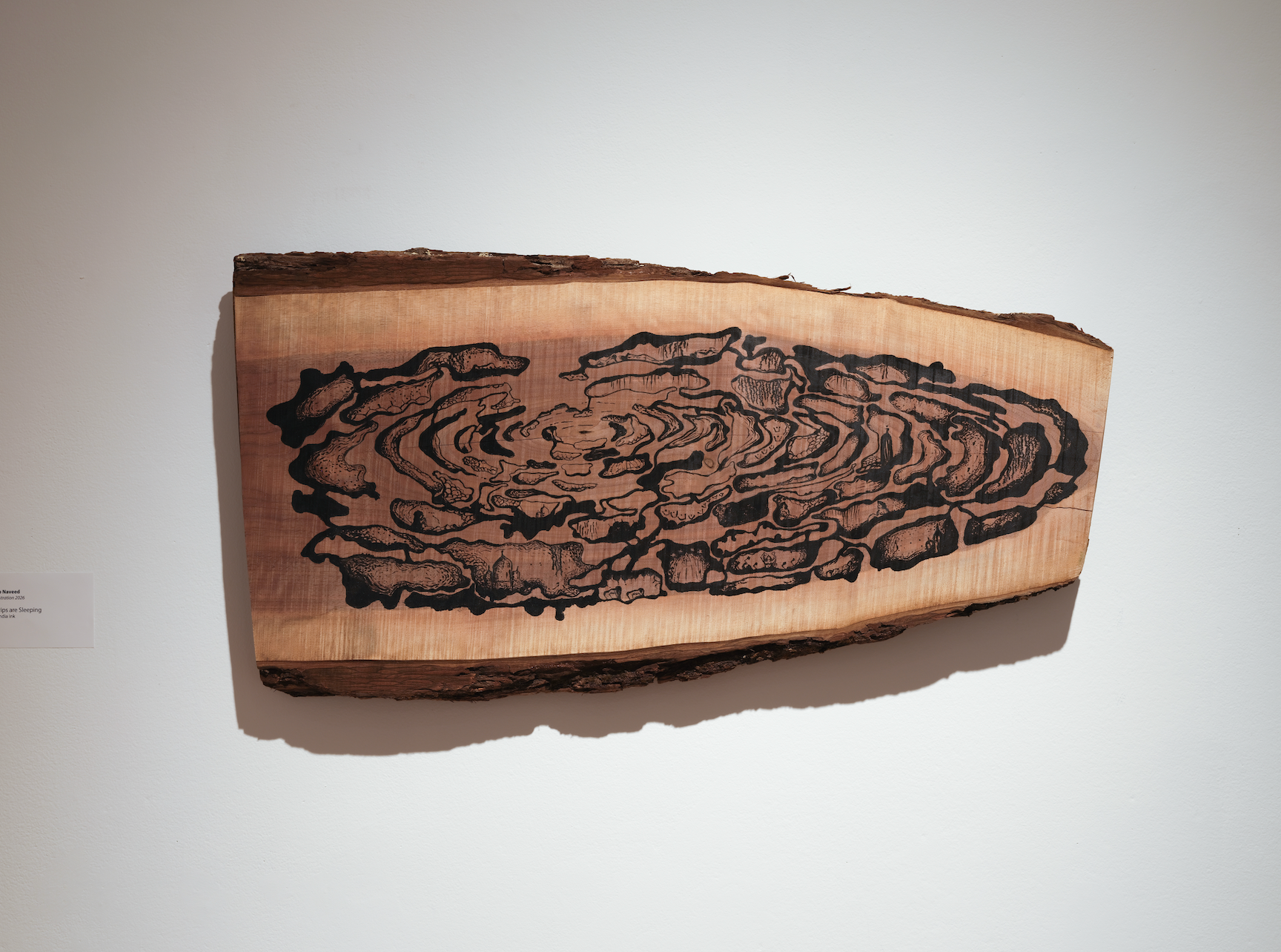
The Crips are Sleeping
India ink on found wood
Image
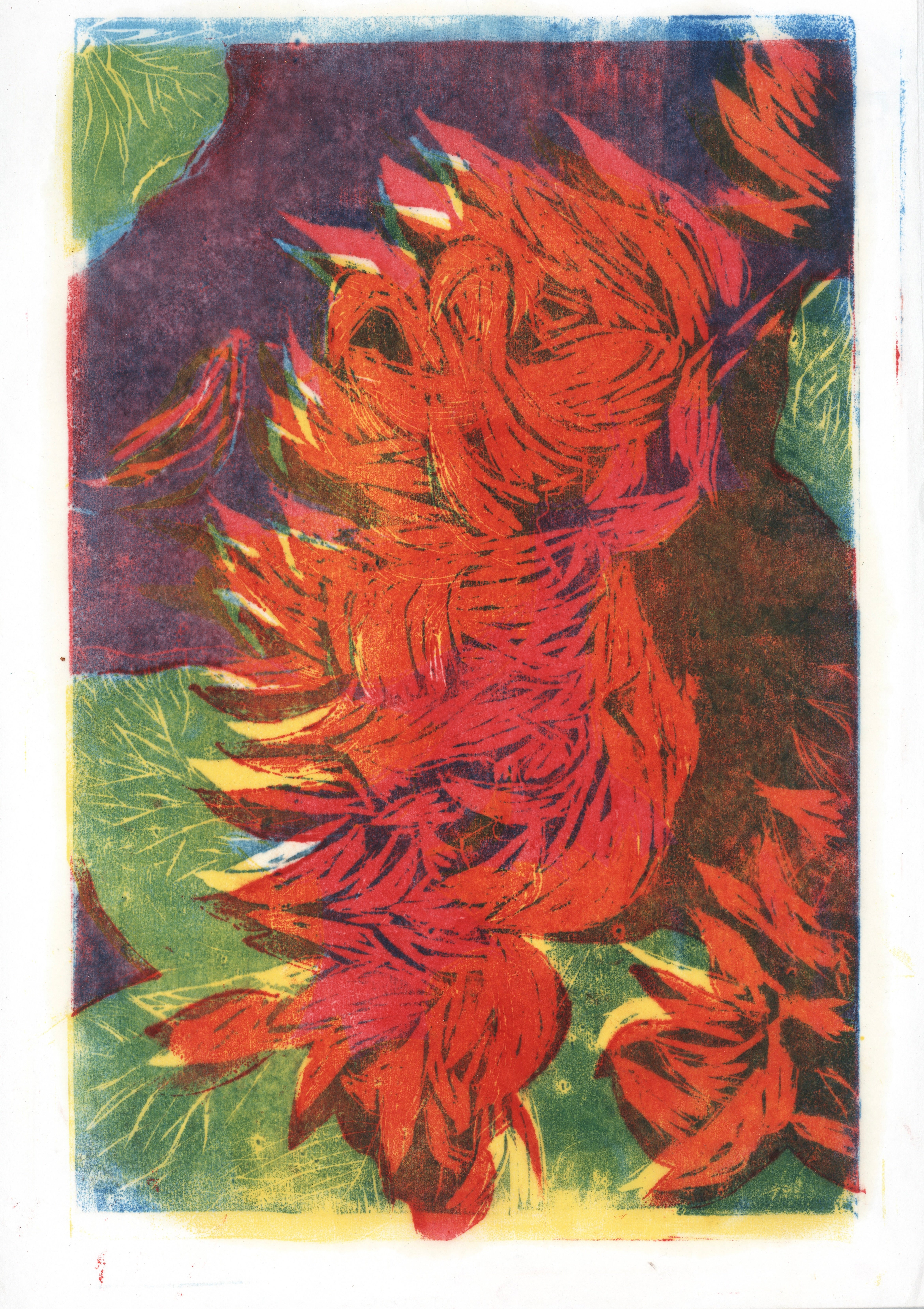
Flame of the Forest
Reduction Woodcut with water-based ink
297 x 420mm
A devotional print made for the sacred Dhak tree native to South Asia. When in bloom, the Dhak's flowers resemble flames.
Image
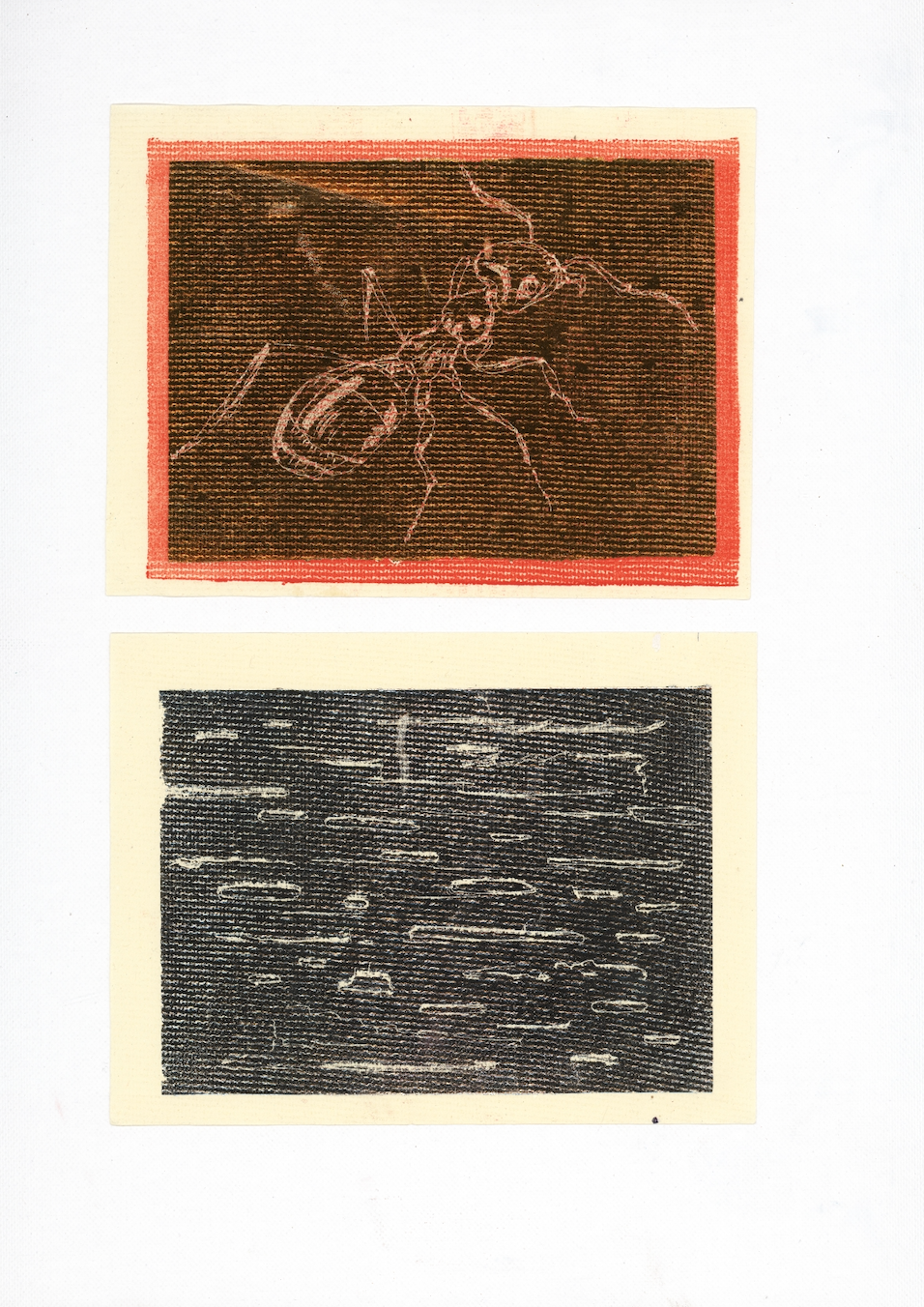
Chonti Ghar,
Etching on Joss Paper
148 x 210 mm
Made as a devotional object for ants; creatures my grandfather was especially fond of. His love for ants is part of a larger South Asian Sufi practice of venerating more-than-human beings and considering them as intercessors for the Divine.
Image
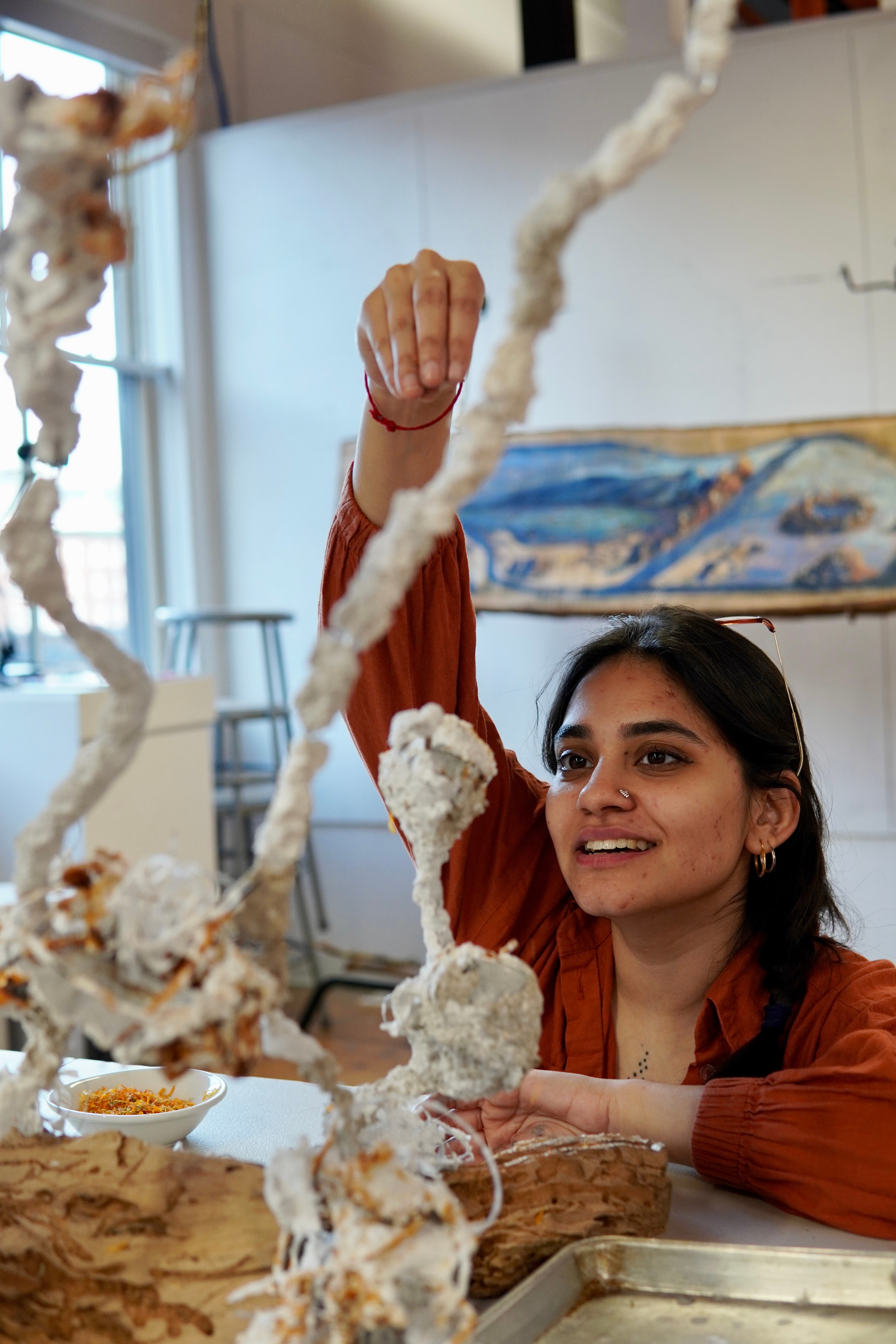
In the studio, assembling a sculpture titled The Ants still Persist, made from recycled paper pulp and found metal. The sculpture acts as a ghost image of ant nests made from metal-casting methods that often exterminate entire colonies.
Image
Image
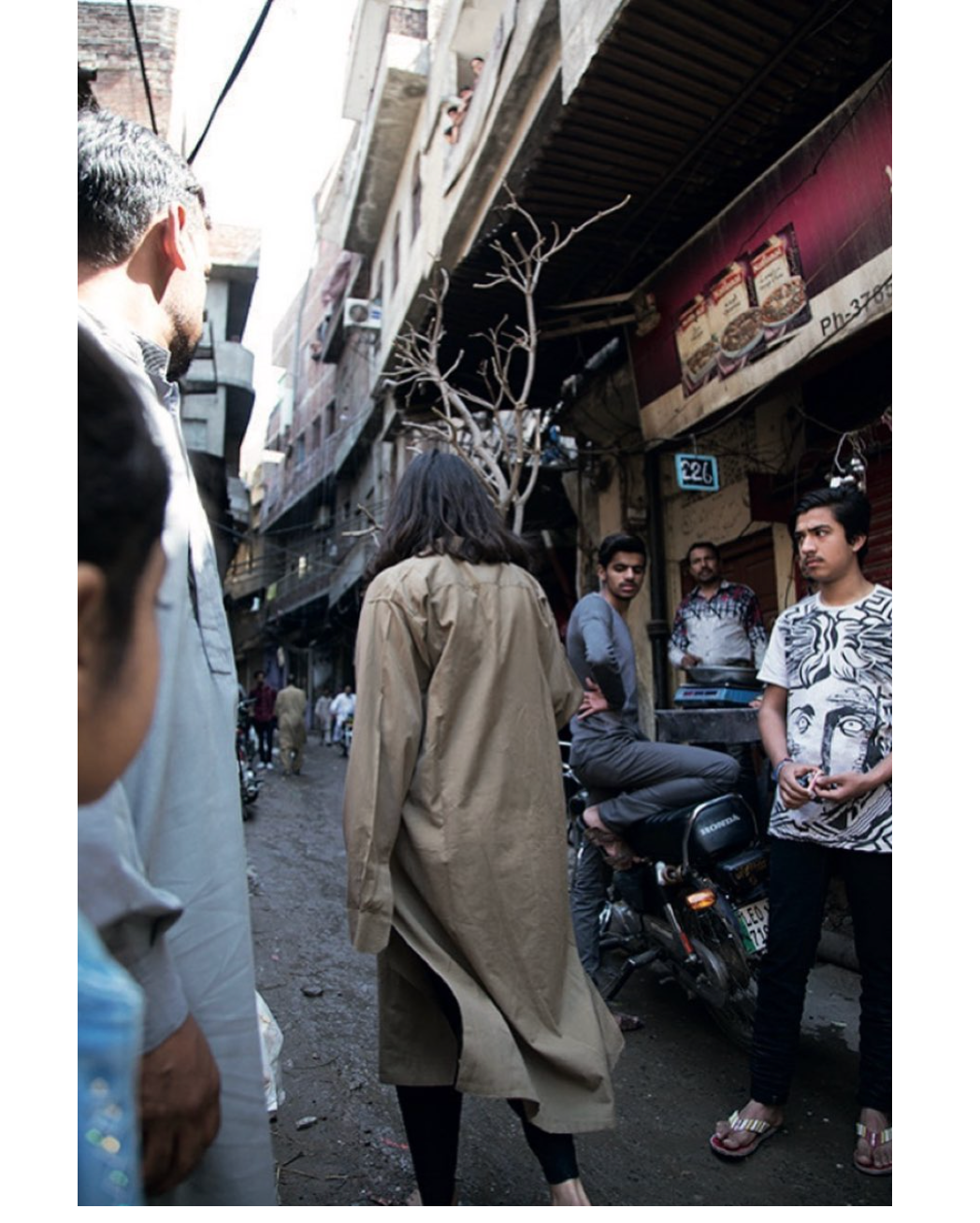
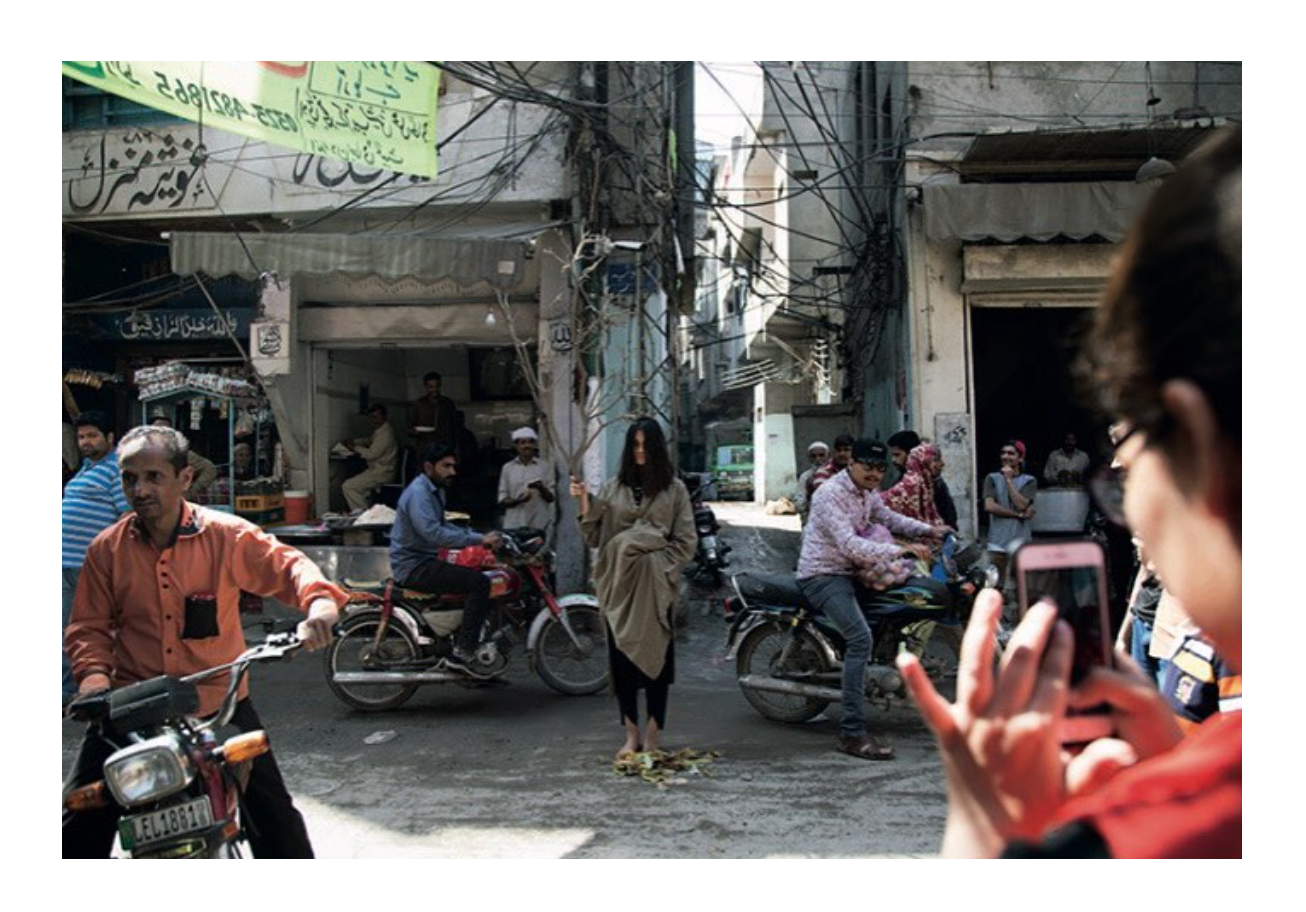
The Trees are Falling
15 mins performance, Lahore Pakistan
My first performance in the old city of Lahore, where I stood in the middle of a traffic intersection with a tree branch and emptied dead leaves from underneath my shirt. The performance embodied grief felt by the female body as well as a tree body.
Image
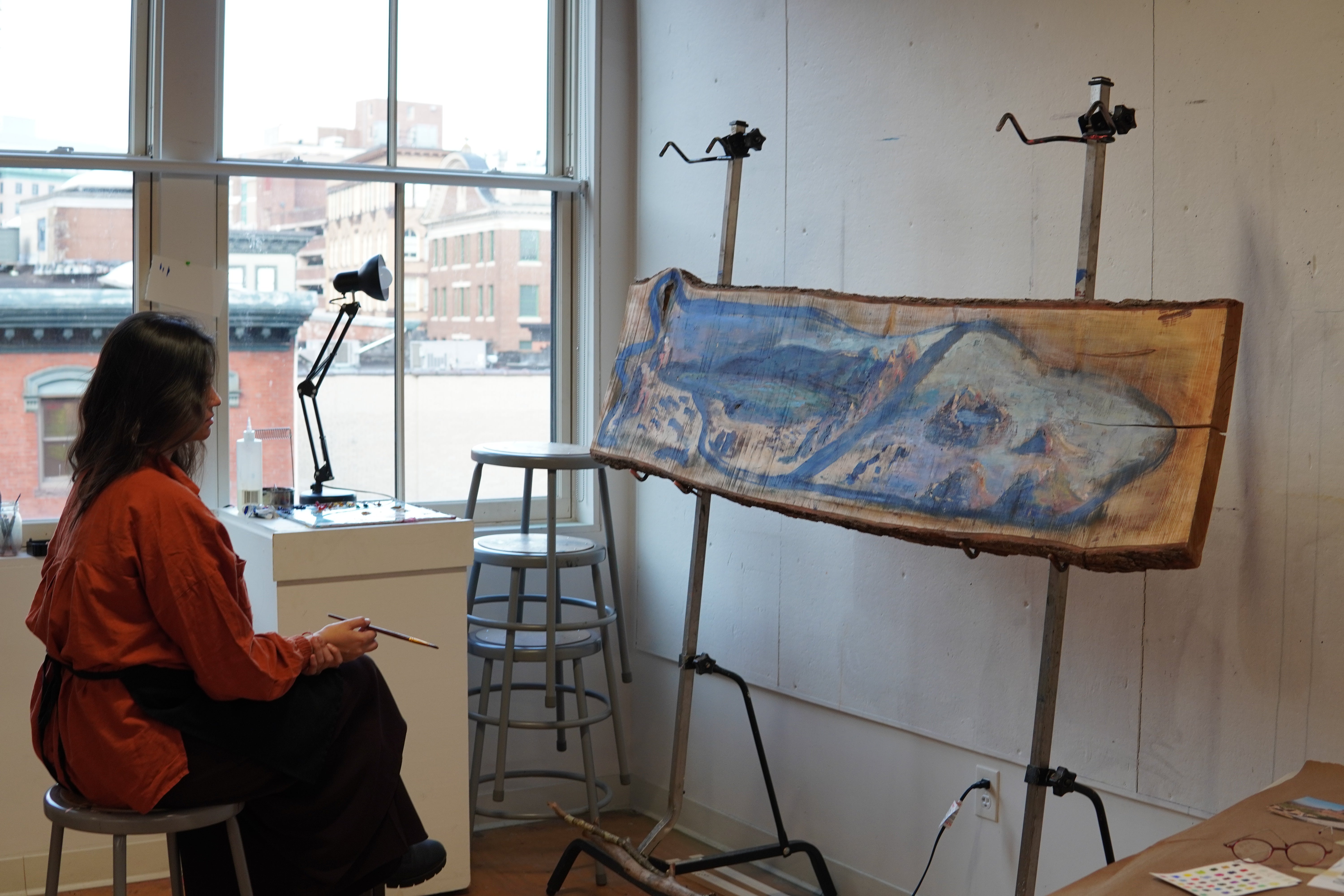
In the studio, gazing at the maple wood and figuring out what they're trying to communicate to me.
Image

Rhode Island School of Design
20 Washington Place
Providence, RI 02913–2784
United States of America
+1 401 454 6100
+1 800 364 RISD
QUICK LINKS
risd.edu
Graduate Studies


Image
Rhode Island School of Design
20 Washington Place
Providence, RI 02913–2784
United States of America
+1 401 454 6100
+1 800 364 RISD