Pingfan Que
MFA Illustration
My Utopian Dream
Starting from the volunteering job in Rhode Island Parrot Rescue, I was shocked by the surprisingly high number of abandoned parrots. From research about human-pet relationships and avian cognition, I found that animals often occupy a liminal position between lives and objects, shaped by an anthropocentric view of ownership and control. The construction of human-pet relationships is based on human-centred cognitive projections. Parrots, however, demonstrate emotional intelligence, social awareness and cooperative behaviours that challenge such views. Although they also have a pecking order, the social position in flocks is more equal than that of humans.
This project proposes a negotiated living space shared by me, an international student questioning her sense of belonging, and an abandoned parrot unable to return to its natural habitat. Rather than imagining a pure utopia, the installation creates a compromised environment where coexistence is both possible and constrained.
To consider parrots as equals rather than animals, such a space is surrounded by a projected tropical forest adjusted to parrots’ visual perception, symbolising an imagined peaceful belonging. Meanwhile, the furniture, cage and floor are all designed to be parrot-bite-friendly, supporting their instinctual behaviours rather than suppressing them.
Embedded within this space is a quiet, almost impossible desire: that through the slow act of biting, these manufactured artefacts will eventually disappear. But the work does not promise a return to origin. Instead, it questions whether freedom can exist within constructed boundaries, and whether coexistence is not the absence of structure, but the negotiation of it.
Image
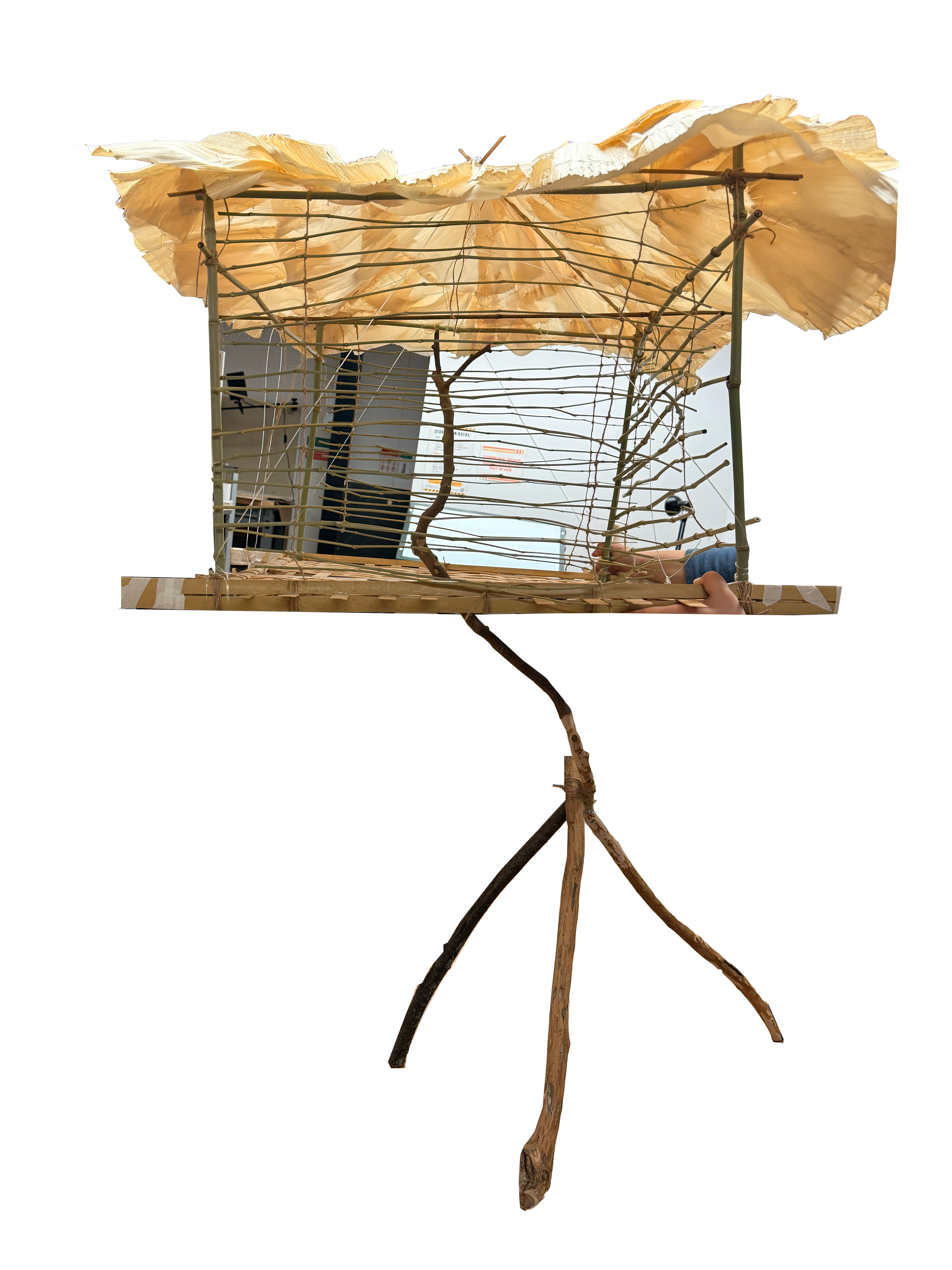
Parrot's home
The parrot’s home is made for imagined abandoned parrots to inhabit and coexist within the space. All materials are natural and safe for parrots to chew and play with. Its fragile structure reflects a shared vulnerability between the parrots and the artist herself. Over time, as the parrot chews through the home built for it, the structure is gradually worn down. The parrot gains a form of freedom through this act of destruction, while still remaining unable to return to the projected image of nature. A relationship of trust may be formed, but it exists within the limits of the space.
Image
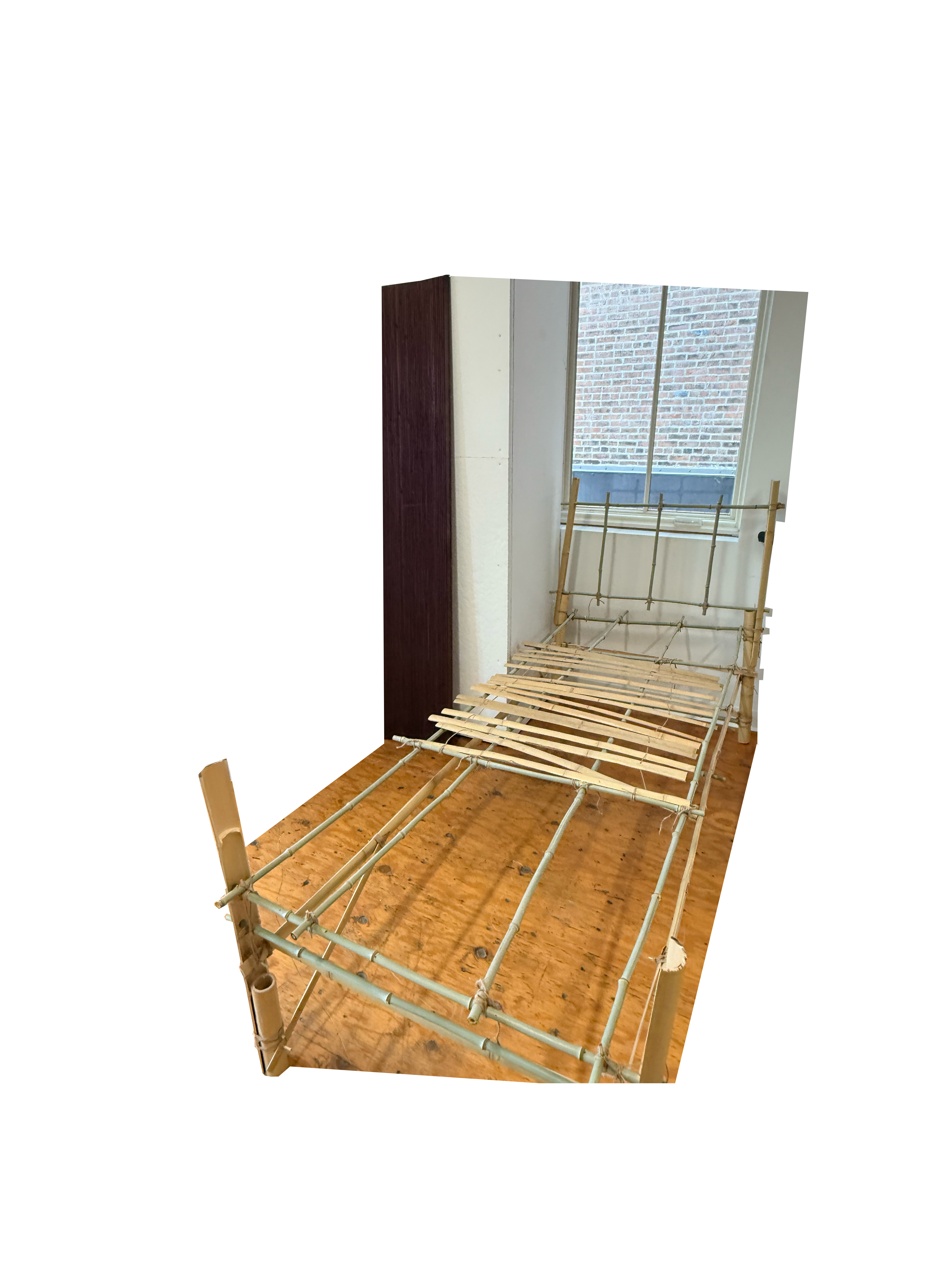
The Bed
One common reason parrots are abandoned is that they chew household furniture, yet chewing is an instinctive behavior rather than a fault. In response, the artist’s furniture is made from natural, chewable materials. Bamboo is a common and affordable material in Shanghai, the artist’s hometown, which lies in the warm, humid Jiangnan region. In many ordinary households, bamboo beds and mats were part of everyday summer life. Before studying abroad, the artist herself often slept on a bamboo mat during hot summers. This work, therefore, connects parrot-friendly design with the artist’s cultural memory, social background, and bodily experience of home.
Image
Rhode Island School of Design
20 Washington Place
Providence, RI 02913–2784
United States of America
+1 401 454 6100
+1 800 364 RISD
QUICK LINKS
risd.edu
Graduate Studies


Image
Rhode Island School of Design
20 Washington Place
Providence, RI 02913–2784
United States of America
+1 401 454 6100
+1 800 364 RISD