Raveena Deshpande

MArch Architecture

The Wall

As urban populations grow, access to affordable housing declines, pushing people to build informal settlements outside legal and formal construction systems. These settlements often lack access to essential infrastructure—water, sanitation, and electricity—even as they house a large share of the population in developing countries.

Current models of governmental aid designing for informality exist as top down approaches that ignore lived realities at the scale of the home. They focus on planning and urban development levels. These are incongruent with informal lifestyles, and undermine the sense of belonging that comes with rituals of self-authorship in space making that exist in such settlements.

This thesis proposes an alternative: reposition governmental aid for informal housing as a wall—a tool to articulate growth through cluster-level, collective infrastructure that delivers minimum essential utilities (water, electricity, drainage, sewage) for domestic stability, while enabling self building of homes along the wall, preserving inhabitants’ belonging and ownership. It also imagines the wall as a way to introduce public amenities such as play areas, work areas that such organically growing settlements lack. 
Image

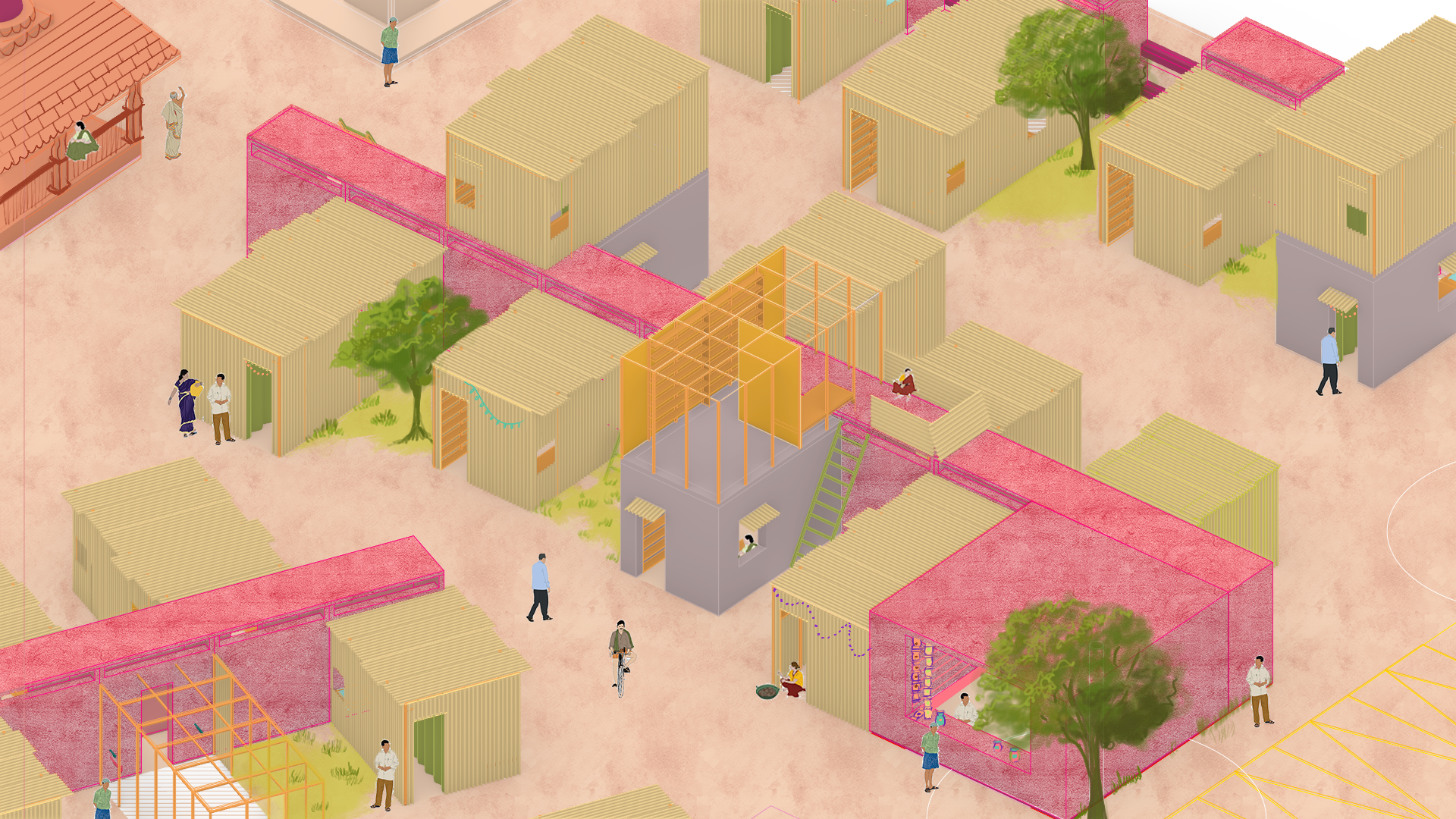
An image of a colored wall at the center, surrounded by people constructing informal housing along it.

Wall as Infrastructure
This image articulates the stability and solidity of the wall as a shoulder to rest against, and to draw essential utilities from, while facilitating flexible, organic growth of domesticity. The design of the wall privileges certain orientation of development over others, thus shaping growth and open spaces between homes.

Image

An Image of an infromal settlement full of color, life and people going about their daily activity.

Life with the Wall
This image images the wall articulates growth of a settlement, and how people adapt the wall and begin to live and celebrate life along it, each building in their own unique way.

Image

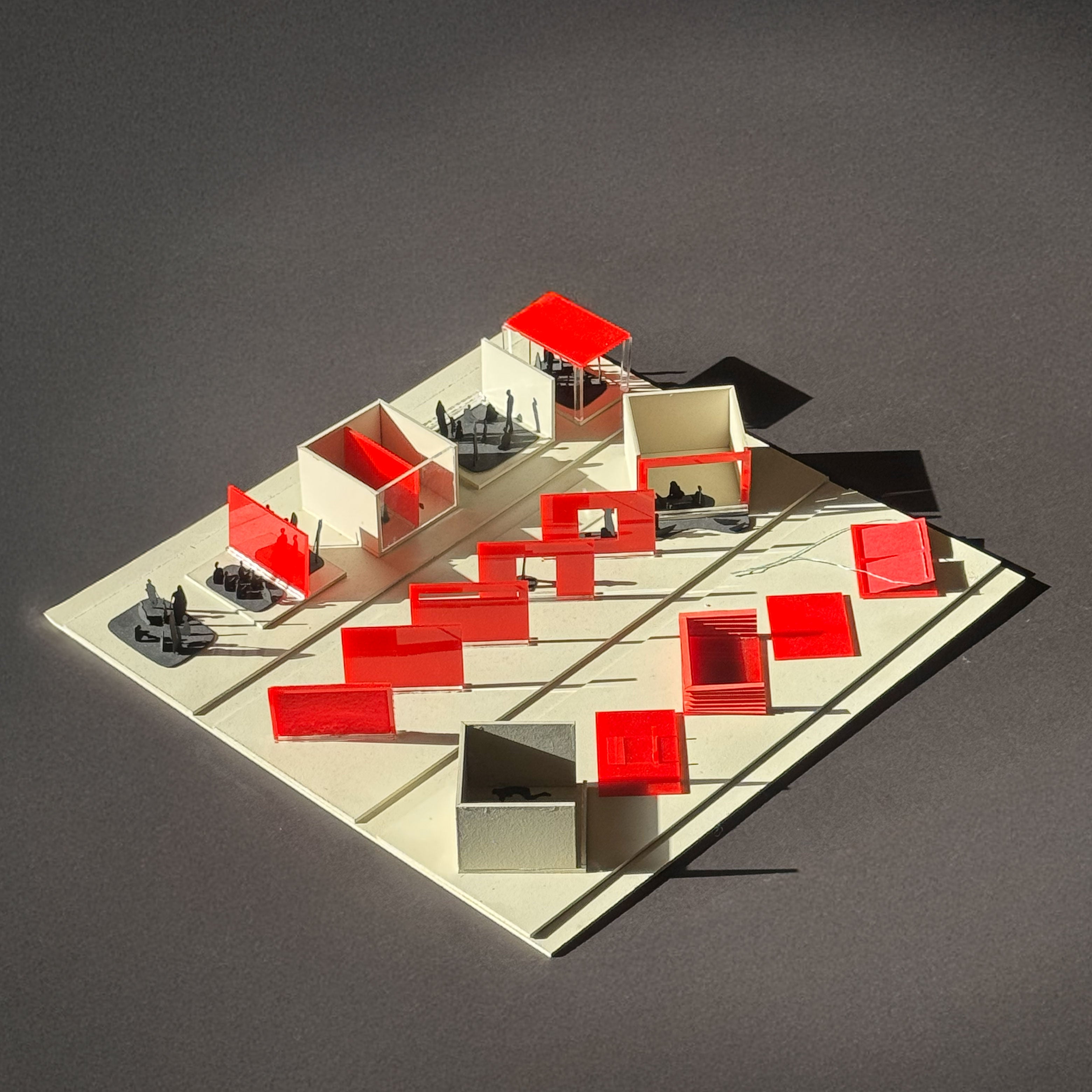
An image with a model of small rooms, each with a plane of the room highlighted.

Thesis Probe: Room for Play

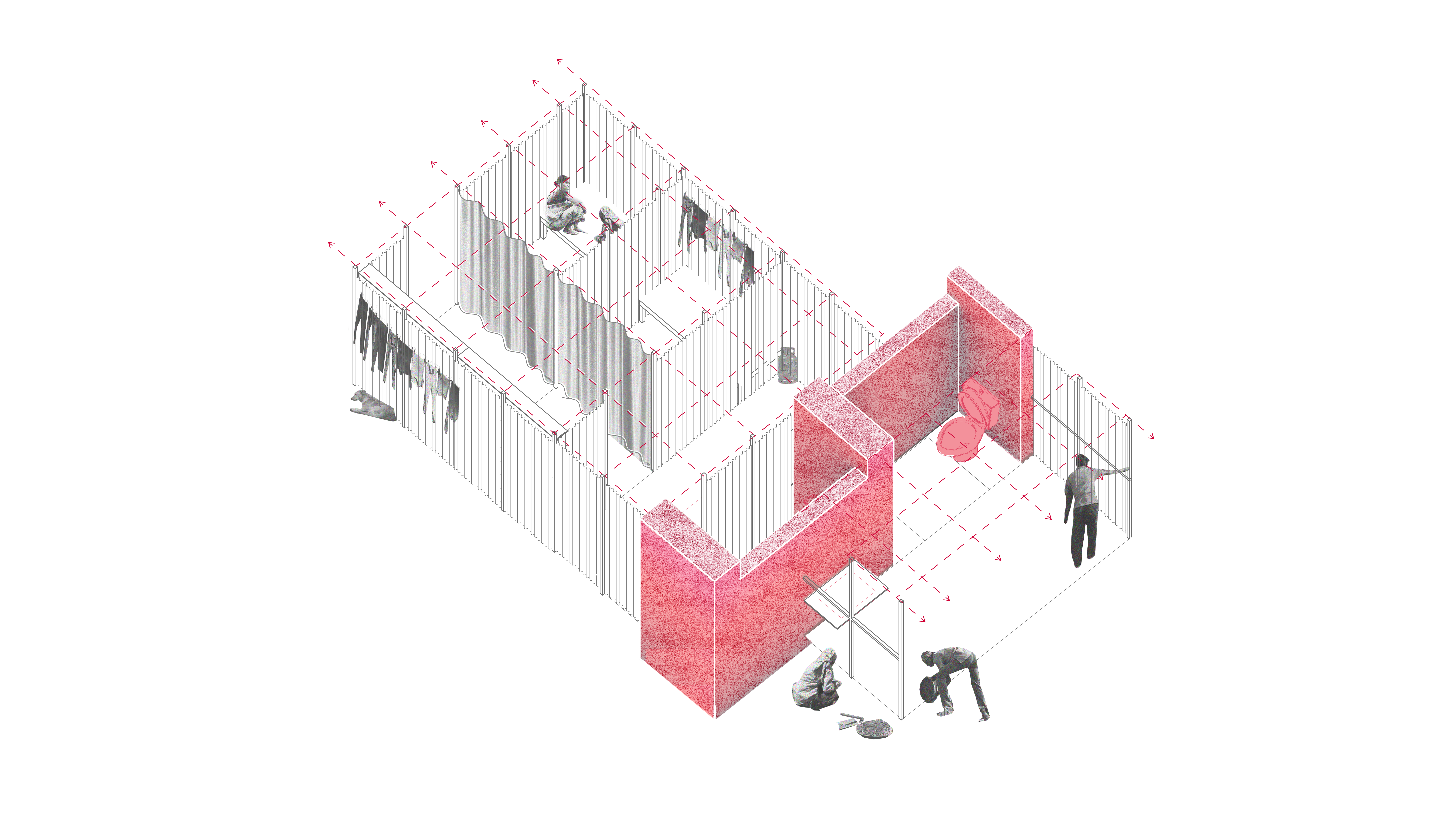
A plane, in essence, is a powerful spatial tool. It has various connotations in its simple existence relative to its users; horizontally- it demarcates space, vertically- it separates, coupled with others, it encloses, divides, and overhead, it shelters. In an architecture of scarcity, where every resource is limited, each plane has significant power to impact lifestyle and livelihood. In informal housing in India, oftentimes a single room forms an entire home. It is used flexibly for cooking, eating, sleeping and working, and is used during most of the day by the women of the home. These homes are built using the cheapest available materials to construct planes that enclose a space for inhabitation. These are planes of fragile material, planes that lack ventilation and design, thus compromising basic occupant comfort, security and protection from the elements. Could each plane be designed to maximize efficiency- cater to the multiple specific lifestyle needs of their inhabitants, as well as modify a single space for flexible, comfortable use, and expand planes to do more than their basic function- to create a home.

Image

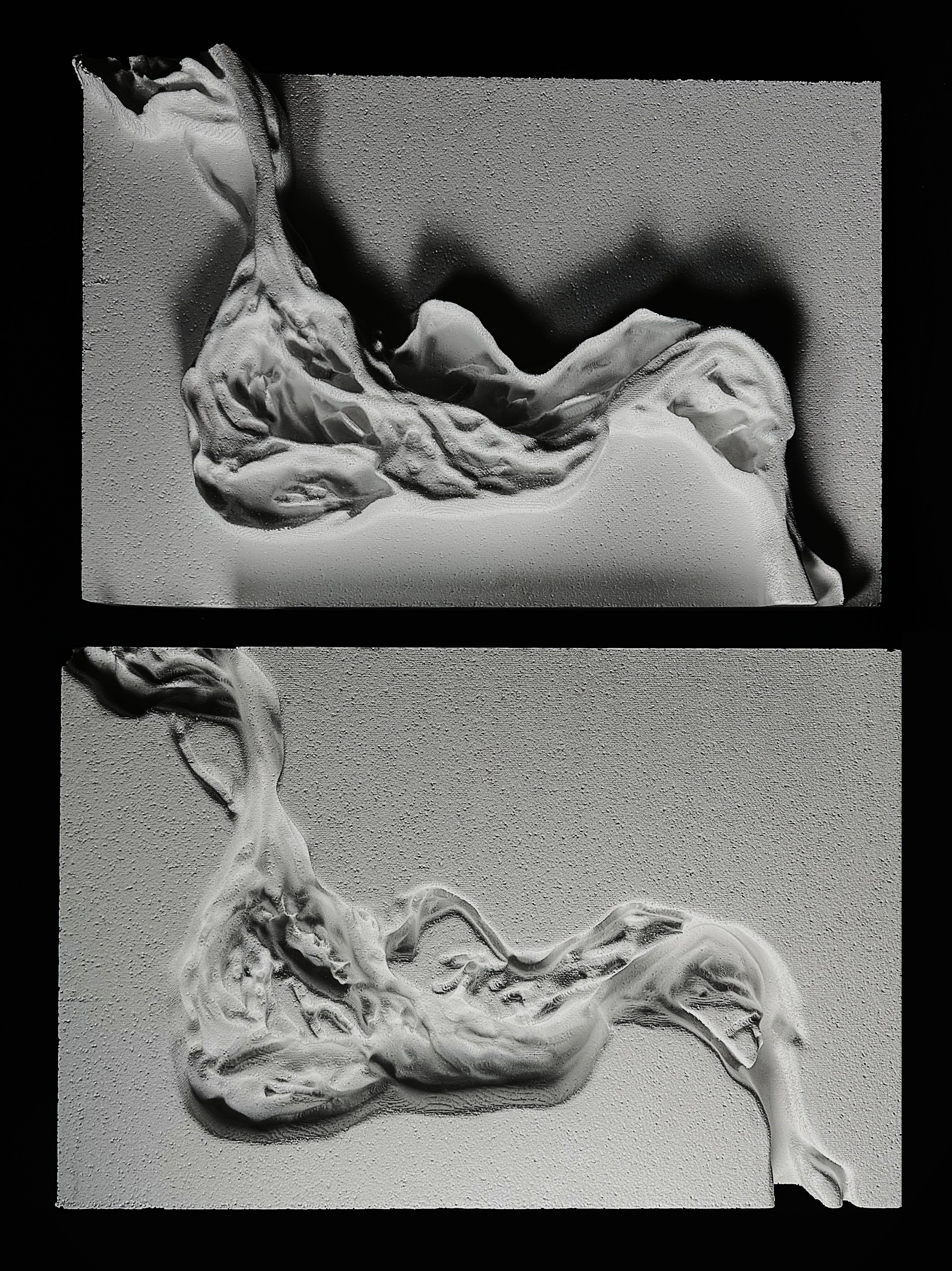
Images of 2 foam models with a river's meander over time carved in with different depth intensities.

River Parma’s meander, sedimentation, | 1930-2020

How do we understand a river’s change in course over time? How can we physically represent its various paths and their respective recency?

States of Change | Spring 2025 | RISD

CNC on High density foam
 

Image

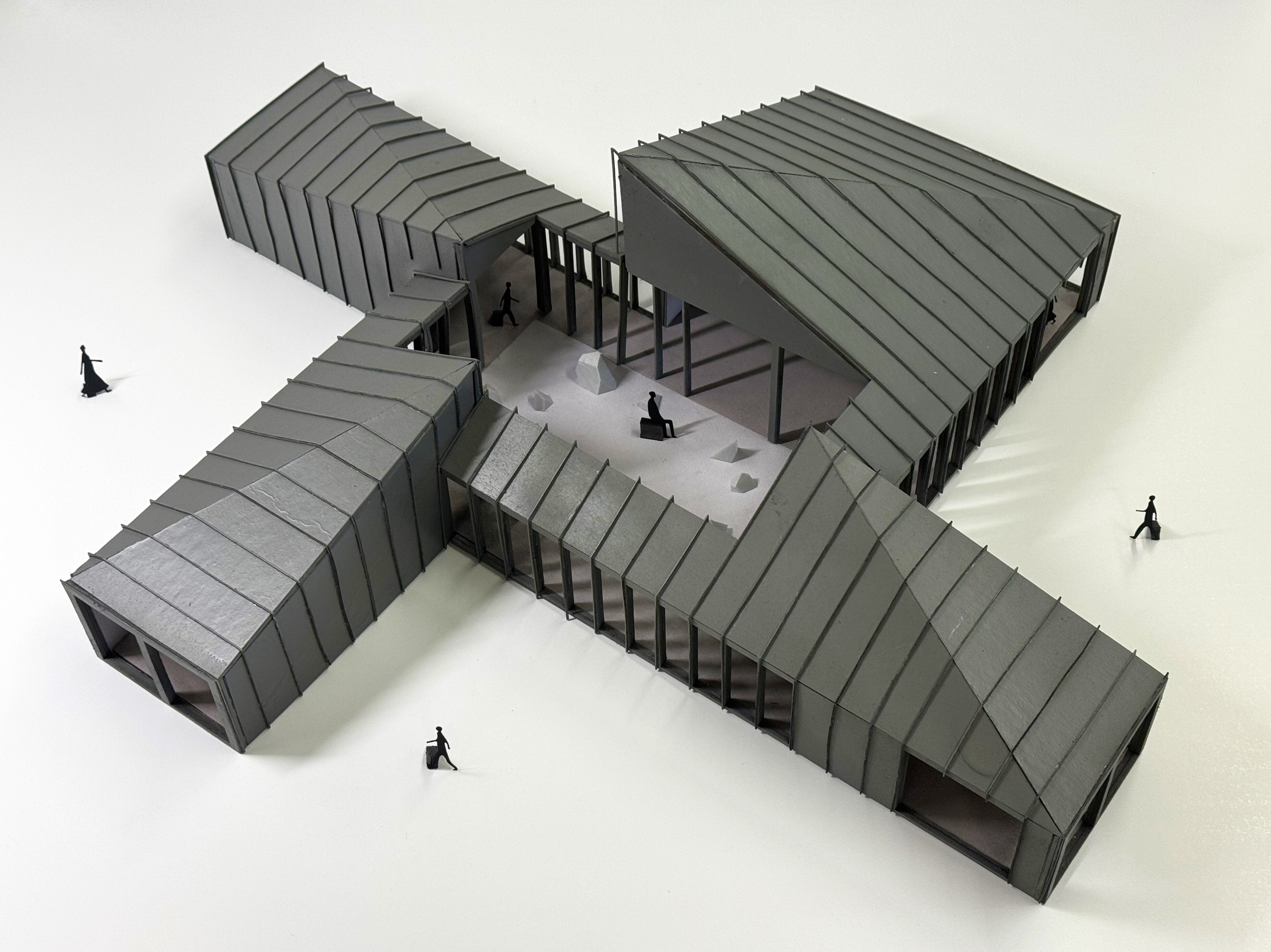
Images of architectural model of house with single sloped roofs.

One House Three Ways

Core 1 Project 3, Reinterpreting M.O.S Design Group's House No. 10's plan and roof form.

Image

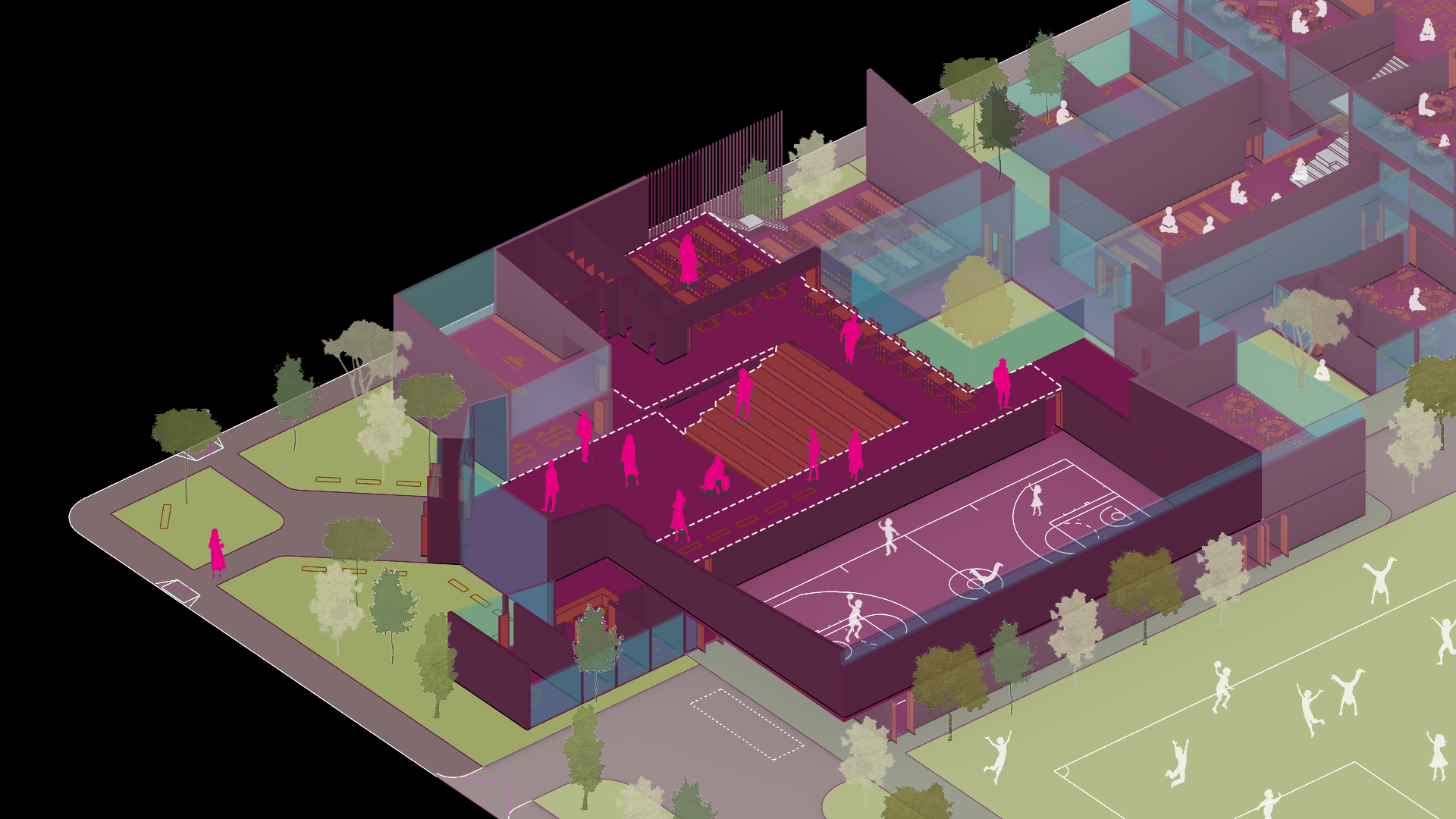
Image of colorful space in school with connection to fun cultural spaces and playgrounds.

What if we hybridize Schools to represent students culture?

Cultural threshold: Gathering space that parent community must enter to access school for drop offs/ admin spaces. It has a partial amphitheater to allow different types of cultural performance for dance/ art/ music/ food sharing/ particular menus etc.

Department Navigation