Samuel Choi
MArch Architecture
Hidden Systems
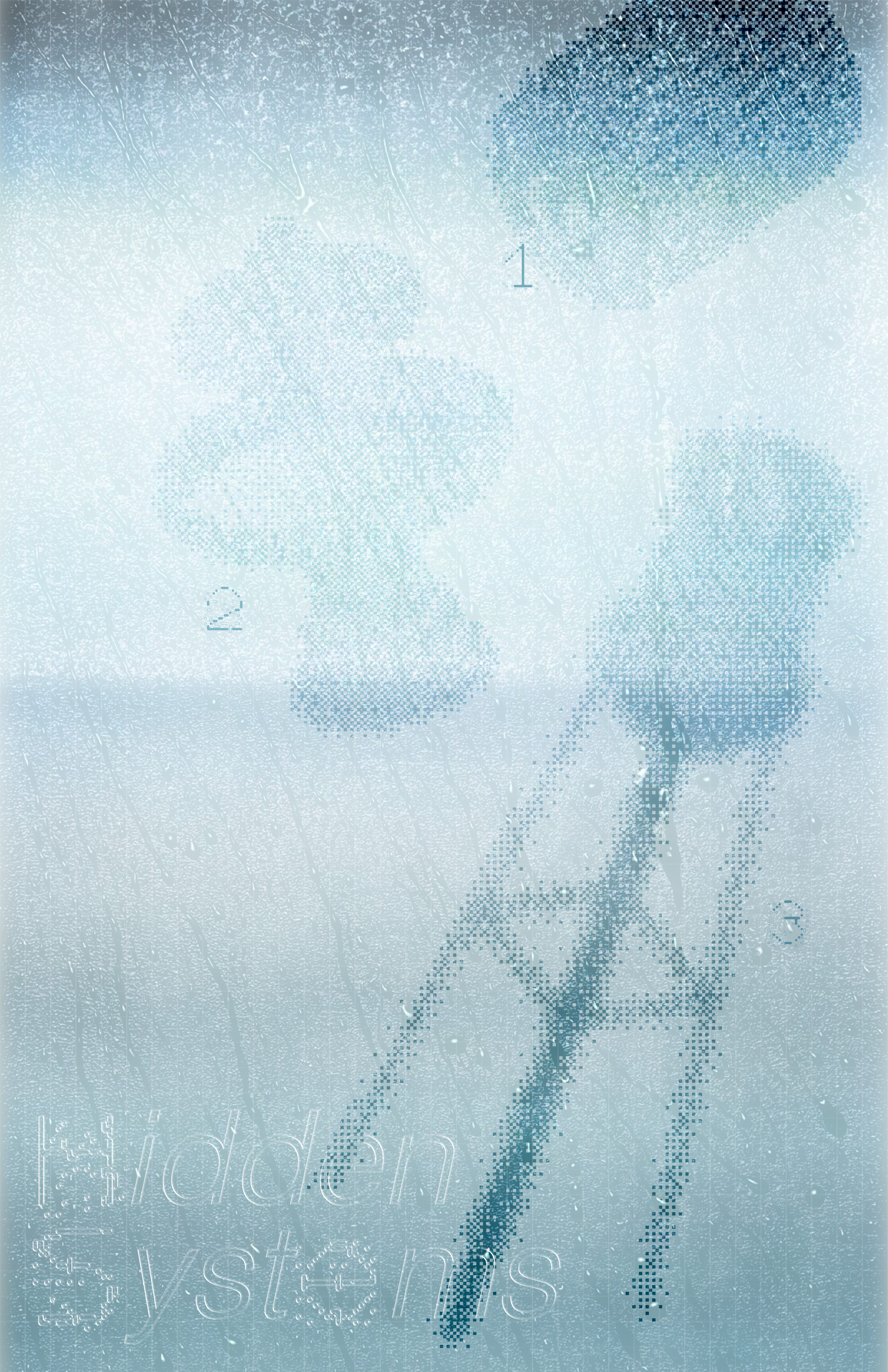
Across buildings and cities, moisture is managed, concealed, and discharged through convoluted systems of containment. Still, water ultimately resists this framework. It reveals itself as leaks, puddles, condensation—moments typically understood as technical failure. Hidden Systems reframes these conditions as architectural knowledge, one that becomes evidence of water’s material capacity, limits of infrastructure, and a record of time.
NYC is constructed on, powered by, and profiting from water. Although it hosts a robust network, seepages disrupt control, allowing systems to be traced across scales. As pipes expand, contract, and freeze, the project unfolds seasonally, moving through water’s three states: solid, liquid, and gas.
What follows proposes architecture not as a perfectly sealed object, but as a medium of constant negotiation with its environment. The interventions within the city conceive water infrastructure as design opportunities, building legibility to necessities often disregarded. They are architectural responses that embrace water’s agency.
Image
Image
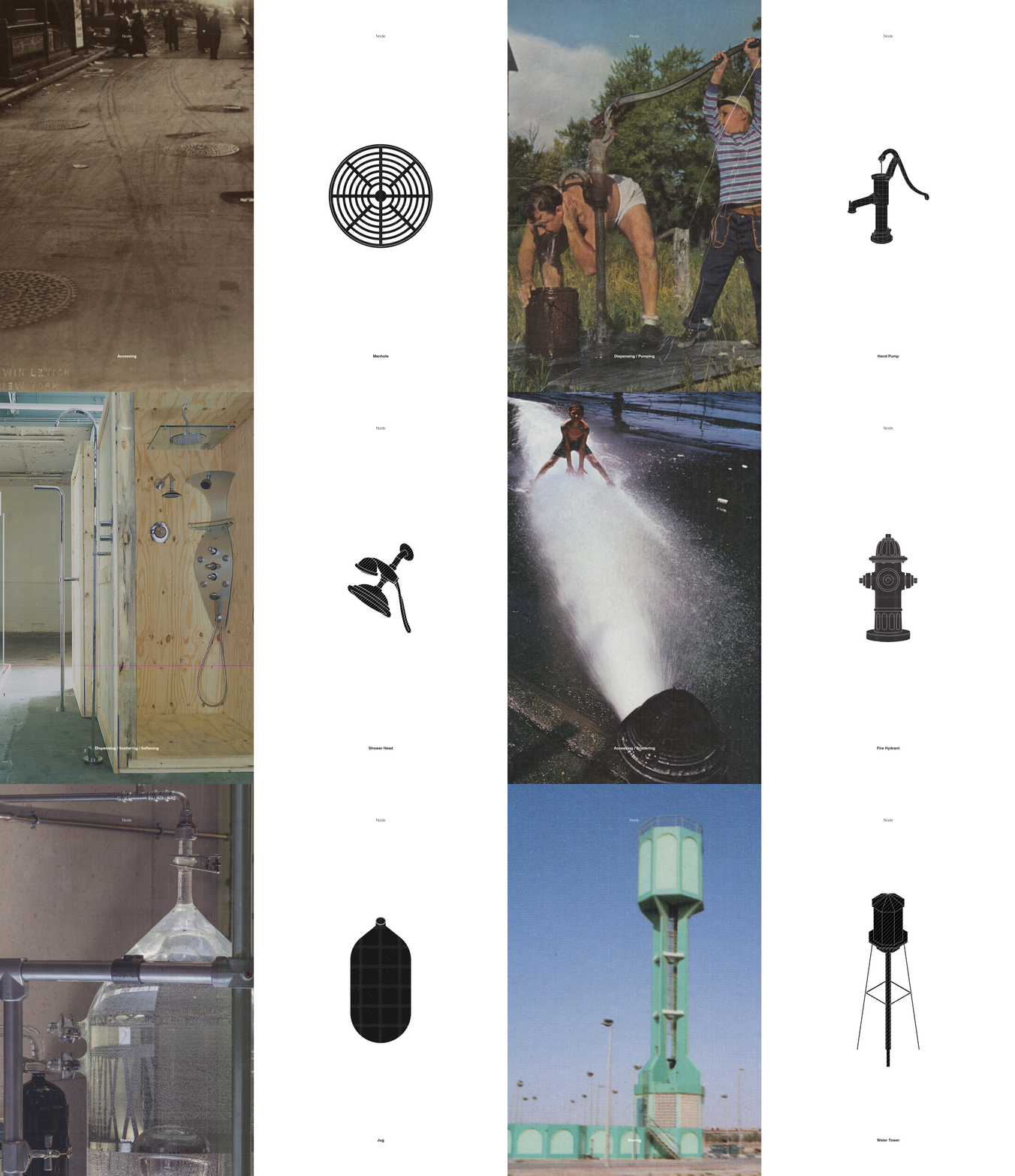
Artifact 01: Index of Nodes
Image
Artifact 02: Con Edison Steam Stacks
Image
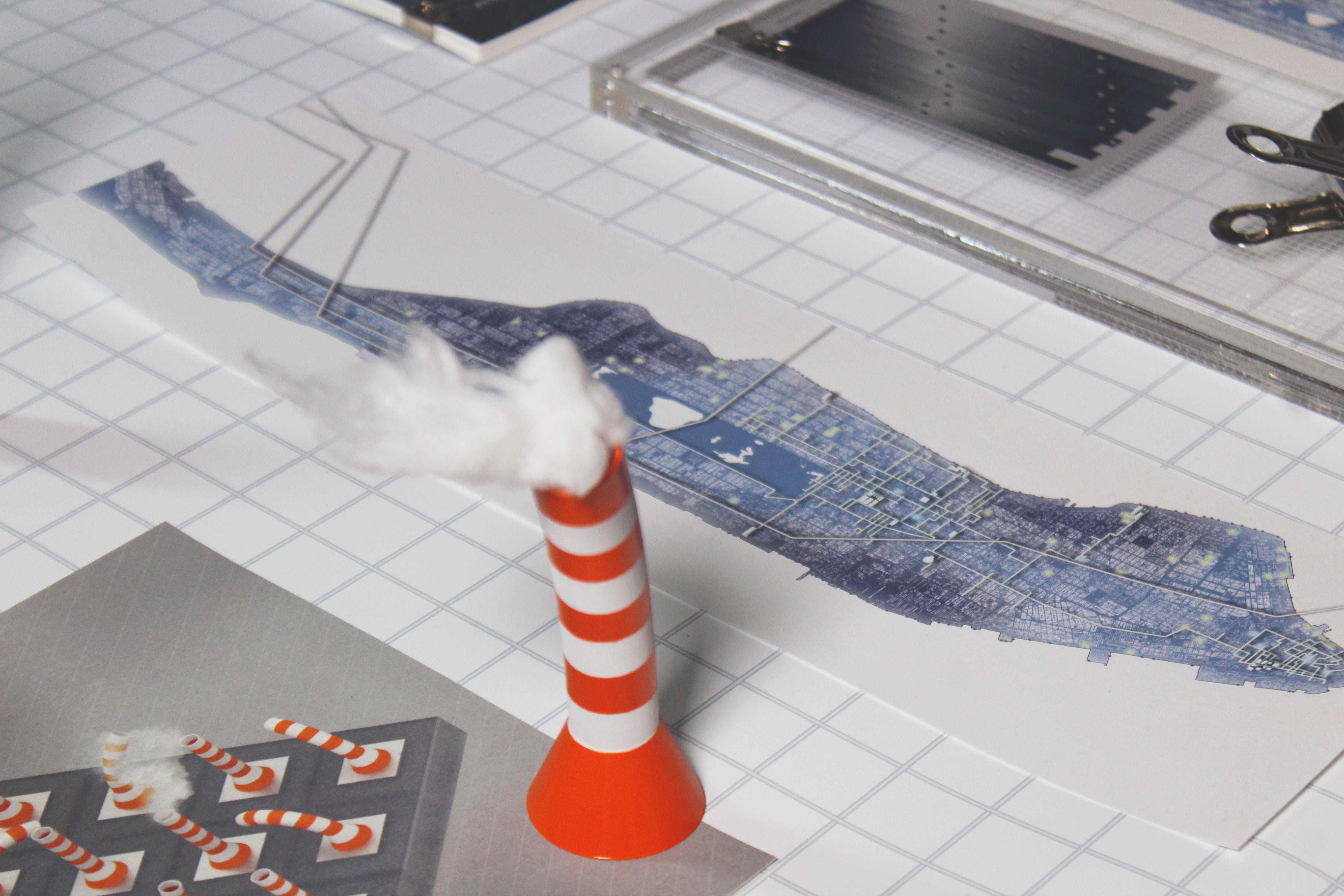
Artifact 03: Map of Manhattan
The project unfolds by examining excess of water within New York City. Taking "building with water" as a prompt, leaks and overflow become a generator for design interventions.
Image
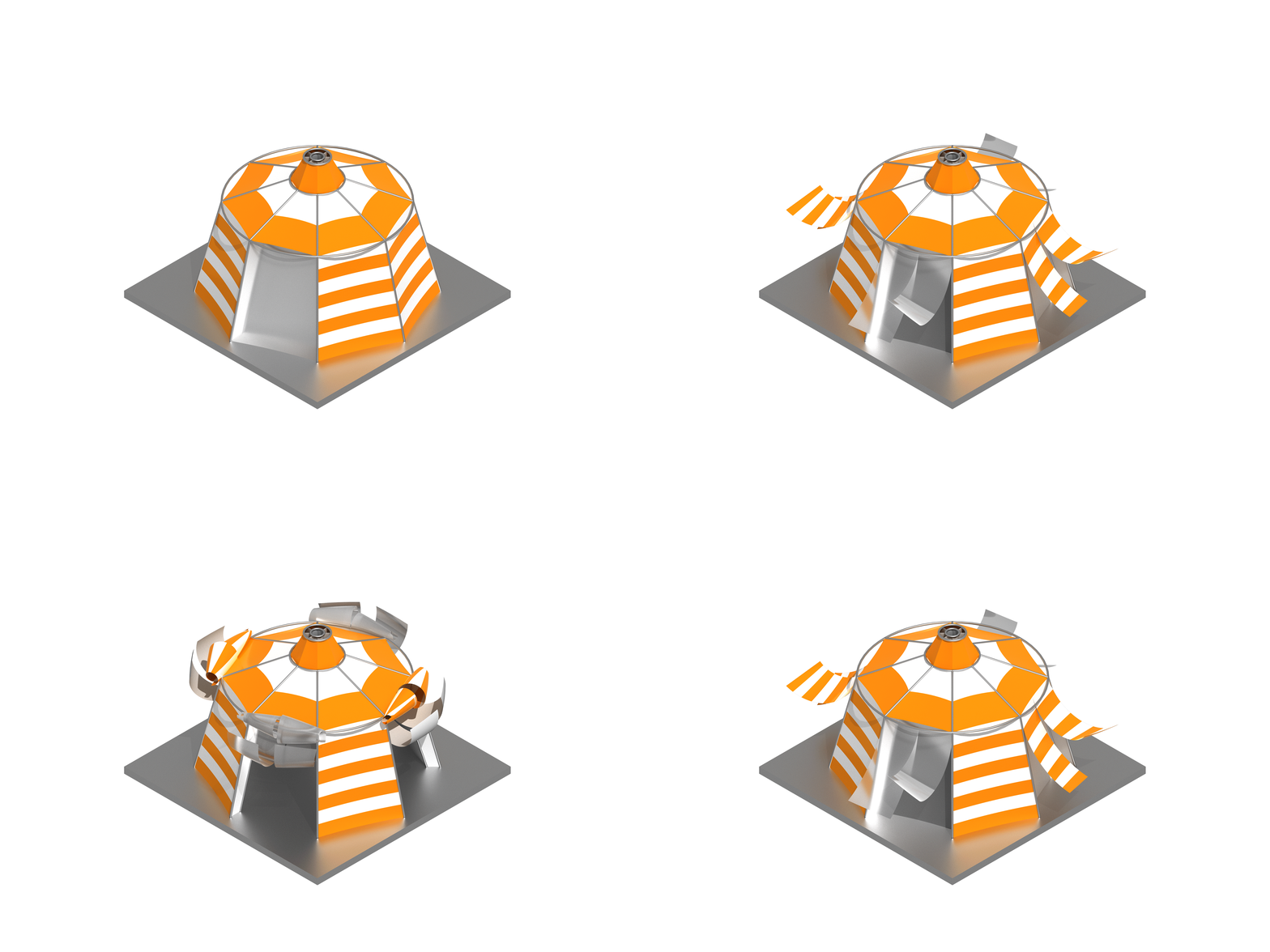
Excess of Steam: Warming Station
Image
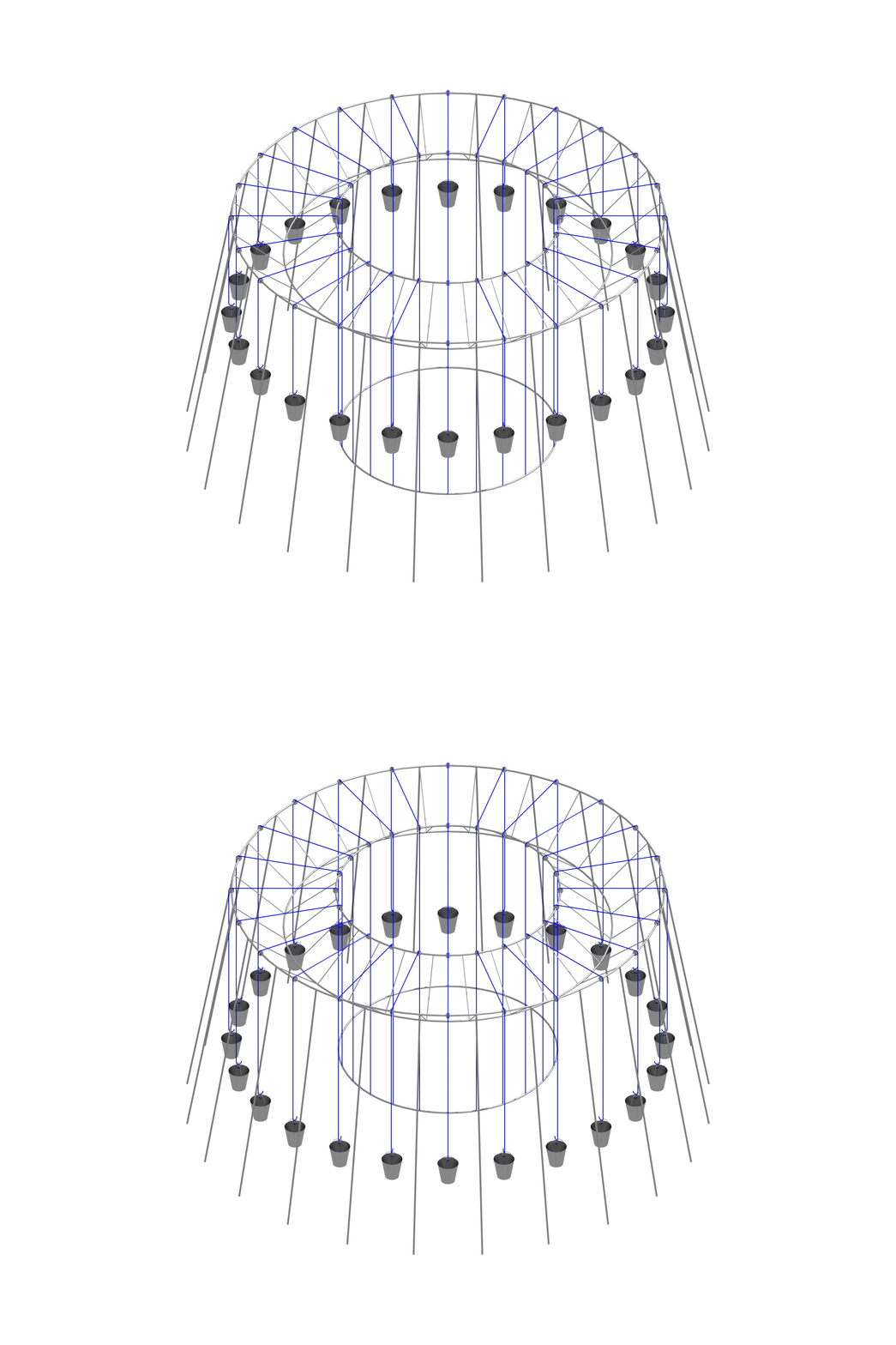
Excess of Water: Bucket Pavilion
Image
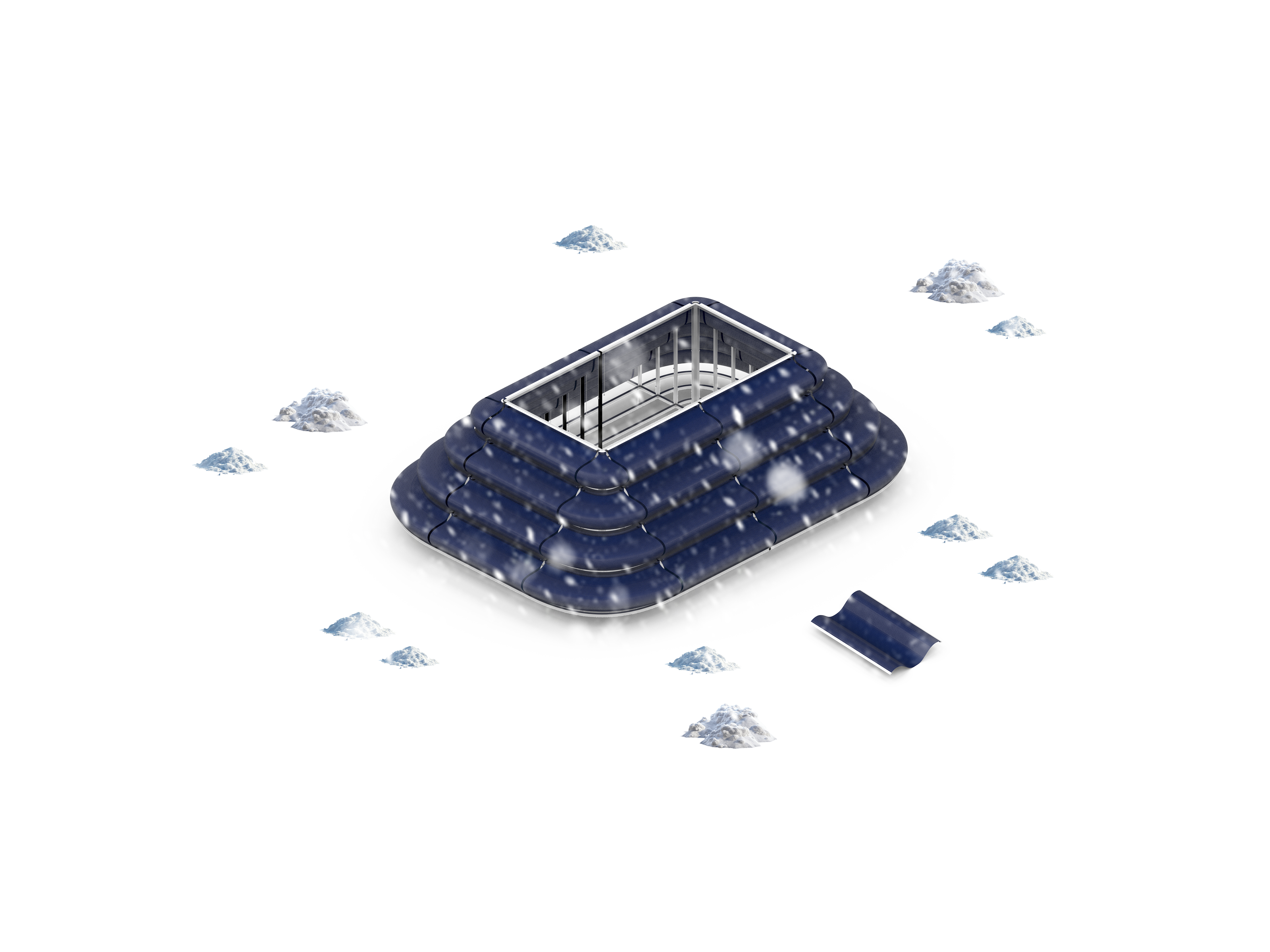
Excess of Snow: Windbreaker
Image

NYC Department of Water
Learning from how the smaller interventions engage with smaller forms of excess around the city, the NYC Department of Water building engages with a larger excess: the flood. This building becomes an archive of water and water technologies, housing the smaller interventions that can be deployed, and alleviating an inch of sea-level rise for ten Manhattan city blocks.
Image

Rhode Island School of Design
20 Washington Place
Providence, RI 02913–2784
United States of America
+1 401 454 6100
+1 800 364 RISD
QUICK LINKS
risd.edu
Graduate Studies


Image
Rhode Island School of Design
20 Washington Place
Providence, RI 02913–2784
United States of America
+1 401 454 6100
+1 800 364 RISD