Shaivi Tomar
MA Design Engineering
Roami: Designing Dependable AI for Everyday Life
Roami is an exploration of how AI can be designed to feel less transactional and more human. As intelligent systems become increasingly embedded into everyday life, many experiences today prioritize speed, optimization, and productivity—often at the cost of trust and emotional awareness.
This project investigates alternative ways of designing AI interactions that feel intuitive, calm, and contextually aware rather than overly directive or extractive. Through adaptive systems, interaction design, and experience frameworks, Roami explores how AI might support human decision-making without overwhelming it—acting less like a tool for efficiency and more like a thoughtful companion that understands context, ambiguity, and emotion.
At its core, the project asks: what does it mean to design AI experiences that people can trust, feel comfortable with, and meaningfully connect to? Roami proposes a future where intelligent systems are not only useful, but also emotionally considerate, explainable, and quietly supportive of human agency.
Image
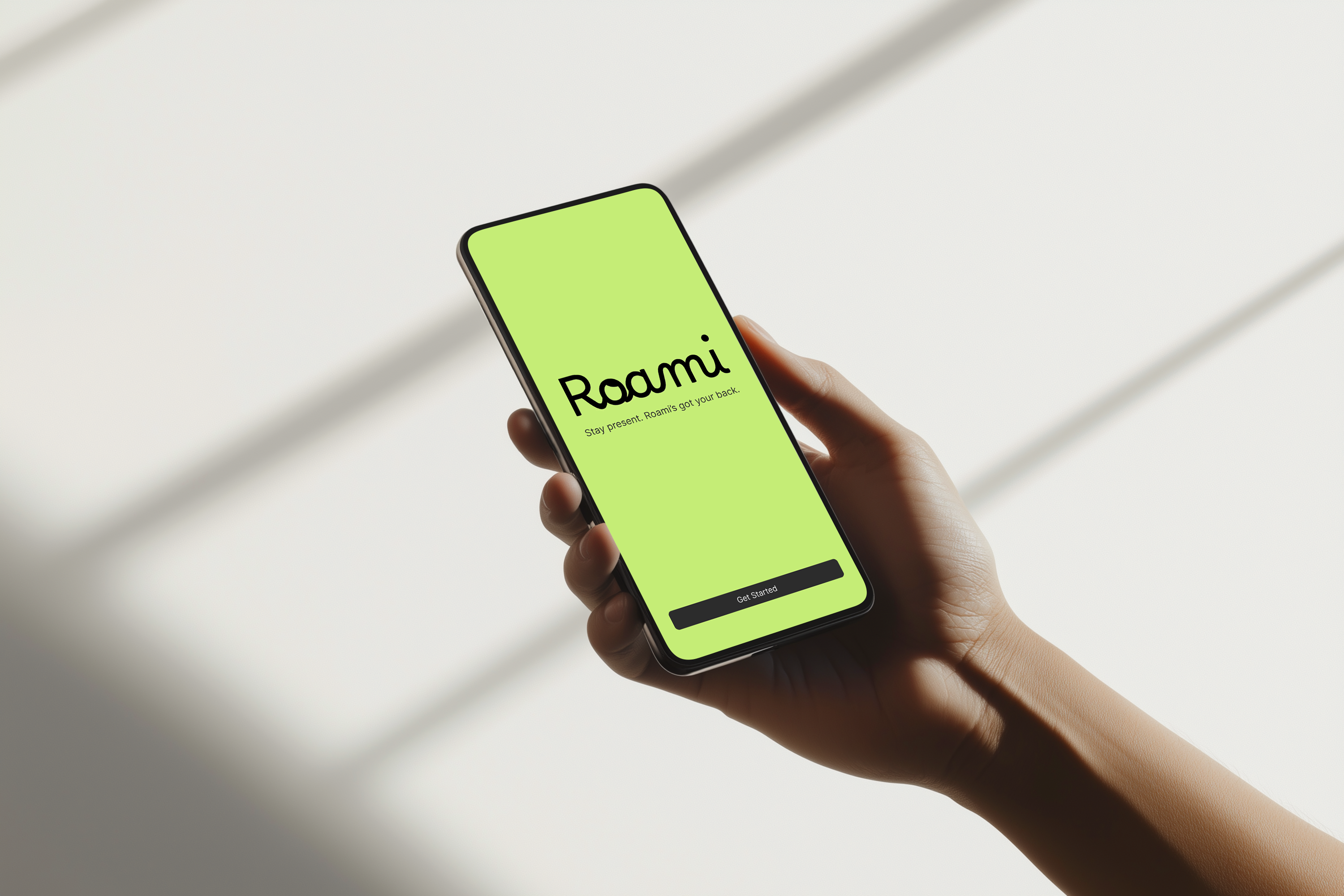
Roami opens with a minimal, grounded interface that sets a tone of ease and presence. It introduces the AI as a supportive companion rather than a directive system, reducing cognitive load and encouraging trust from the very first interaction.
Image
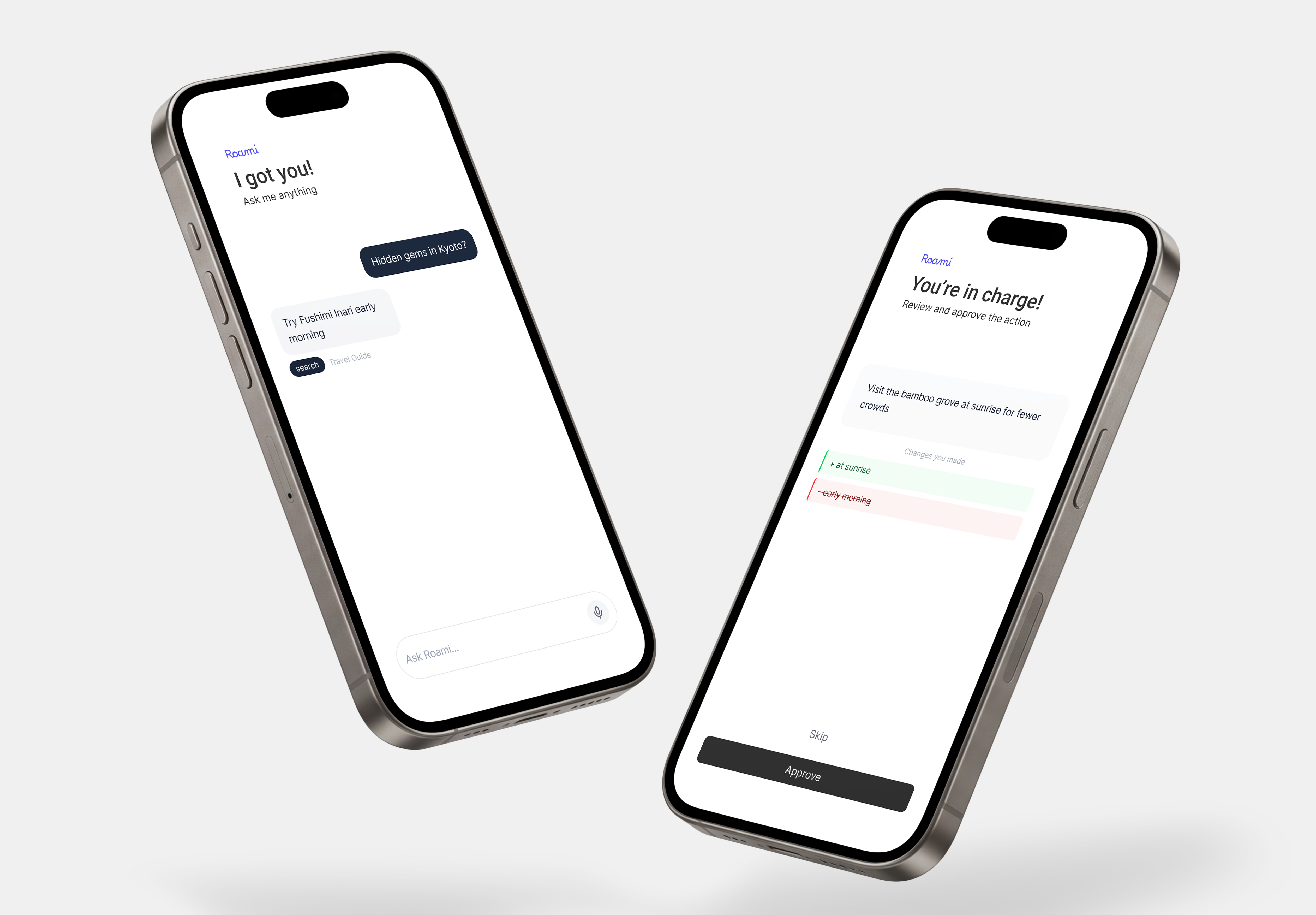
Roami blends conversational support with transparent decision-making, allowing the AI to suggest context-aware actions while keeping the user firmly in control. Suggestions are lightweight and responsive to intent, but nothing is executed without visibility and approval. This structure reinforces explainability, trust, and shared control between human and system, shifting AI from an autonomous decision-maker to a collaborative participant in the experience. The interaction is designed to feel fluid yet accountable, ensuring users understand not just what the AI recommends, but why it does so.
Image

Rhode Island School of Design
20 Washington Place
Providence, RI 02913–2784
United States of America
+1 401 454 6100
+1 800 364 RISD
QUICK LINKS
risd.edu
Graduate Studies


Image
Rhode Island School of Design
20 Washington Place
Providence, RI 02913–2784
United States of America
+1 401 454 6100
+1 800 364 RISD