Tonia Yuqi Zhang
MFA Graphic Design
Re-Assembly
Graphic design is bound by invisible defaults—software suites, standardized formats, and interfaces optimized for speed, profit, and frictionless output. Re-Assembly treats these standardized technologies not as neutral scaffolding, but as the primary material for critical inquiry. By dissecting this “default” infrastructure, the work exposes the logic of extraction and control baked into our templates and grids. Through a practice of subverting and rebuilding these everyday systems, design is pushed to operate under decentralized and open terms. This repositioning rejects the role of the designer as a surface technician, instead defining them as an active agent and an architect of alternative systems.
Image
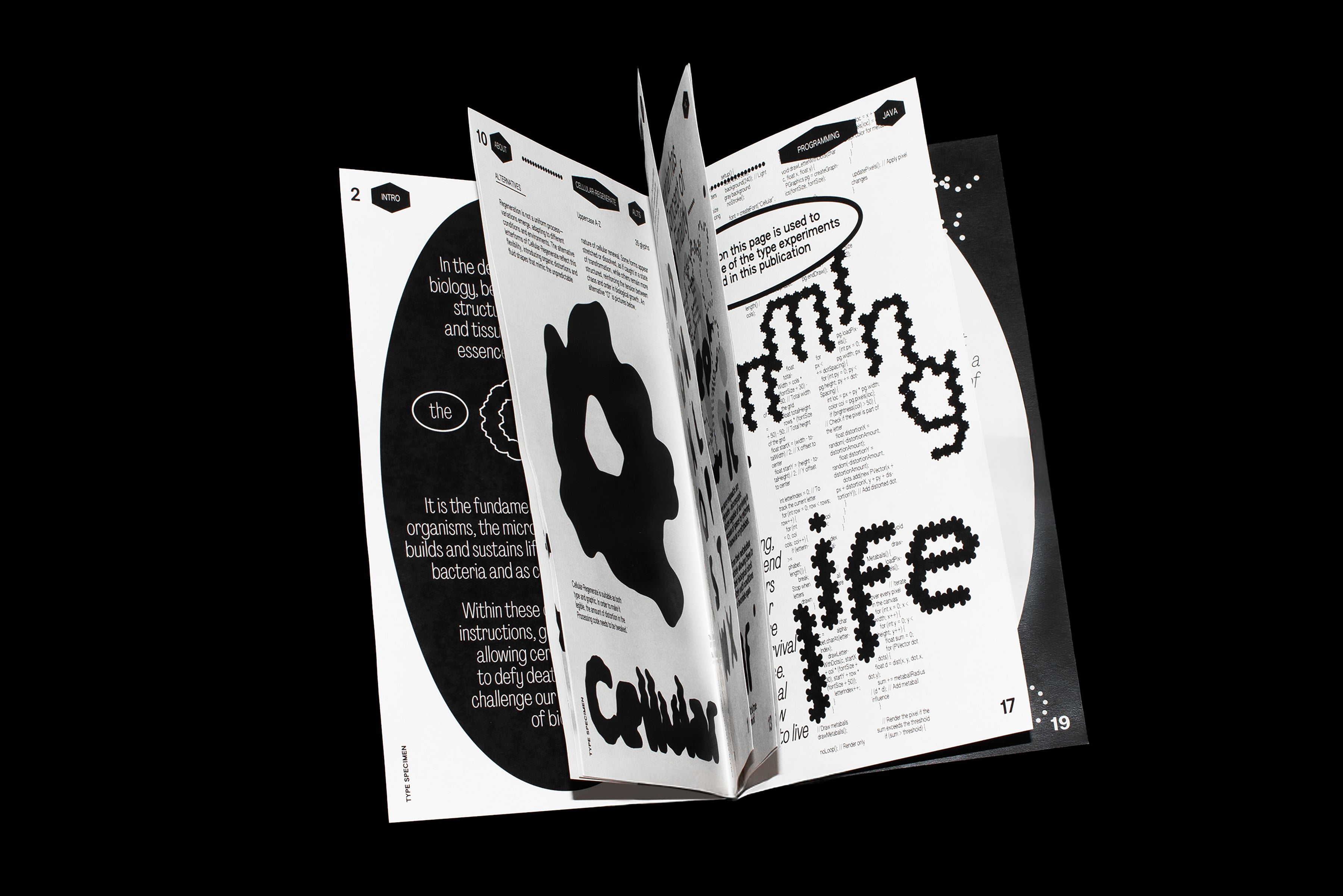
Cellular Transfigurations
Cellular Transfigurations is a generative font family built with Processing (p5.js), inspired by biologically immortal organisms such as Schmidtea mediterranea (planarian flatworm) and Turritopsis dohrnii (the “immortal” jellyfish). Imitating processes that allow these species endlessly regenerate, the code reshapes letterforms—stretching, mutating, and sometimes erasing legibility—treating typography as a living system and asking whether meaning dissolves when life persists without end.
Image
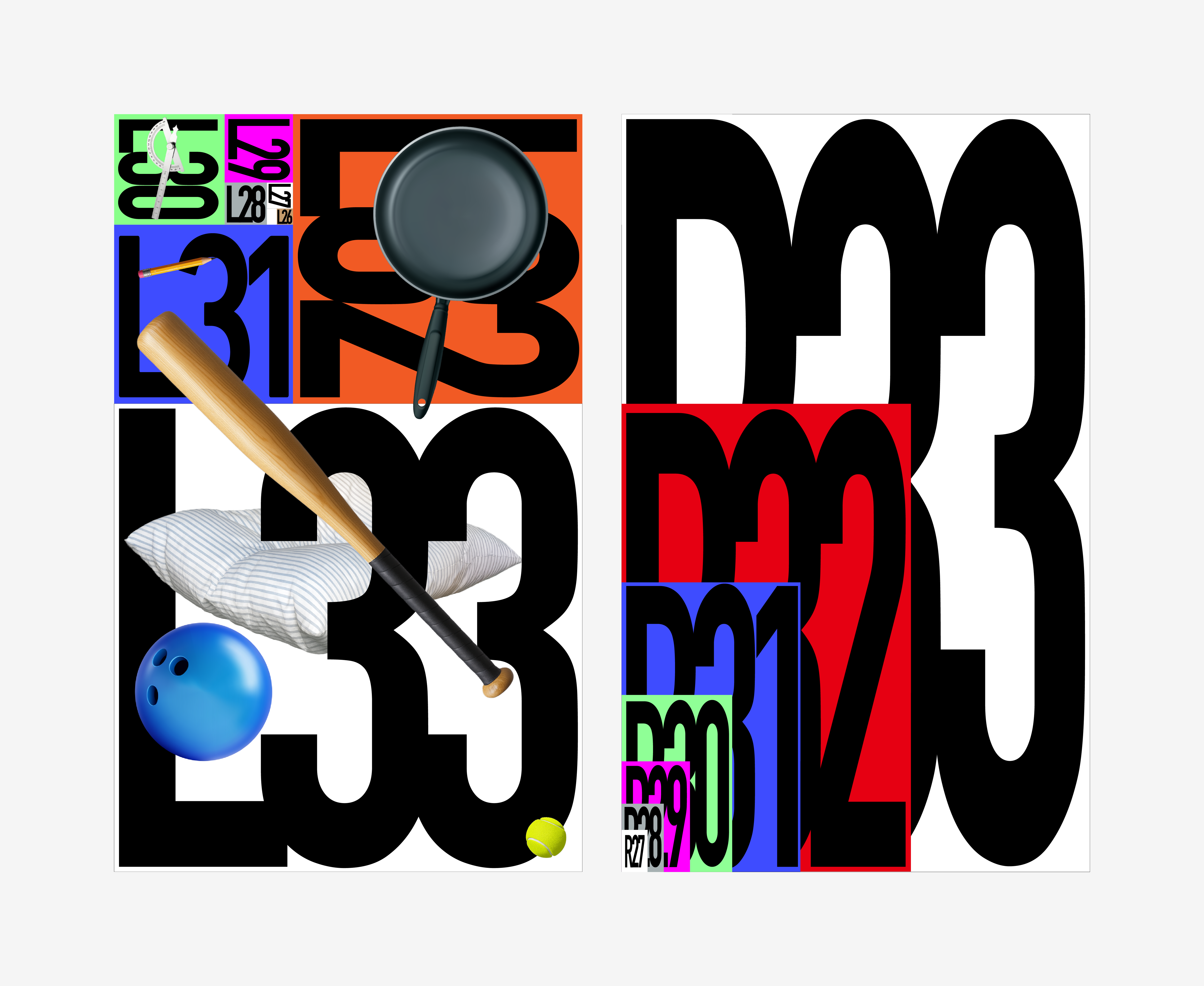
The L-Paper Standard
The L-Paper Standard is a speculative measurement system replacing the meter (a unit tied to European Enlightenment rationalism and economic efficiency) with the light-year as its base unit. The system scales infinitely using the golden ratio ($\phi$), generating a continuous sequence of square sizes (L1, L2, L3...). When L1 through L107 are arranged in a golden ratio spiral, the total length equals one light-year, deliberately spanning scales from microbacteria to cosmic structures (L156-L163 approximate the observable universe). A secondary R-format extends each square L-size into a golden rectangle (e.g., R33 is L33 extended by $\phi$) for practical use. The project is presented via two printed posters and an interactive website that visualizes the infinite scaling.
Image
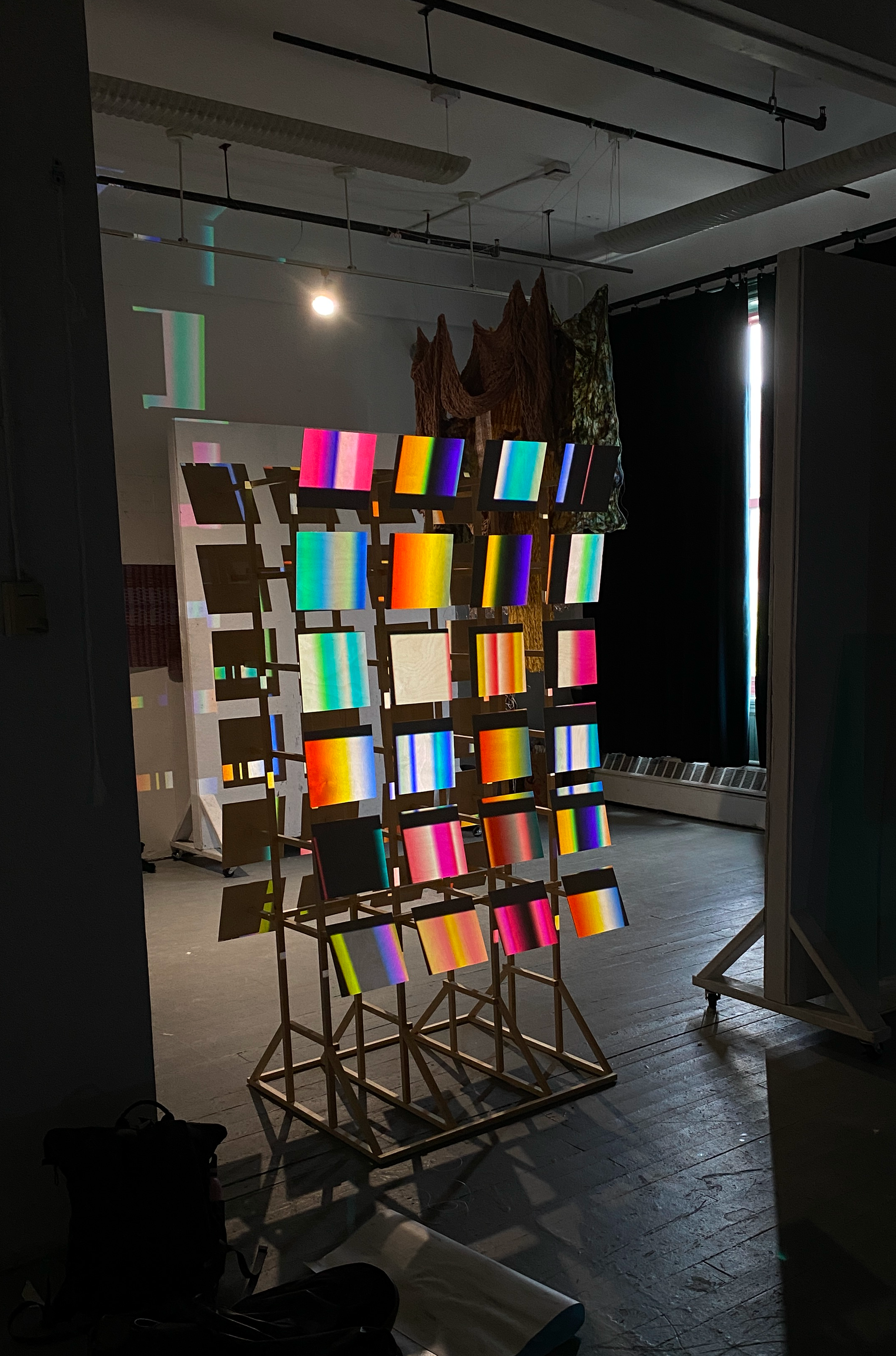
Loading Loading
Loading Loading examines the temporal architecture of waiting within digital systems. Operating through a methodology of inspection,defamiliarization, and recontextualization, the installation isolates the transitional artifacts of the screen—gradients, bars, and throbbers—and extends them into a 12-minute cycle.
The project deliberately introduces friction by subverting the functional logic of the interface. In a digital economy that optimizes for frictionless attention, the persistent replacement of one loading state with another creates an intentional psychological tension. This discomfort serves to defamiliarize the viewer’s relationship with the "result-oriented" screen. By withholding the expected digital content, the installation re-centers the "white space" of the internet not as a delay to be suffered, but as a stabilized, physicalized moment of contemplation and uncommodified time. Collaboration with Chihao Chang.
Image
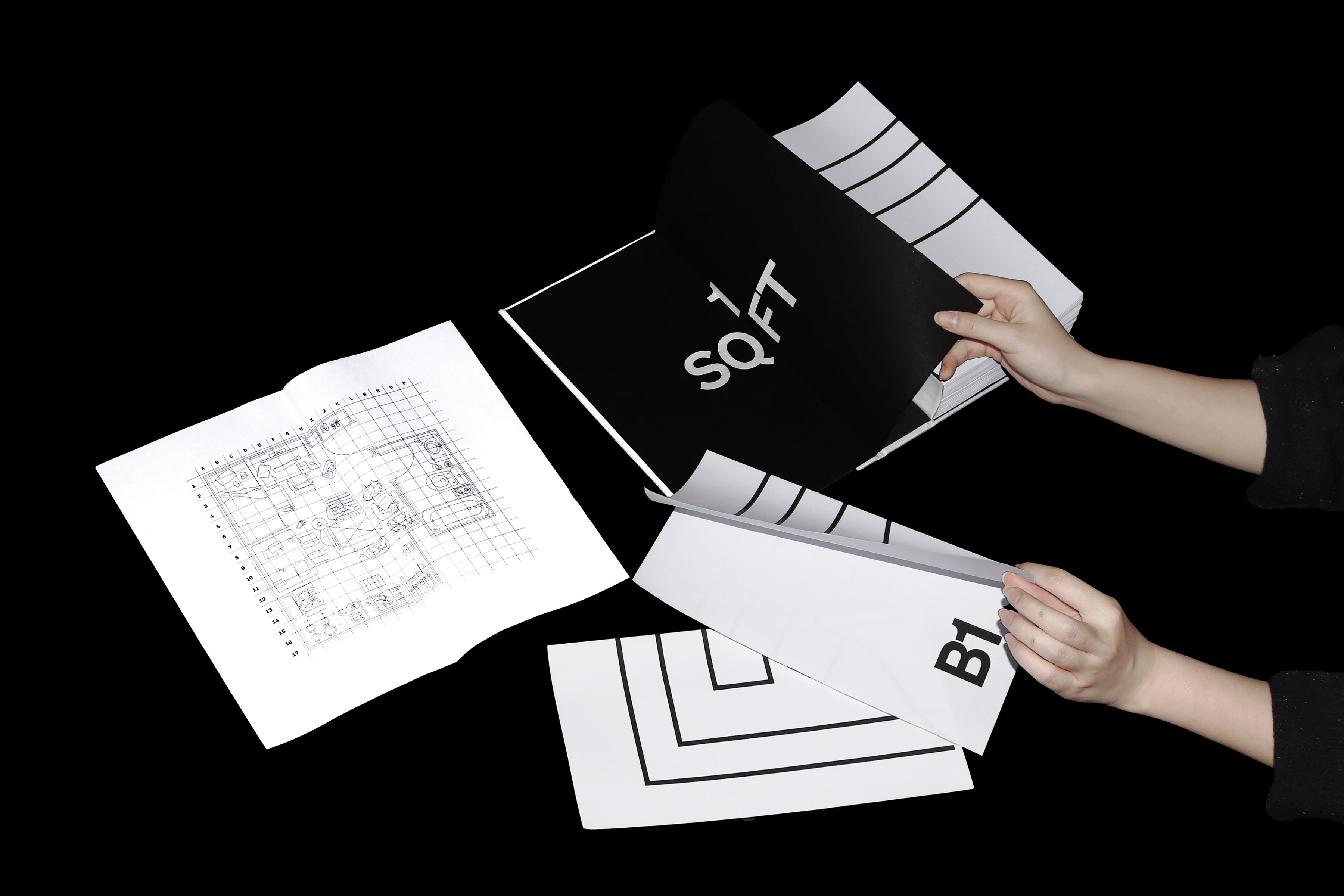
A13–220
This project is a book that collapses an apartment into a single navigable system.
The project consists of 220 folded sheets, each corresponding to one square foot of a 220-square-foot studio. When unfolded and assembled, the pages form a 1:1 architectural representation of the space.
Rather than presenting space through conventional plans or sequences, the book merges spatial, temporal, and narrative structures. Moving through the book becomes equivalent to moving through the apartment.
The pages document not only the architectural layout but also traces of daily life—hair, objects, debris—treating them as part of the spatial system.
Image
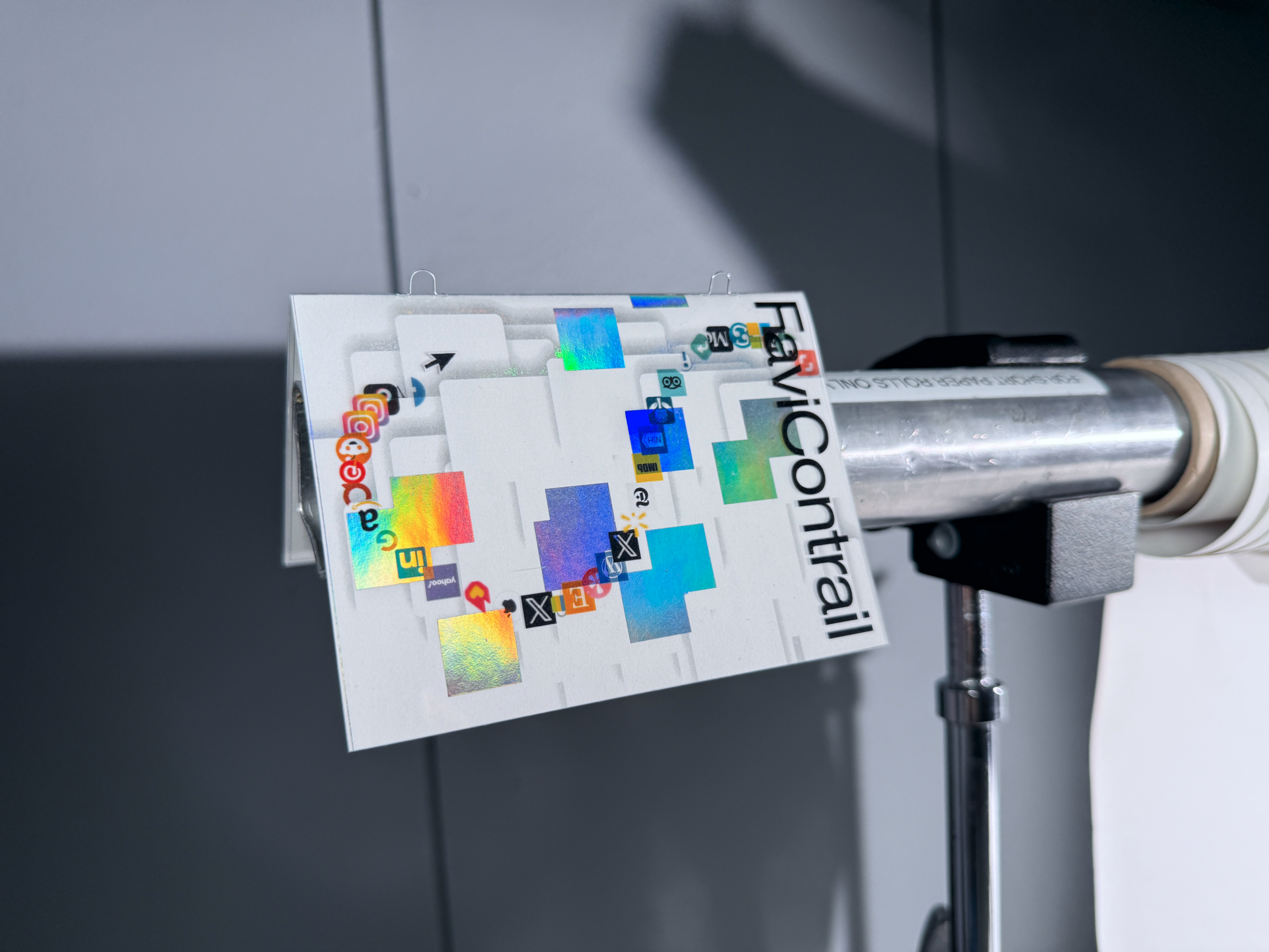
FaviContrail
FaviContrail is a Chrome extension that drags every tab you've opened around behind your cursor. It isolates the favicon—a marginal element of the browser interface—and makes it dominant.
As users browse, favicons detach from the tab bar and accumulate into a trailing field that follows the cursor. The thin strip of icons, normally compressed at the top of your browser window, is remixed into a dynamic trail that annoys you by reminding you how many tabs you have open. It becomes a visible record of your browsing behavior. The browser is no longer experienced as a neutral container, but as an environment saturated with branded presence.
The project amplifies a byproduct of web infrastructure: tab accumulation. By turning this behavior into a persistent visual trace, FaviContrail exposes patterns of excess, attention, and habitual navigation. The interface does not correct or optimize the behavior—it exaggerates it.
Available at favicontrail.xyz
Image
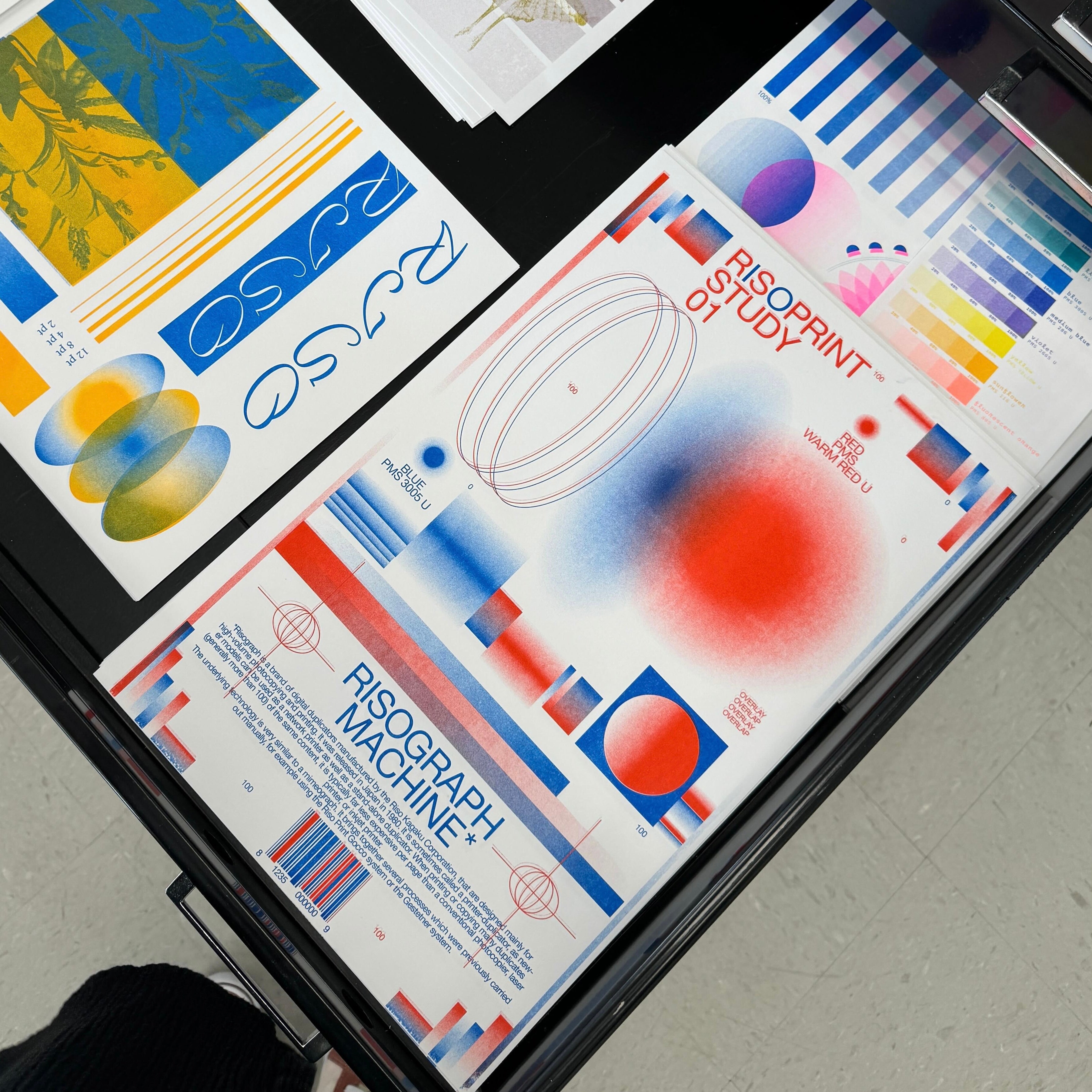
Risograph Machine
Risograph Machine is a riso poster about the risograph machine.
Image

Rhode Island School of Design
20 Washington Place
Providence, RI 02913–2784
United States of America
+1 401 454 6100
+1 800 364 RISD
QUICK LINKS
risd.edu
Graduate Studies


Image
Rhode Island School of Design
20 Washington Place
Providence, RI 02913–2784
United States of America
+1 401 454 6100
+1 800 364 RISD