Violet Liu
MDes Interior Architecture
After Yellow Horse: From Passive Shelter to a Self-Sustaining Cycle
Equine therapy centers are expensive to run and difficult to sustain. When the landlord changes, or the donations dry up, they close. Working within the existing stable complex of a shuttered facility in rural Rhode Island, the design works with what is there: rerouting circulation, layering in agricultural production, and opening the site to a public farmers' market. The result is a place where the work of recovery and the work of sustaining the institution are, as much as possible, the same activity.
Image
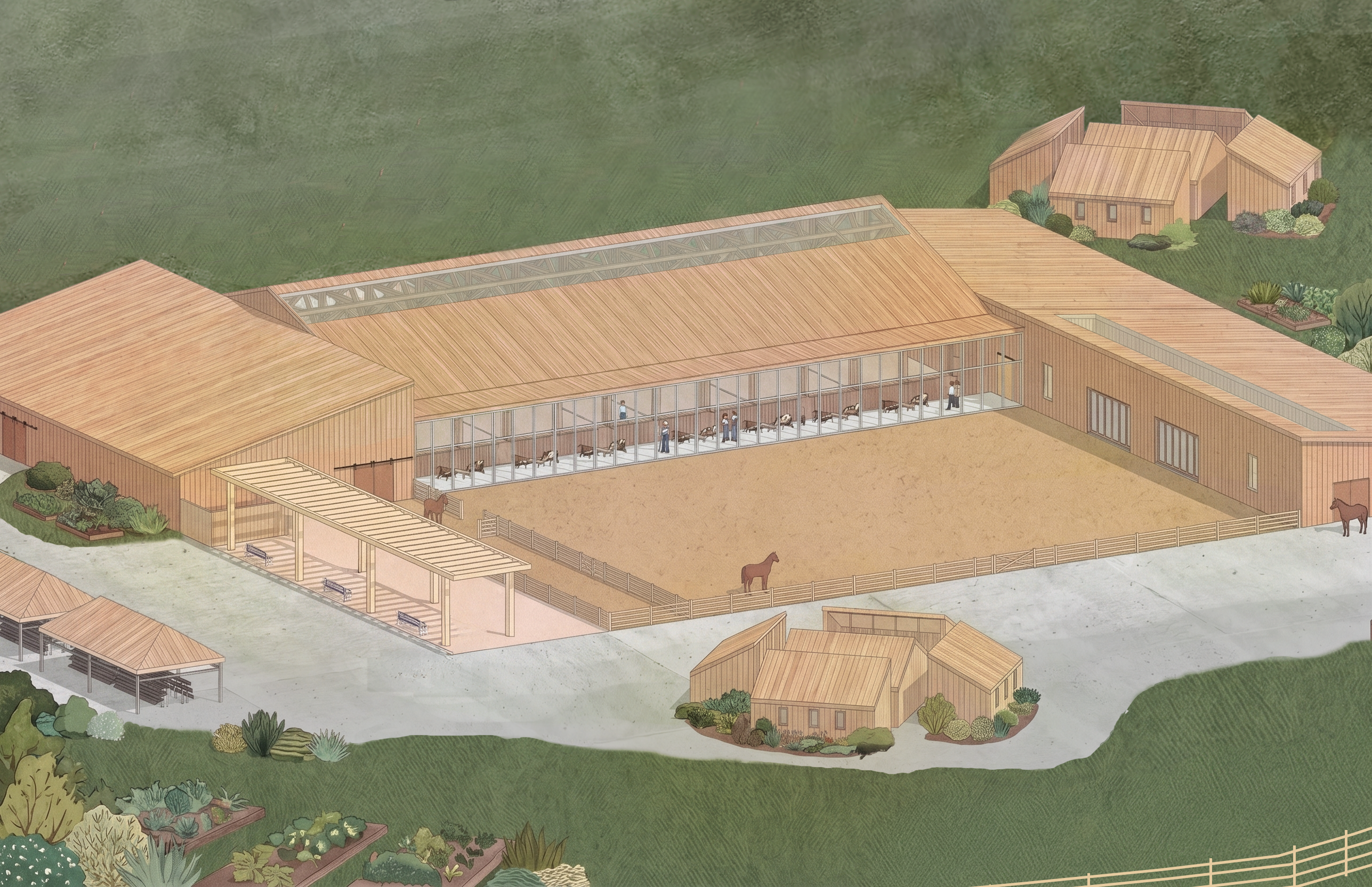
The existing barn structure is retained. Circulation is rerouted to connect three programs in sequence: an indoor therapeutic arena, a shared agricultural production zone, and a weekend farmers' market open to the public. A new outdoor arena extends the therapeutic space toward the landscape, separated from the indoor arena by a glass wall that keeps the two visually connected. Patient and public circulation never cross. The market runs outdoors in warmer months and moves into the production zone in winter. The site does not close.
Image
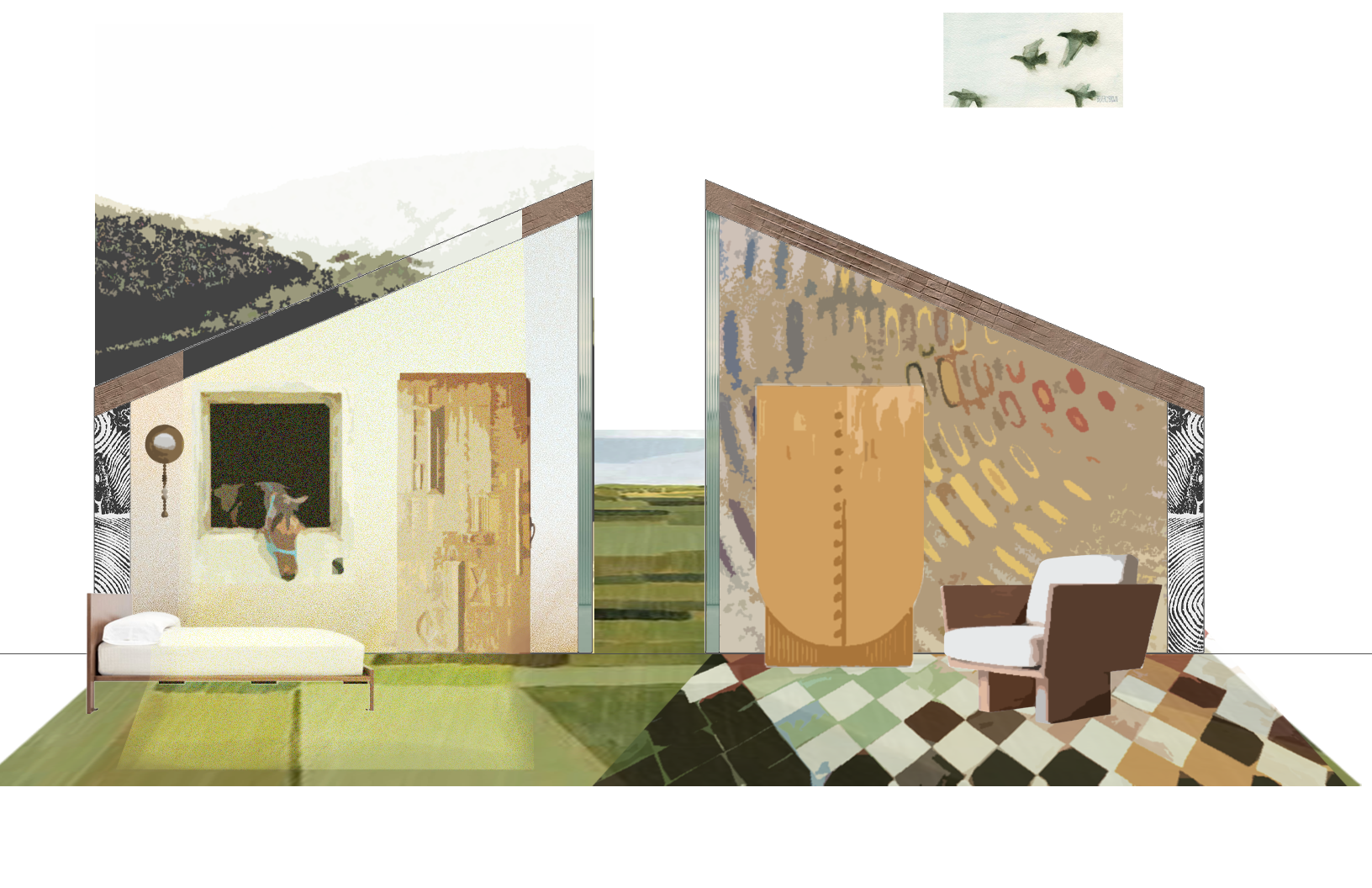
The residential unit sits within the therapeutic circuit of the site, close enough to the arenas and planting beds to make daily participation possible. The interior is spare: a bed, a chair, a view toward the landscape. One wall opens to the barn beyond through a glazed partition, keeping the presence of the horses near without requiring contact. The floor shifts from green to a checkered pattern, marking the threshold between rest and movement. The unit is designed for short-term recovery stays, not long-term residence. It is a place to sleep, to watch, and to decide when to step outside.
Image
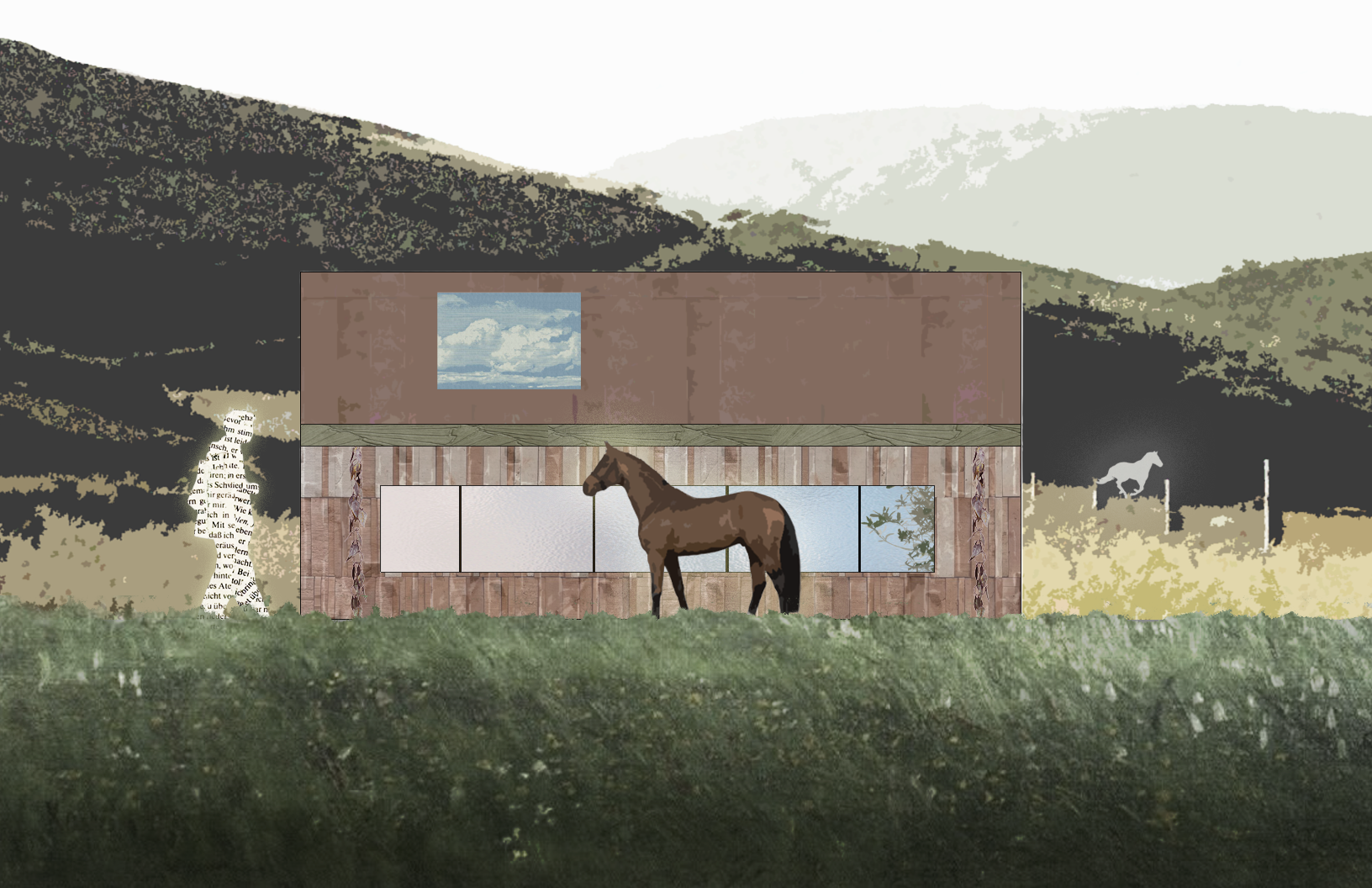
The barn exterior reads as two distinct material layers: reclaimed timber cladding at eye level, and a solid masonry band above, punctuated by a single window framing sky. The large glazed panels at ground level dissolve the boundary between inside and outside, making the horse visible from the meadow and the landscape visible from within. The building does not announce itself. It sits in the field the way a working structure should, familiar in form but opened up where the original was closed. What has changed is not the shape of the barn. It is what can be seen through it.
Image

Rhode Island School of Design
20 Washington Place
Providence, RI 02913–2784
United States of America
+1 401 454 6100
+1 800 364 RISD
QUICK LINKS
risd.edu
Graduate Studies


Image
Rhode Island School of Design
20 Washington Place
Providence, RI 02913–2784
United States of America
+1 401 454 6100
+1 800 364 RISD