Xuanyu Yang
MDes Interior Architecture
Walking Through Feeling
Emotion is the most direct bridge between human experience and architectural space, yet design often treats feelings as a byproduct of more important concerns. Walking Through Feeling challenges this assumption by asking whether a designer can intentionally use spatial qualities to move a person through a defined emotional sequence.
To test this, the project designs a spatial version of Lewis Carroll's Alice in Wonderland as an immersive theater experience. The narrative is told not through text, performance, or screen, but entirely through the physical qualities of a sequence of rooms: material, light, scale, sound, and smell. Each room corresponds to a moment in Alice's psychological journey, from disorientation and panic to calm and moral clarity. Visitors move through the space wearing headphones, listening to excerpts read plainly from the original book, while the architecture carries the emotion the words can only name.
The site is 461 West 14th Street in New York City, a former showroom located directly below the High Line. Two separate entry points at different elevations allow visitors to enter from above and exit at street level, mirroring Alice's fall into Wonderland and her return to reality.
Grounded in Christian Norberg-Schulz's concept of genius loci, the thesis argues that emotion in architecture is not accidental. It can be designed with the same intentionality as structure or program.
Image
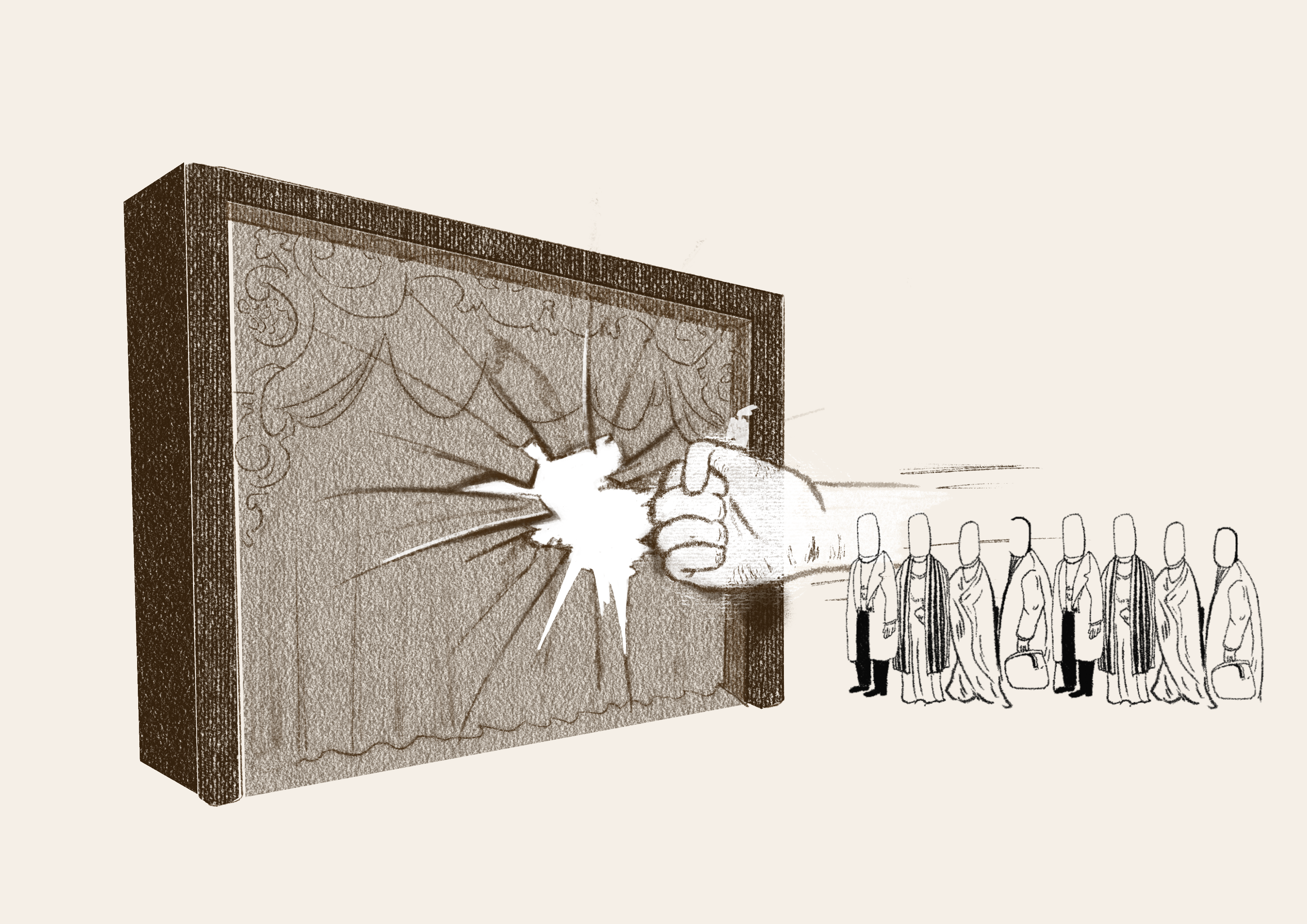
Breaking the Fourth Wall
2026
Concept illustration, digital drawing
Image

The Shore (Space 05/09)
2026
Interior rendering, digital
Image
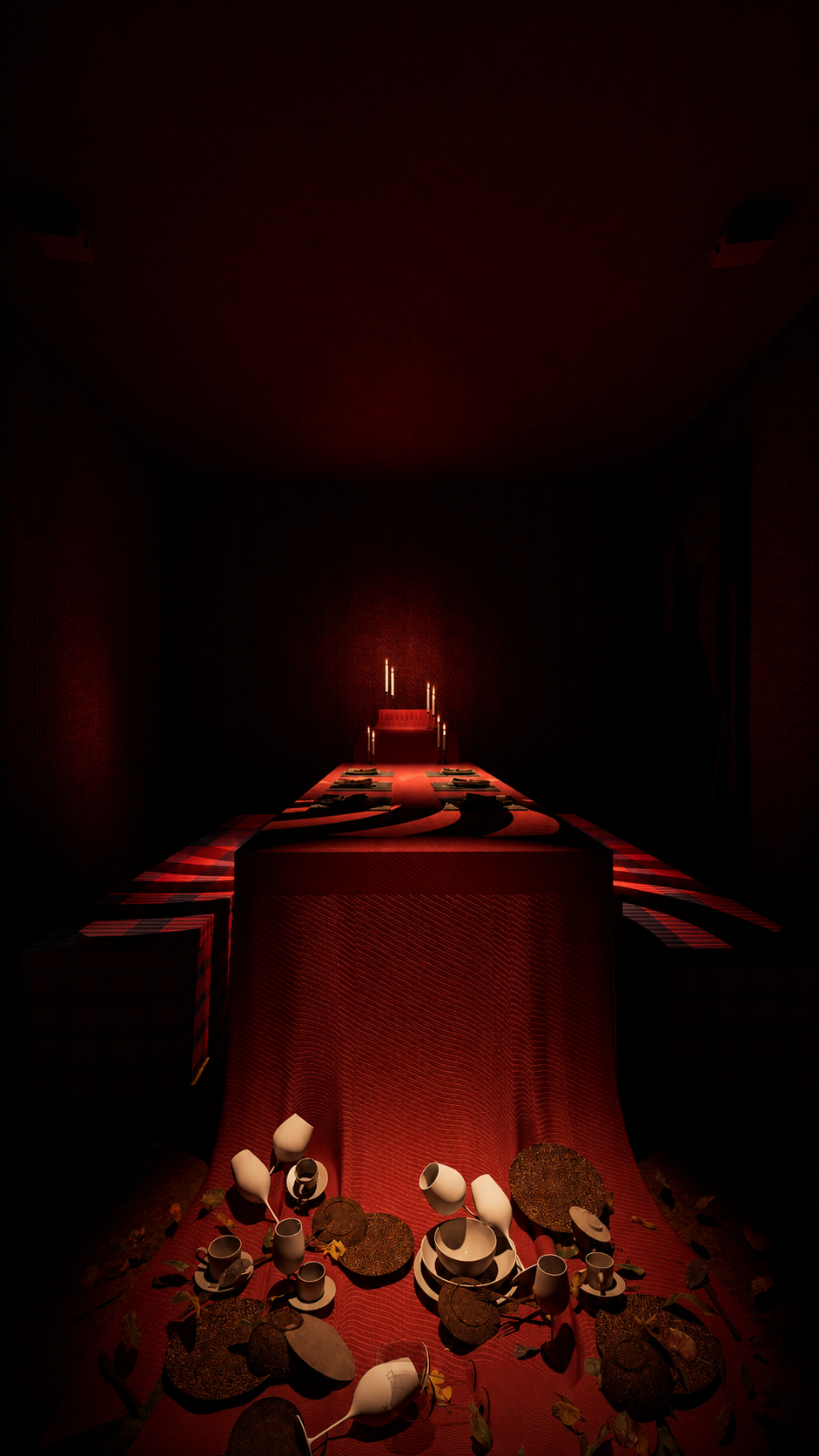
The Tea Party (Space 07/09)
2026
Interior rendering, digital
Image

Rhode Island School of Design
20 Washington Place
Providence, RI 02913–2784
United States of America
+1 401 454 6100
+1 800 364 RISD
QUICK LINKS
risd.edu
Graduate Studies


Image
Rhode Island School of Design
20 Washington Place
Providence, RI 02913–2784
United States of America
+1 401 454 6100
+1 800 364 RISD