Yasmine Chen
MLA Landscape Architecture
Unleashing Material Agencies: Creating environmental-perceptual interfaces with wool and bioplastics
Relied on a limited set of high-energy industrial materials, contemporary architectural practice has formed a material “hegemonic structure” in which certain materials and construction logics dominate. This dominance suppresses material diversity and limits the capacity of architecture to align with ecological processes, resulting in a clear metabolic imbalance within the built environment. This imbalance stems from a systemic absence that frames architecture as a closed, controllable system, imposing human control on matter while suppressing its agency.
A focus on material agency is necessary to engage in regionally grounded practices through the lens of Jane Bennett’ calls “vital materialism.”In this framework, matter is redefined as an active agent with lifecycles and dynamic capacities, activating its intrinsic autonomy1. Building on this, a systemic approach is introduced to explore the reconfiguration of spatial relationships in the built environment driven by material responsiveness.
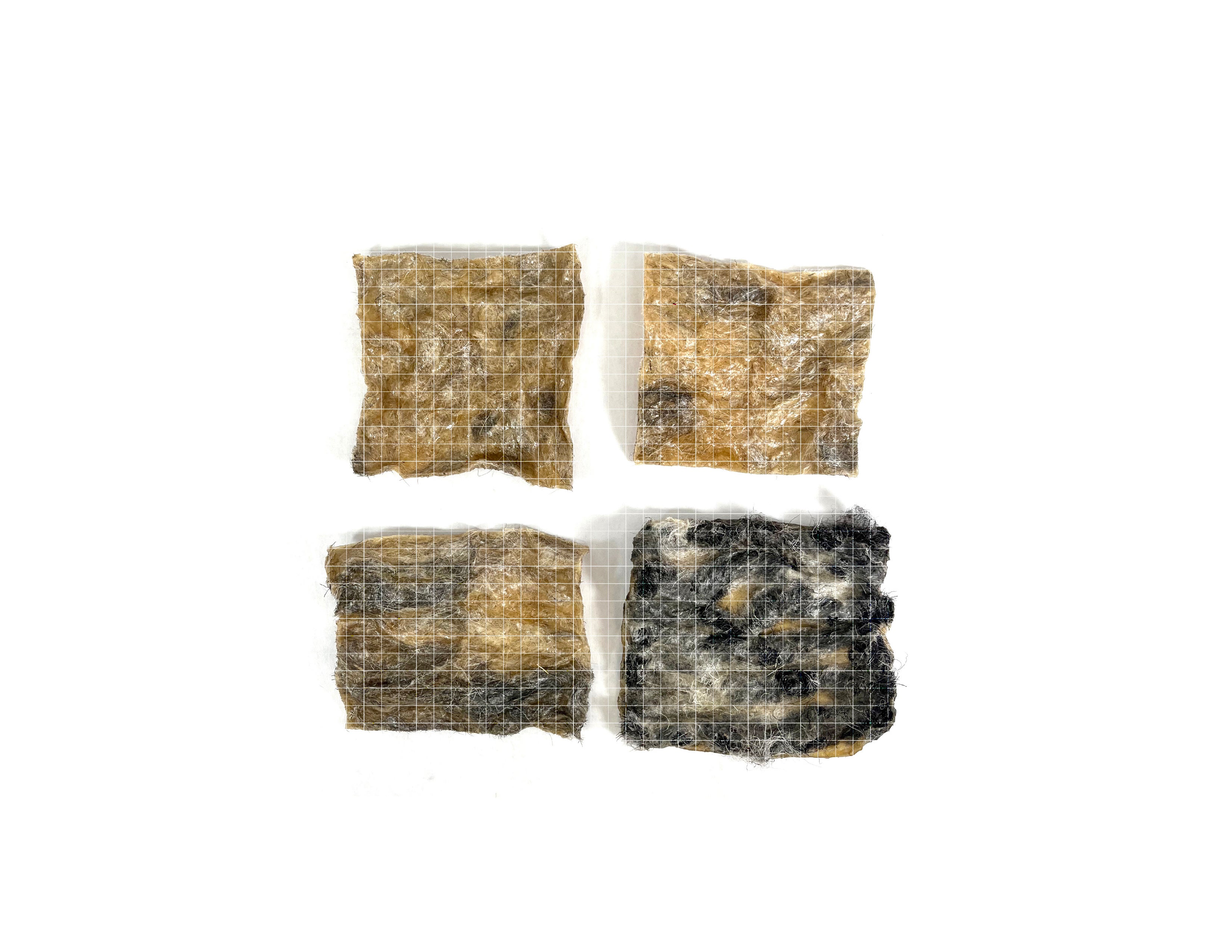
This research positions the interface as a starting point for spatial operations, using composite materials made from waste wool and bioplastics as an experimental medium. The investigation focuses on how material behavior activates interfaces, allowing responsive and permeable spatial structures to emerge and spatial relationships to be reconfigured. The methodology operates between scientific experimentation and design practice, integrating recipe development, material testing, design interventions, and site deployment. Through continuous interaction and feedback, the process gradually evolves into perceptual interfaces capable of responding to environmental conditions.
Image
Image
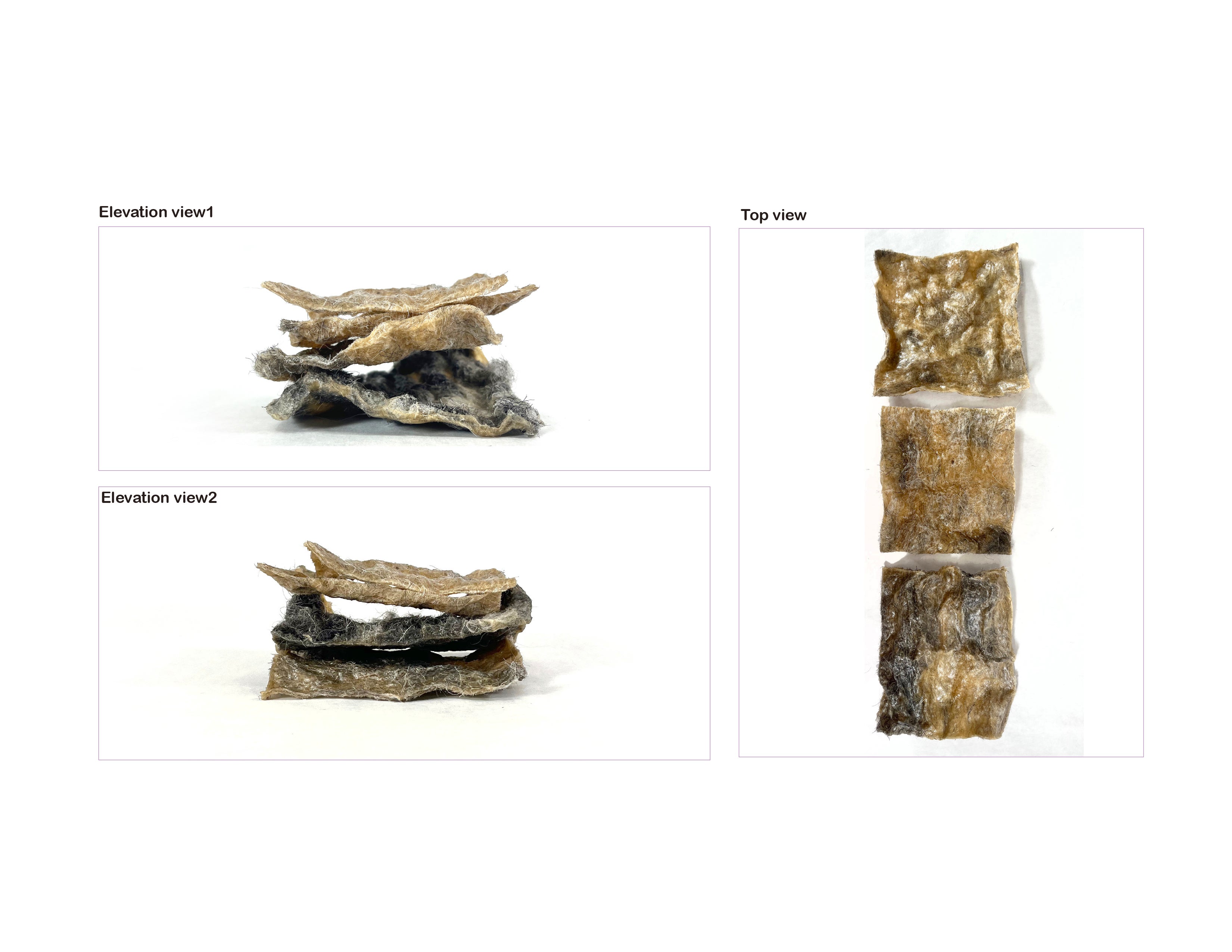
Material behavior test
This study selects waste wool and a bioplastic matrix as a composite material system, both of which are highly sensitive to humidity. Humidity not only drives hygroscopic swelling in wool and moisture-induced reconfiguration in bioplastics, but also regulates the mechanical coupling between the two materials through interfacial moisture migration, functioning as a “control switch” within the composite ecology. As a result, the material exhibits coordinated linear and lateral deformation behaviors. Material behavior is understood as an ongoing process of action—an expression of how the material experiences its environment, responds to external conditions, and continuously reveals itself over time. It cannot maintain a stable state; instead, it is constantly rewritten and displaced by air, humidity, and time. This dynamic responsiveness constitutes the core expression of its agency.
Image

Rhode Island School of Design
20 Washington Place
Providence, RI 02913–2784
United States of America
+1 401 454 6100
+1 800 364 RISD
QUICK LINKS
risd.edu
Graduate Studies


Image
Rhode Island School of Design
20 Washington Place
Providence, RI 02913–2784
United States of America
+1 401 454 6100
+1 800 364 RISD