Yen Lin (Darren) Chao
MA Design Engineering
NODE
I’m a designer-engineer at Brown and RISD, previously EECS at UC Berkeley. I’m interested in creating thoughtful, human-centered objects and experiences. Sometimes that means solving real problems, sometimes it means making something playful, strange, or simply enjoyable to exist alongside. I care about work that makes life feel a little more intentional and a little more alive. My thesis project is NODE.
NODE is a modular robotics system that uses cardboard as a primary building material to bridge the gap between design and engineering in early STEAM education. Many existing kits either constrain creativity with rigid instructions or overwhelm beginners with complex electronics. NODE sits in the middle, enabling students to build, test, and iterate freely.
The system combines plug-and-play electronics with cardboard-based construction, allowing users to move from physical ideas to working systems in an intuitive way. Cardboard is treated not as a limitation but as a core prototyping tool, making structure, scale, and movement easy to explore without cost or complexity barriers.
NODE is designed to grow with the user. Students start with a guided build to learn foundational concepts, then gradually transition into open-ended creation using both provided components and everyday materials. By integrating design, engineering, and storytelling into a single workflow, NODE aims to make hands-on learning more engaging, scalable, and closer to real-world creative practice.
Project done in collaboration with Jialong Lai MA 26 DE and Ruijia Diao MA 26 DE.
Image
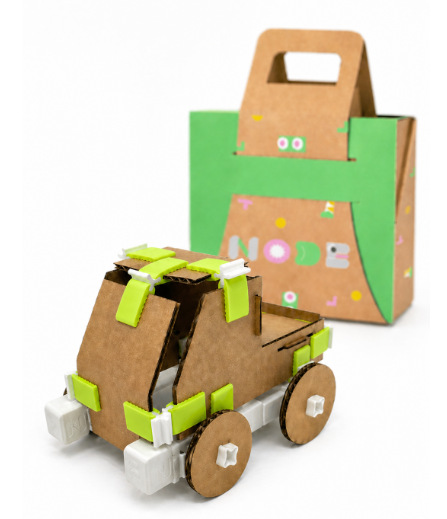
NODE Starter Kit
The NODE Starter Kit includes a guided cardboard vehicle build, modular electronics, and a fold-out toolkit-style package designed to introduce students to hands-on design and engineering.
Image
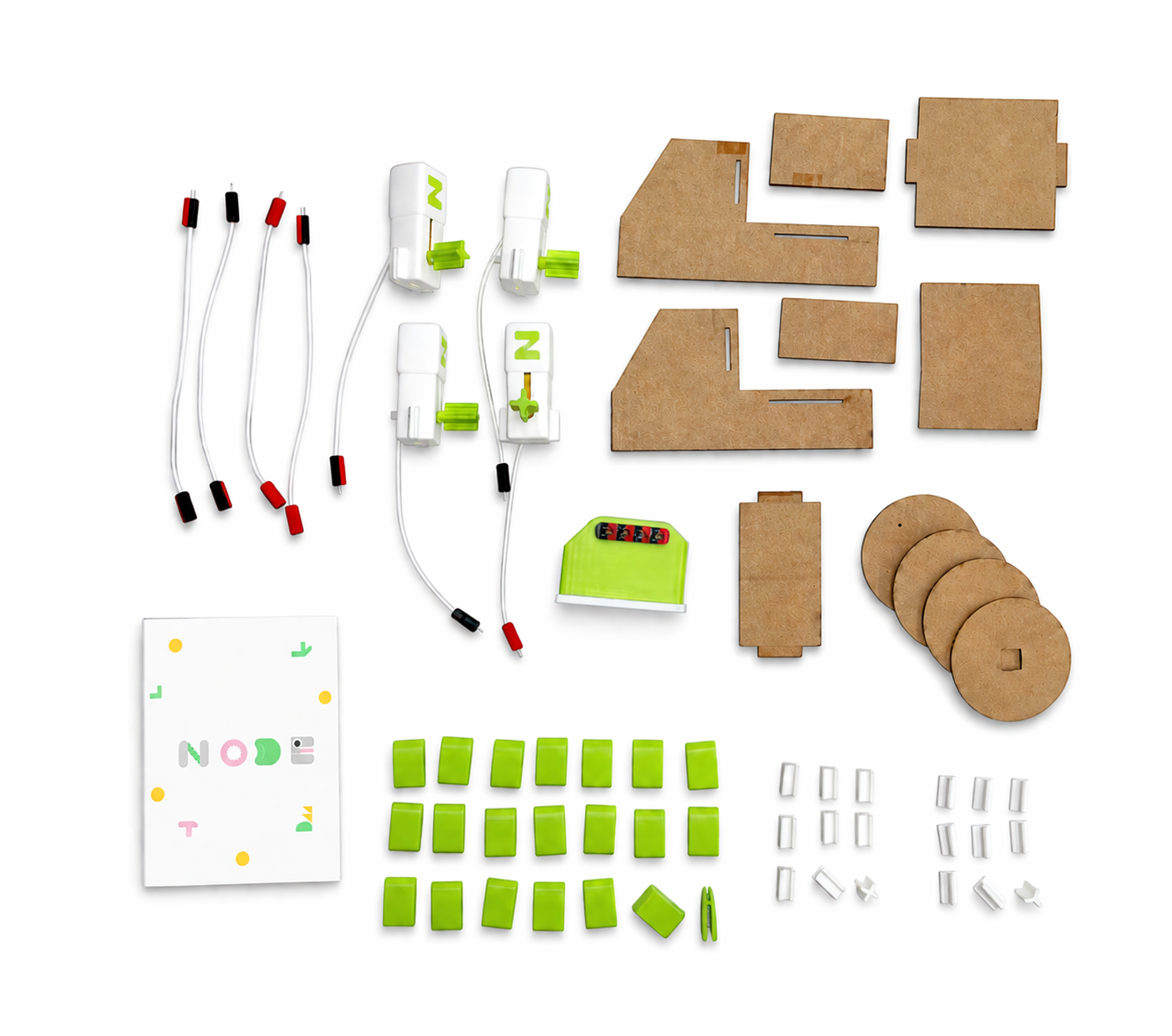
NODE Kit Component
The system combines a microcontroller unit, plug-and-play motors, custom cardboard connectors, and pre-cut materials into an accessible modular robotics platform. All elements are scalable and compatible with traditional electronic kits.
Image
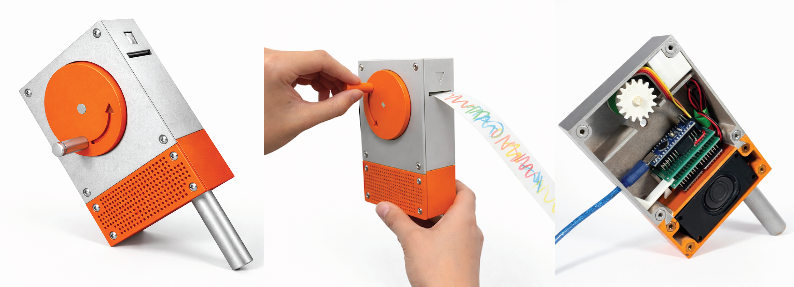
Jukebox 2.0
Jukebox 2.0 is an interactive device that translates hand-drawn color patterns into music. Users feed a strip of colored drawings into the machine, where a built-in color sensor reads each hue as the paper moves through the system. These colors are algorithmically mapped to musical notes, generating a melody that reflects the sequence and rhythm of the drawing. The project explores how familiar visual expression, like coloring and doodling, can become a direct input for music creation without requiring traditional musical training. It combines embedded electronics, sensing, and physical interaction to create an accessible, playful interface for composing sound.
Image
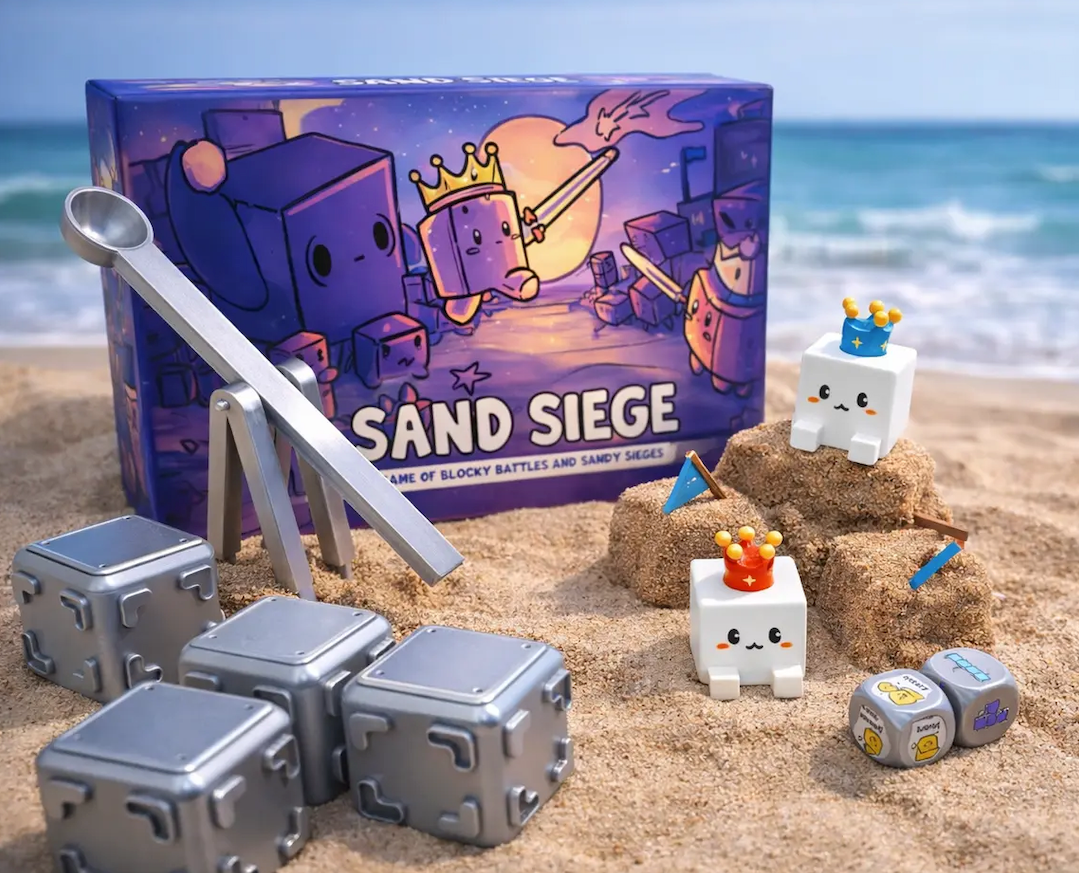
Sand Siege
Sand Siege is a modular beach game that turns sandcastle building into a competitive and creative play system. Kids build structures using reusable sand bricks, hide treasures, and take turns rolling a die to trigger actions like building or attacking. A hand-powered catapult interacts with sand structures and only works when anchored in sand for safety and context.
The system is designed for simple, intuitive play with minimal instruction, combining open-ended building with light game mechanics.
Image
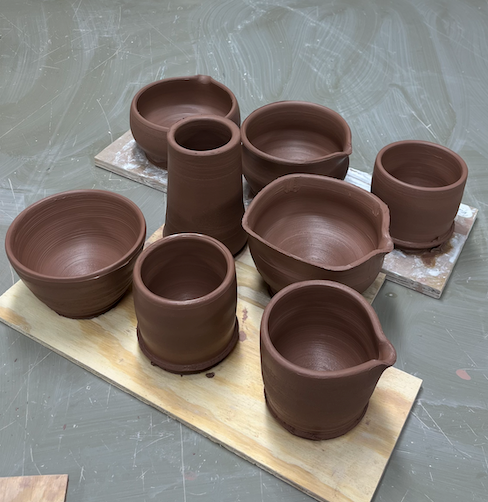
Assorted Pottery Greenware
Image
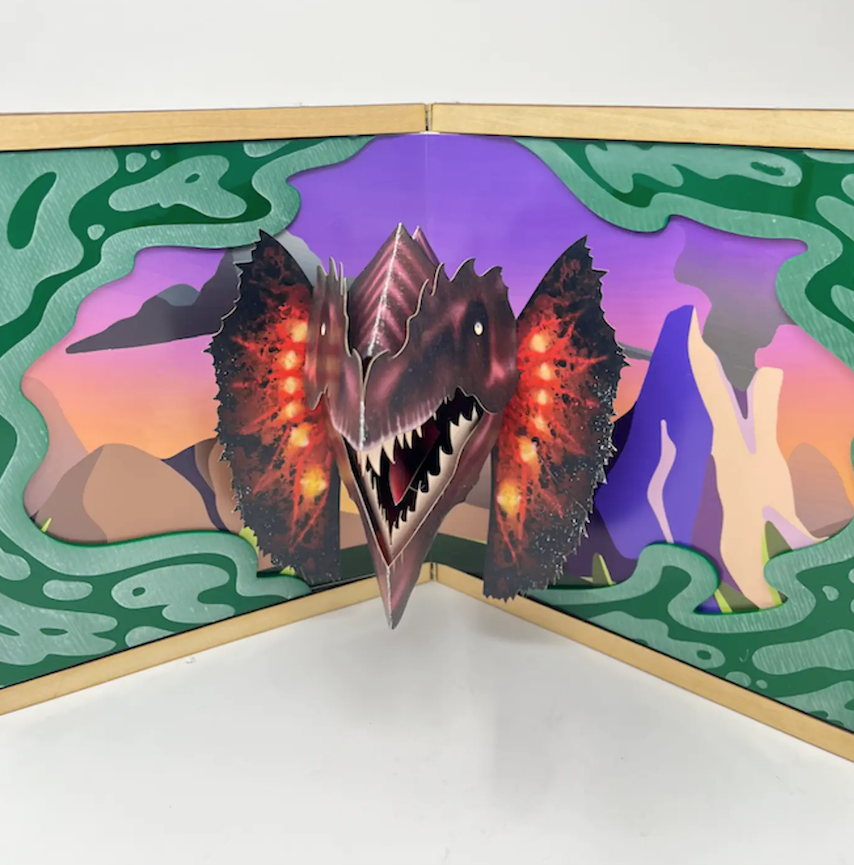
Folded Reality
Popup book exploration with digital fabrication methodologies.
Image

Rhode Island School of Design
20 Washington Place
Providence, RI 02913–2784
United States of America
+1 401 454 6100
+1 800 364 RISD
QUICK LINKS
risd.edu
Graduate Studies


Image
Rhode Island School of Design
20 Washington Place
Providence, RI 02913–2784
United States of America
+1 401 454 6100
+1 800 364 RISD