Zhihao (Sky) Xing
MDes Interior Architecture
The Right to Withdraw: Soft Boundaries and Material Refuge in the Workplace
Traditionally, architecture has provided physical protection through solid structures and defined boundaries, while modern interior spaces have evolved further to serve function, efficiency, and the operational needs of society. These include open-plan offices, art school studios, and other public spaces like libraries. Although physical rigidity and operational efficiency have been well served by the modern built environment, the psychological experiences of those within it remain largely overlooked - a lack of privacy, emotional support, and space for emotional withdrawal.
This research explores why contemporary workplaces often expose individuals to sensory overload and why people often retreat to stairwells, restrooms, or corridors when experiencing stress or emotional discomfort. What features of these in-between spaces can help inform the design of future office spaces? Through recording life scenarios, analyzing film clips, and conducting interviews, it examines human behavior and how its impact, exploring how to create workspaces that provide a sense of security and privacy while allowing individuals to maintain their individuality and emotional state. Drawing on material experiments with waste wool fiber — a remainder material whose acoustic, structural, and optical properties can be calibrated to modulate sound, visibility, and enclosure — this research proposes a design intervention that translates the protective qualities of in-between spaces into an inhabitable object within the workplace. This study offers a perspective for rethinking the workplace and advocates attention to the physical and emotional boundaries in shared environments on a more holistic level.
Image
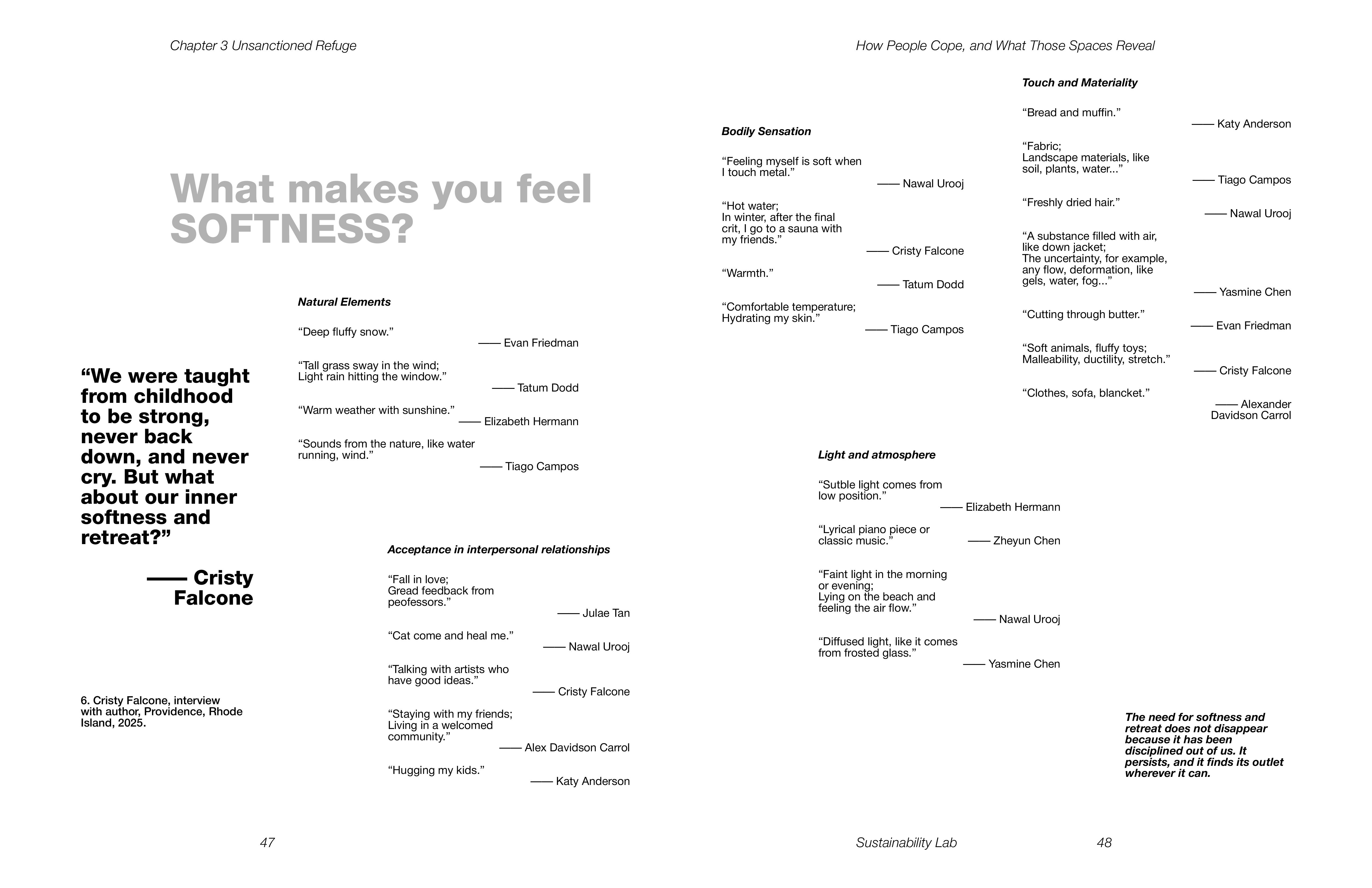
This paper examines sensory overload in open-plan offices and studios. People often respond to this by fleeing to places such as restrooms or stairwells. In addition to analyzing the characteristics of these “non-places,” the author conducted interviews to understand people’s needs. Based on the responses from RISD faculty and students, the author categorized their needs into natural elements, acceptance in interpersonal relationships, bodily sensation, light and atmosphere, and touch and materiality. Drawing on these characteristics and material research from the previous semester, the author created targeted materials primarily using discarded wool.
Image
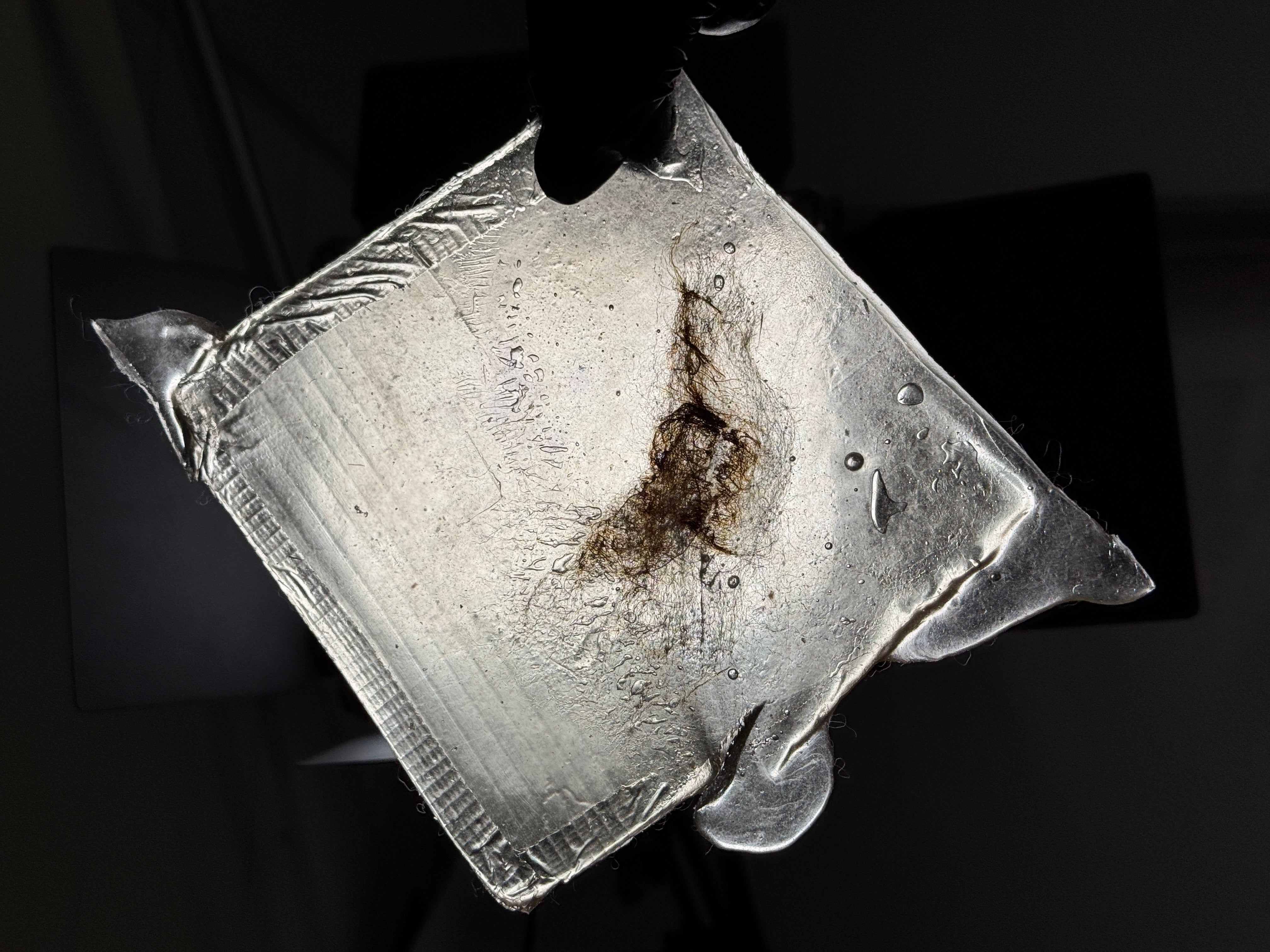
A bioplastic sheet made from a blend of wool and gelatin. 6 inches by 6 inches. The torn gelatin is heated until melted and then reformed. The charred wool reveals a distinct texture.
Image
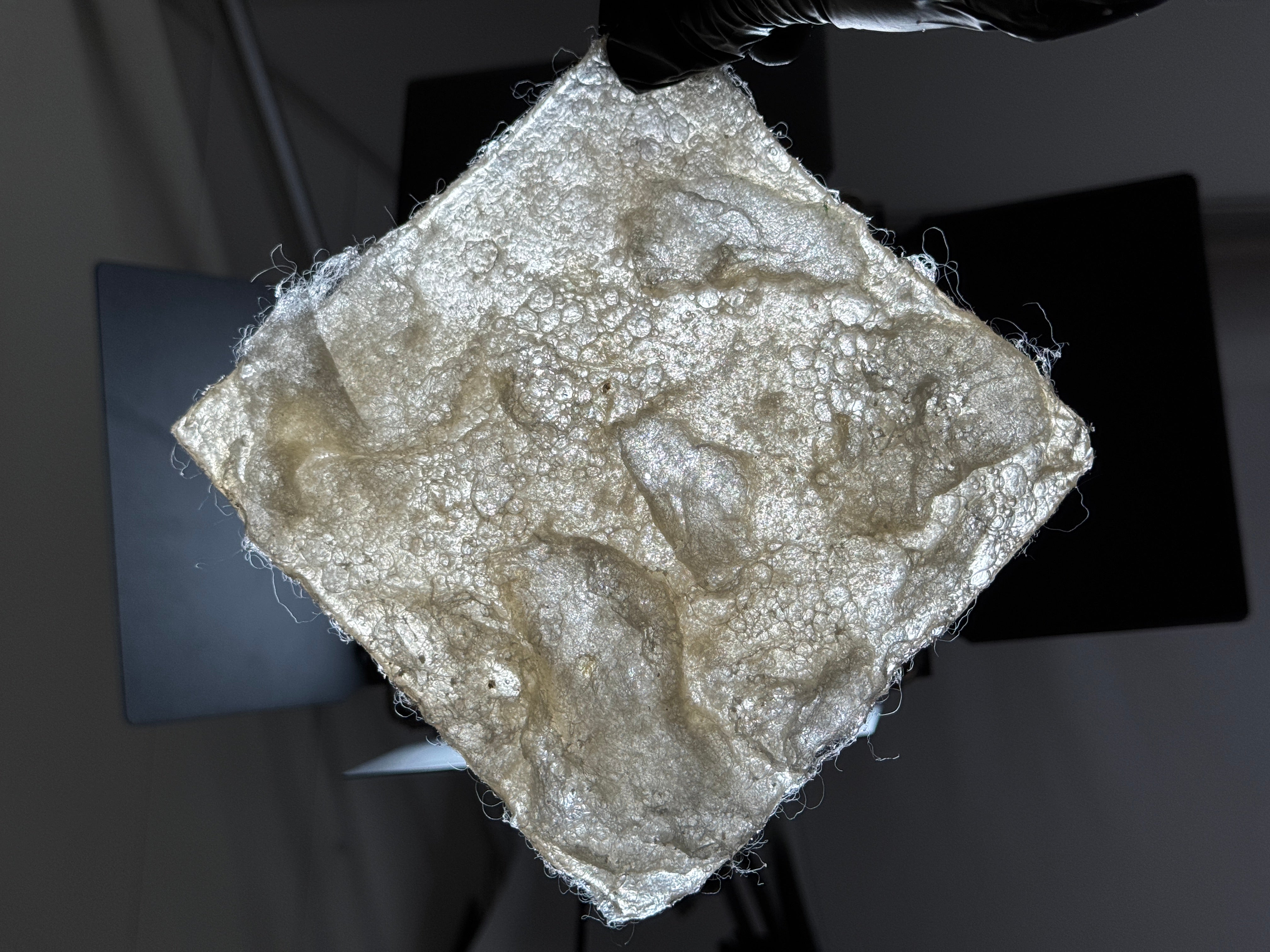
A bioplastic made primarily from wool and gelatin. 6 inches by 6 inches. Under this recipe and processing method, the surface develops large bubbles that can be pressed and spring back, forming a cross-linked network structure internally. It is translucent with a slight yellowish tint.
Image
Image
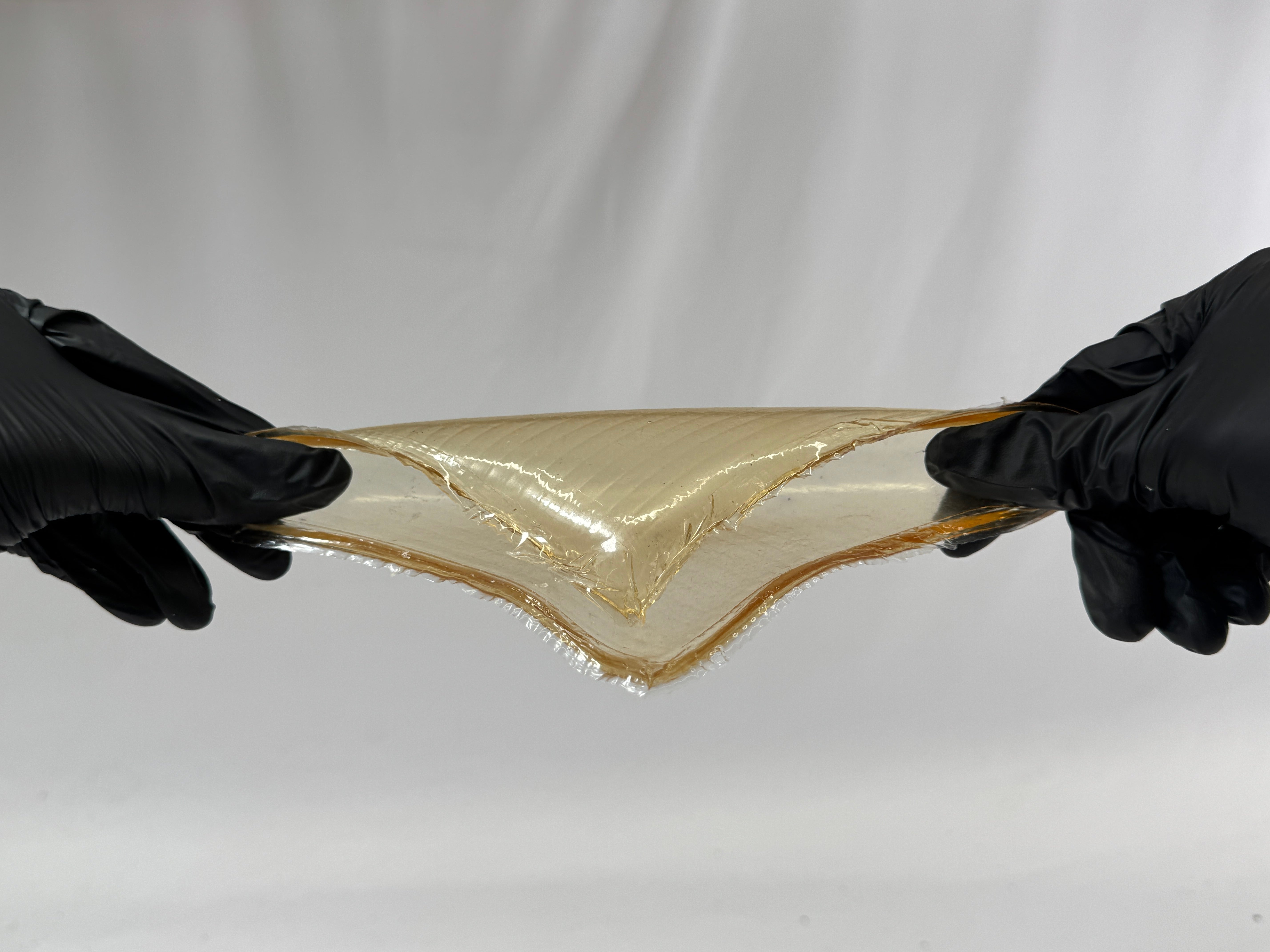
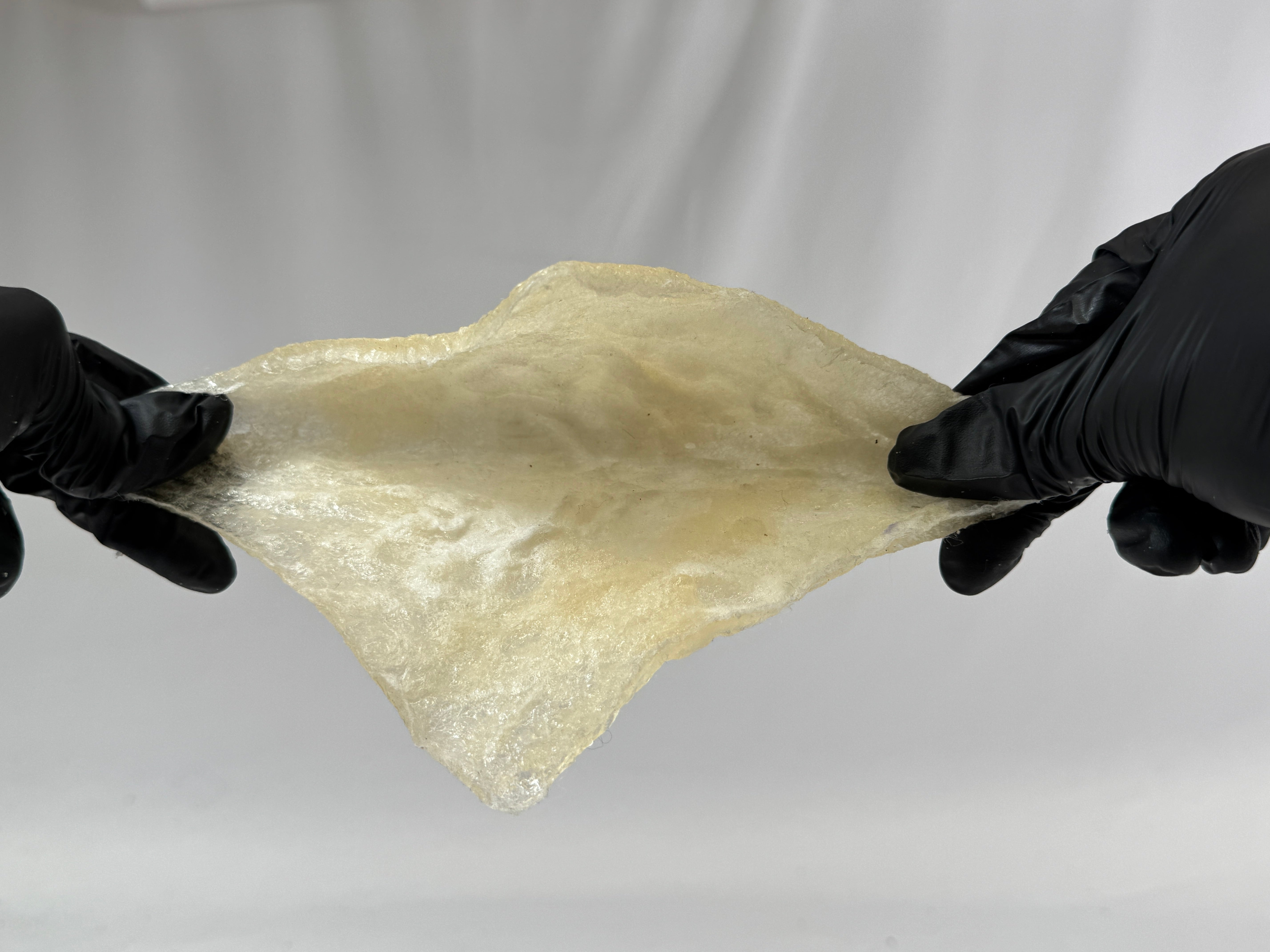
A simple tensile test on bioplastics made primarily from wool and gelatin. 6 inches by 6 inches. A qualitative study of the material through the manipulation of variables.
Image
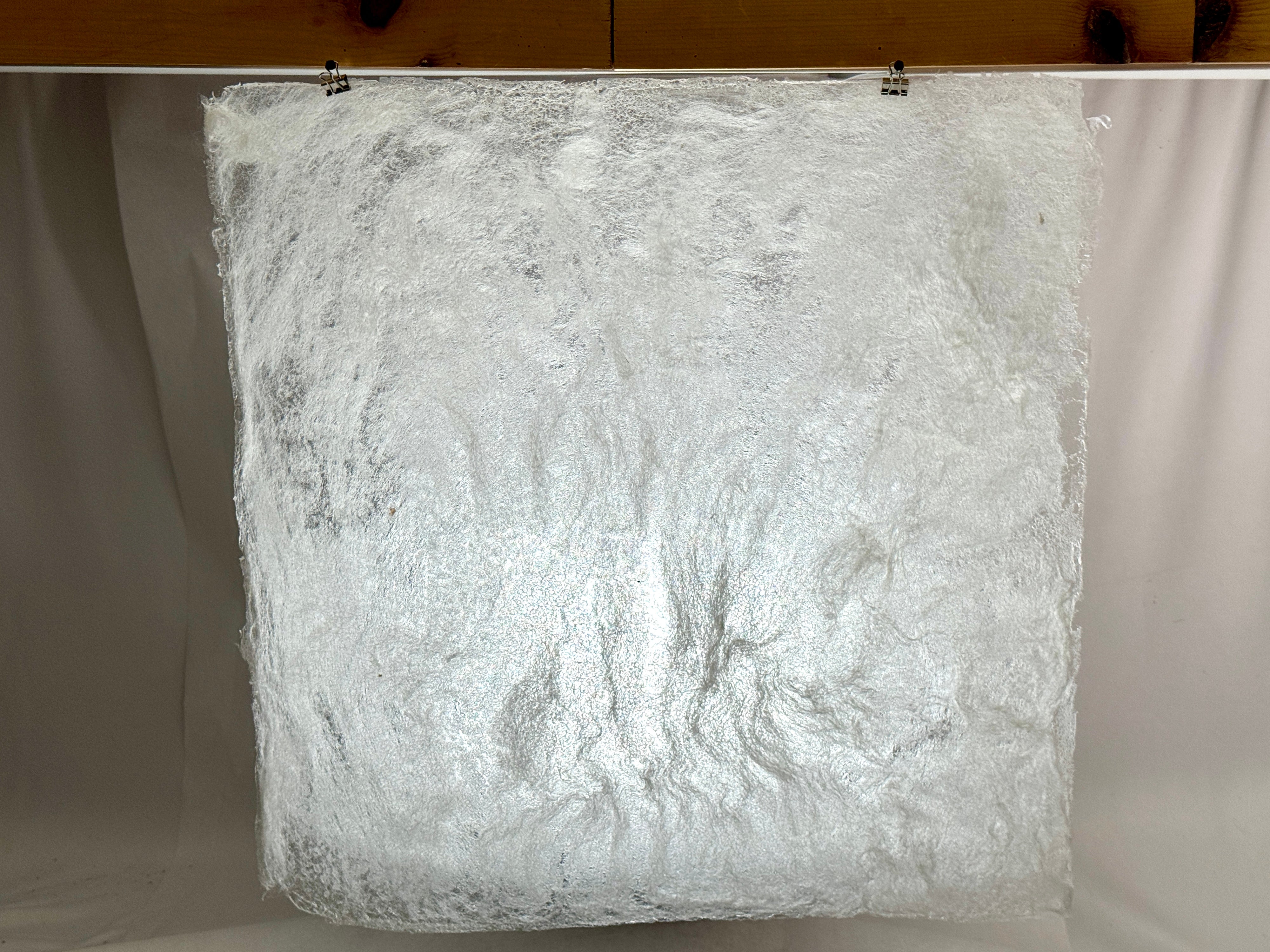
Sheets of material made from a small amount of wool and methylcellulose. 21 inches by 21 inches. The translucent texture allows light to easily enter the “shelter”—the final design—from the front and above, while blocking out some distractions.
Image
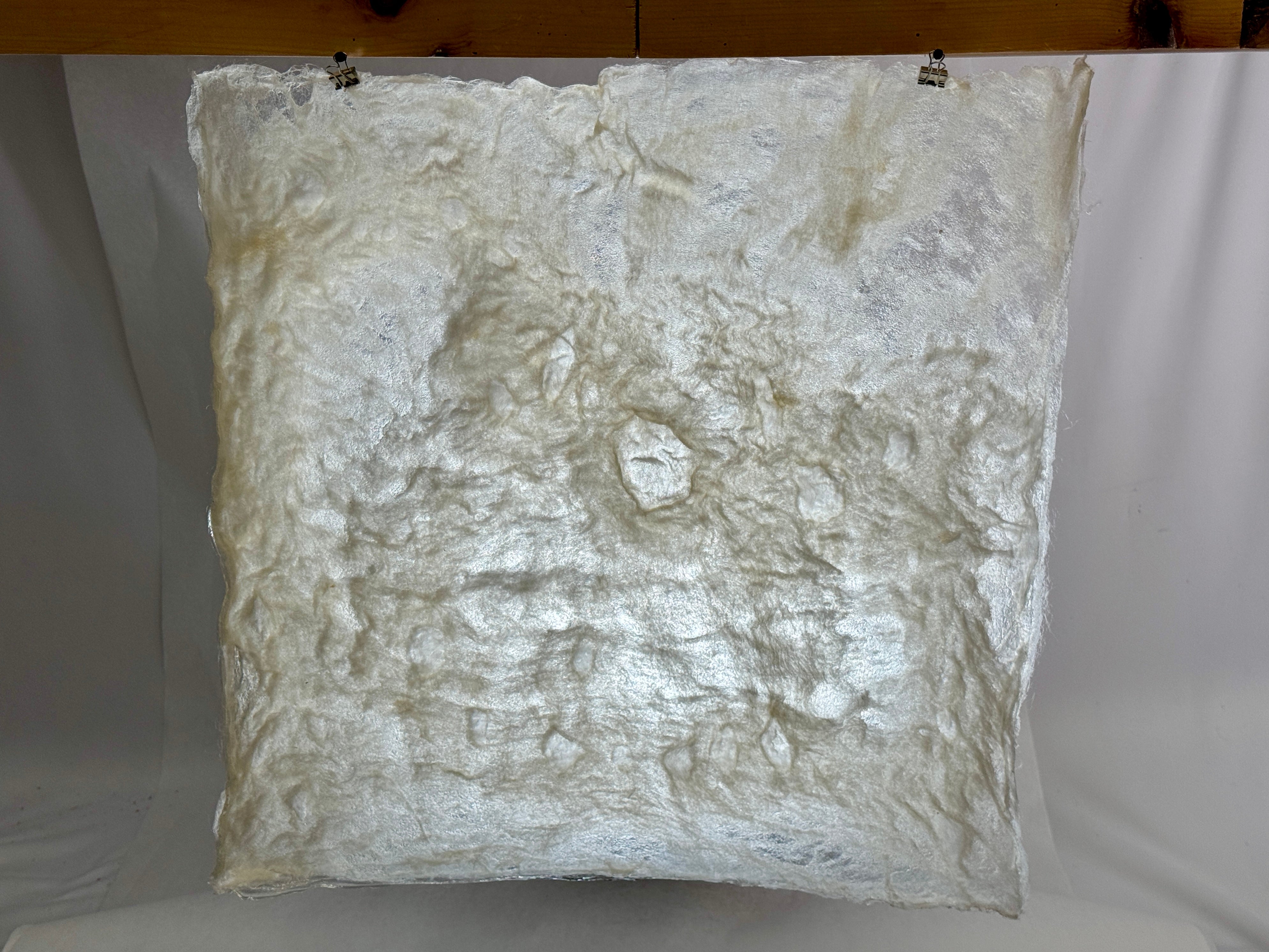
A sheet of material made from a mixture of wool and methylcellulose. 21 inches by 21 inches. The material is nearly opaque, but light can still pass through. This material will be applied to the back of the user’s head in the final “shelter” design to reduce the feeling of being watched by others or having one’s privacy invaded.
Image
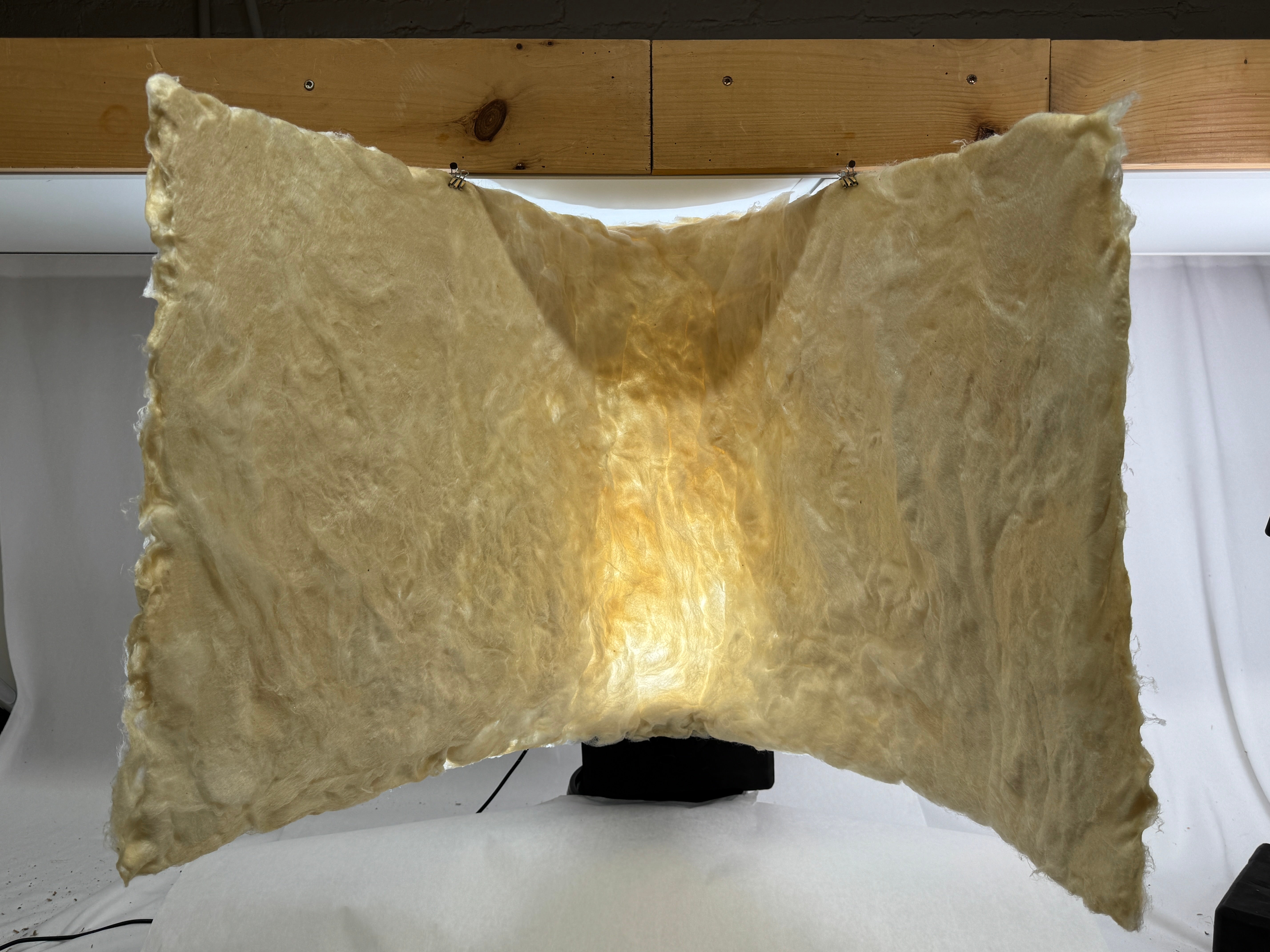
A material made primarily from wool and gelatin. 21 inches by 45 inches. The material is thick and has a high wool density. The gelatin has yellowed due to heat exposure. Thanks to the wool’s excellent sound-absorbing properties, this material will be placed on either side of the wearer’s ears in the final “shelter” design to reduce noise.
Image

Rhode Island School of Design
20 Washington Place
Providence, RI 02913–2784
United States of America
+1 401 454 6100
+1 800 364 RISD
QUICK LINKS
risd.edu
Graduate Studies


Image
Rhode Island School of Design
20 Washington Place
Providence, RI 02913–2784
United States of America
+1 401 454 6100
+1 800 364 RISD